“We are quite satisfied with the citizens of Colombia,” said Merle, the Ukrainian second-in-command of the 4th Battalion of Khartiia – a brigade of the National Guard of Ukraine.
“They are coming here to protect and defend our motherland and are effective fighters. From the beginning of Khartiia, Colombians have been involved with the most difficult missions alongside some special force units of HUR [Ukraine’s military intelligence].”
He clarified, however, that such praise could only apply once you have taken into consideration the “time and effort” needed to deal with cultural differences.
“We did a lot of planning to understand their mindset, their values, their attitude,” he said.
Apparently, this was referencing the need for adequate rest and sufficient food – especially “arroz con pollo” (the traditional Colombian dish with chicken and rice).
“After creating these conditions, the soldiers became really effective!”
Unidad Guajiro
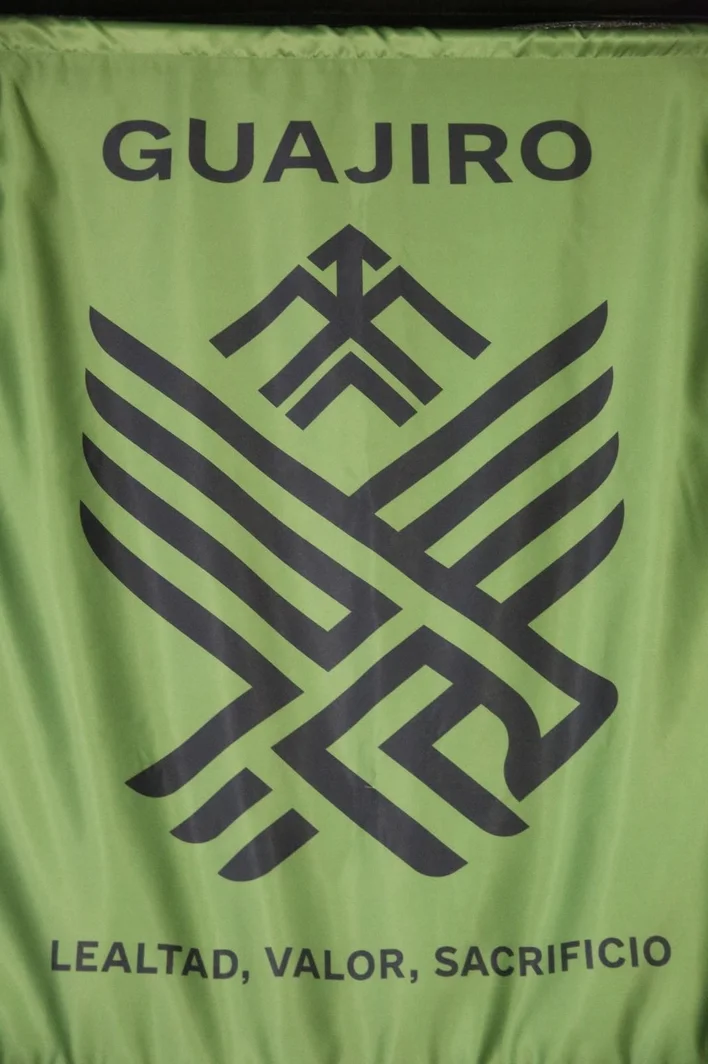
It was quite surprising to see a Ukrainian military unit with a Spanish name, “Guajiro.”
La Guajira is a department of Colombia – the northernmost tip of South America. The first Latino soldier to die fighting with Khartiia came from there, hence his callsign “Guajiro” became the unit’s name. The rebranding honors his memory, but is also an outward sign of respect for future Colombian recruits.
Over time, Khartiia has developed a reputation as an elite brigade, making it highly desirable for foreign soldiers seeking opportunities to fight in Ukraine. The new Guajiro insignia was officially launched in April 2025.
“Perhaps hundreds of Colombians have passed through our brigade, which is the National Guard,” Merle said. “Though around 7,000 have passed through the Ukrainian Armed Forces.”
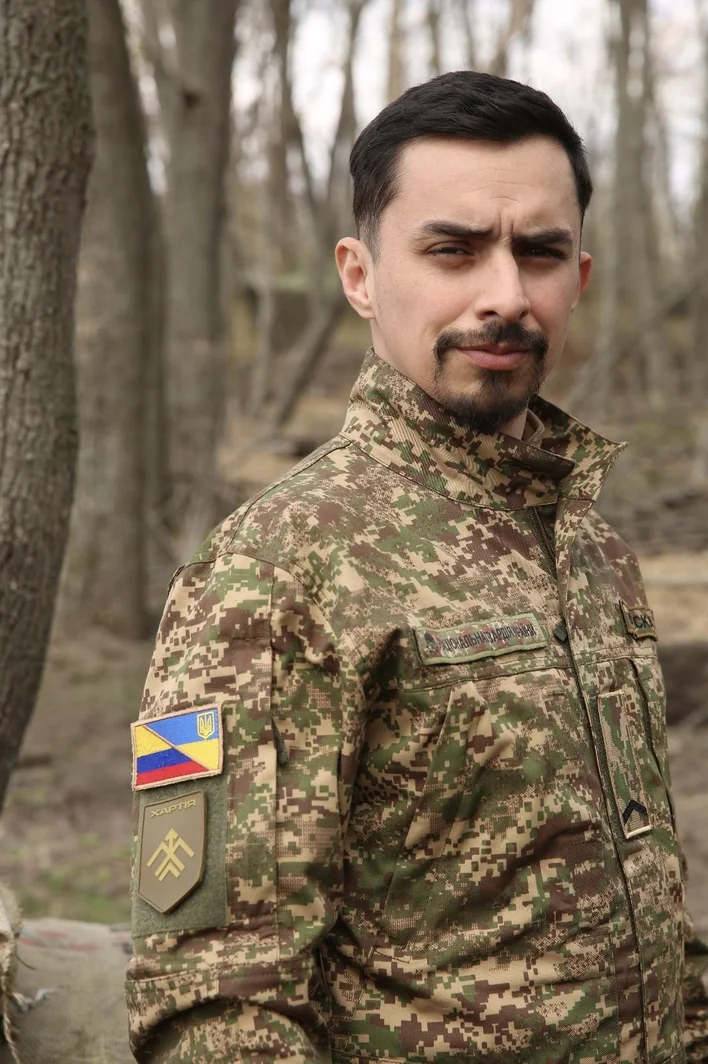
Callsign ‘Black Hawk’
Callsign “Black Hawk” was the team leader of a small group of Colombian soldiers who were available to talk. He is from Bogotá and had been with Khartiia for eight months.
Black Hawk was recruited via a Zoom call while still in Colombia by “Machete,” an Argentinian sergeant who was in Ukraine. This was surprising, since most Colombian soldiers – at least those in the Ukrainian Armed Forces – had to arrive in the country themselves first, of their own accord and with their own funding for travel.
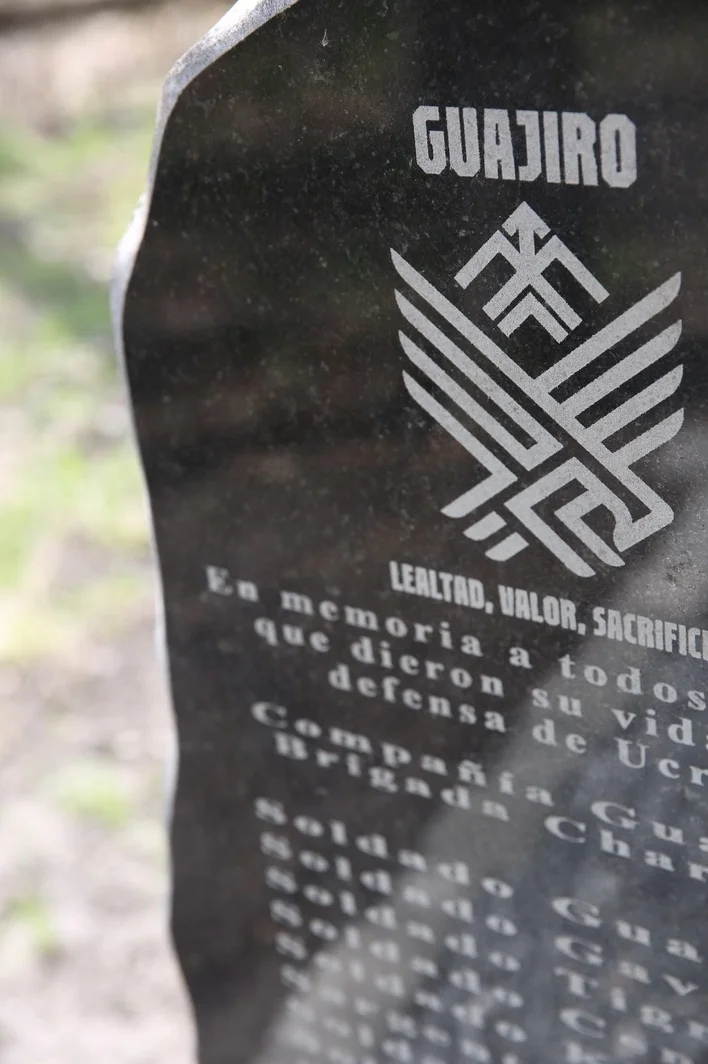
“We lost five fellows on that mission in November,” Black Hawk lamented as we looked at the gravestone memorial. These were the last five names on the list.
“But we have gained terrain in the Kharkiv region and we keep on pushing forward,” he added.
“In Colombia, I was a soldier in aerial offensives. We had the advantage in that guerrilla groups did not have access to helicopters. Here I am also offensive, but it is mechanized. It’s tanks. It is very difficult because the enemy has so much technology – it is the strong against the strong,” he said.
Black Hawk added that communist guerrilla groups in Colombia – such as the Revolutionary Armed Forces of Colombia (FARC) – have always received Russian support. Guerrilla fighters are often trained by Russia and receive weapons via Venezuela.
He believed that this is why the civil war in Colombia has never ended. He also found it ironic that he was now battling Russia directly.
There was one final point he felt important to explain.
“Those of us who were soldiers in Colombia, we have a vocation to serve. It’s like when a doctor rushes to help a member of the public who has suffered a heart attack. They know they are going to save a life,” he said.
“Ukraine is a country that has been invaded by terrorists who have killed many innocent civilians. We have to help.”
“If you go do a ‘Rambo,’ they will take you down.” – Callsign “Vikingo,” a Colombian fighter in Ukraine
Callsign ‘Vikingo’
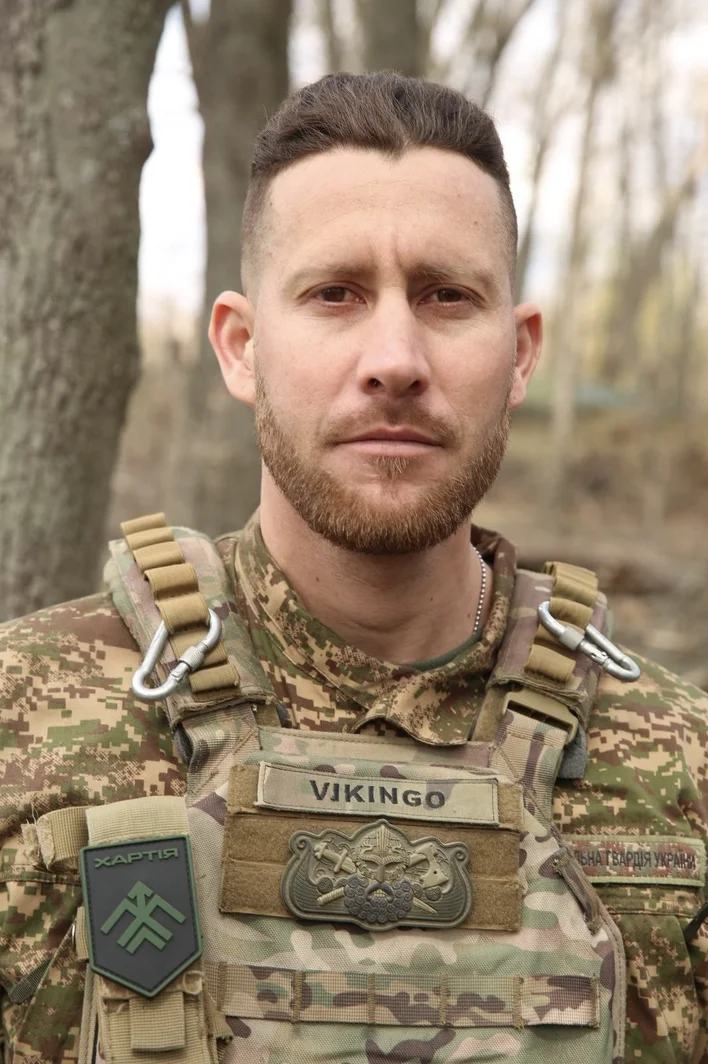
“Vikingo” was another soldier in the Guajiro unit.
“Tell me how to pose, because I am no model,” Vikingo said. When the press officer commented that he thought he looked different from the other Colombians, Vikingo joked, “That’s because I am pretty!” with the accent and cheek typical of the paisas from the region around Medellín.
“I am from Antioquia, the best location, of course!”
He soon started talking about more serious matters, however. “Holy saints, the war here is on another level. You can’t just fight one-on-one. You cannot show your silhouette. Here, it is all about seeking cover. If you go do a ‘Rambo,’ they will take you down,” he said.
He mentioned once that a kamikaze drone hit the edge of his trench but did not explode. “This must have been some act of God that it did not detonate – it can get very complicated.”
Callsign ‘Guardián’
Callsign Guardián was not a member of Khartiia. He was not lucky enough to fight for a brigade that actively tried to be welcoming and professional. He and a friend were not recruited to the Ukrainian Armed Forces through the official route and so became victims of a rogue commander who exploited them as undocumented foreigners.
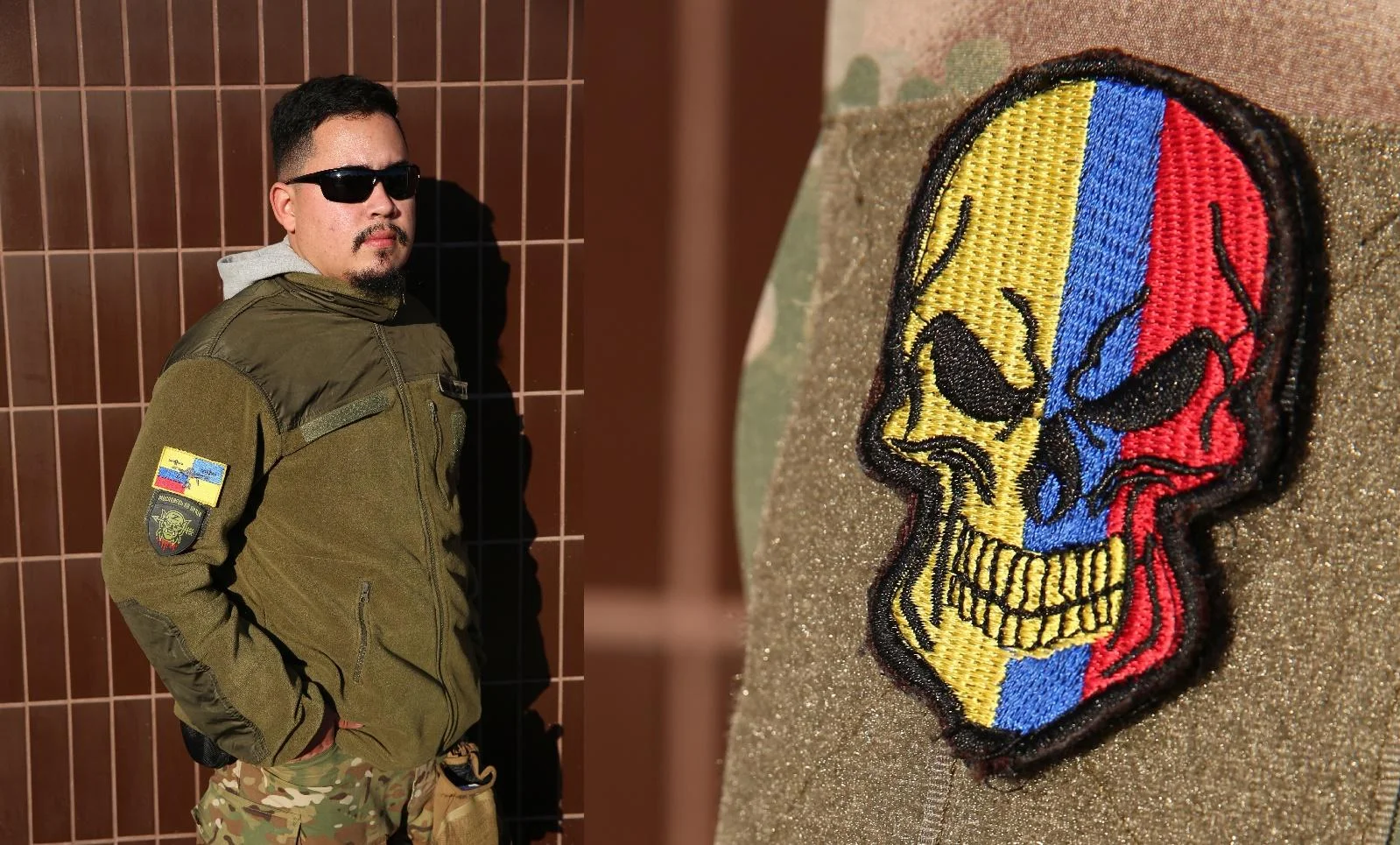
“We were the second group in the 59th Brigade, after the first group had to break up. We suffered 10 or 11 losses in a single mission,” Guardián recalled. “Colombians who got trapped, left behind. They kept asking for assistance over the radio as they lay there bleeding to death. It was horrible.”
His friend interjected: “Sometimes Ukrainian soldiers escort you to a certain point and then leave you, promising back-up, but it’s a lie.”
Guardián suffered shrapnel injuries from a drone on his very first day and still had the scars. “It was tough. Six days in the trenches – day after night after day without leaving. We all got back alive from that mission, even though three teammates got lost amidst the Russians for over a week, one of them with a bullet wound to the leg.”
He believes that despite Ukraine receiving some of the world’s finest in the Colombians that did arrive, they didn’t always know how to take full advantage of this resource.
“Perhaps they just want to preserve their own race first,” he said. “There are always vehicles to bring soldiers in, but there is never space to take anyone away.”
When they were eventually rescued, they were blamed for deserting their position – when in fact it was Ukrainian soldiers who had done so, according to him. He said they were also falsely accused of stealing ammunition – and this was used as an excuse to expel them without pay.
“We were given 72 hours to leave. We did not want to break contract, but we had no choice,” he added.
They lost out on two months’ salary, despite a small group trying to make a formal complaint with their passport copies and a letter.
Furthermore, Guardian’s injuries were classified as minor, not major – which he said was to avoid paying him full compensation – even though he spent a good month in recovery and still carries some metal fragments in his flesh that cannot be removed.
They mentioned the Colombian who connected them on TikTok to the 59th Brigade in the first place – a soldier with the callsign “Anderway.”
“There is a 95% chance that he is corrupt and in on the deal,” Guardián said. “Perhaps a 5% chance that he was also a victim of disinformation from the higher commands. I would not dare to say. Either way, it was too heavy a price to pay for many of us.”
Many months after their military IDs were promised, they remained empty-handed, effectively unofficial mercenaries of sorts.
“Witnessing with your own eyes as you step on corpses. Some guys go crazy with the trauma.” – Andrés, a Colombian fighter in Ukraine
Andrés and Pablo
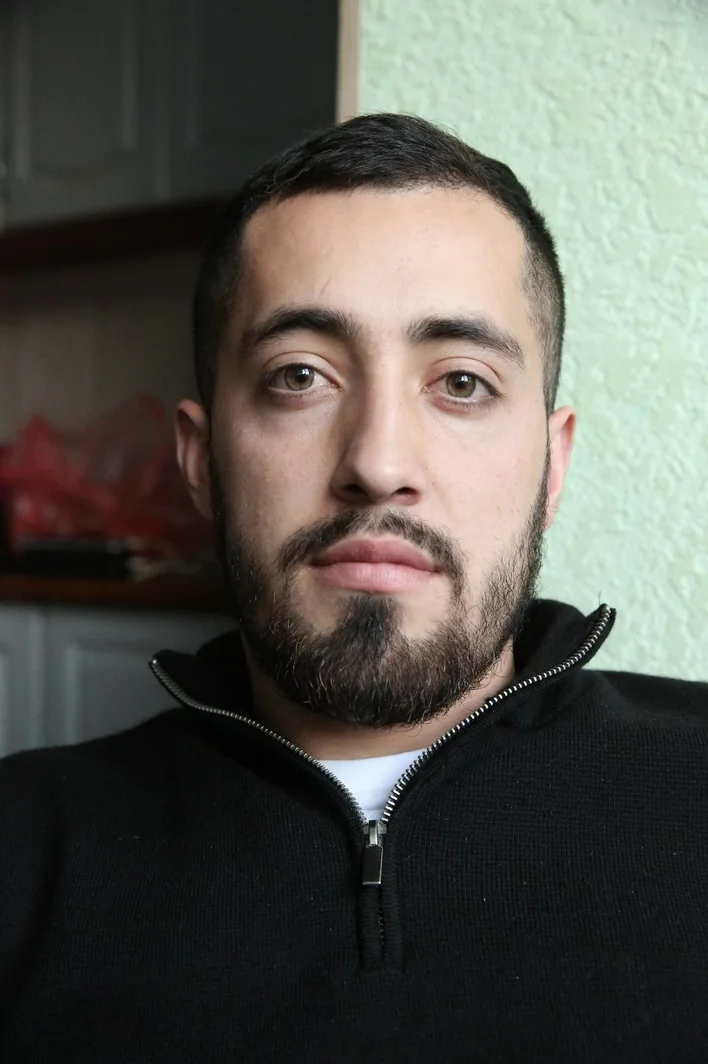
Andrés and Pablo are two veterans who shared a flat with other Colombians, some considerable distance away from the front line. Andrés was from the capital Bogotá, whereas Pablo was from the Caribbean town of Córdoba.
Andrés was recovering from a broken rib, whereas Pablo – who had been in Ukraine twice as long as his flatmates – sustained a head injury.
I am told in true movie style how Andrés once returned to rescue another Colombian from the battlefield, whose leg had been severely injured moments earlier.
“How could I leave my friend Arabe behind like a dog?” Andrés asked. “He had done so much in the previous days – he actually rescued this Peruvian kid, who had also been trapped with a broken leg. That kid’s leg had started to fill with maggots from flies’ eggs. It was not fair to then abandon Arabe in a similar situation after he’d just saved the Peruvian’s life himself!”
Pablo had been listening to this story quietly, perhaps still dealing with certain memories of his own. But he did point out that two people limping across a battlefield were twice as worthwhile – and so twice as likely – to become the target of an enemy drone.
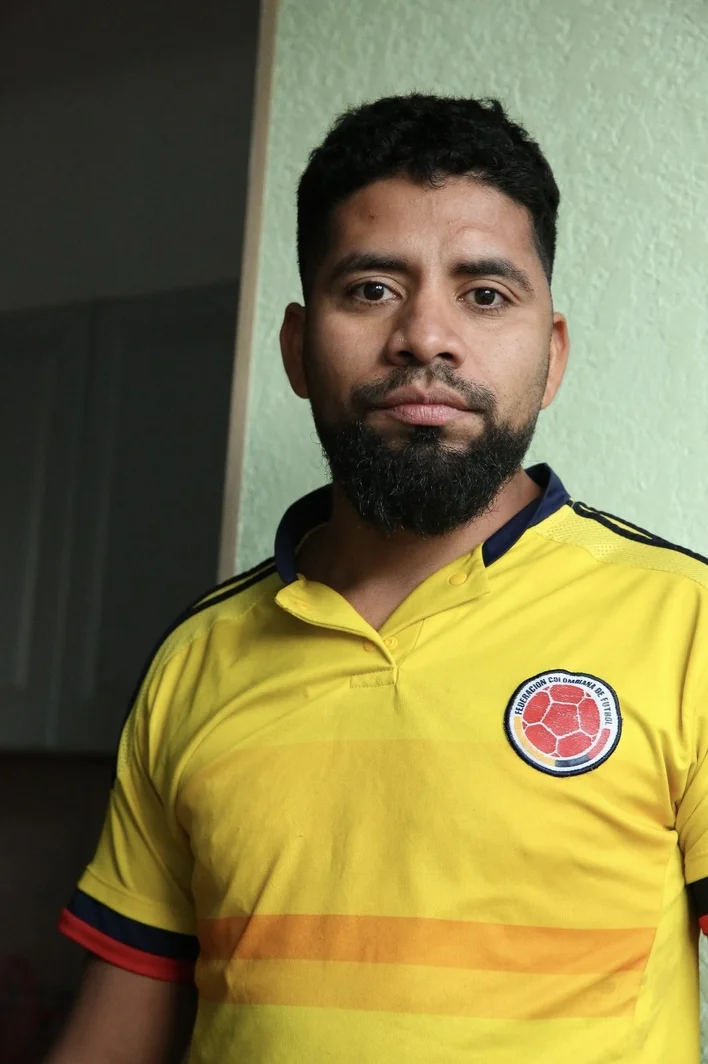
“On the front line, there are dead Ukrainians and dead Russians lying around everywhere,” Andrés said. “It’s worse than a horror movie. It’s uncensored. Witnessing with your own eyes as you step on corpses. Some guys go crazy with the trauma.”
In a morbidly humorous remark, Pablo joked: “You spot a nice helmet on the ground. Maybe it will fit me? But when you go to pick it up, it’s a skull. It’s a dismembered head. That never happened in Colombia!”
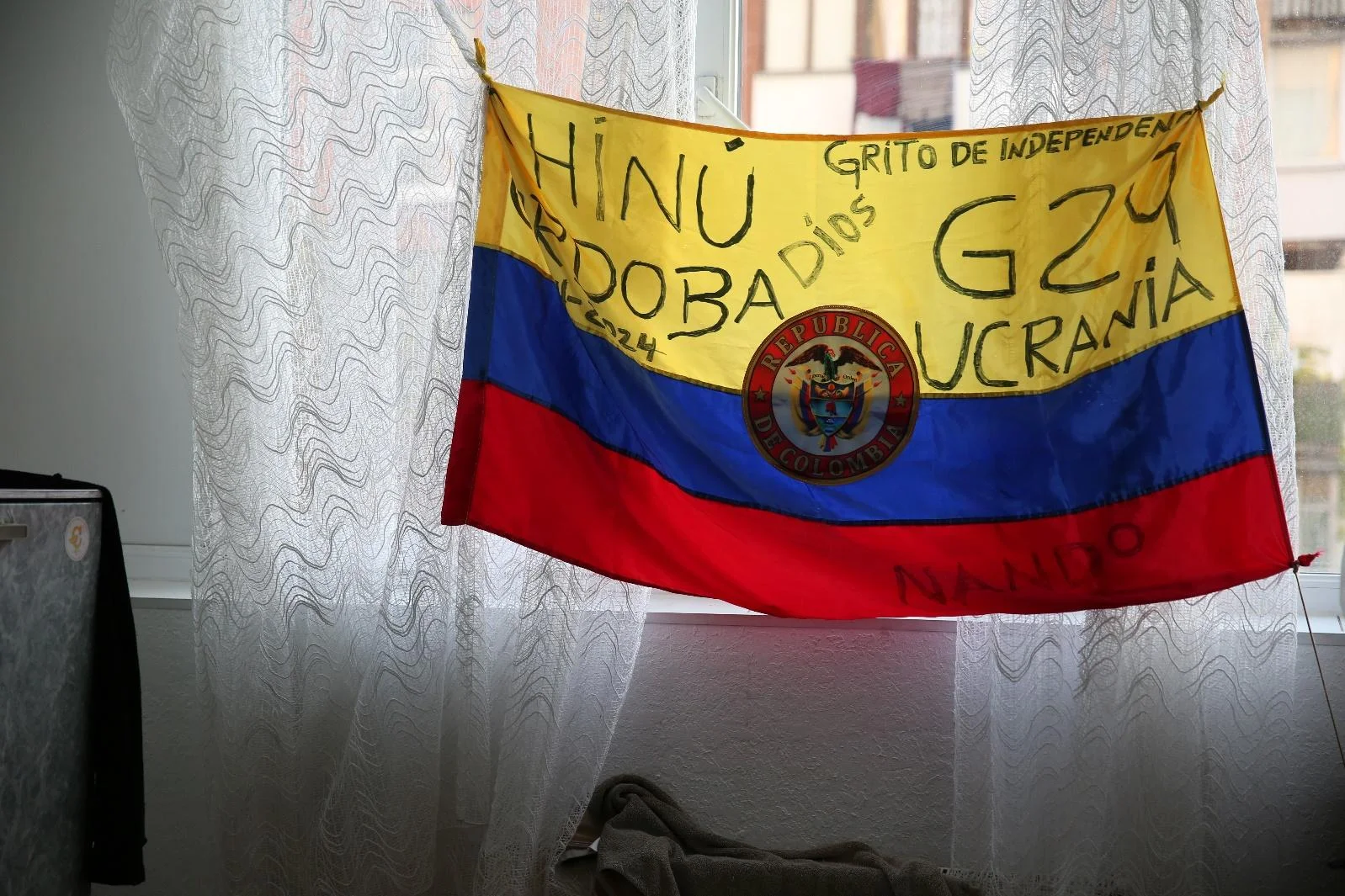
The radiant Colombian flag across their kitchen window (image below) contains the phrase “Grito de Independencia” – the Cry for Independence that references the heroic struggles to claim sovereignty from the Spanish Crown in 1810. There are some parallels with Ukraine fighting the shadow of the Soviet Union.
“There is an ideology in the heart of every Colombian since the days when Simón Bolívar battled the Spanish in the center of the country,” Andrés said. “Heroism does exist.”
He said he felt great empathy towards Ukrainian villagers and farmers, recognizing their humility. It reminded him of rural Colombia – with hens, eggs and the kindness of everyday people wanting to be helpful.
“We are not delinquents,” Pablo added. “We are good people.”
“I am not a mercenary,” Andrés concluded.
“I served Colombia with my all heart for seven years. I had an impeccable CV. We have military experience – this is what we have to offer Ukraine.”
Author’s note: With special thanks to Khartiia, Black Hawk, Vikingo, Andrés, Pablo, Guardián and his friends for their time.
This is the third installment in a weekly series exploring the role of Colombian fighters in Ukraine’s war against Russia. Read the first part here and the second here.
Stay tuned for more.