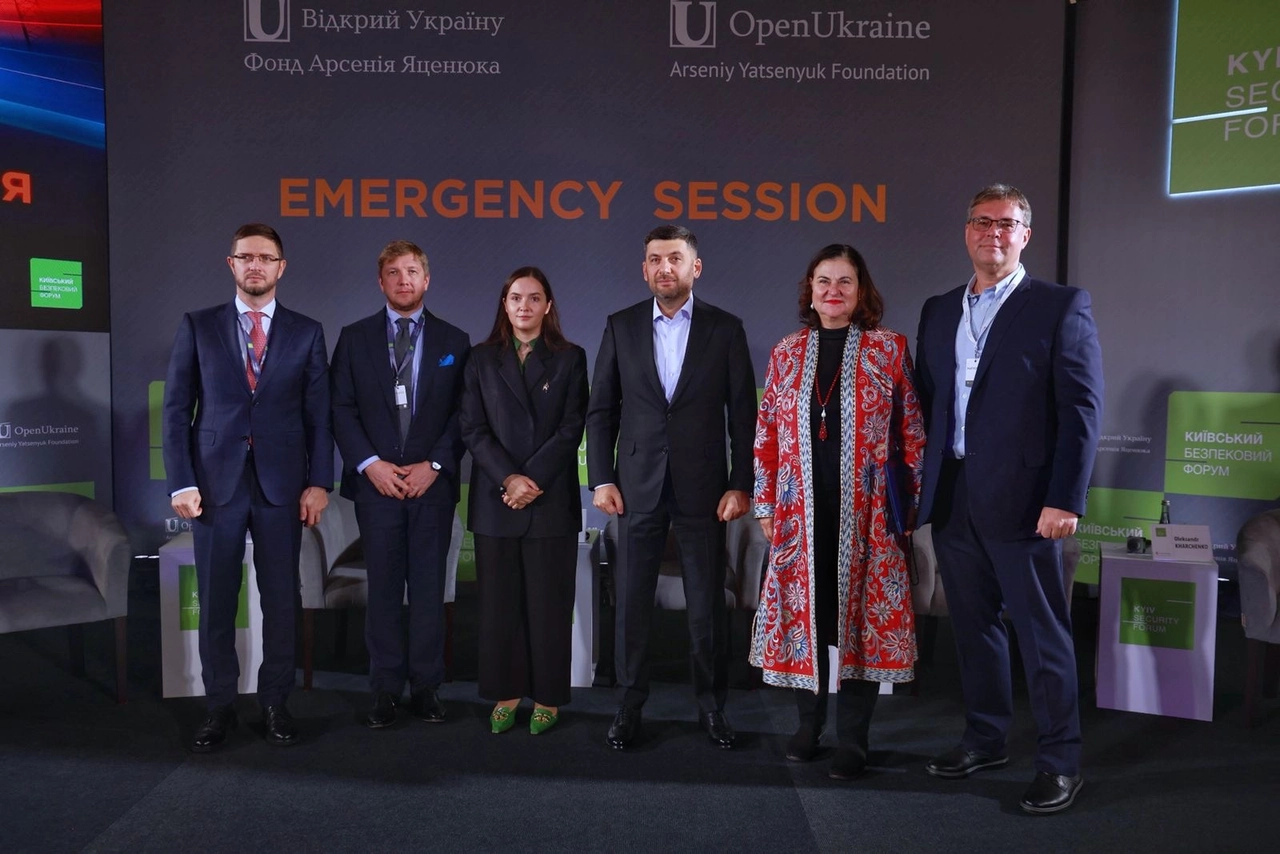
As Russia’s ongoing barrage of missile and drone attacks continue to plunge swathes of Ukraine into darkness, politicians, diplomats, officials, executives, journalists and NGO heads, gathered for an emergency session of Kyiv Security Forum – “Warming Ukraine: How to Save the Nation’s Energy Sector.”
Convened by former Prime Minister Arseniy Yatseniuk, the session presented some of the country’s most seasoned leaders and energy experts: Nataliya Boyko, energy adviser to the prime minister and board member of Naftogaz; Dmytro Sakharuk, CEO of DTEK Trading; Volodymyr Groysman, former prime minister of Ukraine; Andriy Kobolyev, former head of Naftogaz and now an energy investor; and Katarína Mathernová, the EU’s ambassador to Ukraine.
Moderated by Oleksandr Kharchenko, director of the Energy Research Center, the discussion unfolded with a shared recognition: the war for energy is a war for survival.
War against the civilian population
Yatsenyuk opened the session with a blunt warning: “[Russian President Vladimir] Putin’s plan is not only to occupy Ukraine; part of his plan is to freeze Ukraine. He hopes he can freeze the Ukrainian people. But he will never freeze our will to win.”
Yatsenyuk described the dual emergency of both an energy and fiscal crisis. “Two-thirds of the national budget now goes to defense,” he said. “We don’t yet have the funding to make it through the next year, but first, we must make it through the cold.”
Since October, Russia has intensified its missile and drone strikes against power plants, gas facilities and substations across the country. The deliberate targeting of civilian energy infrastructure, Yatsenyuk said, is “a component of Russia’s genocidal plan.”
His appeal to Western partners was direct: “Russian sovereign assets must serve as reparations for Ukraine’s defense and recovery.” In reference to delays in Washington’s decision to offer Tomahawk missiles to Ukraine, he added: “Tomahawks are not only about victory, they are a deterrence. Russia must know that if it hits our energy, Ukraine can strike back.”
Yatsenyuk’s remarks set the tone for sobering assessments amidst cautious optimism as the panel outlined how Ukraine is to survive what could be its hardest winter yet.
“We entered the heating season prepared, but attacks continue daily”
Boyko described an ongoing battle to maintain gas supplies.
“Gas infrastructure is attacked constantly,” she said. “Just last Friday. there was another massive combined strike on Naftogaz facilities. Despite that, we entered the heating season having injected into storage the full volume we had agreed with the government.”
Boyko detailed how Ukraine has offset domestic production losses with emergency imports and new liquefied natural gas (LNG) contracts. She noted a new agreement signed “just last week” for deliveries of American LNG, as well as Hr. 8.4 billion ($200 million) in state funding for gas purchases.
Yet even with emergency measures, the sector remains on edge. “Specialists are working literally 24/7,” she said. “Air-raid alerts last for hours; people can hardly stay on site. The equipment is expensive, often custom-made, and we have to replace it constantly. It’s a heroic effort, but it’s unpredictable.”
“They are methodical, and they aim to freeze us”
Sakharuk described a campaign of “methodical and systematic” Russian attacks, revealing that while the gas situation is precarious, the electricity system is under siege.
“They are not only striking large substations now, but also the smaller regional networks,” he said. “Unfortunately, the scale of loss is significant. We’ve run out of spare equipment. Before, we could move parts from one plant to another. That’s no longer possible.”
Ukraine’s engineers are scouring Europe for compatible Soviet-era transformers and turbines. “The quickest solution,” he explained, “is to try to find used equipment in countries that once had similar systems, such as Romania, Poland, Greece, Croatia. Then when it’s damaged, we can repair it. The physical presence of equipment is what matters.”
Sakharuk urged even closer cooperation between European governments to facilitate those transfers and more financing for repairs. But the most crucial component, he said, is air defense: “You can rebuild endlessly. The effectiveness of our recovery now depends on how well we can protect what we have. In the last weeks, several of our stations were attacked with five or six ballistic missiles at a time. Without serious air defense, you can’t talk about stability.”
Despite the devastation, he rejected despair. “Every company: DTEK, Ukrenergo, Centrenergo is doing everything to restore capacity. We will get through this winter,” he said, “but only if we work together: government, business, and partners abroad. Collaboration is survival.”
Communities on the front line
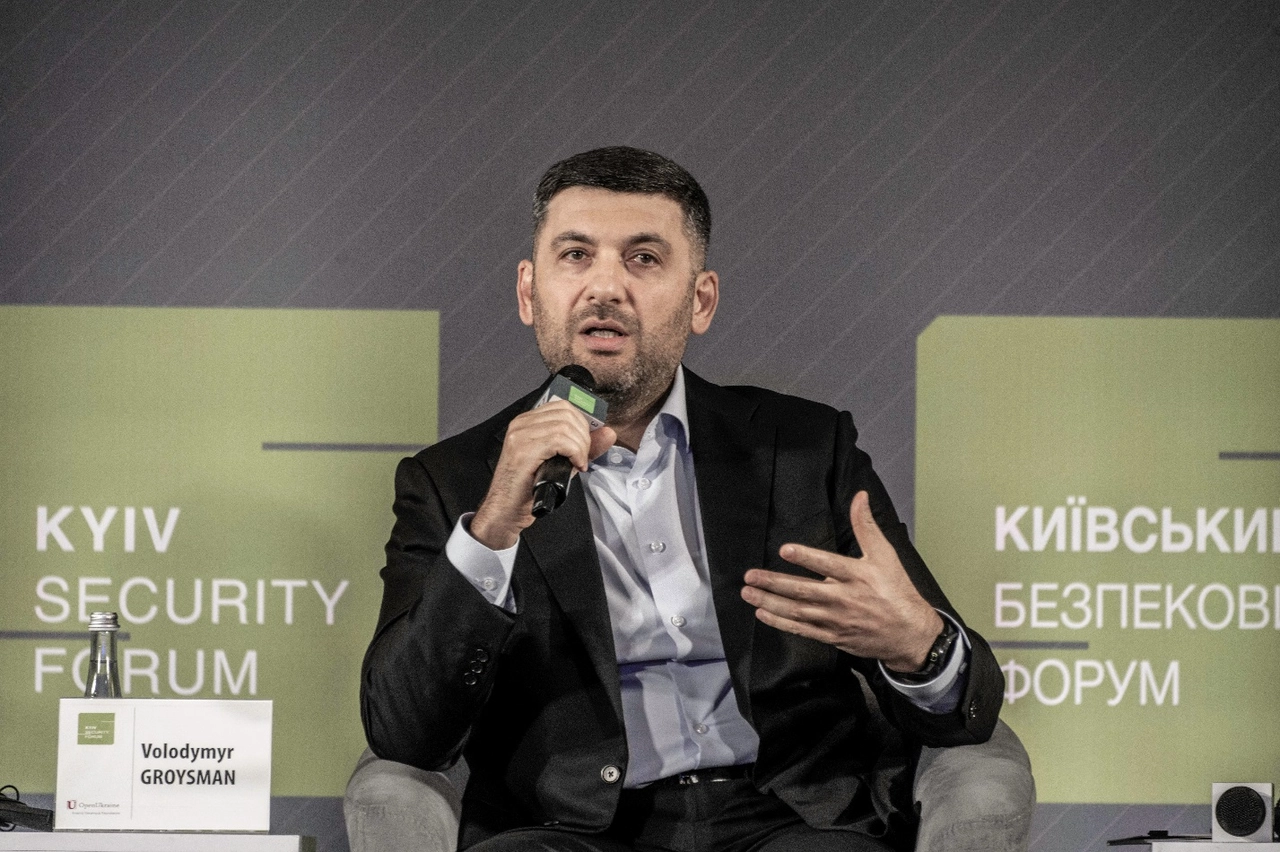
Praising Ukrainian soldiers for defending against air strikes and energy workers for repairing grids under fire, Groysman declared that “no one in recent modern history has restored an energy system under bombardment,”, adding that “when the light goes out and comes back only hours later, that’s not luck – that’s titanic human effort.”
He also appealed to Western partners to act decisively. “We keep saying: ‘Close the sky!’ and give us more air defense... When Iran attacked Israel, the coalition took off and intercepted everything. Iran understood it could not reach its goals. Why should Ukraine be different?”
Urged local authorities to prepare contingency plans for extended blackouts, Groysman added: “Every city and region must know exactly what to do if the lights, the water, or the heat go out… How to keep apartment buildings and hospitals running, how to transport people, how to protect the vulnerable. These are down-to-earth things, but vital.”
“Small, local power plants can keep cities alive”
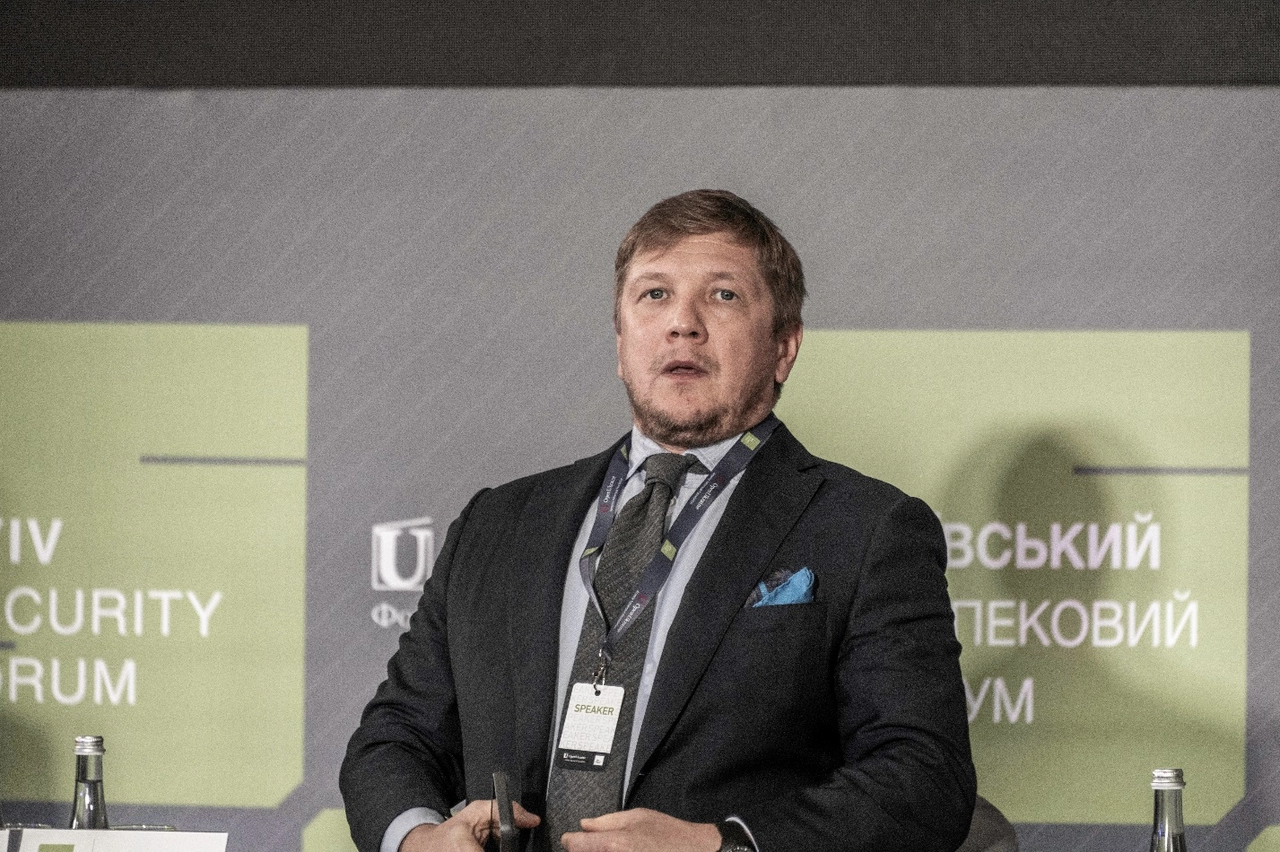
Kobolyev discussed the issue of decentralization.
“When I worked in the state sector, I saw that private business moves faster,” he said. “Now, when we need to decentralize generation and build alternatives to our old Soviet-style grid, private companies can do it more quickly.”
He praised the Ukrainian parliament for adopting reforms that ease permits and financing for energy projects but warned that unresolved market problems still discourage investors.
Additionally, he pointed to the promise of US involvement through the Development Finance Corporation (DFC). “DFC wants to invest in Ukraine’s mineral resources, including gas,” he said. “We have enormous potential in shale gas, especially in western Ukraine. If private companies can get licenses and access capital, it could change everything.”
Tongue in cheek, he added: “Let’s be honest, we won’t attract [US] President Trump by talking about our budget deficits. But tell him, ‘Under Trump, America’s shale revolution came to Ukraine,’ and that’s a medal he’d want to wear. That’s how partnerships are built through shared interests.”
“Ukraine’s energy sector is teaching the world”
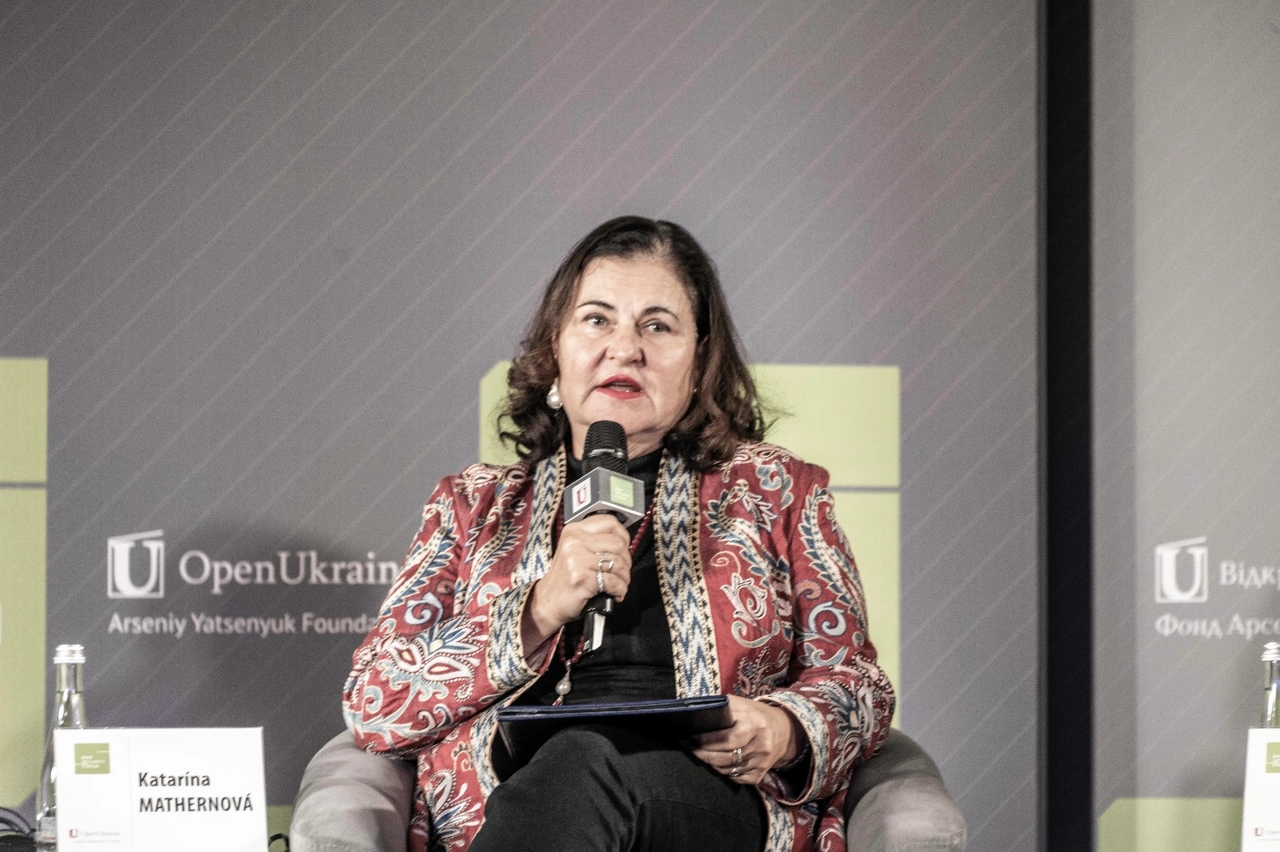
Mathernová commended Ukraine’s engineers for their resilience. “It’s truly astonishing that the system still functions,” she said. “Blackouts continue, but the determination to keep going is inspiring. When this terrible war ends, Ukraine’s energy industry will teach the world how to rebuild.”
Since the invasion, the EU has mobilized €3.2 billion to support Ukraine’s energy sector. “Much of that funding has gone through the government,” she admitted, “but our biggest instruments are actually designed for the private sector – through institutions like the EBRD [European Bank for Reconstruction and Development] and the IFC [International Finance Corporation].”
Mathernová revealed that Brussels and the EBRD are developing new risk-mitigation tools for private investors in Ukraine, modeled partly on the US DFC. “We know we must help not only the state sector but also private companies, because that’s where innovation and speed come from,” she added.
However, the ambassador cautioned that Ukraine still needs to maintain its large state-owned utilities. “We can’t leave the backbone of the system unsupported,” she said. “It’s not a question of either/or. We must work on gas, electricity, water, and networks all at once. These are multidimensional chess moves.”
Mathernová concluded with an anecdote emblematic of European solidarity. “One of my favorite examples,” she said, “is a thermal power station dismantled in Vilnius was able to be rebuilt piece by piece in Ukraine. It now provides vital spare parts for repairs. That is what partnership looks like.”
Confronting the winter ahead
Moderator Kharchenko asked each speaker to describe Ukraine’s readiness for winter. The answers reflected realism tempered by resilience.
Boyko answered first: “For me, the most important thing is conscious consumption. Too many people still think electricity and heat should come automatically, even for free. We need a new culture of energy awareness, a kind of religion of saving.”
She added that state and private sectors must coexist. “Energy is not a field where you can privatize everything overnight,” she said. “We still rely on the state to provide stability and protect consumers. But over time, the private share will grow and that’s healthy.”
Sakharuk stressed the need for unity. “This is about results,” he said. “If everyone works separately, there will be no result. Only together – public and private – can Ukraine and our partners get through the winter.”
He called for daily persistence and creativity. “[In the same way] our soldiers invent new ways to hit the enemy every day, we in energy must also think differently… Without investment, there will be no future.”
Groysman, summing up, offered both gratitude and urgency. “We are deeply thankful,” he said, naming the EU, Germany, France, Poland, Sweden, and the US. “But Putin’s missiles tell us that everything that is being done is not enough. Every rocket that falls is a message: ‘do more’.”
And despite the darkness, he insisted that Ukraine’s spirit remains unbroken.
“Our greatest generator is our people,” Groysman said. “Those who fight, who repair, who teach, who heal, who rebuild. As long as they live and work, Ukraine will live.”
A nation of generators
Outside the Forum’s conference venue, the din of diesel generators fills Kyiv streets – a loud display of fragility and endurance. For over three years, Ukraine’s engineers have become as vital as its soldiers, defending the grid under constant fire, rewiring cities in the dark, and proving that resilience is measured not only in weapons but also in watts.
Yatsenyuk’s words from the session’s opening resonated in the minds of many as the delegates dispersed into the cold evening:
“He will never freeze our will to victory.”
As winter advances and Russia intensifies its campaign to plunge the country into darkness, making civilian life unlivable, Ukraine’s answer remains the same – the steadfast, human pulse of light that refuses to go out.