October hosted the seventh Ukraine Action Summit (UAS), where supporters across America came together to advocate for Ukraine. While I did not attend this time, I have attended two prior summits. In covering the diaspora and its diversity, I’ve come to understand that the real value of events like the UAS isn’t only the advocacy, important as it is, but the relationships formed. Those connections can open unexpected doors.
At the UAS in April 2025, I received a text message from a friend urging me to drop what I was doing and go to dinner. “It’s important you meet these people,” they said. I finished my advocacy meeting and went to meet the individuals they spoke so highly of. What followed was a brief 15-minute meeting with the Dignitas team, including Lyuba Shipovich, the co-founder and CEO. We talked, got a sense of each other, and she told me that once I came to Ukraine, I should let her know so she could organize a trip for me to the front to meet units working on ground robotics.
A few months later, as I planned my frontline reporting, I reached out to Shipovich. I arrived in Kyiv after a sleepless night of Russian bombardments. The next morning, we left for the front, and over the following week I met with various robotics units and observed several frontline missions that became central to my reporting.
A consistent theme emerged in conversations with commanders: they wished they had more soldiers to send to the drone training centers run by Dignitas.
After finishing the robotics work, I arranged to embed with a drone unit through contacts in a territorial brigade. Shipovich was worried about me embedding with a unit that might be under-equipped and urged me to go with a better-supported brigade. She connected me with a commander from the 110th Separate Mechanized Brigade.
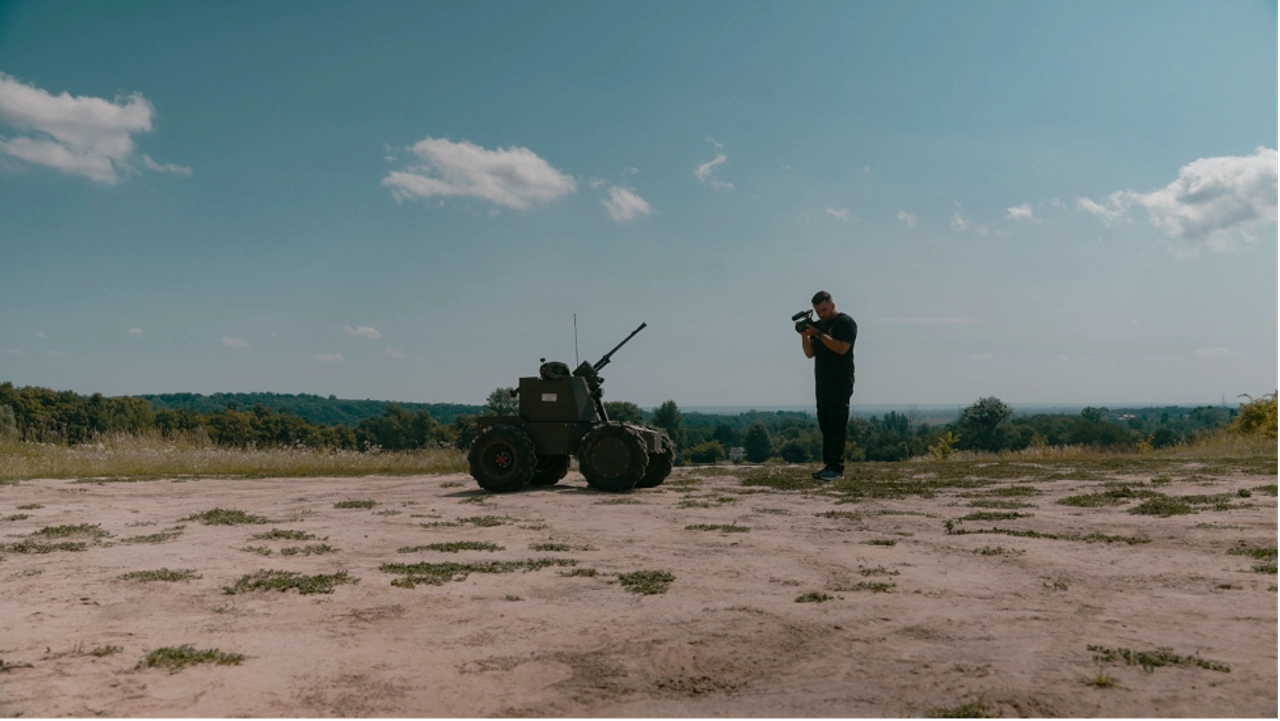
Within days, I was sitting in a dugout on the frontline, being told to prepare for imminent glide bombs and a major Russian assault on our position. I was able to bring a friend, Ryan Van Ert, a filmmaker from Los Angeles, who later said it was the first time he felt “true fear.” Shortly after we were dropped off, our driver narrowly escaped a Russian drone ambush. In the months that followed, that same driver was killed in action.
I still struggle to put the experience into words. Among the embedded drone missions I’ve done over the years, this one felt like standing at the world’s edge. Ruslan Tsarenok of the 27th Brigade of the National Guard of Ukraine told me that addressing what is happening in the war matters. “I hope this will gain attention,” he said. “I hope people will start to understand and speak about it.”
Perhaps my experience would have been different had I not met Shipovich at the summit and embedded with another unit. Had I embedded myself with a lesser-equipped unit on the front, my body might be lying in a field in Donetsk Oblast.
In any case, I wouldn’t have gained such deep exposure to frontline robotics or been able to report on it to audiences in the West.
All of this speaks to the value the UAS brings by hosting a large event that brings together much of the diaspora and the broader community, and highlights the need for more spaces that allow these connections to form.
In Washington State, the opening of a local cultural center sparked a rush of events and gave Ukrainian organizations a long-awaited place to gather, something that had not existed before, despite the state having one of the largest Ukrainian diasporas in the country. It showed how quickly momentum can build once there is a physical space for people to meet, organize, and imagine new possibilities together.
These gatherings also draw a much wider circle than Ukrainians alone. The UAS brings together both members of the diaspora and Americans with no personal ties to Ukraine who nonetheless feel invested in defending the values Ukrainians are fighting for. It is a broad coalition – Ukrainians by blood and Ukrainians by choice – bound together by shared principles rather than ancestry.
Why advocacy matters
The UAS also gives people with no prior advocacy experience a clear way to get involved. Andrew Fylypovych, a delegate from Pennsylvania who has attended nearly every Summit, said the value goes far beyond policy. “The summits bring together disparate groups from the diaspora and people from the general community. This creates a great opportunity to learn from each other as well as to get mutual support. Nothing is better than knowing you are not alone,” he told me. “And being in DC does keep the pressure up, however small, on the powers that be.”
Eddie Priymak, a delegate from Washington State and a Ukrainian American Protestant, told me earlier: “The more active the diaspora, the greater the possibility of influencing our politicians. This was just one summit, but a continued effort by the diaspora can play an important role in helping Ukraine.”
Stephanie Dowbusz, a Texas-based organizer, said that while “phone calls are important,” meeting lawmakers in person “has a bigger impact.” That work does not happen in isolation.
Jacqueline Colgan, a delegate from New Jersey, echoed that point. “While we all can, and should, be reaching out to our elected officials regularly to express our desire that the US continue to support Ukraine, it is very impactful to show up, en masse, in DC, all at one time, to make both our presence seen and our voices heard,” she told me. American veterans and Gold Star Families have also advocated at the summit.
Maria Marini, an American Coalition for Ukraine (ACU) delegate from Houston, told me the challenge is uneven capacity across the country. “Since 2022, we’ve been working on an emergency timeline, and that’s meant we haven’t always had the time to cultivate our communities the way we could,” she said.
“In places like Philadelphia, Chicago, New York, California, and Washington State, the diaspora is concentrated, but in much of the South there often isn’t a critical mass of Ukrainian institutions with enough weight to bring people together.”
She added that one priority for the ACU now is “building advocacy capacity in those regions, not just relying on individual delegates who show up to the Summit, but creating the infrastructure that allows Ukrainians and Ukraine supporters to organize year-round.”
Oleksii Plastun, a professor at Sumy State University, stressed that diaspora engagement carries unique weight in Washington. “It is hard to overestimate this importance,” he told me. “Voices from within the US, especially from the Ukrainian diaspora, may have far greater impact.”
Multiple organizations now form the backbone of this advocacy network. Nova Ukraine is one of the founding organizations behind the Ukraine Action Summits, helping turn them into the largest coordinated advocacy effort in the Ukrainian diaspora.
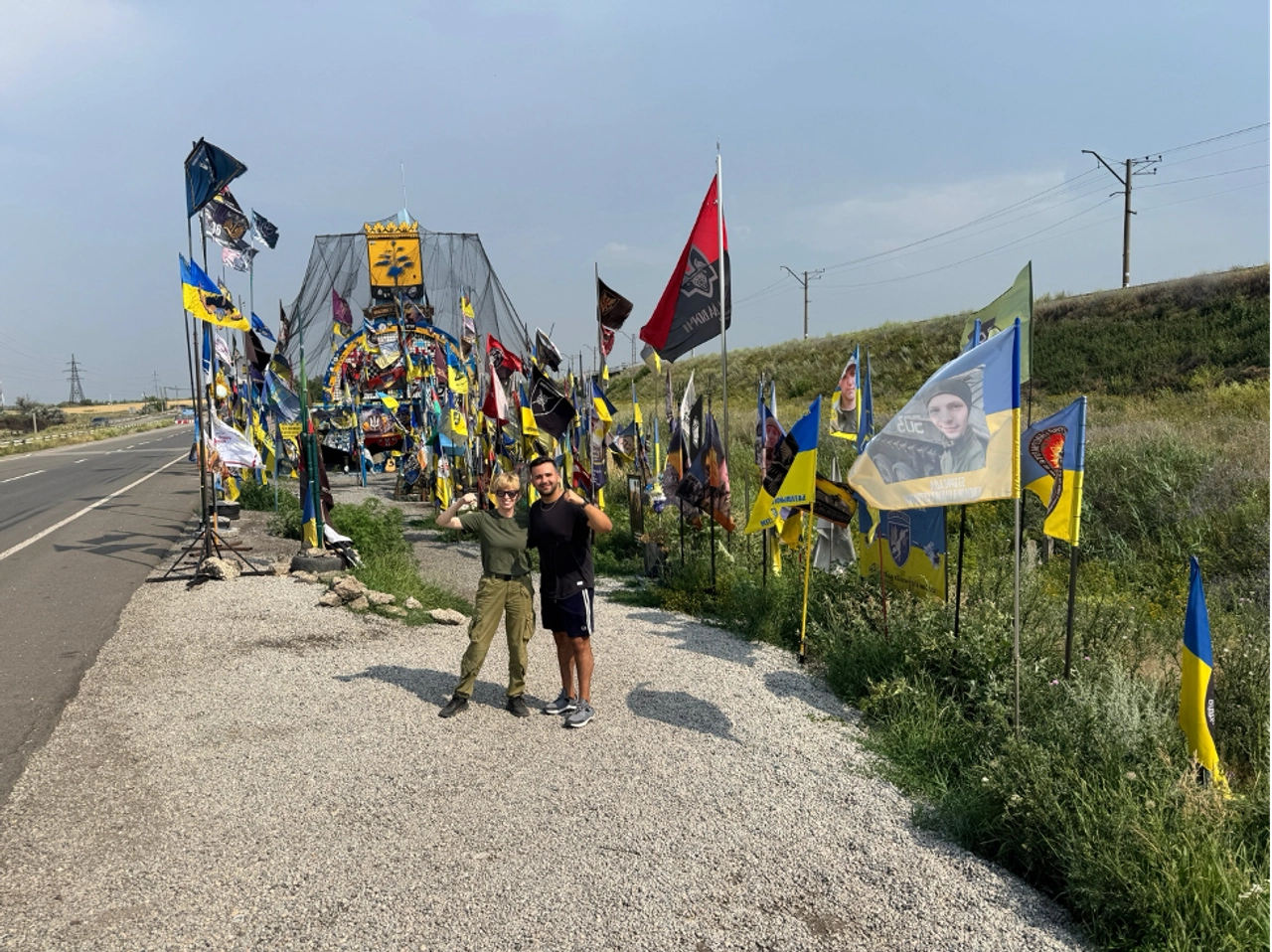
Igor L. Markov, a board member of the organization, said, “Nova Ukraine’s volunteers have been involved in advancing every Ukraine aid bill passed by the US Congress since 2022. Our coordinated advocacy helped secure passage of major military and fiscal support packages, including H.R. 8035 and H.R. 8038.”
He noted that “the Spring 2025 Summit alone brought together more than 600 advocates who held over 440 congressional meetings, contributing to additional co-sponsors on key legislation.” In his view, “the Ukraine Action Summits have been among the most impactful diaspora-led advocacy events organized in recent years.”
Mykola Murskyj, a director of advocacy at Razom, said the organization works closely with civil society partners and is one of the lead sponsors of the upcoming Ukraine Action Summit. “Our policy experts have worked with the American Coalition for Ukraine to identify the most impactful legislation that hundreds of Americans will advocate for when they come to Washington,” he told me.
Policy experts note that the summits carry weight beyond the diaspora community itself. Katerina Sedova, a nonresident senior fellow at the Atlantic Council, said the summits reveal the scale of grassroots engagement across the country.
“These events show Congress just how much bipartisan support for Ukraine still exists among their constituents,” she told me. “As a result of the summits, representatives sign on as co-sponsors to key legislation, express public support, and work across the aisle to get vital bills passed.”
Delegates, she added, often become “go-to expert voices” for congressional staff, building long-term relationships that strengthen US-Ukraine policy over time.
The network built around the Summits now extends into adjacent policy efforts. Bill Cole of the Peace Through Strength Institute, who has been active at recent Summits, has worked to advance US-Ukraine cooperation on unmanned and autonomous systems – one of several advocacy initiatives that have grown out of relationships formed at the UAS.
Eugene Goncharov, Policy Lead for the ACU, stated that important efforts are also conducted outside the Summits. “Our goal is not just to meet with congressional offices twice a year, but to develop a relationship and understanding with them that improves over time,” he told me.
“Summits are great, but communication with offices continues year-round. After each Summit we review how the meetings went, then hold calls with each state to discuss impressions and next steps,” said Goncharov. “Those steps vary by district and by the strength of existing relationships.”
Goncharov added, “The ACU provides updated priorities, talking points, and recommendations, answers questions, and when needed steps in to manage conversations with offices, especially on legislative specifics or coordination across states.”
But these networks are shaping more than policy outcomes.
The need for structure
The need for these gathering spaces goes beyond political advocacy; they have also begun to reshape how Ukraine is understood in the United States, after decades in which American academia and policy institutions framed Ukraine primarily through Moscow.
“Recent events have helped produce a better understanding of Ukraine, and the irony is that the public at large has a better understanding than many politicians and journalists,” said Oleh Wolowyna, director of the Center for Demographic and Socio-Economic Research of Ukrainians in the US at the Shevchenko Scientific Society in New York.
Benjamin Maracek, a social studies teacher and volunteer English instructor at Balakun, said decades of scholarship left a deep imprint on how Ukraine is still understood in the United States. “Much of the foreign policy community has an innate Russian bias,” he told me. “They never get beyond seeing Ukraine and Belarus as ‘parts’ of imperial Russia.”
Maracek added many Americans only began “discovering” Ukraine after 2022. “For years, Western media framed the conflict in the Donbas as a ‘civil war,’ not what it was: Russian imperialism,” he told me. “That old Russo-centric viewpoint still shapes how policy makers and educational institutions inform the American public.”
This mindset was reinforced by an oversimplified narrative dividing a “Russian-speaking East” from a “Ukrainian-speaking West,” a frame that felt familiar to Americans but flattened Ukraine’s far more complex social and historical landscape, Maracek noted.
Those outdated frameworks also make the public more vulnerable to manipulation. Plastun noted that Russian disinformation continues to distort the public narrative. “The narrative is being deliberately distorted by Russia. Strengthening public understanding of the basic facts is essential,” he said. “Countering this influence requires more visibility for Ukrainians, Europeans, and independent experts who can present the real picture rather than propaganda narratives.”
Some of that advocacy has also found traction among Republican lawmakers. Maracek told me that groups have made gains by highlighting Russia’s attacks on Christian communities in occupied regions and the abduction of Ukrainian children. He noted that figures like Pastor Mark Burns, one of former President Trump’s spiritual advisers, have become “a valuable asset to Ukraine’s cause” in conservative circles.
With each successive generation, the emotional connection to the “homeland” inevitably weakens unless it is actively cultivated.
Where to go from here
But the key question is what happens after the Summit. How much infrastructure exists to help supporters of Ukraine keep their advocacy efforts going year-round? One individual I interviewed, who has attended nearly every Summit, told me that each gathering has become more professional, with far greater investment in media and public messaging.
Their concern, however, is whether comparable investment is being made in the infrastructure that supports diaspora groups and their American allies after the Summit ends – and how to sustain that momentum once everyone returns home.
“This is what I tell delegates: ‘We are here to cultivate relationships. ACU mostly serves to collect constituents and zip codes. The constituents have the power that the NGOs don’t,’” said Marini.
Organizations can provide resources from a distance, but without formal organizing points, local efforts struggle to gain momentum.
In Washington State, some churches have often stepped into this role by necessity rather than design. The Council of Ukrainian Christian Churches of Washington State was formed to coordinate support for refugees, assist with integration into American civic life, and amplify advocacy efforts aimed at both state and federal officials.
As Dr. Maksym Vasin, the council’s executive secretary, put it: “Support from the United States is crucial for Ukraine, not only in the political and military spheres, but also at the level of public opinion within American society.”
Alexander Romanishyn, a former deputy minister of economy of Ukraine and a board member of the ISE Group think tank, argues that advocacy succeeds or fails based on the strength of local institutions. “In many Ukrainian communities, churches remain the strongest anchor institution, not only for religious life, but as trusted hubs where people meet, organize, and share resources,” Romanishyn said.
But Romanishyn stressed that economic and civic engagement accelerates only when communities develop additional, non-religious gathering points like cultural centers, Ukrainian schools, community spaces, and grassroots NGOs that organize people outside church life.
He added that business-focused institutions matter just as much. Chambers of commerce, professional networks, and startup accelerators provide what he called the “practical glue” of diaspora life: mentorship, introductions, first customers, hiring pipelines, and access to capital. Initiatives such as Ukrainian Valley in California or the ISE Accelerator, which helps Ukrainian startups enter the US market through trade missions and networking, show how diaspora engagement can move from symbolism to sustained capacity.
In Washington State, one of the country’s largest Ukrainian diasporas, there had been no secular Ukrainian-language school for decades, and still no real authentic Ukrainian restaurants. The proportion of Ukrainian refugees coming to Washington, compared to other states, has increased year over year, with the state absorbing the most refugees.
This local effort also reflects how political realities shape diaspora engagement. Adam Smith, then chair of the House Armed Services Committee and the region’s most influential member of Congress, said in a 2024 Foreign Policy interview that Ukraine should essentially be given only enough support to stay alive and negotiate. It raised an uncomfortable question for many in Washington State’s Ukrainian community: What impact had the local diaspora really had on its own representative?
A similar dynamic surfaced in Ohio during the 2022 Senate race involving JD Vance. Several outlets asked whether the Ukrainian community there might be decisive in preventing his election. Before the vote, Politico wrote that “Ukrainian Americans are an important bloc of voters in Ohio, whose Senate race this year could help decide which party controls the chamber.”
Vance would go on to win by a wide margin.
The picture is different in places where Ukrainian communities are newer or less organized. In Kentucky, the state’s first Ukrainian restaurant opened only this August. I have more than a dozen cousins living there who are Protestants, yet their local churches are not engaged in any advocacy efforts.
That gap is striking, given that Kentucky has well over 10,000 Ukrainian Americans and several members of its congressional delegation hold positions that are damaging for Ukraine. With Mitch McConnell stepping down next year – a rare Republican voice who consistently supported Ukraine and warned that Putin had been “playing Trump for a fool” – the stakes are even higher.
Vance took to X to respond to McConnell’s comments, writing: “This is a ridiculous attack on the president’s team, which has worked tirelessly to clean up the mess in Ukraine that Mitch – always eager to write blank checks to Biden’s foreign policy – left us.”
He then asked whether any of the three Republican candidates running to replace McConnell “share his views here.” US House Rep Thomas Massie from Kentucky, followed up on the post, writing: “As you know, @realDonaldTrump has endorsed a neocon for US Congress in KY-4 who wants to escalate the war in Ukraine.” Massie also recently introduced HR 6508, “to end our NATO membership.”
There is a lot of potential there, but without any organized effort, it isn’t being used.
Lukian Selskyi, editor-in-chief of Vilni Media, wrote: “Yet all of that colossal energy still refuses to convert into our own senators, governors, or even mayors of big and small cities.”
The contrast is sharp when compared with regions where Ukrainian communities have deeper roots. However, political policies are much stronger in places where Ukrainian communities have existed since before World War II, such as Chicago and New York. In those regions, there are long-established institutions, cultural centers, restaurants, schools, and networks that make advocacy easier to sustain. But in many other states, especially those shaped by recent waves of immigration, that infrastructure is still missing.
More restaurants, cultural centers, community hubs, and year-round organizing spaces are needed. Foundations have to be built not just for advocacy but for community life itself. Without that, the diaspora’s energy risks fading once people leave Washington, DC and return to their daily lives. There is also a case to be had for churches to get more involved in advocacy as well.
And that is the real lesson of the Ukraine Action Summits. Advocacy matters. Showing up in Washington matters. But none of it is enough on its own.
So where are the Ukrainian-American business leaders who could be supporting endowments or providing funding to expand Ukrainian studies programs at universities across the country? Where are the investments needed to strengthen academic research and improve how Ukraine is understood in America?
The community needs more infrastructure for lasting success. Once the war ends, will the summits stop? Will people simply pack up and go home? The real question is how the diaspora and its supporters are being set up for long-term success. With each successive generation, the emotional connection to the “homeland” inevitably weakens unless it is actively cultivated.
That future will depend on what is built locally – the institutions, gathering places, and organizing networks that can outlast any single moment of crisis. Real structure meant to last. Without those foundations, the energy we see at the summits risks fading, but with them, the diaspora can become a durable force for Ukraine for decades to come.
The views expressed in this opinion article are the author’s and not necessarily those of Kyiv Post.