In Kyiv, hundreds of multi-story residential buildings remain without heating.
While Russian strikes on energy infrastructure and thermal generation have had virtually no effect on the front line, they have plunged civilians in the capital and other cities into darkness and cold during one of the harshest winters in memory.
The resulting mass shutdown of electricity and heating in Kyiv, with temperatures dropping to -20°C (-4° F), has put those who are least protected at risk – the elderly, people with disabilities, those with limited mobility, and those without relatives.
Let’s have a look inside the home of 90-year-old Valentyna Bardash, who lives not far from the center of Kyiv.
She lives alone in a building that has had no heating for two weeks and practically no electricity after Russian strikes.
It’s only 11°C (52°F) inside, as we can see on the thermometer in her living room.
She leads us to the kitchen, where gas is constantly burning on the stove.
“I keep warm with gas, and constantly heat water on the stove,” says the pensioner, who immediately warms up her food.
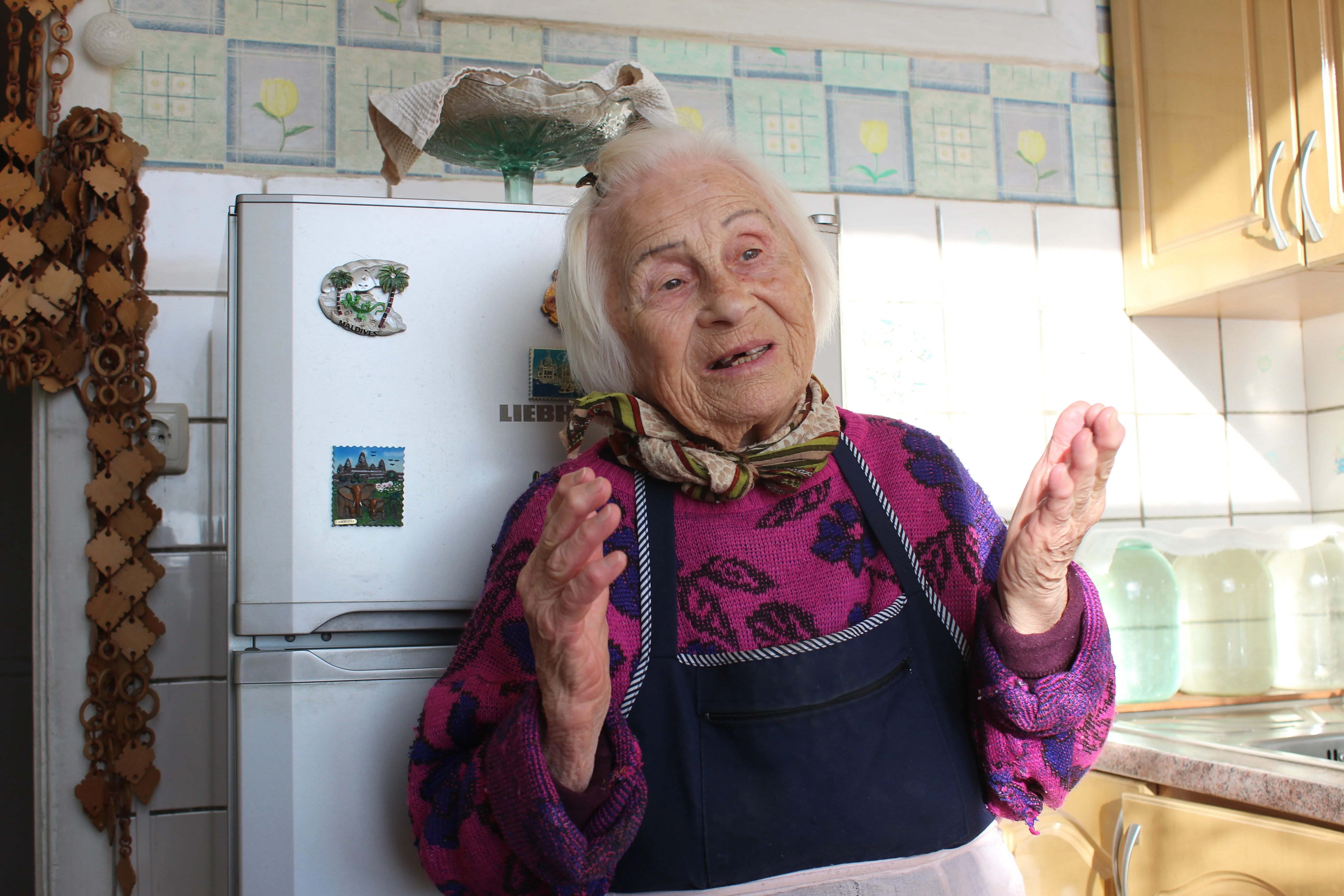
She shows us her hands twisted from the cold, which she cannot warm up at all. She says this is the greatest discomfort.
She is dressed in winter clothes inside her own home. She says that due to the lack of electricity, the elevator is also not working, so she practically never leaves the house. Her son and neighbors help her.
She’s lived here since the very construction of her building, the mid-1950s, and has no intention of leaving.
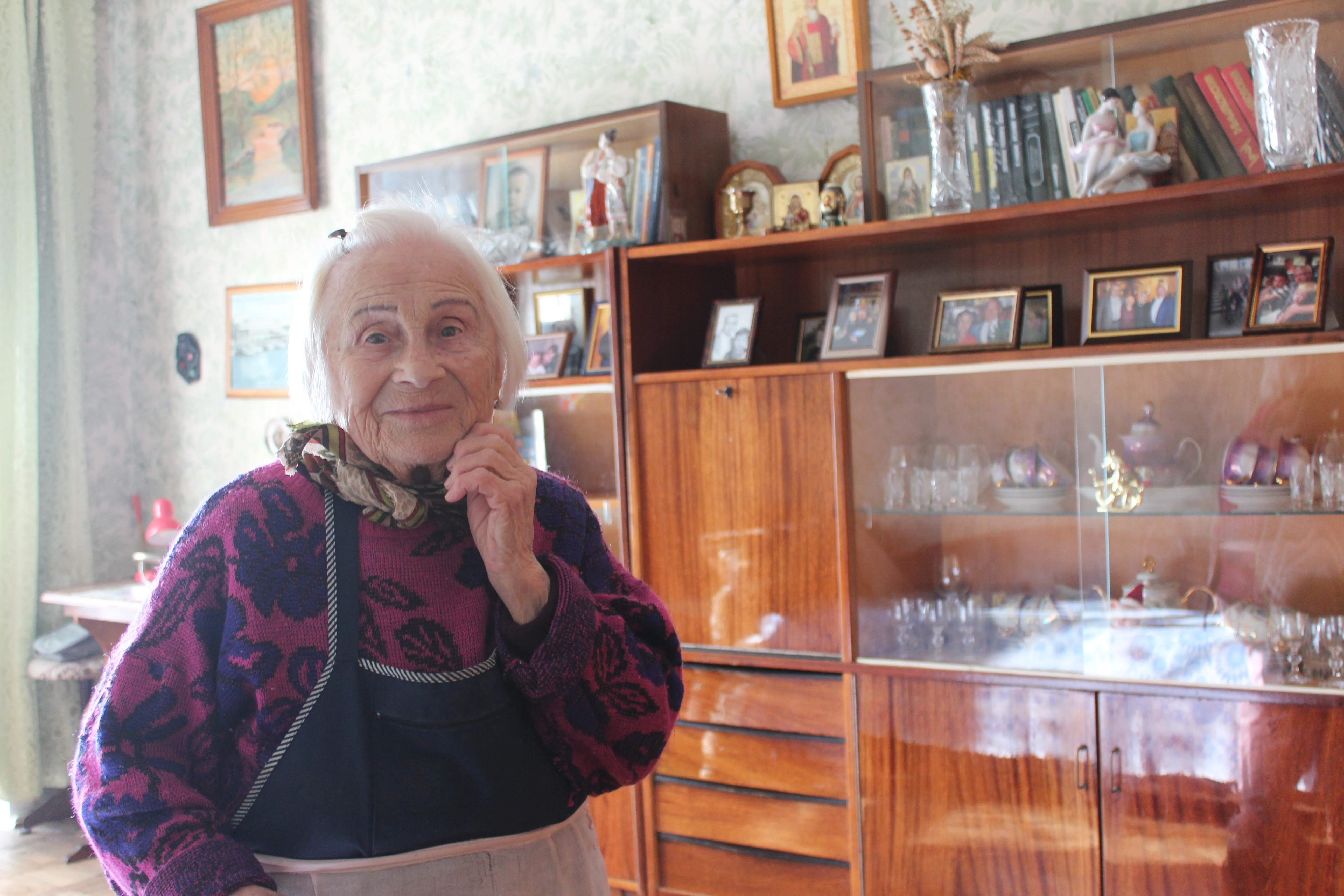
Valentyna worked as an economist at one of Kyiv’s largest factories. Her home is a large, beautiful building not far from the center of Kyiv. Built directly opposite the Bolshevik factory, which was once one of the city’s main enterprises, it was designed to house factory workers. The majestic building has 10 sections and nearly 300 apartments.
But inside it has been destroyed by Russian terror – due to the shutdown of utilities, it is turning into a frozen hell. After Russian shelling of civilian infrastructure, the building at 60 Beresteisky Ave. has been without heating for two weeks.
Many well-known people live here. Writer and film director Iryna Tsilyk shows us icicles on the facade of the building.
Here, due to ruptured frozen pipes, a water leak occurred – this rupture is neither the first nor the last.
While visiting, another one occurred. Together with Tsilyk and one of the neighbors – Serhii Korovka – we run to the attic where a pipe has burst.
Sneaking through the attic, we see old plumbing the local management company has not gotten around to for the past 20 years.
This is the fate of many old buildings in Ukraine. In part, they have major repair needs, while at the same time there are not enough young and active people in the building who could control the quality of the work. Such buildings become the first victims of Russian strikes – their plumbing and wiring are more outdated and less resilient.
Finally we get to the rupture, where water is gushing from the pipe.
“Since Jan. 19, we’ve had no heating. There was one rupture, then another, then many more in the apartments. Now I am tracking them – essentially, I’m the local plumber, or rather, the plumber’s assistant,” Serhii smiles with frozen lips.
The roof is not the only problem – the situation in the basement is even worse – due to pipe ruptures, water flows directly down the walls and forms a huge puddle right in the bomb shelter.
In some apartments, due to frozen walls, it’s impossible to stay inside. In the apartment of Valentyna’s neighbor, Iryna Antseva, the thermometer reads 5°C (41°F).
She walks around the apartment wrapped in winter clothes.
She shows an empty baby crib. Her family with children has left. She is also forced to live in another building, and only visits her apartment.
On the ceilings in almost every apartment here, there are stains. They are from water from the upper floors, where in apartments abandoned earlier, pipes have already burst.
Although residents often complain about the housing office and city authorities who do nothing and simply ignore their requests, they know perfectly well who is responsible for their problems.
Valentyna Bardash shakes her head – as a representative of a factory management staff, she recalls how back in the 1970s, when official Moscow propaganda spoke about “brotherly” peoples, she traveled on business trips to Moscow.
“They were always like this. When we came to Moscow back then on various business trips, they said: ‘Look, the khokhols [a derogatory name for Ukrainians used by Russians] have arrived,’” she says.
Despite this, residents hope for an intensification of efforts by the city authorities – especially given that in other buildings in the same block, heating has already been restored.
Serhii, Iryna, and many residents of their beloved building are making every effort to protect its plumbing and wiring – confident that the giant can still be saved.