Ukraine has moved up in Transparency International’s latest corruption index, with the organization saying the country’s anti-graft bodies are “making a difference” by uncovering major scandals reaching as high as the presidential office.
The war-torn country was rocked by several far-reaching corruption scandals last year, as well as rare wartime protests voicing opposition to President Volodymyr Zelenskyy’s proposal to curtail the power of two key anti-graft enforcement agencies.
Transparency International’s 2025 Corruption Perceptions Index (CPI), which ranked 182 countries and territories based on perceived levels of public sector corruption, placed Ukraine 104th, with a score of 36 out of 100 – one point and one place higher than in 2024.
The CPI scores countries on a scale from 0 to 100, where 0 represents a country perceived as highly corrupt and 100 indicates very clean governance.
In its report, published on Tuesday, Transparency International said that 2025 had been a “challenging year” for Ukraine, marked by major procurement and defense-sector scandals, which it said pointed “to continued high-level corruption risks.”
At the same time, it said the fact that these and many other scandals are being uncovered and are leading to convictions shows that “Ukraine’s new anti-corruption architecture is making a difference”.
“The challenge now is to move from reactive clean-ups after each scandal to structural reforms that close loopholes and better protect public resources,” it added.
Anti-graft agencies under pressure
Major corruption-related controversies hit the headlines in Ukraine last year, including an attempt by Zelenskyy to bring the country’s two main anti-graft bodies, the National Anti-Corruption Bureau of Ukraine (NABU) and the Specialized Anti-Corruption Prosecutor’s Office (SAPO), under the authority of the prosecutor general, a presidential appointee.
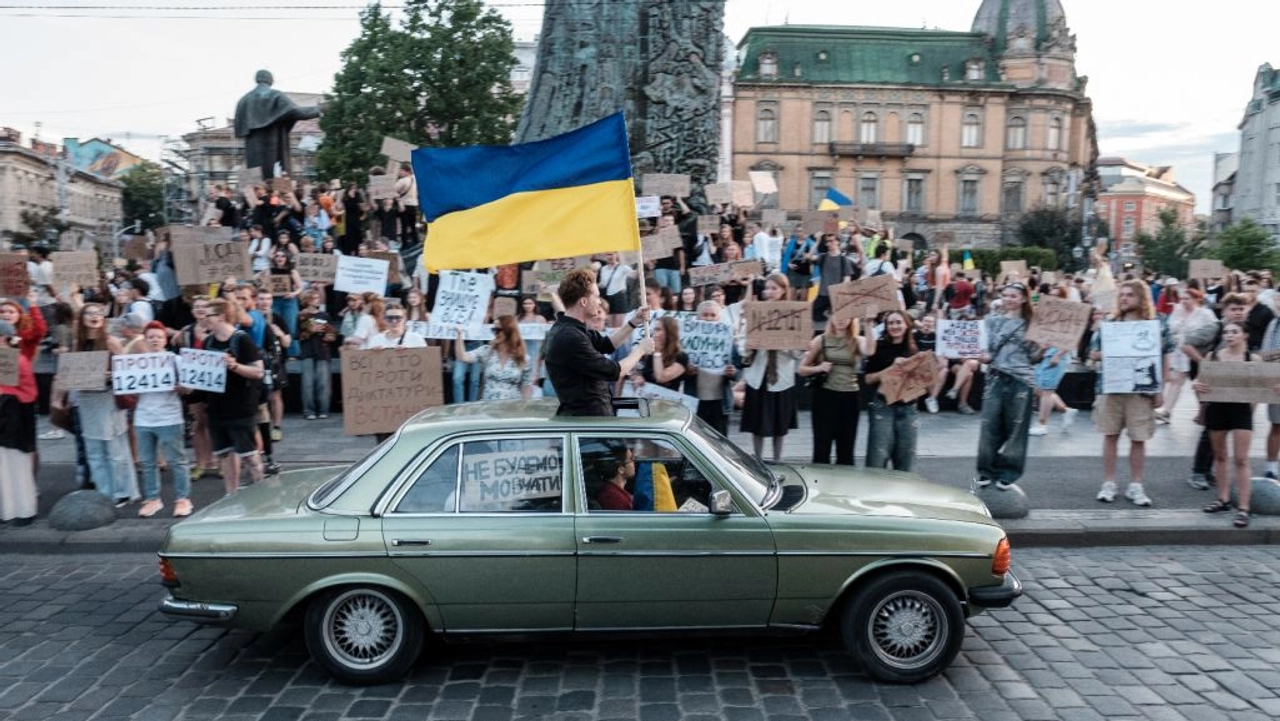
The move, which experts said would have sharply curtailed the agencies’ independence, triggered wartime street protests and strong criticism from Ukraine’s Western allies, forcing the government to reverse course and restore the bodies’ autonomy with new legislation within days.
Last year also saw a high-profile controversy in Ukraine’s energy sector, after anti-corruption investigators uncovered an alleged kickback and embezzlement scheme worth around $100 million linked to the state-owned nuclear operator Energoatom.
The investigation—which has seen multiple suspects charged and sparked scrutiny of senior officials—prompted the resignation of Andriy Yermak, Zelenskyy’s powerful chief of staff, after his home was raided by anti-graft agents in November.
Global backsliding
The CPI 2025 index found that the number of countries scoring above 80—once a benchmark for clean governance—has shrunk dramatically from 12 a decade ago to just five this year.
Even the world’s established democracies are increasingly sliding into corruption. Once seen as anti-graft strongholds, the U.S., UK, Canada and Sweden experienced a drip in their anti-corruption ratings which the Transparency International attributed to the absence of “bold leadership” and “lowering ambition on anti-corruption efforts.”
Europe under scrutiny
The report said that Eastern Europe and Central Asia remains one of the world’s lowest-performing regions “with widespread impunity for corruption being driven by the vested interests that dominate most governments and their institutions.”
It also warned that while Western European nations make up nine of the top ten countries globally in the CPI, “anti-corruption efforts have largely stalled in recent years, with the region’s average CPI score dropping quicker than any other.”
Denmark achieved the highest score (89) for the eighth year in a row, closely followed by Finland (88) and Singapore (84).
Poland ranked 52nd out of 182 countries, receiving a score of 53, which remained unchanged from last year.