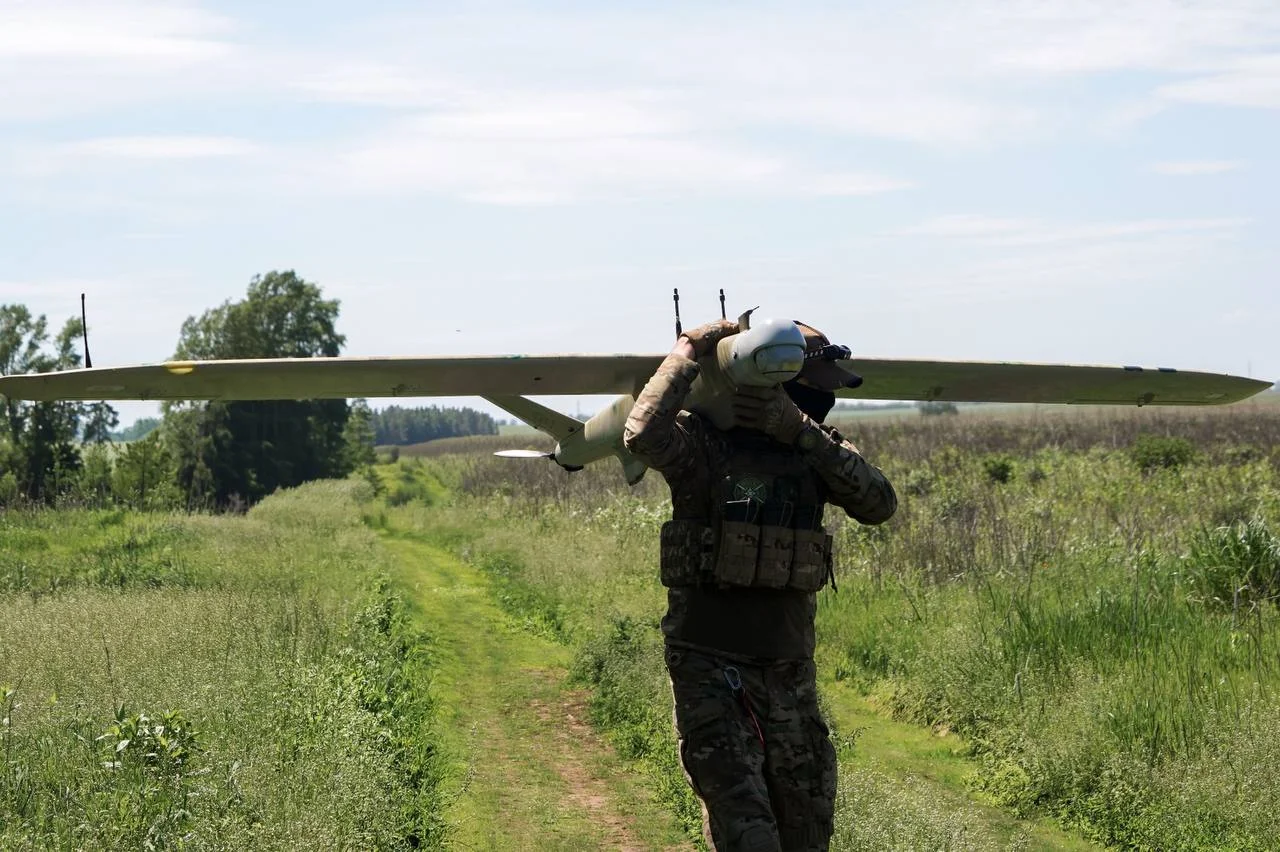
In a concealed position in Ukraine’s Kharkiv region, the silence lasted only until the drone launch countdown began. Soldiers moved quickly between camouflage nets, antennas and dugouts carved into the earth, while several laptops streamed live aerial footage from deep behind Russian lines. Seconds later, the drone shot forward from the catapult and disappeared into the gray sky above the front.
Kyiv Post was granted rare access to spend a day with the 21st Unmanned Systems Regiment “Lava,” observing how soldiers assemble, prepare and launch Ukrainian reconnaissance and strike unmanned aerial vehicle (UAV) systems from a hidden command post near the front line.
“Four hours and we still haven’t lost it,” one serviceman said while monitoring the screen, referring to the Leleka reconnaissance drone. “This camera here is an evasion system. It reacts to interceptor drones automatically.”
The “Lava” Unmanned Systems Regiment is part of the corps structure of Khartiia, one of Ukraine’s increasingly technology-driven military units. From the concealed command point, operators coordinated both the Leleka reconnaissance UAV and the strike-capable Bulava loitering munition system, using them together for reconnaissance, artillery correction and long-range strikes against Russian targets.
The Leleka, developed in Ukraine for tactical reconnaissance, is designed to locate enemy positions and adjust artillery fire. Certain modifications of the Leleka recce drone can remain airborne for up to four hours and fly distances of up to 100 kilometers (62 miles), while operating at altitudes reaching 1,500 meters (4,900 feet). Built from lightweight carbon fiber and fiberglass composites, the Ukrainian-made system is designed to withstand Russian electronic warfare, using encrypted video transmission and autonomous return-to-base capability if communication is lost.
Standing beside the launch site in Ukraine’s Kharkiv region, a Kyiv Post journalist asked the operators whether the drone could easily reach the Russian city of Belgorod from their position. The soldiers responded with smiles and confidence: “Easily. And gladly. But only on command.”
Soldiers described it as the backbone of their aerial surveillance work. According to operators, newer versions now include autonomous evasive systems capable of reacting to approaching interceptor drones without direct remote UAV pilot input.
“It sees behind itself with a wide-angle camera,” a 39-year-old servicemember from Kryvyi Rih with the call sign “Norman,” said during an interview near the launch position. “It reacts on its own. We only give it commands about how to evade, changing altitude, changing angles, but the maneuver itself is autonomous.”
Inside the command point, laptops displayed live aerial feeds while operators maintained constant contact with commanders through Discord channels and military communications systems. Soldiers said the command center monitored crews around the clock.
“There are reconnaissance tasks, correction tasks,” a servicemember said. “We don’t just fly wherever we want. We’re assigned a square and work there. Command watches us 24 hours a day, from the moment we report we’re on position.
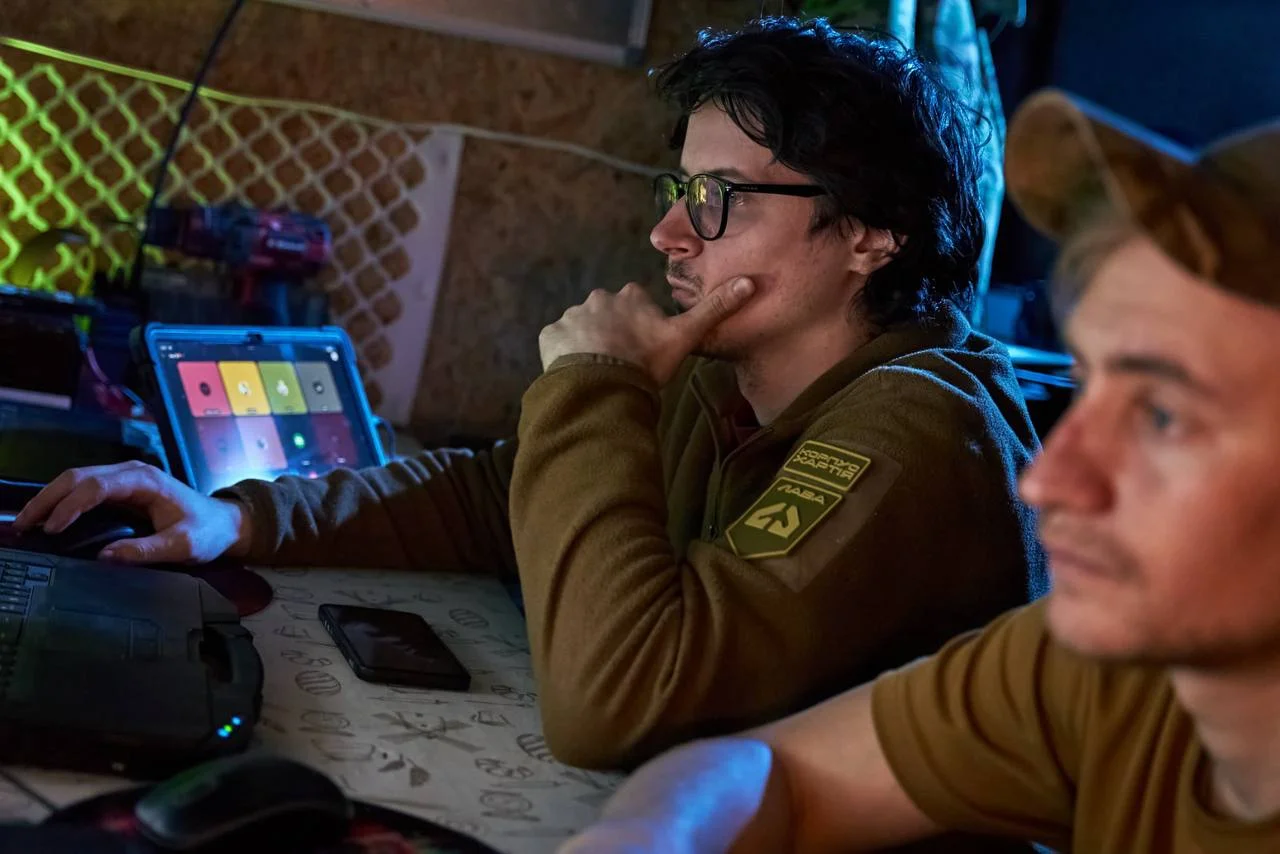
The soldiers spent far more time underground than outside. Launches were fast, deliberate and quiet. Operators said Russian forces often tracked Ukrainian drones back to their positions, making every extra minute in the open dangerous.
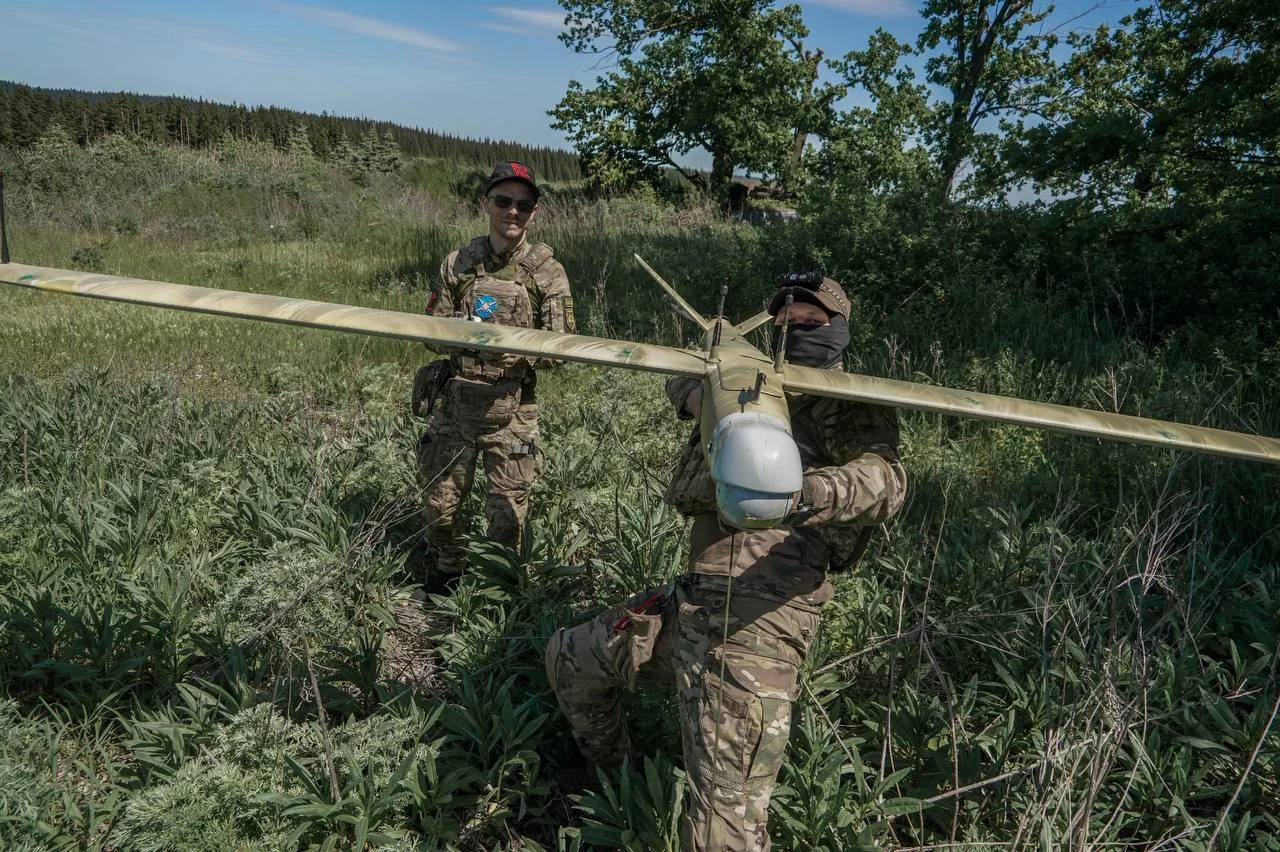
The brigade’s attack capability relies heavily on the Bulava system, a Ukrainian loitering munition that soldiers described as a “very expensive kamikaze drone.” Operators assemble the system manually before launch, carefully balancing every component.
“You can’t even remove the battery,” one operator said while handling the drone. “It’s completely balanced. Any change affects accuracy.”
According to the crew, the Bulava can operate at altitudes up to 2,000 meters and fly as far as 55 kilometers without a relay drone, or up to 110 kilometers with one. Operators said the Bulava continues toward its target even after losing connection.
“I guide it onto the target, accelerate, and then at around 300 meters the signal may drop,” the soldier explained. “But it still tries to continue toward the target. It’s like in ‘Top Gun’ when they keep guiding the missile until the final seconds. We do the same thing.”
The system works together with a larger version of the Leleka known as the M2R relay drone, which extends communication between operators and the Bulava strike drone during deep attacks behind Russian lines.
“It’s not just reconnaissance,” a soldier said, pointing at the UAV. “This one acts as a relay platform. Communication with Bulava goes through it. Command sees everything live and decides immediately whether to strike or not.”
Norman spoke calmly while assembling the drone, occasionally switching between technical explanations and dark humor familiar among frontline drone crews.
Operators described the systems as part of a broader campaign of deep attacks targeting Russian logistics, communications towers and command infrastructure behind the front line.
“These [unmanned] aircraft are mostly for deep strikes into enemy rear areas,” Norman said. “Destroying logistics, destroying expensive communications equipment, relay stations, telecommunications towers.”
Norman said crews constantly adapt to changing Russian countermeasures. The introduction of interceptor drones forced Ukrainian operators to rethink survivability in the air.
“Before this system existed, our drones were being shot down more often,” he said. “Now the aircraft can maneuver. If avoiding five birds helps us survive one interceptor drone and return home, then that’s fine.”
Around them, soldiers prepared another drone launch using a catapult system. The heavier models require significant force to throw them into the air against the wind.
“This is the heaviest aircraft,” one operator said while tightening the launcher. “A new guy definitely won’t throw it properly. We literally make them work out first.”
The crews said Russian forces track Ukrainian drone launches just as Ukrainian operators track Russian ones. Discipline, they said, is often the difference between survival and death.
“We almost never stay outside,” Norman said. “We leave cover only to launch the aircraft. The enemy tracks our drone, just like we track theirs.”
He recalled one recent operation where multiple drone crews and aviation units spent more than an hour and a half targeting a heavily protected Russian tank.
“They show final strike videos online,” he said. “But what people don’t see is that it took around 35 FPV drones to completely burn that tank. It was heavily protected.”
For Norman, the war is personal. Asked how he lives with killing Russian soldiers, he answered without hesitation.
“How do they live with killing our people?” he said. “I sleep worse when we don’t kill Russians. I know I’m standing on my land, behind me are my family and parents. Russians came here to destroy my country.”
Norman said he rarely sees his wife and 13-year-old child, who already understands what her father does at war.
“She mostly asks if I’m okay,” he said. “I tell her these are the conditions now, that she has to help her mother and become more independent.”
Moments later, the crew completed final checks on the launch system. The catapult tightened against the wind. Operators stepped back into position.
“Ready?” one soldier shouted.
Within seconds, the pilotless aircraft became invisible against the clouds. Only the steady telemetry numbers on the operators’ screens showed it was still there, already moving deeper toward Russian positions.