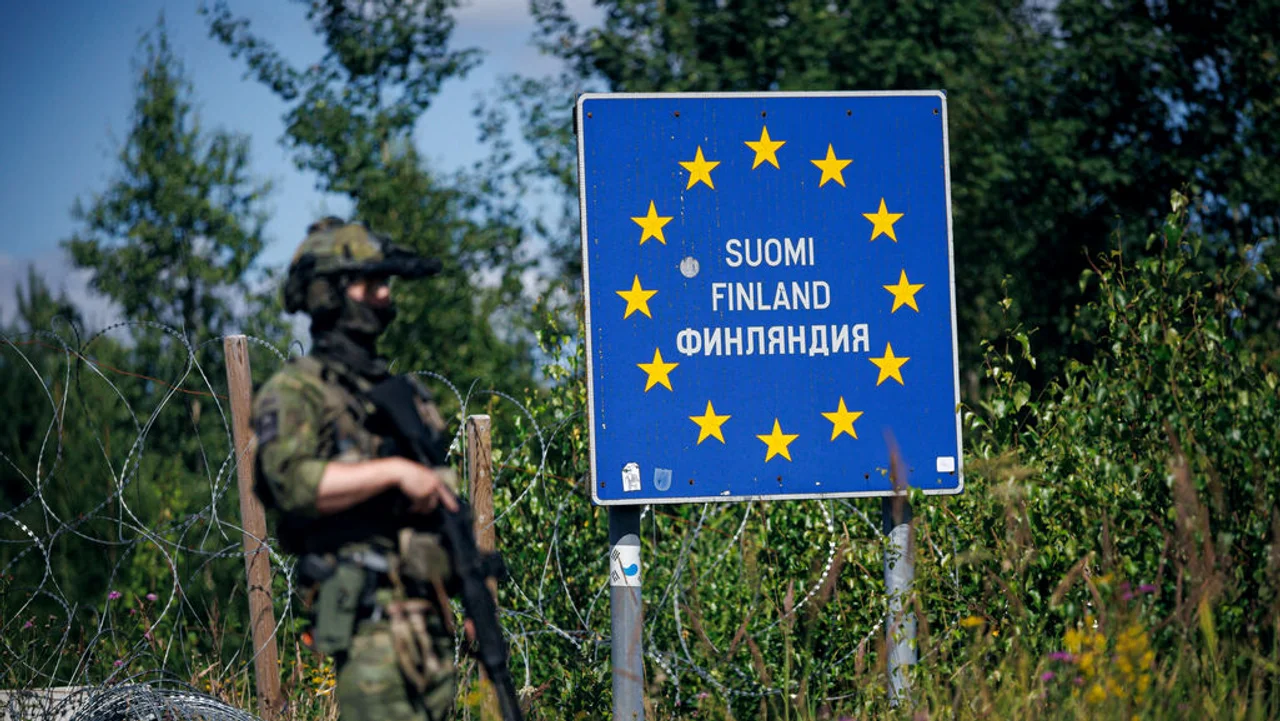
Finland has completed a 200-kilometer fence along selected sections of its border with Russia, as Helsinki strengthens its eastern frontier against what it sees as a growing security threat from Moscow.
The Finnish Border Guard marked the completion of the barrier at the Nuijamaa border crossing in southeastern Finland on Monday, capping a project conceived after Russia’s full-scale invasion of Ukraine reshaped the Nordic country’s security policy.
“The state’s most important duty is to see to the safety of its nationals,” Interior Minister Mari Rantanen said at the event.
“The eastern border fence is a necessary part of an effective border surveillance system in these unpredictable times,” she added.
The fence covers selected sections of Finland’s 1,340-kilometer frontier with Russia – the longest border Russia shares with any EU or NATO member.
Rantanen said Finland could eventually extend the barrier and called for additional EU funding to help eastern member states strengthen their borders.
The 200-kilometer barrier consists of dozens of separate sections concentrated in areas deemed most vulnerable.
The system includes a 4.5-meter-high fence, technical surveillance equipment, patrol roads and a 25-meter-wide cleared strip along the frontier. The project cost €356 million.
From non-alignment to NATO
Finnish political parties agreed in October 2022 on the need to build a partial fence along the Russian frontier, months after Moscow launched its full-scale invasion of Ukraine. Pilot sections were built in 2023, with large-scale construction beginning in 2024.
The decision came amid a historic shift in Finland’s security policy. The country joined NATO in April 2023, ending decades of military non-alignment in response to Russia’s full-scale invasion of Ukraine.
The fence took on added importance after Helsinki accused Russia of facilitating the movement of migrants toward its border in late 2023 as a form of hybrid pressure.
Around 1,000 asylum seekers from third countries arrived at the frontier from Russia that autumn, prompting Helsinki to progressively shut its eastern border crossings before closing them all in December.
Russia denied orchestrating the influx.
Border crossings to remain shut
Rantanen said on Monday the crossings would remain closed, citing the continuing war in Ukraine and concerns over Moscow’s hybrid operations.
“The border crossings with Russia will not be opened because the security situation related to the military attack on Ukraine and hybrid operations has not changed,” she said.
The fence is part of a broader push by Finland to bolster its preparedness amid heightened security concerns over Russia.
Last week, more than 2,000 people took part in a two-day drill in the central city of Kuopio, billed as Europe’s largest civil defense exercise since the end of World War II.
The drill tested how authorities and civilians would respond to cyberattacks, disruptions to electricity and water supplies, and the threat of missile strikes from Russia.