(This is the second of three newsletters about German and Japanese commitment to rearmament, a shift that strengthens the civilizational alliance against Russia and China and has led to new, reasonable tariff agreements between America and the European Union as well as between America and Japan. The first is here.)
Vladimir Putin’s war against Europe began in 1985, the minute he landed in Germany as a KGB agent.
JOIN US ON TELEGRAM
Follow our coverage of the war on the @Kyivpost_official.
Posing as a journalist, he spent years analyzing Germany’s political culture and meeting its leaders. He witnessed the fall of the Iron Curtain, returned home in 1990, and began devising a scheme to reoccupy Eastern and Central European countries.
By 2000, he was the acting president of Russia and launched his first “invasion.” This consisted of Russian pipelines directly to Germany and other key European countries, to make them dependent on Russian natural gas and to bypass pipelines in Ukraine in order to pave the way for its invasion.
In 2005, Putin recruited former German Chancellor Gerhard Schroder to head his pipeline projects. By 2022, Germany was dependent on Russian gas, so Putin invaded Ukraine and tried to “blackmail” Europe by cutting off its gas flows. However, his extortion attempt failed because the EU immediately limited usage and subsequently found alternative sources, then fully backed Ukraine’s defense.
As the war began, most wondered why Germany hadn’t taken the lead politically and morally in Europe’s hour of need against Russia. It was complicated, but Putin’s influence, possibly even control, over a succession of German leaders was a crucial factor.
Chancellor Schroeder became a personal friend of Putin’s and amassed wealth as a Russian lobbyist. He was Germany’s Chancellor from 1998 to 2005 and also influenced his successor, former Chancellor Angela Merkel, who continued “pro-Russia” policies and signed Putin’s pipeline deals. In 2017, she appointed Frank-Walter Steinmeier as President, a man who had previously served as Schroeder’s Chief of Staff (Steinmeier himself was so close to Putin that Ukraine’s President Volodymyr Zelensky refused his offer to make a state visit to Kyiv immediately after the 2022 invasion). Finally, Merkel left in 2021 and was followed by another Schroeder acolyte, Olaf Scholz, who was the Chancellor when Putin invaded Ukraine until 2025.
This succession of sympathizers ended in February 2025, when Friedrich Merz’s Christian Democratic and Green political alliance defeated Scholz’s Social Democrats (SPD). He pointedly stated on the campaign trail that German rearmament was necessary to defend democracy, unite Europe, and repel Moscow’s aggression. He described Russia’s invasion of Ukraine as “Zeitenwende,” or an epochal turning point: Russia is an existential threat, and the crisis requires Germany to abandon its post-WWII pacifism. He said in 2025: “This is not just Ukraine’s war – this is about European freedom.”
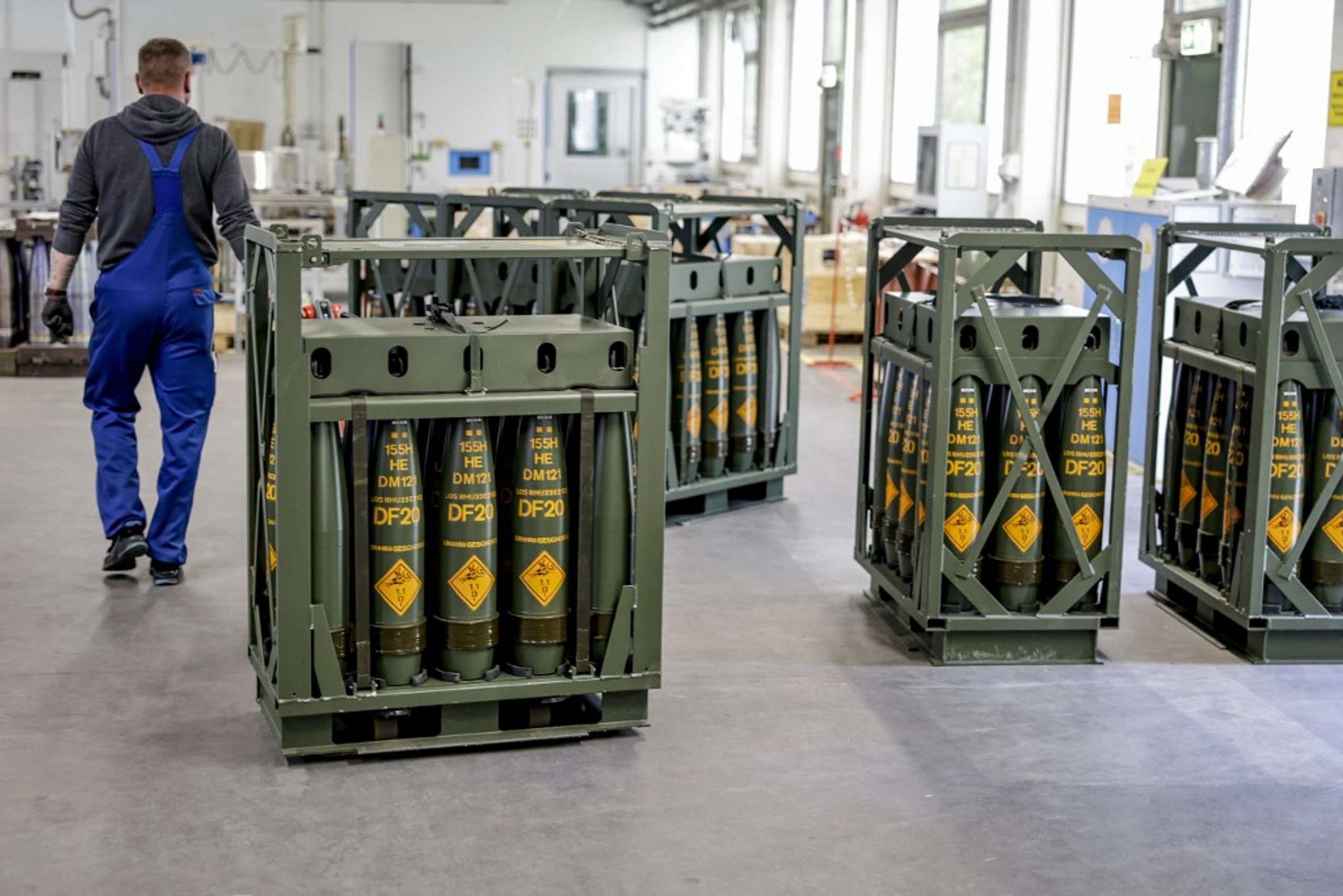
Merz is committed to deepening the European “project,” joint defense procurement, deeper French-German military integration, and strategic planning with the British. He has also repositioned rearmament as a tool of national renewal and pledges the $700 billion defense and infrastructure budget will stimulate high-tech manufacturing, research and development, as well as green transformation. Germany plans to nearly triple its regular defense budget to around $175 billion per year by 2029, with a significant portion of that money allocated to innovations such as AI robots, unmanned mini-submarines, drones, and electronic surveillance systems.
Merz is openly critical of the past and said Germany should stop “leading from behind.” In his first few weeks in office, he was the first in Europe to commit 3.5% of GDP to defense, to push for nuclearization, and to sign bilateral security pacts with France, Britain, and others. Arguably, he’s Germany’s first truly “European” Chancellor, as his ancestry is partially French and Italian. Also unique is that Merz is not a career politician: He served two years in the military, is a lawyer who became a judge, and was a mergers-and-acquisitions specialist who served on the German board of directors of American asset management giant BlackRock.
For these and other reasons, Merz has a good working relationship with Trump and helped facilitate the new tariffs deal as well as convince Washington to ship arms to Ukraine again by promising to pay for American weapons on behalf of Ukraine. These moves prevented a tariff war, but also rescued Ukraine and gave Trump an arms trading bonanza. Merz’s leadership is refreshing; his style is bold, but high-risk, because, like Japan’s Prime Minister, he’s undertaking rearmament, a sea-change in his society, while ruling with a wafer-thin majority. If successful, however, Germany will become the principal security pillar in its region, as Japan will, if it succeeds in rearming.
It’s geopolitically significant that Germany and Japan, accomplices in the worst war in history, fully join with their democratic allies to defeat the Evil Empires in Moscow and possibly Beijing. They are enormously wealthy and can afford to undertake the costly business of rearmament. However, they also recognize that they cannot afford to rely on America to do so.
Reprinted from https://dianefrancis.substack.com/ – Diane Francis on America and the World.
The views expressed in this opinion article are the author’s and not necessarily those of Kyiv Post.
You can also highlight the text and press Ctrl + Enter