Global smartphone manufacturers including Xiaomi, Samsung and Apple, ramped up the supply of their devices to Ukraine despite the pandemic, according to a report by the analytics firm International Data Corporation (IDC).
Last year they delivered 6.9 million mobile phones to Ukraine — 5.9% more than in 2019.
The supply was low only during the coronavirus lockdown in March-May, when local electronic retailers closed their stores and only sold smartphones online.
In June-August, when retailers like Allo, Eldorado, Comfy and Foxtrot resumed their work, the delivery of smartphones to the country increased by over 12% compared to the same period in 2019. At the end of 2020, the supply went up by nearly 37%.
IDC expects that the Ukrainian smartphone market will continue growing by nearly 2% every year and global companies will supply over 7 million devices to Ukraine in 2021.
The average price of a smartphone decreased by $19 last year — from $211 in 2019 to $192 in 2020.
Ukrainians prefer to buy mobile phones that cost less than $200 because the purchasing power of customers is low, the research said.
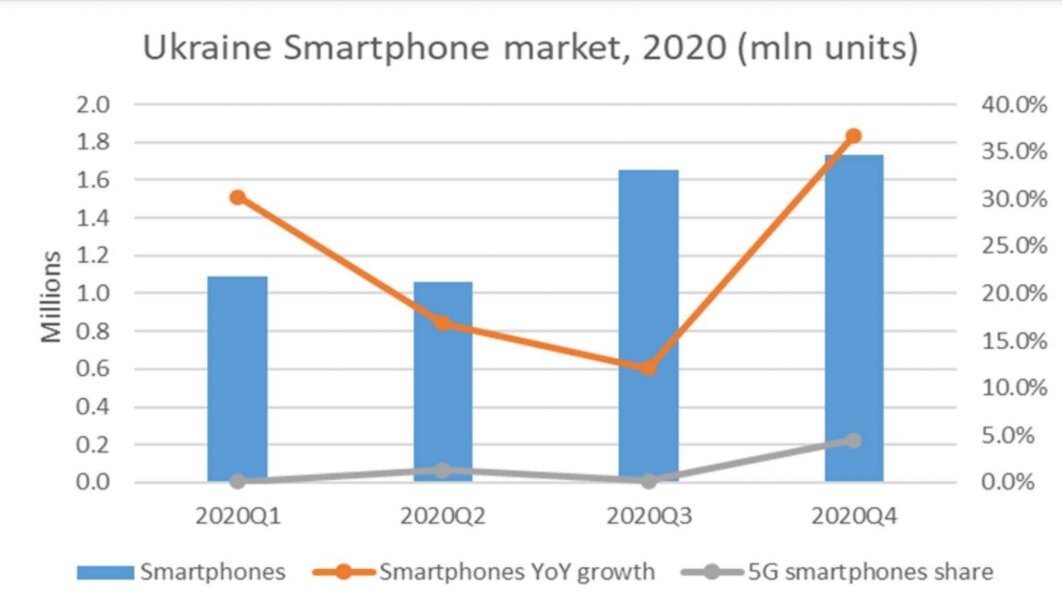
The supply of smartphones in Ukraine increased by nearly 6% to 6.9 million last year. During the first few months of the coronavirus lockdown, in March-May, the supply of smartphones from global manufacturers like Xiaomi and Samsung dropped but then went up again as many local electronic retailers resumed their work.
The share of cheap smartphones in Ukraine surged from 61.8% to 70.8% last year. The main reason is the increasing popularity of affordable devices manufactured by Chinese company Xiaomi.
Korean brand Samsung is also popular in Ukraine. Its prices range from $280 to $1,180. Apple smartphones are popular among those who can afford to pay over $1,250 for a new mobile device.
The number of once popular Chinese Huawei smartphones decreased by 3.8%. According to ITC, the same trend happened all over Eastern and Western Europe.
Huawei has been repeatedly accused of spying on behalf of the Chinese government and many countries that use the company’s equipment voiced security concerns. However, there is no hard evidence to prove that tech by Huawei is dangerous, Ukrainian cyberexperts told the Kyiv Post.
The decline of Huawei helped its competitors, including Chinese brands Xiaomi, Oppo and Tecno to thrive. For example, Xiaomi increased its market share in Ukraine by 8.3% last year.
Globally, smartphone manufacturers rely on the devices that support the fifth-generation network, or 5G, currently the fastest mobile data technology in the world. Right now, 5G is not available in Ukraine and demand for it is low, according to Natalia Milko, an analyst from IDC.
Some 5G smartphones manufactured by Xiaomi or Apple have started to enter Ukraine. Their share increased by 1.7% last year, Milko said. In other Eastern European countries, the supply went up by 3.8%.
The Ukrainian government has promised to roll out 5G in Ukraine in 2022, however, many Ukrainian towns still do not have access to high-speed 4G internet.
Ukraine’s big three mobile operators — Kyivstar, Vodafone and lifecell — told the Kyiv Post that they first plan to expand their existing 4G networks and then think about rolling out 5G.