The Ukrainian hip hop group Kurgan and Agregat exploded onto the main stage, their rapid-fire rhymes rippling through the night air at Lviv’s !FESTrepublic. Stage lights swept over the crowd, splashing faces with neon as bodies jumped in unison, hands slicing the air.
That scene – pulsing with joy – might seem out of place in a country at war, where hundreds of thousands have been killed. But for the several thousand gathered at this summer’s Faine Misto Festival, the music wasn’t a distraction from war, but a way to carry on.
One festivalgoer, Bel, said that she once had her own band, but it ended when one of its members went to fight in the war – and was killed. However, watching her boyfriend’s band, Apatiya, perform made her feel genuinely happy.
“I was proud that my boyfriend was playing and I was happy that everyone around was enjoying the music,” she said.

“Imagine sitting somewhere in Western Europe looking at the television, going like ‘hey these guys are enjoying themselves,’” said Donagh Ramseyer, Irish frontman of Swiss thrash metal band Xonor, his face hidden behind the band’s signature balaclava. “Like ‘They should be suffering,’ or ‘They should be hard up in a bunker’ or something like that. It just makes me puke kind of. They expect people to not enjoy the time they do have, even though there’s a war going on.”
In October 2022, Xonor became one of the first foreign bands to play in Ukraine after Russia’s full-scale invasion. “I looked at the numbers and I was like, okay, so this many people died in the last few months from air strikes. There’s still millions of people living in the city. So, who am I to say ‘I’m scared’?”
“You have children there. Old people still living in the cities. So I kind of felt a little bit of arrogance thinking that, ‘Oh, I need to protect myself.’ I really understood it was like a way to show proper support.”
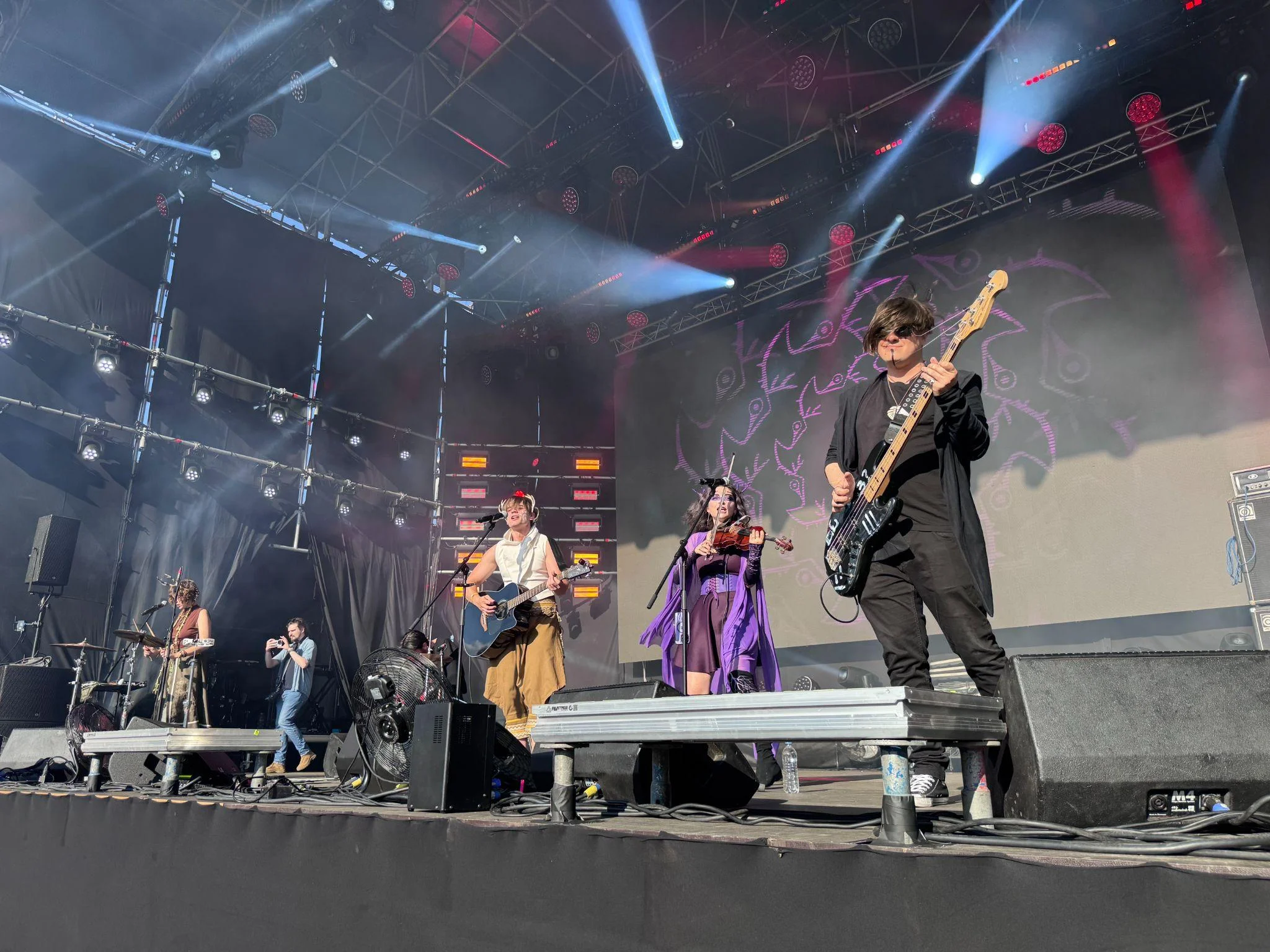
Artem Kovalenko, frontman of the hardcore band Sick Solution, put it bluntly: The military fights so that those far from the front can still live normally.
“I understand people who say we can’t enjoy [our lives] because we have war in Ukraine,” he said. “But other people understand why we need this festival, why we need music in Ukraine, why we need evolution, our music, and our festivals. Because it’s life. People need life.”
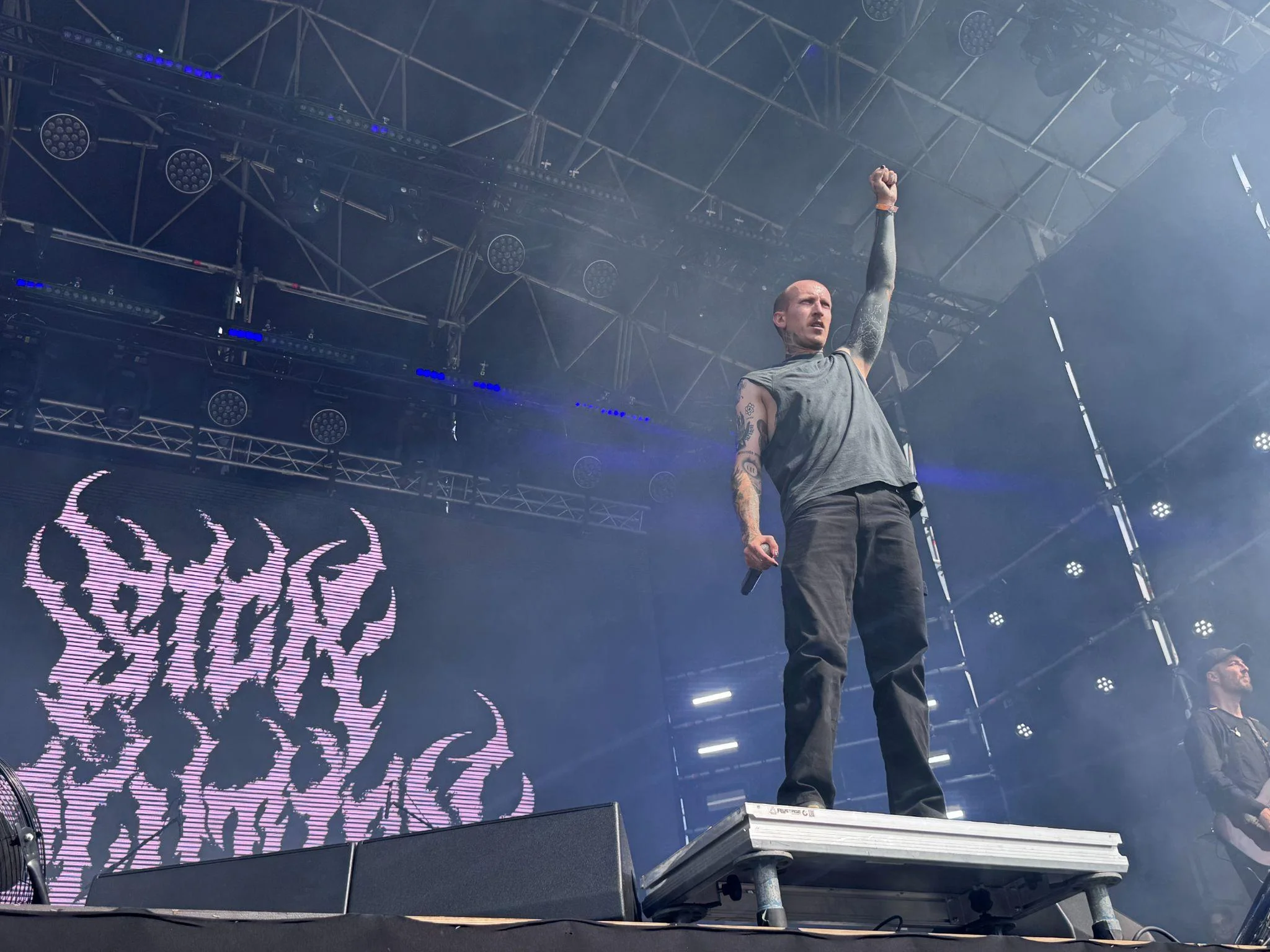
For Kovalenko, that means offering people something meaningful – and helping others, quite literally, stay alive. Alongside two bandmates, he serves in the Azov Brigade in non-combat roles.
Today, his band is raising money for the brigade’s medical team. Sick Solution had already collected about Hr.1 million ($24,000) before coming to Faine Misto and planned to raise a lot more.
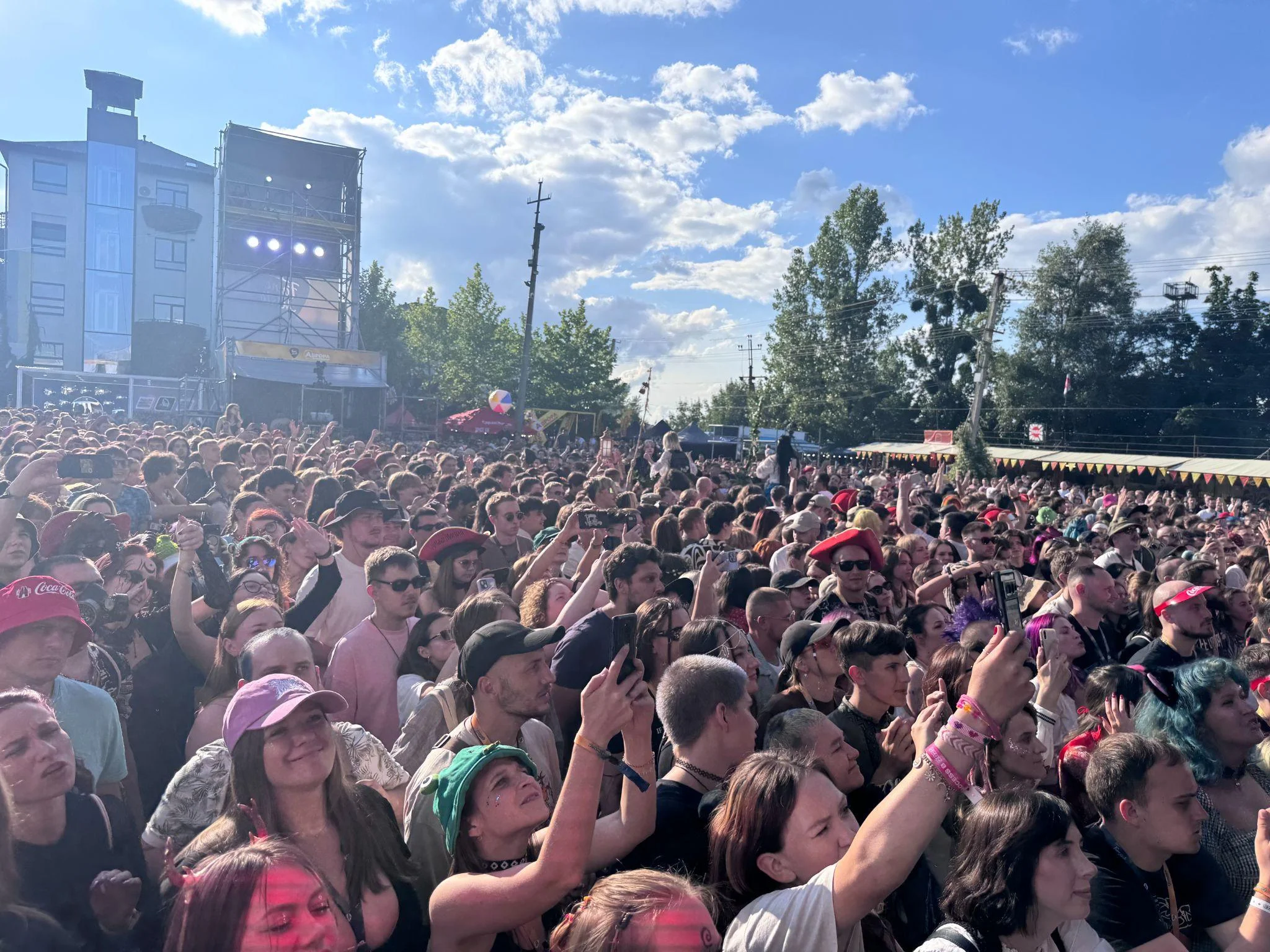
“We are a concert agency that has transformed into a charity foundation,” said co-founder and co-organizer Volodymyr Pasyaka, who said that the goal of the festival held between Aug. 1 and Aug. 3 was to raise Hr.35 million ($850,000) for the Azov Brigade.
“Today, the festival is basically for the military and because of the military. But really – is there any point in war if we don’t protect culture? These things are very closely intertwined. One can’t exist without the other. And maybe that best highlights how things that seem incompatible at first can beautifully complement one another.”
But even in moments of celebration, the war intrudes. During a set by Kyiv’s experimental punk-funk duo Hamerman Destroys Viruses, or HZV, an air raid siren pierced the music, sending people toward shelter.
“Air raid sirens are a part of our life,” said HZV’s Volodymyr Pakholiuk.
It wasn’t their first interruption and it wasn’t the most disruptive one either: “In 2022 when the war started and all the gigs were banned we were struggling. Well, you know how an artist feels without concerts. But suddenly, in April, we had a gig at Dovzhenko Center. We had just gotten drenched in pig’s blood. Then the siren went off and the show stopped. It was a one-song concert.”
For Kurgan and Agregat, a group from the village of Bliznyuky, in the Kharkiv region, the festival was a rare return to the stage, as most of their time now goes to volunteer work for the military.
“I guess our role is to turn recognition into something tangible – money, maybe a car. But drones for our military – that’s the real priority. The rest comes after,” Amil Nasirov said, answering a Kyiv Post question prior to the group’s performance.
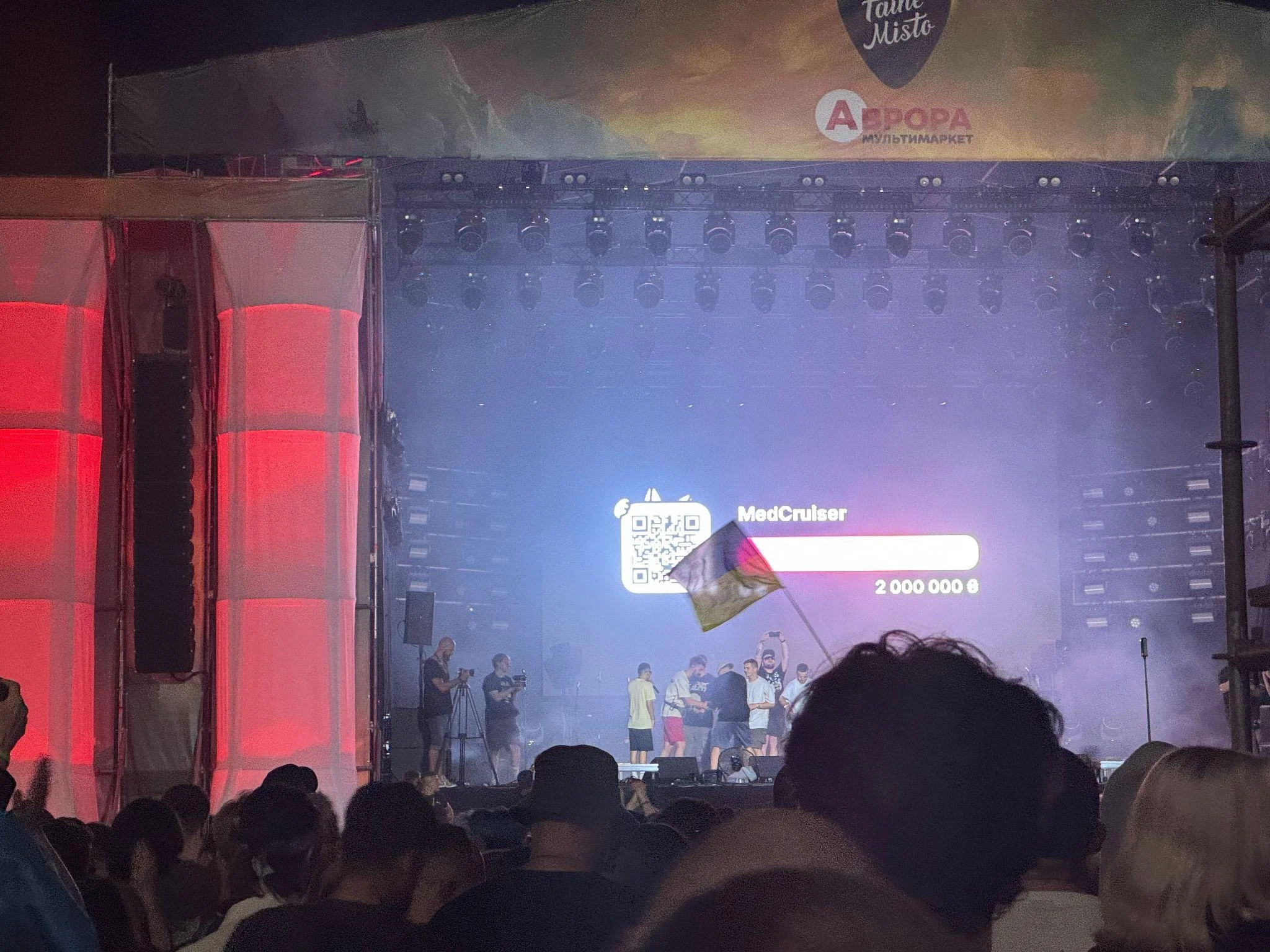
That night, they played to a packed open-air crowd. On a giant screen behind them, a live bar tracked donations toward a Hr.2,000,000 ($48,000) goal for a medical cruiser for the Azov Brigade. When the bar filled, the crowd erupted in cheers – proof that here, music and survival move to the same beat.