If you missed part 1, you can read it here.
As 2025 ends, Ukraine faces a critical question: will its allies provide enough support, quickly enough, to protect both Ukraine’s sovereignty and the international order that keeps everyone else safe?
JOIN US ON TELEGRAM
Follow our coverage of the war on the @Kyivpost_official.
Right now, no one knows the answer.
By late 2025, diplomatic efforts to end Russia’s war suddenly appeared to be making progress, but in reality, nothing changed. Russian President Vladimir Putin still aims to destroy Ukraine as a functioning state aligned with Europe, and US President Donald Trump continues to act in ways that benefits him. The peace process remains stalled.
So, as 2026 begins, Europe faces a choice. After decades of relying on US security guarantees, it must either take decisive action or risk losing not only control over the war’s outcome but its future security.
There is some good news. While the US has been slow to act, Europe and other Ukrainian allies, including major financial institutions, have begun to respond with more urgency. This is starting to make a difference.
The belated commitment
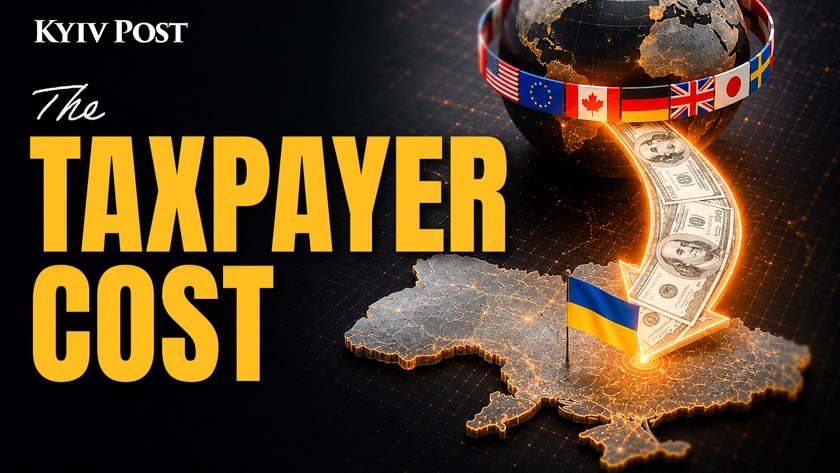
Europe recently pledged €90 billion ($106 billion) in loans for 2026-2027, bringing total EU support to €216 billion ($254 billion). The funding is important, but what it stands for is even more significant. Europe now sees that Ukraine’s survival and its own security are linked, and it can’t wait for US leadership anymore.
Rubio Warns of ‘Real’ Escalation Risk as Ukraine Strikes Deeper Inside Russia
At recent summits, European leaders made strong promises about clear security guarantees for Ukraine. They have pledged to use “armed force, intelligence, and logistical assistance” if Russia attacks again after any peace deal. European Commission President Ursula von der Leyen called this “Europe’s independence moment.”
For years, European countries relied on the US for defense and debated over who should pay more, believing major military threats were over. Russia’s invasion changed that. Now, Europe is working quickly to reestablish itself as a global player.
Support for Ukraine beyond Europe
Europe is not handling this alone.
Canada is one of the biggest contributors per person, giving almost $22 billion in total, with over $12 billion in direct financial aid. In December, it pledged another $2.5 billion to help unlock more IMF funding. These commitments often encourage other institutions to give more support.
Japan has pledged between $12 billion and $15 billion in total support, making it a top donor despite being far from the conflict. Japan views Ukraine’s defense as connected to security in the Indo-Pacific. If Russia wins in Europe, Japan worries it could encourage China.
Australia has provided over $1.5 billion, including military equipment and training.
These Indo-Pacific countries may realize before some Europeans that what happens to the rules-based order in one place affects everyone. If Ukraine falls, it sends a message to every aggressor that the system does not work and they can act with impunity.
The role of international financial institutions
The supply of arms is essential, but if Ukraine’s economy collapses, disaster will follow. International financial institutions are not a charity; they are the economic backbone keeping the country running.
The IMF’s Extended Fund Facility provides $15.5 billion, part of a $153 billion package and a new Staff-Level Agreement (SLA) for an additional $8.1billion was reached in late 2025, The World Bank, EBRD, and EIB, European Bank for Reconstruction and Development, and the European Investment Bank, are also key players channeling funds via various programs.
This support only works if the money arrives on time and partners stay committed.
The IMF estimates Ukraine will need about $136.5 billion during the program period, with a $63 billion funding gap for 2026-2027. The EU’s €90 billion loan covers about two-thirds of that gap, but the rest depends on continued support from other partners as new crises arise.
Promises do not help if political arguments or delays keep the funds frozen while Ukraine uses up its reserves.
For Ukraine, this support may be coming dangerously late. Europe’s military factories are finally busy, but building up industry for a major war usually takes years, not just a few months.
Political will is increasing, but unity among 27 countries with different interests is still fragile. European military strength looks strong on paper, but after years of neglect, rebuilding will likely take a decade, not just one year.
The Coalition of the Willing
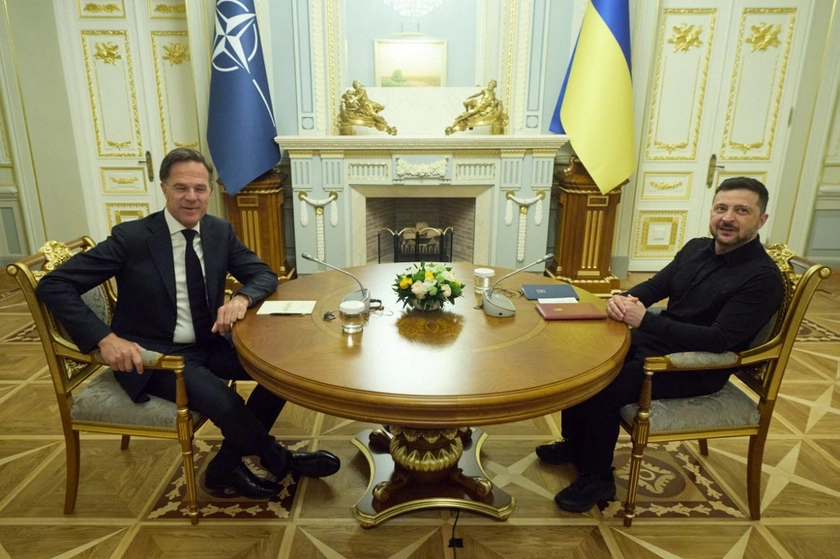
In March 2025, as Washington’s support for Ukraine weakened, British Prime Minister Sir Keir Starmer and French President Emmanuel Macron took the lead. They created a diplomatic group to coordinate European leadership on Ukraine’s security, called the Coalition of the Willing. Later that year, Germany’s Chancellor Friedrich Merz joined as co-chair, showing Berlin’s move from hesitation to action.
The Coalition started with 26 countries and by the end of the year grew to 34. It includes European nations and Commonwealth countries like Canada and Australia, and Japan.
Politically, the Coalition coordinates support for Ukraine during talks with Russia and the US, helping Kyiv keep leverage when Washington and Moscow might prefer to make deals without Ukraine’s input.
On the security side, members are working on guarantees for Ukraine’s future and planning a reassurance force – troops to be deployed once a ceasefire is in place. Twenty-six countries have promised equipment and personnel for this force, but key details like size, capabilities, and what to do if Russian forces attack are still undecided.
The idea of a reassurance force brings up tough questions. Can European troops defend themselves if Russia attacks? Can Europe keep a military presence without US air support and intelligence? Will political will last when the costs become clear?
What matters is that the Coalition shows Europe is serious about acting. Whether this new structure can actually deliver, and do so in time, is still uncertain.
The fundamental contradiction
Normally, a ceasefire comes before negotiations. The fighting stops first, then both sides talk. Putin has rejected this idea, and the West, mostly because of Trump’s position, who has gone along with it.
Putin believes that time is on his side, but he will not accept anything less than total victory – not just the Donbas, but Ukraine’s complete subjugation.
Why would he agree to a compromise now if he thinks he could get a better deal in six months? He will not – unless Russia faces real military defeat or its economy and morale collapse under sanctions and endless war.
What comes next?
European support is finally increasing, but not yet at the speed or scale needed to change Ukraine’s tough situation on the front lines. Ukraine’s resolve remains strong, but across the Atlantic, US aid is stalled due to political bargaining.
Sadly, the story of 2025 was one of delays and missed chances. Washington hesitated, European support arrived too late, and Russia blocked progress at every step.
Putin wants to subdue Ukraine. Ukraine wants freedom and security. The conflict has turned into a long, grinding war of attrition.
So, 2026 comes down to this: will those international promises turn into real action in time, or will they stay just words on paper?
Will democracies have the determination to keep supporting Ukraine as their own problems grow and costs rise with no end in sight? Will Trump change his approach as Putin remains stubborn and criticism of his policies increases at home?
Ukrainians are entering the fifth year of war against a larger, relentless, and brutal enemy. They are risking everything, trusting that their true allies will stand by them when it matters most.
Ukraine’s fate matters beyond its borders. It is a test of whether democracies can still defend the rules they say they support.
The views expressed are the author’s and not necessarily of Kyiv Post.
You can also highlight the text and press Ctrl + Enter