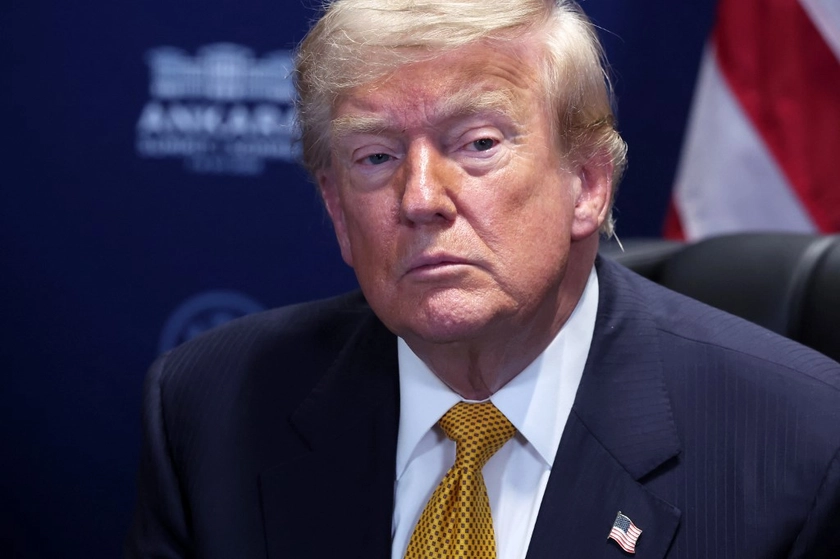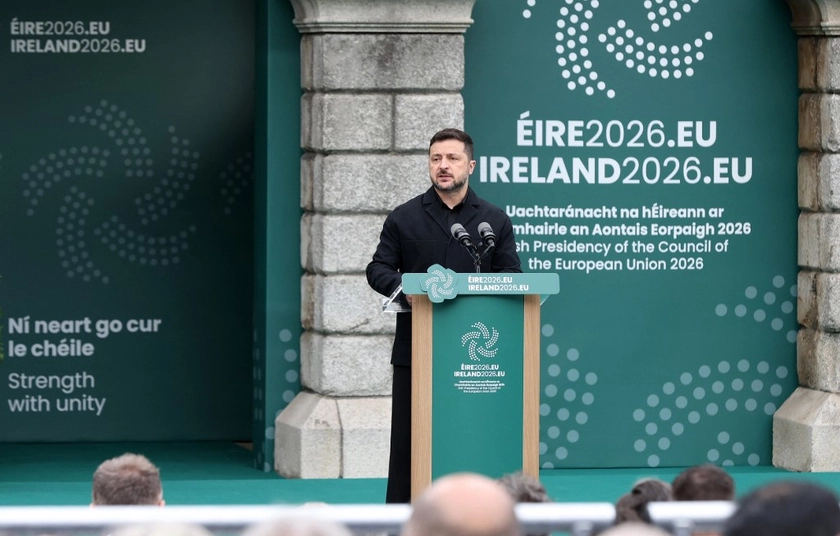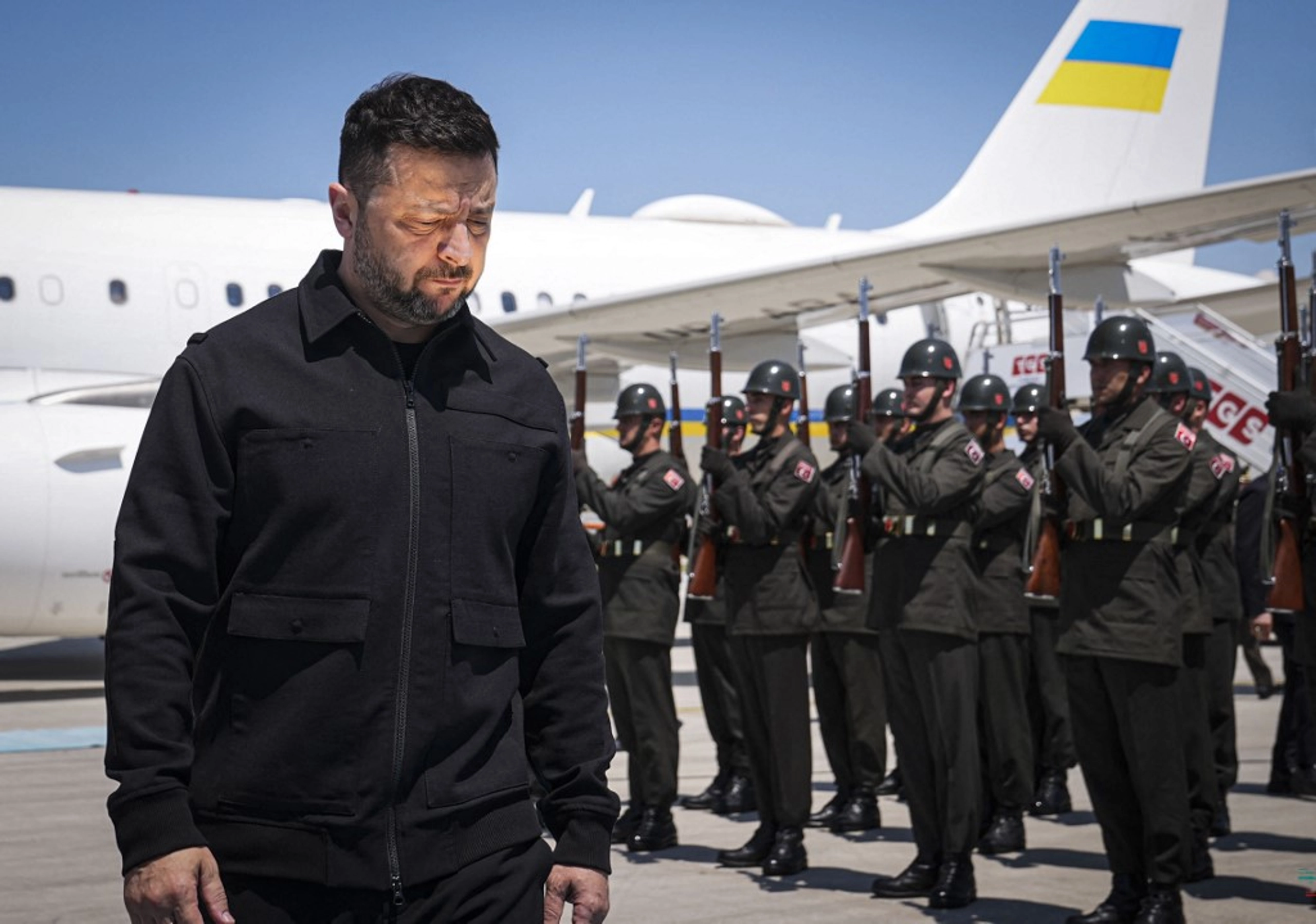
NATO’s Ankara summit delivered a major long-term military support pledge for Ukraine, even as US President Donald Trump’s remarks on Greenland, Iran and European allies exposed the alliance’s continuing internal tensions.
European NATO members and Canada are expected to provide Ukraine with at least €70 billion ($80 billion) in military support this year and maintain comparable levels of assistance in 2027, according to media reports and allied officials.
JOIN US ON TELEGRAM
Follow our coverage of the war on the @Kyivpost_official.
The two-year commitment, worth at least €140 billion ($160 billion), was one of the main practical outcomes for Kyiv at the July 7-8 summit in Turkey.
President Volodymyr Zelensky, who arrived in Ankara with First Lady Olena Zelenska, was greeted with applause and used the gathering to press allies for urgent air-defense supplies.
NATO allies pledge long-term support for Ukraine
The Ukraine funding pledge is expected to cover military equipment, training and other forms of support from 31 NATO members – all European allies and Canada – excluding the United States.
The use of euros rather than dollars was seen as symbolically important, underlining that Washington is not part of the financial commitment.
The figure is not expected to represent entirely new money. It will include existing bilateral aid programs, as well as funding linked to the European Union’s €90 billion ($103 billion) loan facility for Ukraine for 2026-2027.
However, the pledged total is still expected to require additional financing, as current EU and bilateral programs do not fully cover the €140 billion two-year figure.
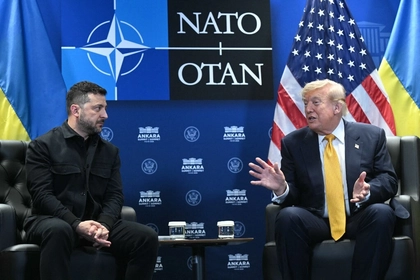
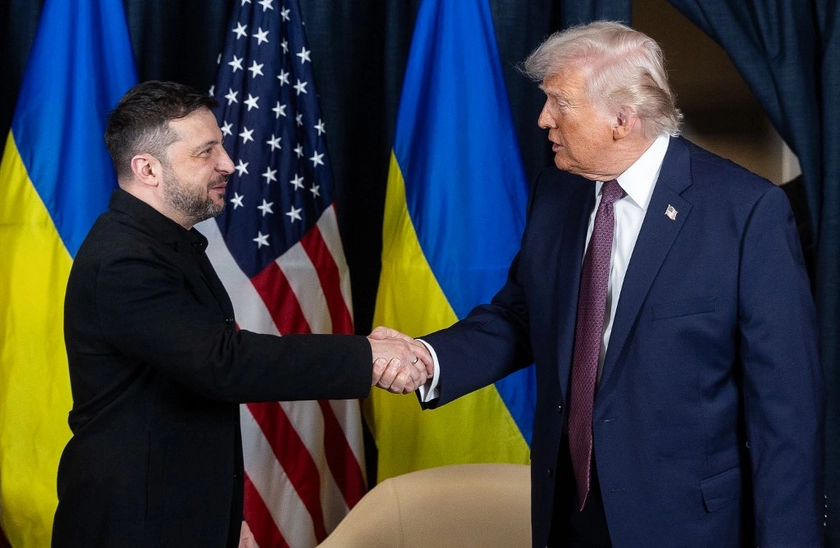
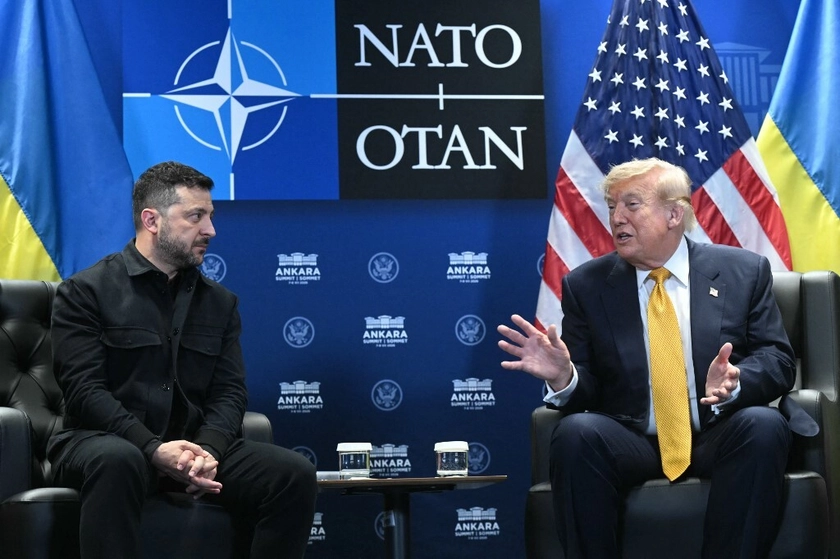
Trump, Zelensky Wrap Up Hour-Long Ankara Talks as US President Says He ‘Would’ Visit Ukraine
The summit declaration does not spell out how the financial burden will be divided among allies, leaving NATO to coordinate how much each country will contribute and when.
German Chancellor Friedrich Merz reportedly played a key role in pushing for a fixed funding figure after earlier proposals, including a plan for allies to allocate at least 0.25% of GDP to Ukraine, failed to gain sufficient support.
Trump says US will license Patriot production for Ukraine
Ukraine’s most urgent request in Ankara was air defense, particularly additional missiles for Patriot systems capable of intercepting Russian ballistic missiles.
Speaking at a joint press conference with Zelensky, Trump said Washington plans to grant Ukraine a license to manufacture Patriot air-defense systems, describing the system as “elite equipment.”
“We’re going to give them the right to make Patriots. We’ll show them how to make them,” Trump said, adding: “This way you can’t complain that we’re not giving them enough. It’s a make-them-yourself.”
Kyiv is especially seeking PAC-3 interceptors, which are needed to shoot down ballistic missiles. Ukrainian officials and experts have warned that production capacity remains far below Ukraine’s demand, making immediate transfers from allied stockpiles essential.
“Today it is important to find a way to receive as many missiles for Patriot systems as possible, as quickly as possible. This is the most important issue we will discuss,” Zelensky said.
He also briefed NATO Secretary General Mark Rutte on the consequences of recent Russian attacks on Ukrainian cities and communities.
“What we are seeing over the last couple of months is what you guys are doing. It is really courageous,” Rutte said.
Ukraine is also expected to receive additional pledges through the PURL program, under which European countries and NATO partners buy US weapons for Ukraine.
Trump also expressed interest in Ukrainian drones, signaling that he is open to discussing a possible drone deal with Kyiv.
US discusses Ukraine’s deeper strikes inside Russia
Trump’s administration also confirmed that Washington and Kyiv are discussing Ukraine’s ability to strike targets deeper inside Russia.
Asked about Ukraine’s increasingly frequent long-range strikes inside Russian territory, Trump referred the question to US Secretary of State Marco Rubio, who said such operations could force Moscow to confront the difficulty of defending its own airspace.
Rubio said Washington hopes such pressure could help create conditions for negotiations aimed at ending the war.
Trump acknowledged that the strategy carries risks, but suggested it could ultimately push Moscow toward a settlement.
“It’s an escalation, but it’s an escalation that could lead to the end of the war,” Trump said.
Trump also said that he has now developed a good relationship with Zelensky, despite their now-infamous Oval Office clash involving Vice President J.D. Vance, who was not present at the Ankara meeting.
Ukraine gains political signal from NATO
The summit was also expected to deliver a political win for Kyiv, with NATO’s declaration recognizing Ukraine as a “security contributor” to the Euro-Atlantic area.
The term matters because NATO has long avoided using it in relation to Ukraine, as being a security contributor is one of the criteria considered when assessing whether a country can become a member of the alliance.
However, the language does not remove the main obstacle to Ukraine’s membership – the absence of consensus inside NATO, especially given the position of Trump and his administration, which, like the Biden and Obama administrations before it, objects to Kyiv’s NATO membership.
Still, the fact that the wording is expected to be approved unanimously, including by the United States, marks a symbolic shift in NATO’s treatment of Ukraine.
Turkey in the limelight as Iran tensions re-emerge
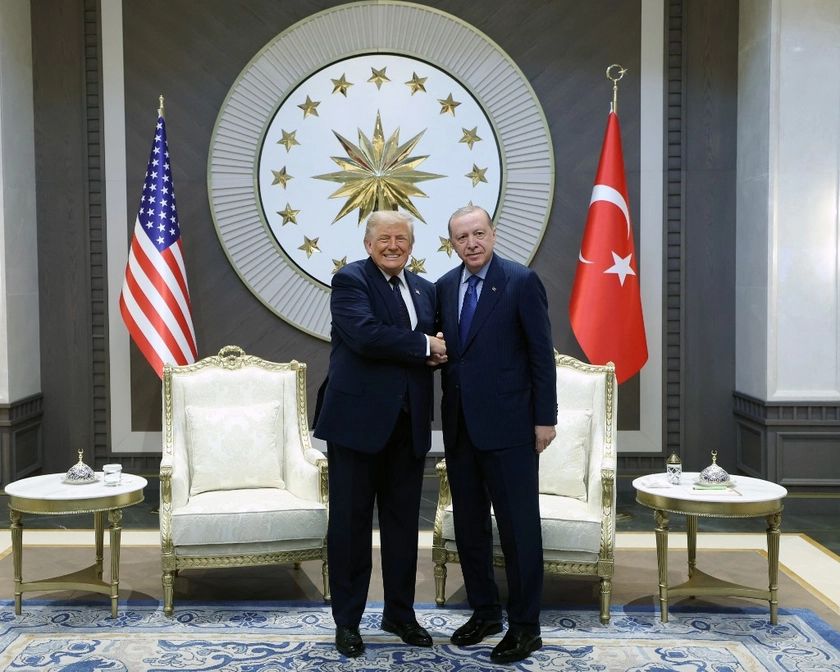
The summit also highlighted Turkey’s importance as a NATO member at the center of several overlapping security crises, including Russia’s war against Ukraine, tensions with Iran and instability in the Black Sea and Middle East.
Trump said the US memorandum of understanding with Iran was “over,” following new US strikes against Iran and the collapse of indirect talks aimed at turning an interim ceasefire into a permanent agreement.
“I don’t want to deal with them,” Trump said.
He added that the Iranian delegation had been “behaving very badly – as they have been for 47 years,” saying that “they’re cuckoo” while reaffirming that Iran “can’t have a nuclear weapon.”
Rutte backed the US strikes, saying Iran had violated the ceasefire and that Washington had to respond forcefully.
Speaking to Kyiv Post, Istanbul-based geopolitical analyst Burak Can Çelik said the summit showed that Turkey has again become too strategically useful for Washington to ignore.
Çelik described Tehran as one of the main destabilizing actors in the region, citing its nuclear program, missile capabilities, proxy networks and ability to threaten energy routes such as the Strait of Hormuz.
“At the same time, a purely military approach is risky, because Iran has deep regional tools and escalation can easily spread across the region,” Çelik said.
Çelik said Turkey’s position on Iran is complicated because Ankara does not want a nuclear or regionally expanding Iran, but also does not want chaos on its borders or a regional war that damages trade, energy security and domestic stability.
For Ukraine, the revival of the Iran conflict presents a double-edged sword. On one hand, Russia could benefit from another oil price spike. On the other, renewed tensions may further expand Kyiv’s cooperation channels in the Middle East.
Çelik added that Turkey is likely to continue its balancing act on Ukraine.
“Ankara supports Ukraine’s territorial integrity, Black Sea security and defense cooperation, but it will avoid fully breaking with Russia. From Ankara’s perspective, Ukraine is important, but Russia is also too large a neighbor to be ignored,” Çelik said.
Trump revives Greenland demand, clashes with allies
The summit’s Ukraine-focused outcomes were partly overshadowed by Trump’s comments on Greenland and several NATO allies.
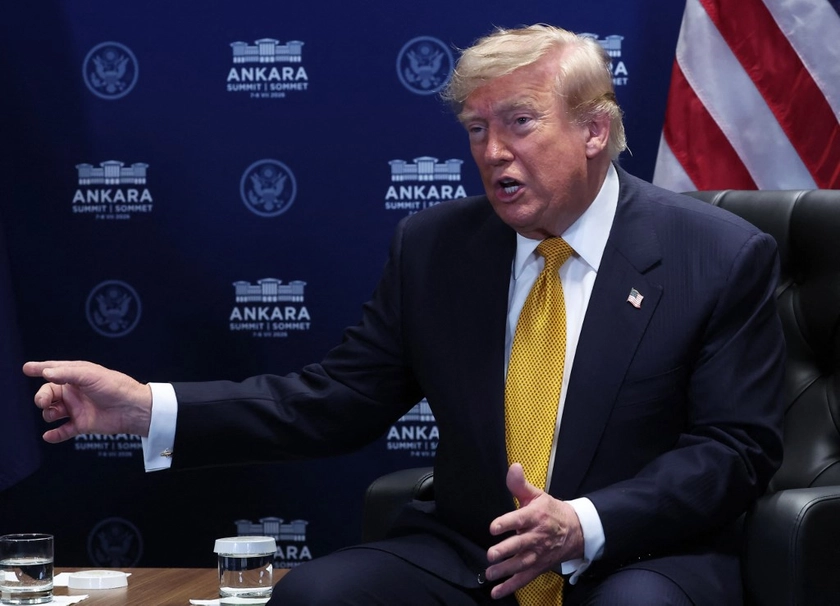
Speaking in Ankara, Trump again said Greenland “should be controlled by the United States, not by Denmark,” reviving a dispute with Copenhagen, a fellow NATO member.
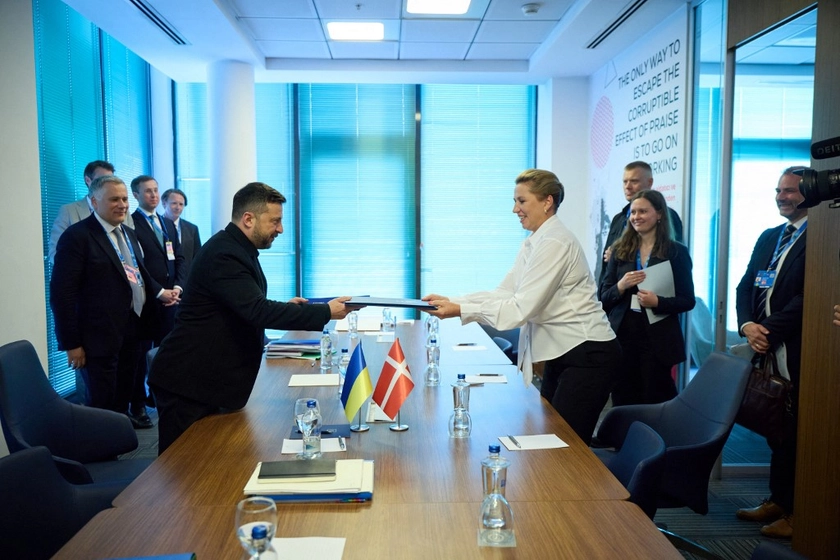
Danish Prime Minister Mette Frederiksen rejected the comments, saying Greenland was “not for sale” and calling on allies to respect the sovereignty of the Danish kingdom and the right of Greenlanders to self-determination.
Trump also entered the summit amid a public dispute with Italian Prime Minister Giorgia Meloni, once seen as one of his closest European allies.
The US president said his relationship with Meloni had “become a little bad” because Italy refused to help Washington in the conflict with Iran.
Trump had earlier reignited tensions by posting a photo of Meloni on Truth Social with the caption “RESTRAINING ORDER NEEDED,” after claiming she had “begged” him for a photo at the G7 summit in France – a claim Meloni denied as fabricated.
Despite the public friction, German media reported that Trump and Meloni were later seated at the same leaders’ dinner in Ankara, with the atmosphere described as friendly.
Trump also expressed dissatisfaction with Spain, calling it “a terrible partner” and saying Madrid “doesn’t pay,” before calling for trade and travel with Spain to be cut off.
Both Italy and Spain support Ukraine’s EU membership aspirations and have provided Kyiv with military aid.
You can also highlight the text and press Ctrl + Enter