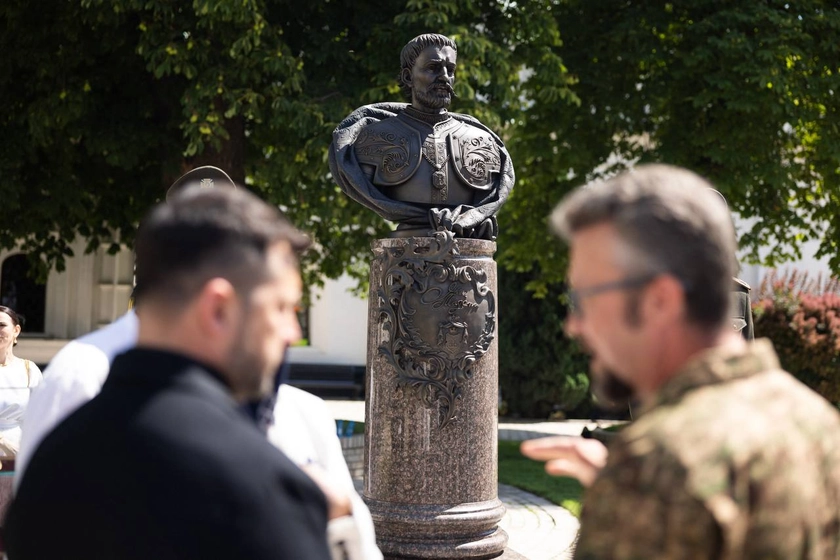
There is a monument in the very heart of Vienna: a man dressed as a Cossack with a small coffeepot in his hand, as if inviting passersby to drop in for a cup of tasty coffee. The man is Yuriy Franz Kulchytsky, who came from the village of Kulchytsi in the western Ukrainian Lviv region and is gratefully remembered as the man who back in the mid-17th century helped rescue Vienna and started the history of European coffee.
Historians call Kulchytsky one of the brightest and most fascinating figures of the 17th century. He was raised as a Cossack and in his youth took part in Cossack campaigns until he was captured by Turks. While in captivity, he learned their language, customs, traditions and habits, one of which was drinking coffee.
JOIN US ON TELEGRAM
Follow our coverage of the war on the @Kyivpost_official.
After he was released, he went to Vienna, where he worked as an interpreter and later became a merchant. After the final defeat of the Ottoman army, he founded a sales company trading in silk, carpets, jewelry and other Oriental merchandise. Notably, he had a perfect command of German, Hungarian, Turkish, Romanian and several Slavic languages.
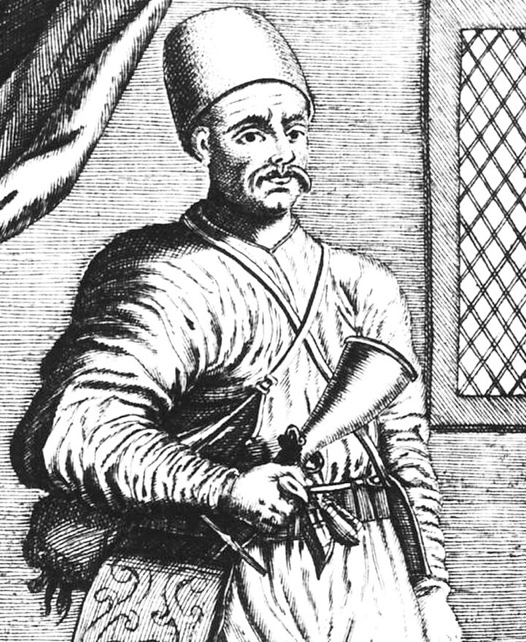
Yuriy Kulchytsky. Gravure, 1683
Vienna rescue mission
In 1683, the huge Ottoman army led by the sultan Mehmed IV besieged Vienna. Kulchytsky was actively engaged in the city’s defense from the very first day until he was wounded in action. By September, the city had almost run out of ammunition and food and was just days from seizure. It was urgently and vitally necessary to call backup, but how to get the message to the allies?

Five Ukrainian Producers Invited to Join the Academy Behind the Oscars
Kulchytsky volunteered to deliver it, despite the extreme danger. Dressed as Turks and singing Turkish songs, he and another Cossack made their way through the Turkish camp. The Danube was less than a mile away, but they had to wait out a very heavy rain until the next day. They swam across the river, but reaching the bank came under friendly fire as the Austrians took them for Turks.
Kulchytsky explained to them in plain and fluent German who he was and what an urgent mission brought him there. The letters from Vienna were immediately conveyed to Charles V, Duke of Lorraine and Bar, who commanded the Austrian troops. They inform Charles V that the city, besieged for two months, was still holding out but was in urgent need of help.
On Sept. 12, 1683, the allied troops led by the Polish King Jan III Sobeski crushed the Ottoman army in the well-known battle at Kahlenberg Mountain, in which Ukrainian Cossacks played a key role. That victory became one of the most important events in European history as it effectively halted the Ottoman Empire’s expansion to Central Europe.
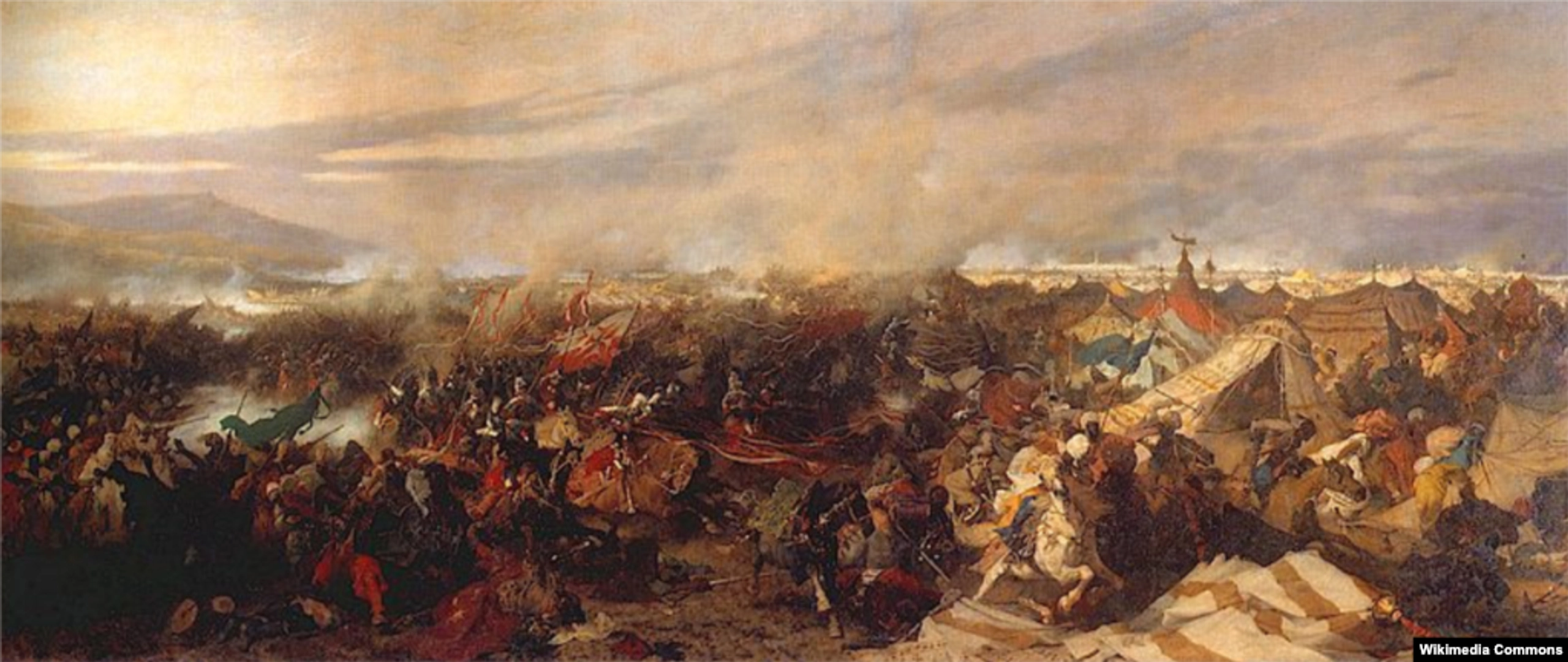
“The Battle of Vienna” by the Polish painter Juzef Brandt,1873. (Image: Wikicommons)
Strange reward
Kulchytsky’s feat was rewarded generously: not only was he decorated, but also given a substantial sum, a house, and appointed the emperor’s personal interpreter. All that was commensurate with the importance and effect of his feat. But when he was offered to pick any trophy out of those seized in the Turkish camp, his choice surprised the Austrians: 300 sacks filled with what they thought was camel fodder. They wondered why the hero was happy to get that “good-for-nothing stuff.” But he knew the real value of that “stuff” – coffee beans.
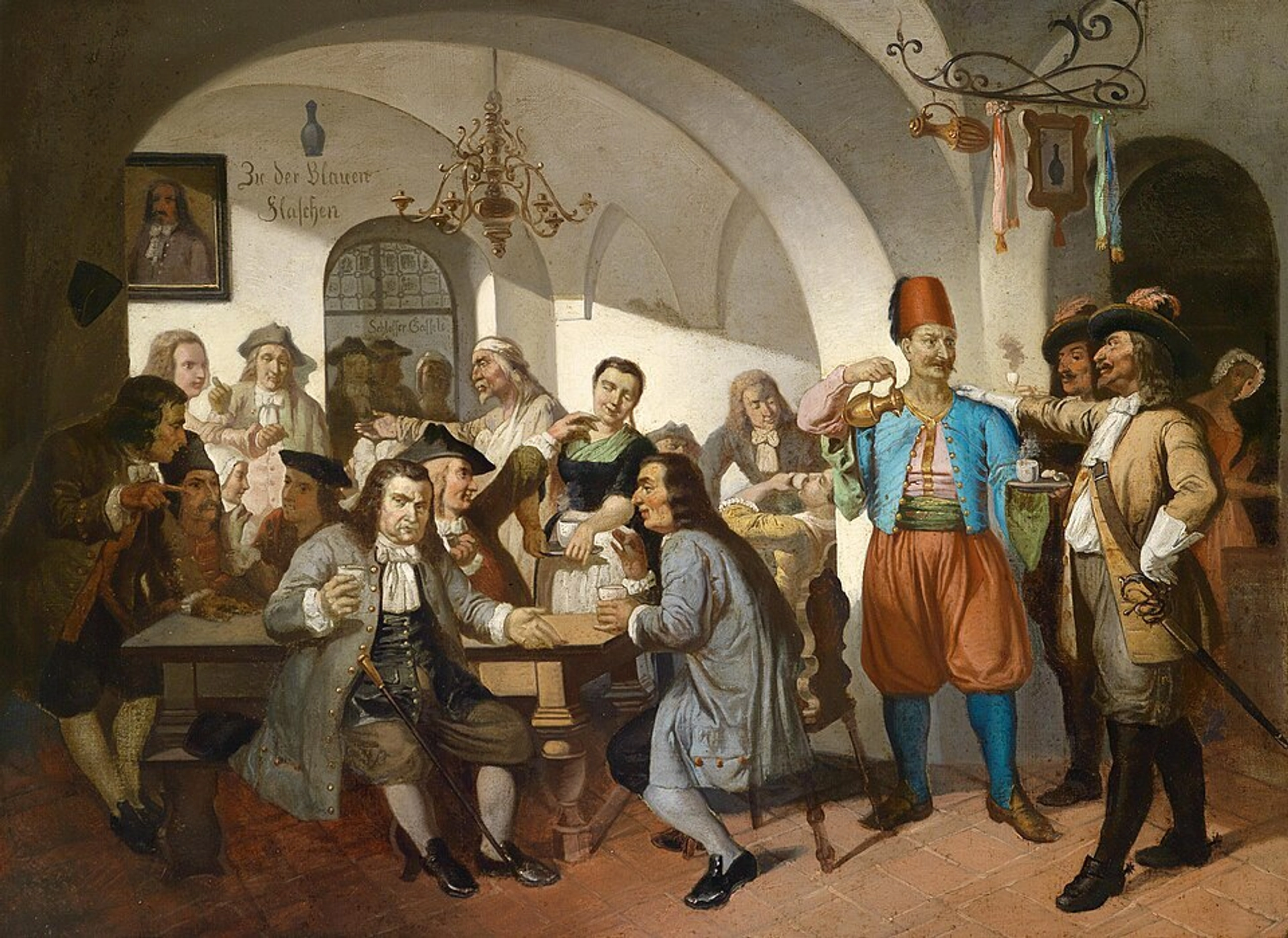
Soon afterwards, Kulchytsky opened his Hof zur Blauen Flasche (Blue Bottle’s Yard), one of the first coffeeshops in Vienna. At first, customers did not quite like the strange bitter hot drink, So Kulchytsky decided to make it sweeter and milder by adding sugar and milk. And that was the beginning of the famous Vienna coffee. The drink Kulchytsky served in the Hof zur Blauen Flasche became more and more popular. What attracted more customers was the Turkish clothes he was wearing.
The “croissant” legend
There is a popular legend connected with Kulchytsky, alleging that he served his coffee with crescent-shaped croissants, as if letting a customer “bite off” a piece of Turkey. Historians still debate the origin of the croissant, but the legend is deeply rooted in Vienna’s historical memory.
Memory through centuries
Yuriy Kulchytsky died in Vienna on Feb. 19, 1694, more than 330 years ago, but his grateful memory lives. In 1883, when Vienna marked the 200th anniversary of the victory over the Ottomans, a bronze monument to him was unveiled on the street named after him, Kolschitzkygasse. There are also memorial plaques and other sites related to or associated with him.
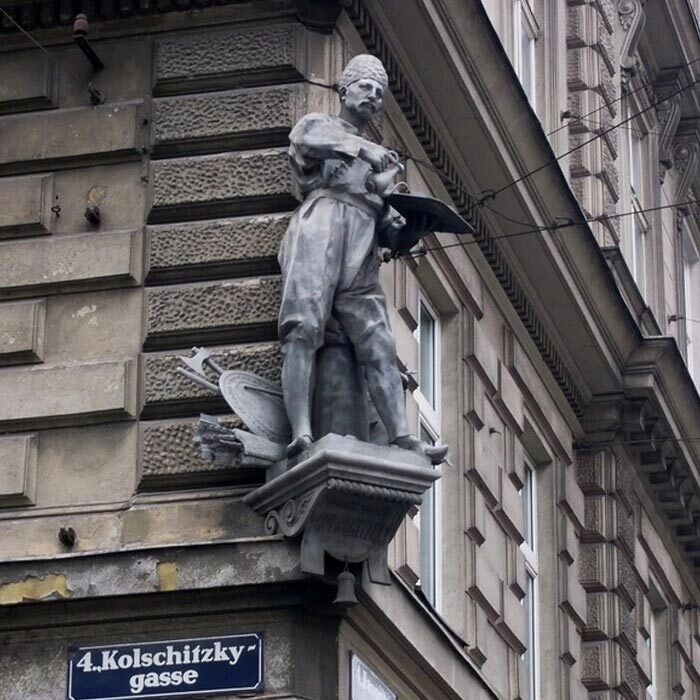
Monument to Yuriy Kulchytsky in Vienna. (Photo: Facebook)
To Ukrainians Kulchytsky is a symbol of one man who made the wheel of history turn just a little faster. He was not only a war hero but also a cultural innovator who joined the East and the West through a cup of coffee. Today, millions of people around the world who savor Vienna coffee hardly know that the first to introduce one of Europe’s favorite traditions was a legendary Ukrainian Cossack.
You can also highlight the text and press Ctrl + Enter
Black Eyed Peas Embrace Ukraine With an Authentic Vyshyvanka