


EN

EN


EN
Stay informed with the most important Ukraine breaking news today. This page compiles the top headlines and critical updates from across Ukraine, offering a real-time snapshot of key developments.
Whether it’s military updates, political changes, or international reactions — we bring you the latest Ukraine news as it happens. All reports are carefully curated from verified sources and KyivPost correspondents on the ground.
Austria’s Foreign Minister told Die Welt that neutrality can’t guarantee the country’s future security and the debate on possible accession to NATO should be on Vienna’s agenda.
In a wide-ranging interview with Germany’s Die Welt (DW) Austrian Foreign Minister Beate Meinl-Reisinger said the country’s historical neutrality should perhaps now be revisited in the face of ongoing Russian aggression.
Austrian neutrality was legally imposed and enshrined in its constitution in 1955 – it forbids Vienna from entering military alliances and the establishment of foreign military bases on its territory.

What Zelensky’s embarrassing miscalculation revealed.
What a mess of things Ukraine’s highly respected wartime president Volodymyr Zelensky, and his less admired immediate entourage, made of things last week. Let’s recall what occurred in what may turn out to be a pivotal juncture, point out some of the less obvious factors involved, and draw some conclusions.
In an abrupt and sneaky move, the president’s office (known as Bankova – the street on which it is situated) and their docile appointees in the government and faction in parliament – Servant of the People – attempted to emasculate the country’s vital independent anti-corruption agencies – the National Anti-Corruption Bureau of Ukraine (NABU) and Specialized Anti-Corruption Prosecutor’s Office (SAPO). This sent shock waves not only throughout Ukraine but also among Ukraine’s strongest supporters in the democratic world.

Meet the enterprising trainee lawyer who helped invent a unique website used by millions of people every day to monitor what is happening on the ground in war-torn Ukraine.
At an age when most young men are finishing their education or planning their “gap year,” Roman Pohorilyi created an ingenious device that is today seen as indispensable to his homeland of war-torn Ukraine.
On the very day Russia launched its illegal, all-out invasion – Feb. 24, 2022 – Roman, then 22, and his friend, Ruslan Mykula, 27, unveiled an online map now used by millions of Ukrainians every day – as well as millions more people all over the world. Their DeepState map, along with its social media Telegram channel of the same name, have become widely regarded as the most detailed and reliable “open source” material of what is happening on the ground in the embattled country.

Despite sanctions, Russia still earns up to $160B annually from fossil fuel exports, as loopholes remain.
Despite tough sanctions against the export of crude oil and petroleum products, Russia still earns up to $160 billion from fossil fuel exports annually. Why don’t sanctions work as intended?
Russian state oil and gas revenue is set to fall in July by around 37% from the same month in 2024 to 680 billion roubles ($8.66 billion) due to cheaper oil and a stronger local currency, Reuters has estimated. The decline in proceeds is painful for Russia, but this is still huge money, which the Kremlin is directing to the murder of Ukrainians. Overall, Russia’s oil and gas revenue for January-July could decline by 20% year-on-year to 5.4 trillion roubles. But if calculated in the US dollar equivalent ($70.2 billion), the drop is not that significant due to a decline in the value of U.S. dollar in relation to the Russian rouble. Though the world has long understood that tightening sanctions against Russian fossil fuel exports is one of the most effective ways to drain the aggressor’s war fighting capabilities, the previous rounds of sanctions have not caused a critical drop in the Kremlin’s revenues. Will the fresh package of sanctions announced by our partners in July help?
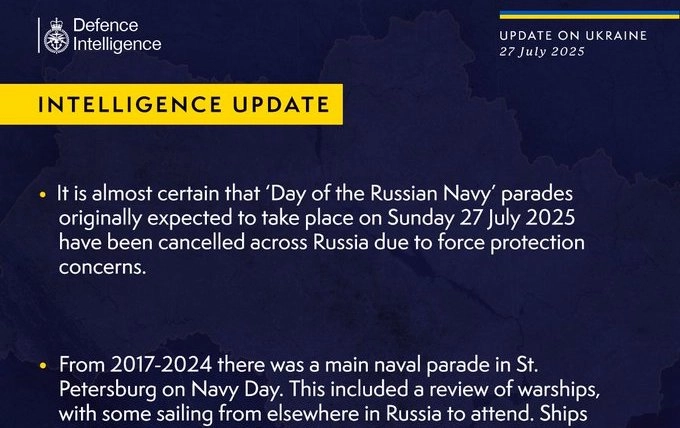
Latest from the British Defence Intelligence.

Russia has a stable of “useful idiot” American influencers spreading anti-Ukrainian lies. One of the most brazen is a Florida representative who wants to stop Trump from sending weapons to Ukraine.
US House Representative Anna Paulina Luna (R-FL) is vigorously leading a campaign to halt military aid for Ukraine, based on her claims that Ukraine persecutes Christians. But a closer look reveals she’s just parroting Russian propaganda aimed at undermining the Christian country of Ukraine.
Recently, a plethora of articles depicting Luna’s disinformation war against Ukraine have surfaced. In Orthodox Christianity, she blasts Ukraine’s President Zelensky for sabotaging religious freedom by “banning the Orthodox Church.” This surreptitiously skewers reality. Russia is the country whose occupying forces in Ukraine violently close churches.

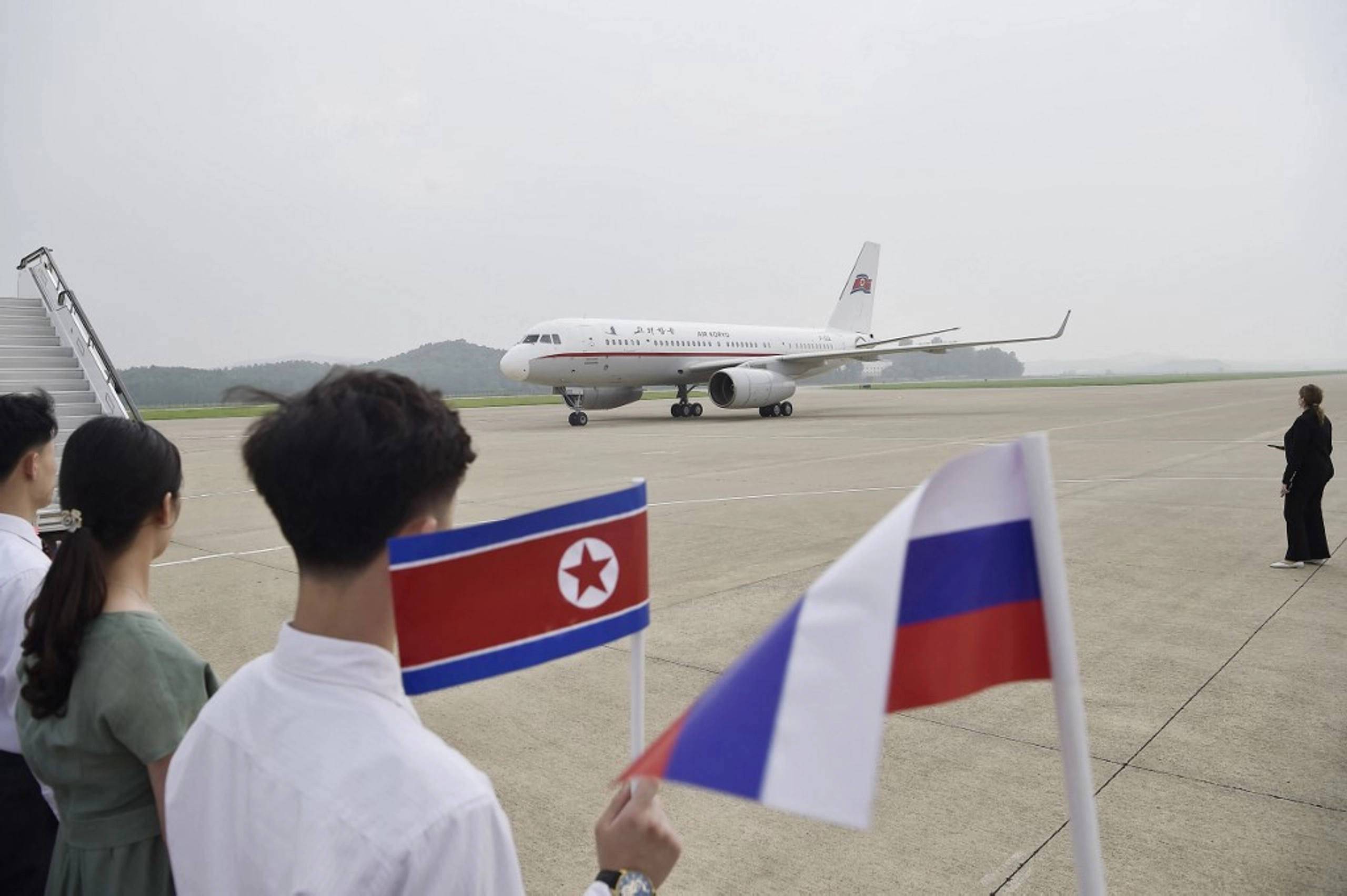
Russia has launched direct monthly flights to North Korea, deepening military ties with Pyongyang, which has sent troops and weapons to support Moscow’s war in Ukraine.
Russia on Sunday began direct commercial flights to North Korea, in a further sign of closer ties with its Asian ally helping its offensive in Ukraine.
The first Moscow-Pyongyang flight, operated by Nordwind Airlines, was scheduled to take off at 1600 GMT and land in the North Korean capital some eight hours later, according to the carrier’s website.

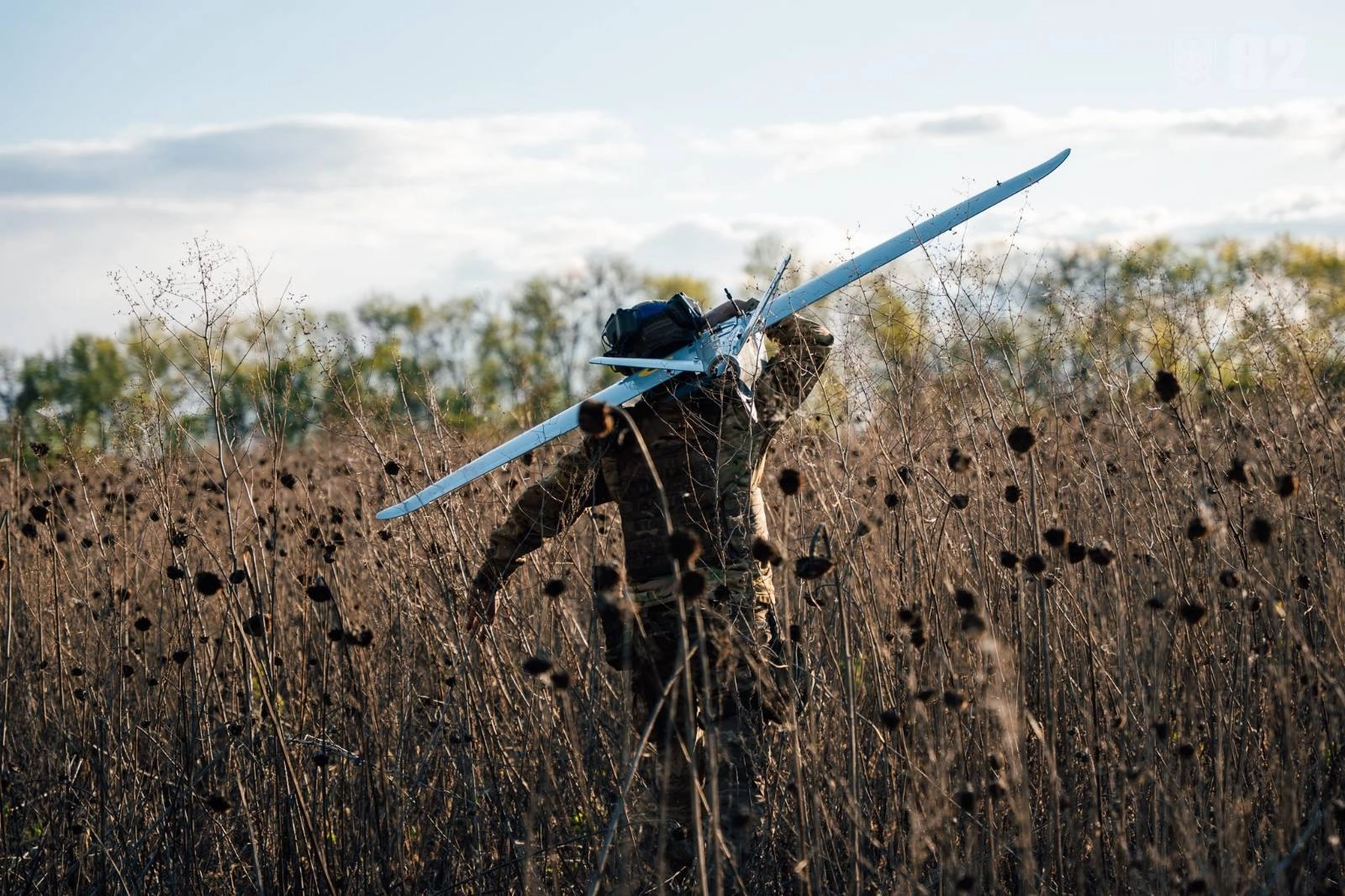
The success of Kyiv’s Strategic Unmanned Aerial Vehicle Engagement plan of defense is destined to become the norm on future battlefields. The world is watching Ukraine.
A huge part of Ukraine’s courageous and resilient stand against aggressor Russia in the past two years of a war now in its fourth year has been successfully utilizing its drone warfare. The use of unmanned aerial vehicles in the military has advanced exponentially since Russia’s full-scale invasion of Ukraine in February 2022. Many now refer to the current conflict as the world’s first-ever full-scale drone war. As Vladimir Putin’s “special operation” enters its fourth summer, reports indicate that drones account for some 70 percent of total Ukrainian and Russian battlefield fatalities.
As Russia’s current summer offensive pushes on along active frontlines some 750 miles long according to General Oleksandr Syrsky, Ukraine’s over-extended military is in a position of heavy reliance on drones to thwart any major Russian advances. Ukraine’s state-of-the-art and fast-paced use of unmanned aerial vehicles as a layered defensive shield has been labeled a “drone wall.” If Ukraine’s “drone wall” can sustain itself over the next several months and stymie Putin’s big offensive, it could very well configure future defensive axioms in military institutions across Europe and the world.

A selection of reactions in the European and Ukrainian press.
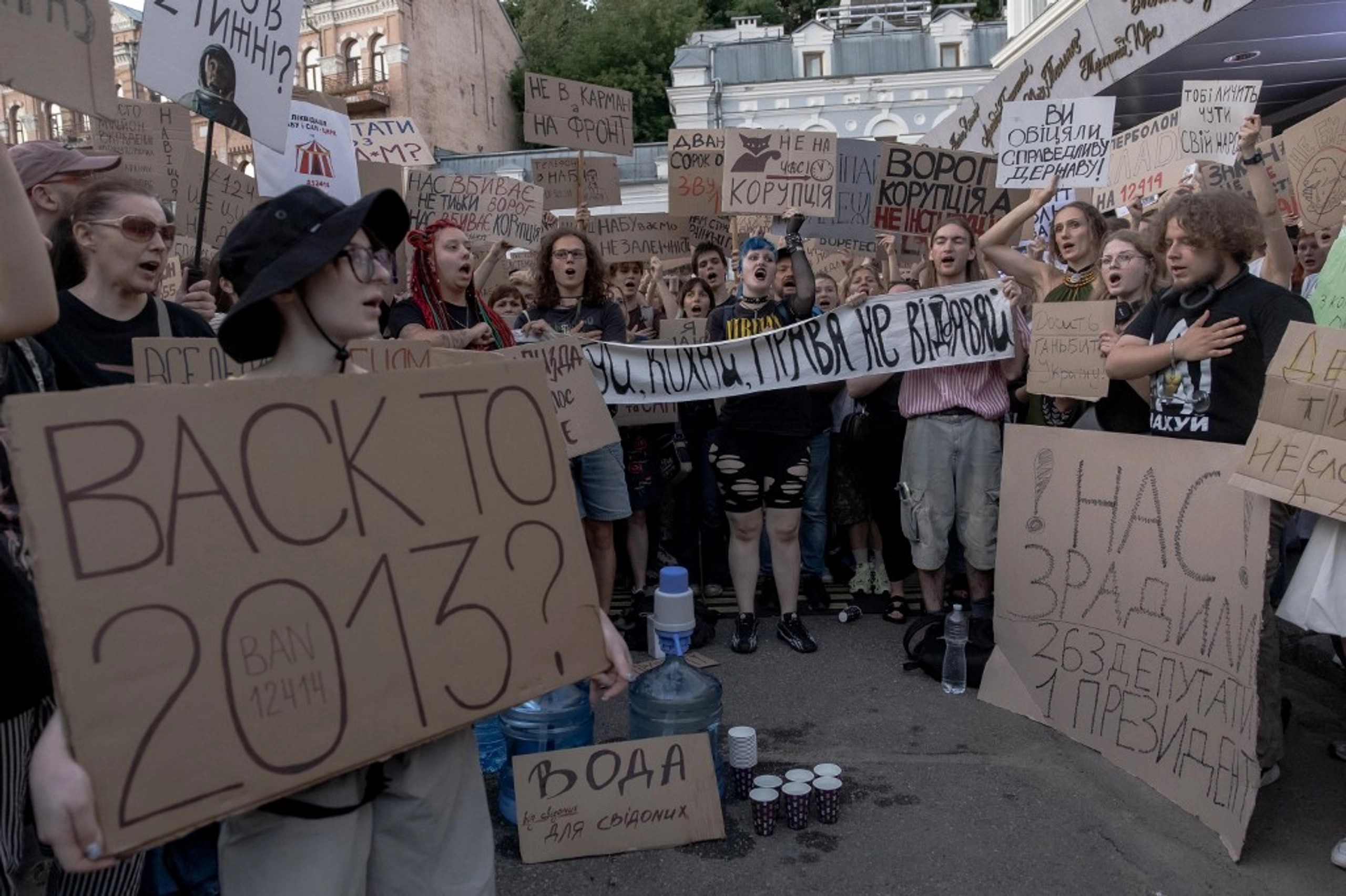
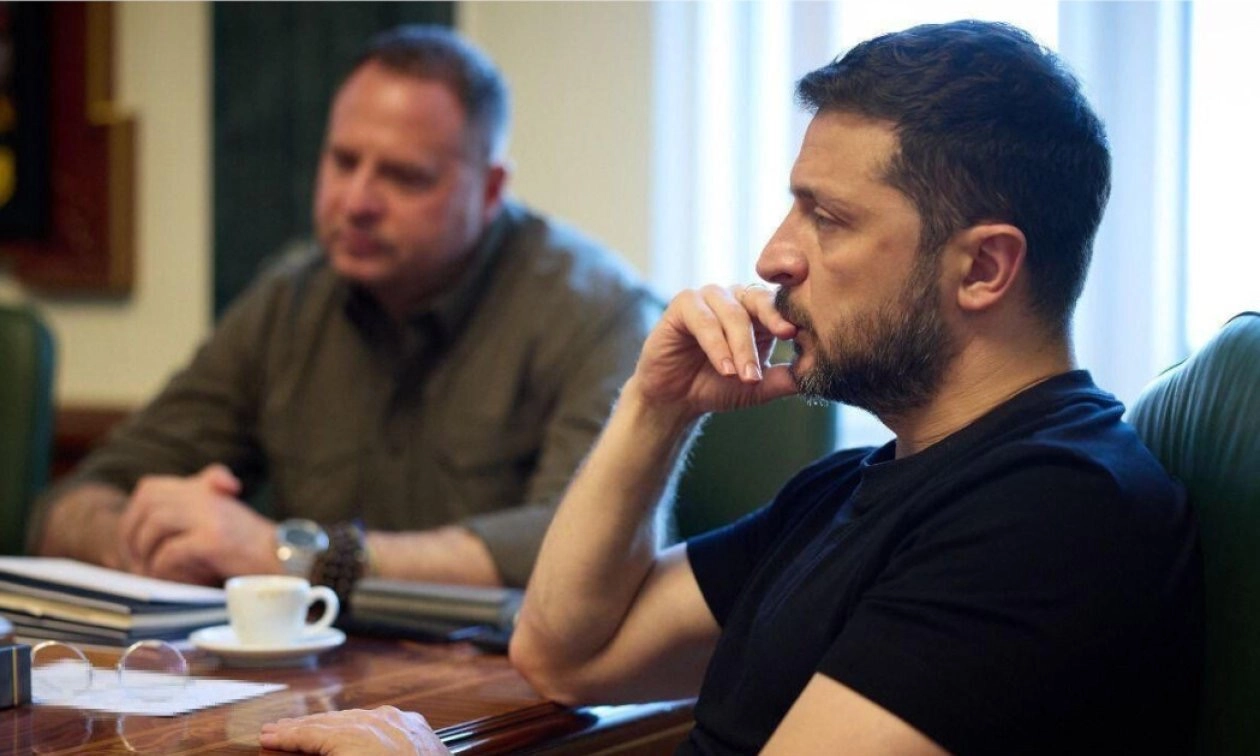
President Volodymyr Zelensky will restore the independence of Ukraine’s anti-corruption authorities. Following fierce criticism from both Ukrainians and his Western allies, the president announced that he would submit a new bill to parliament repealing the regulations passed this week. What conclusions can be drawn from this sudden reversal?
Damage already done
Ukraine eliminated Russian Colonel Lebedev, commander of the 83rd Motorized Rifle Regiment, who led assaults near Velykyi Burluk in the Kharkiv region.
Ukrainian Defense Forces have eliminated Colonel Lebedev, according to a report by the operational-strategic grouping of troops “Khortytsia.” The Russian commander of the 83rd Motorized Rifle Regiment of the 69th Motorized Rifle Division was reportedly leading assault operations in the Velykyi Burluk direction in the Kharkiv region.
“Defense Forces troops eliminated Colonel Lebedev, commander of the 83rd Motorized Rifle Regiment of the 69th Motorized Rifle Division of the Russian army, who was leading assault operations in the Velykyi Burluk area,” the statement reads.
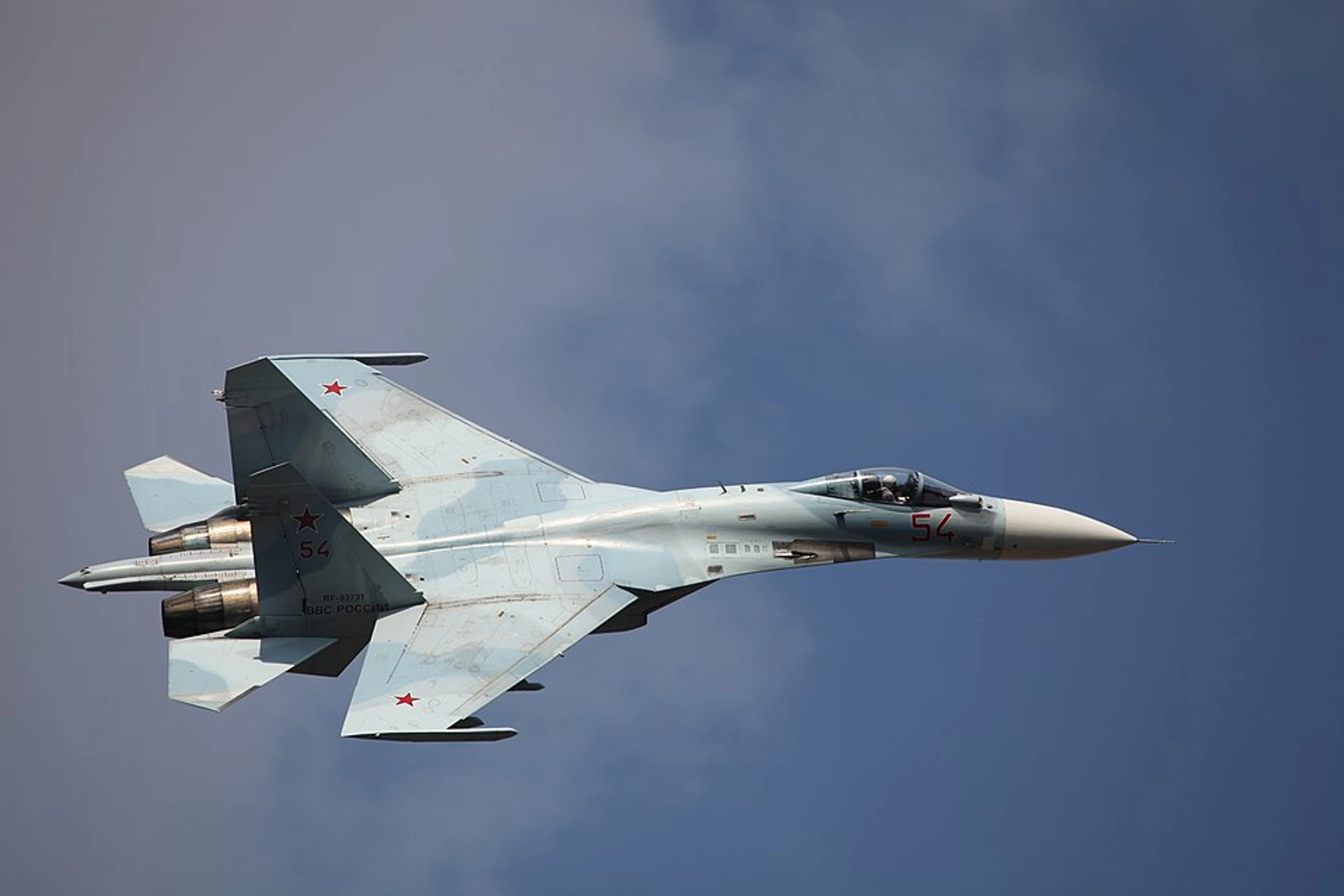
A Russian Su-27UB combat training jet was destroyed at Armavir airfield in Krasnodar Krai.
In the early hours of Saturday, July 26, a Russian Su-27UB combat training fighter jet was destroyed at the Armavir airfield in Russia’s Krasnodar Krai, according to the Main Intelligence Directorate (HUR) of Ukraine.
HUR published corresponding video footage of the incident.

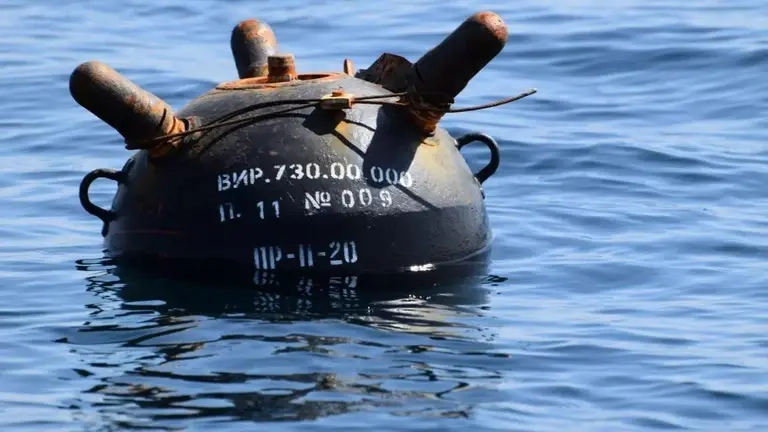
This year’s Sea Breeze exercises showcased strengthened collaboration in explosive ordnance disposal and mine countermeasures between NATO Allies and partners, focusing on mines in the Black Sea.
Sea mines are another aspect of the Russo-Ukrainian War posing a significant threat not only to shipping but also to civilians. For example, on July 18, the State Emergency Service of Ukraine reported the discovery of a sea mine that had been washed up on the coast of the Odesa region. A month earlier, in June, two men were killed by a mine explosion while swimming in the sea in Odesa region.
Moscow began to use drift mines in the Black Sea on a large scale after the start of the full-scale invasion, in particular to block the export of Ukrainian grain. In doing so, it has traditionally disregarded international maritime law.

The top US diplomat referenced China’s covert aid to Russia amid US frustration.
WASHINGTON DC – US President Donald Trump is growing “increasingly frustrated” with Russia’s lack of progress toward a peace deal and is now threatening severe economic penalties, Secretary of State Marco Rubio told Fox News’ My View with Lara Trump. A transcription of the interview was shared by the State Department on Sunday morning.
Rubio stated that Trump’s foremost priority is ending the “conflict,” emphasizing, “It’s not his war... He inherits it, and he’s done everything possible to bring it to an end.”
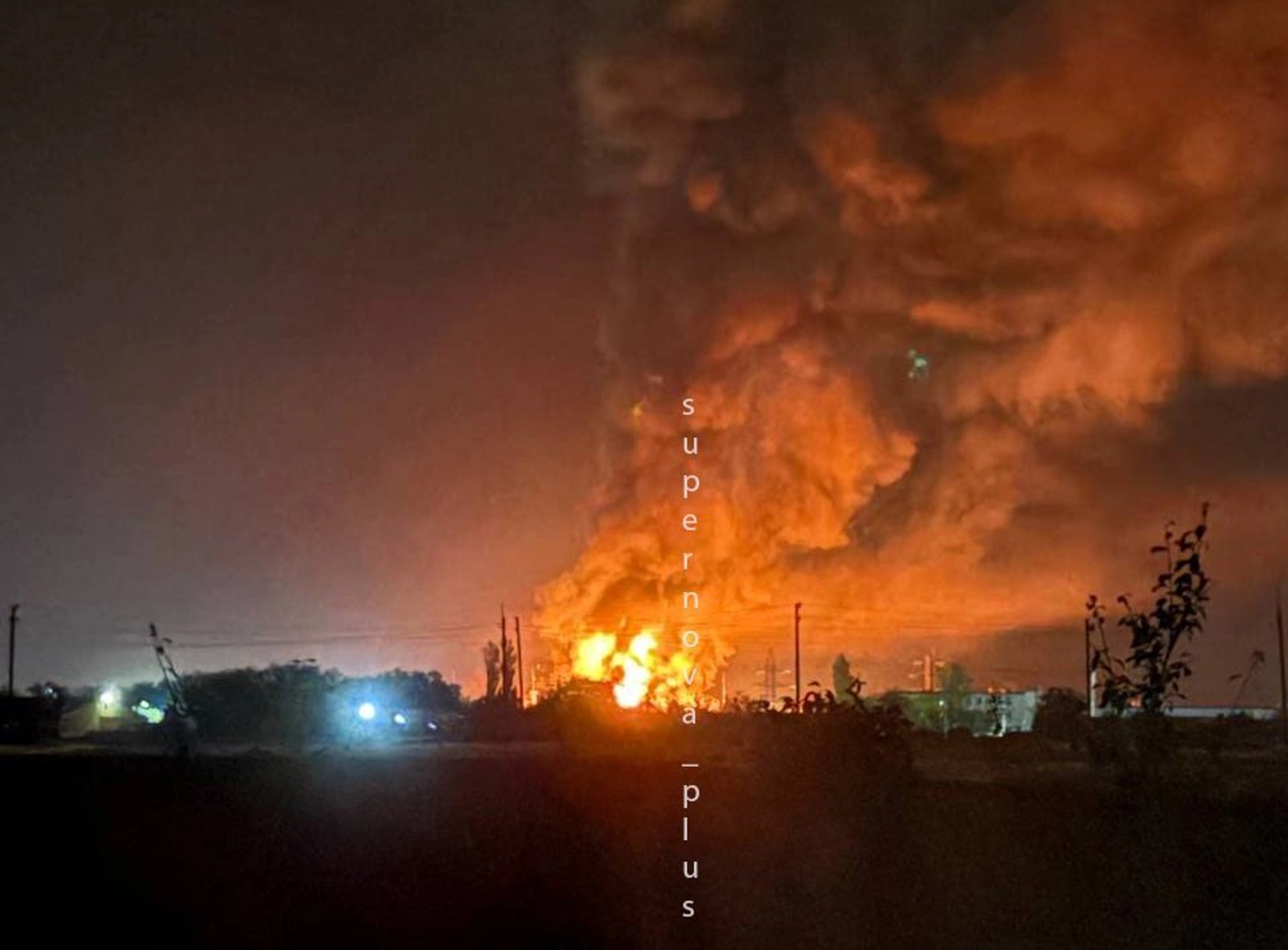
Drones hit a power substation near rail lines in Russia’s Volgograd region overnight, sparking fire, disrupting transport, and dealing another blow to Russian military logistics.
In the early hours of July 27, drones attacked an electrical substation near a railway in the Russian settlement of Oktyabrsky, Volgograd region. Local residents reported explosions and a fire, and footage from the scene quickly appeared on social media. Based on geolocation, the strike reportedly targeted a substation supplying power to railway lines. The information was also confirmed by Russian media and several Telegram channels.
The governor of the Volgograd region, Andrei Bocharov, stated that “as a result of drone debris falling, power supply to the railway’s contact network in the Oktyabrsky district was disrupted.”
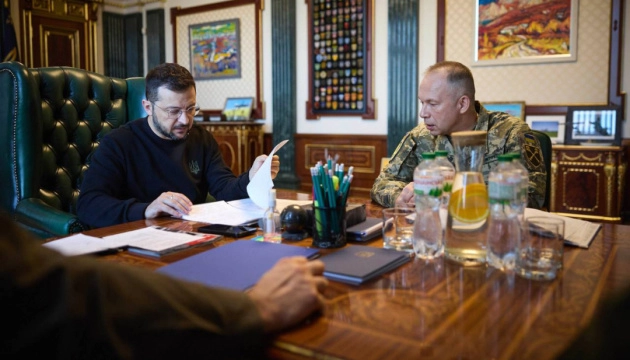
Commander-in-Chief of the Armed Forces of Ukraine Oleksandr Syrskyi reported to Volodymyr Zelensky on the successful actions of the Defense Forces units in the Sumy Region.
Commander-in-Chief of the Armed Forces of Ukraine Oleksandr Syrskyi reported to Volodymyr Zelensky on the successful actions of the Defense Forces units in the Sumy Region.
The President announced this in his evening address, Ukrinform reports.

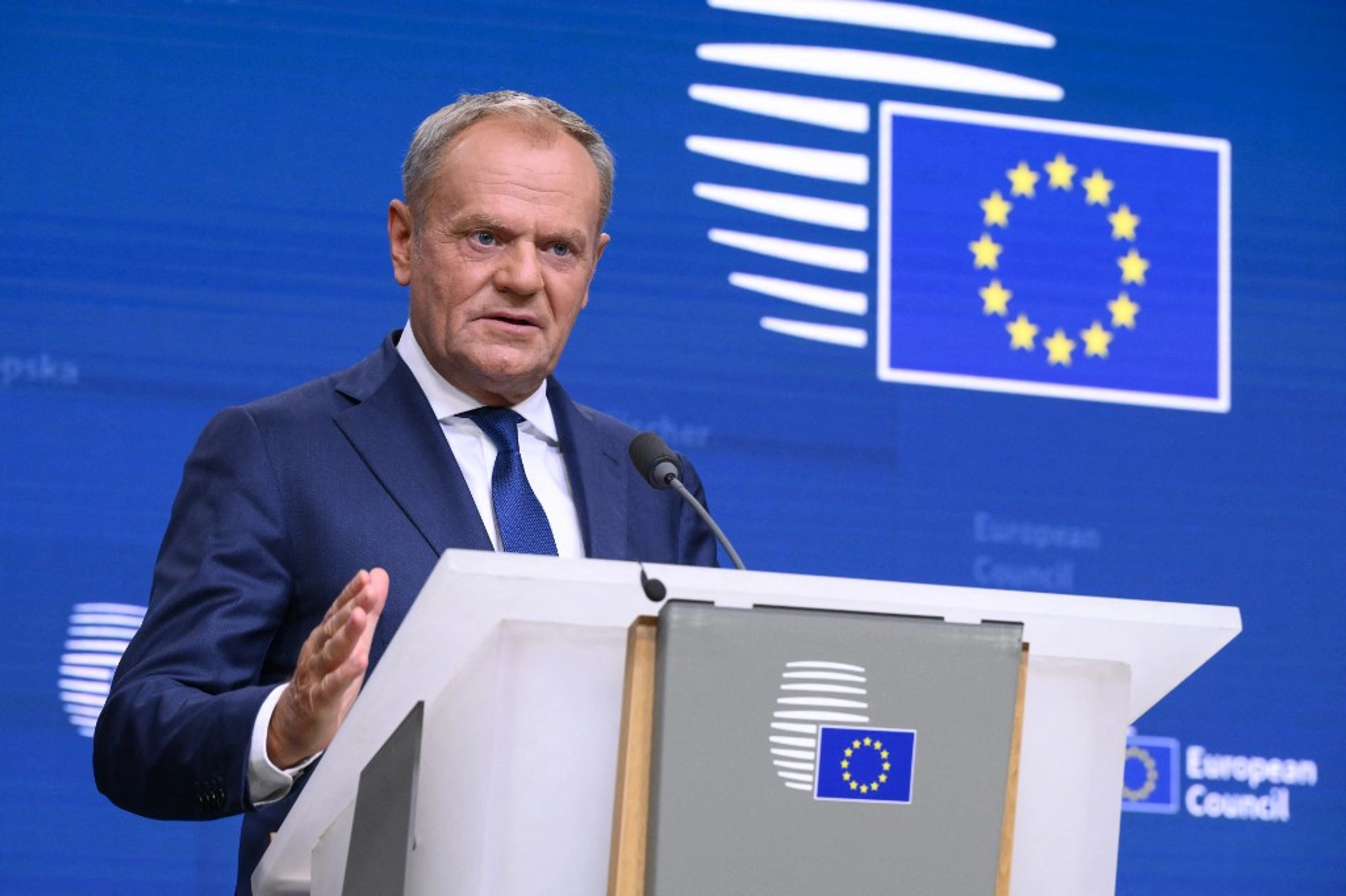
Polish Prime Minister Donald Tusk has warned that Poland must prepare for potential threats from Russia over the next two years
Donald Tusk, Poland’s prime minister, has warned that citizens “must be ready” for an increased threat from Russia over the next two years but pledged his government would work to “stabilize” the country’s security situation.
Tusk said Poland and the European continent as a whole can expect “various developments” over the next two years, after a top NATO official warned that both Russia and China may be gearing up for conflict in 2027.
With the right combination of weapons, long-range strikes and allied support, seige tactics could enable Ukrainians to weaken the Russian forces to the point of collapse.
Bob Woodward, in his book “War,” cited a conversation between then-Chairman of the US Joint Chiefs of Staff Gen. Mark Milley and then-Chief of the General Staff of the Russian Armed Forces and First Deputy Minister of Defense, Gen. Valery Gerasimov, where the Russian General stated the conditions under which Russia would use nuclear weapons.
Gerasimov provided three conditions: “If there’s an attack on Russia that threatens the stability of the regime. If a foreign power attacks Russia with a weapon of mass destruction, so that’s chemical, biological or nuclear. And that Russia reserves the right to use tactical nuclear weapons in the event of catastrophic battlefield loss.”

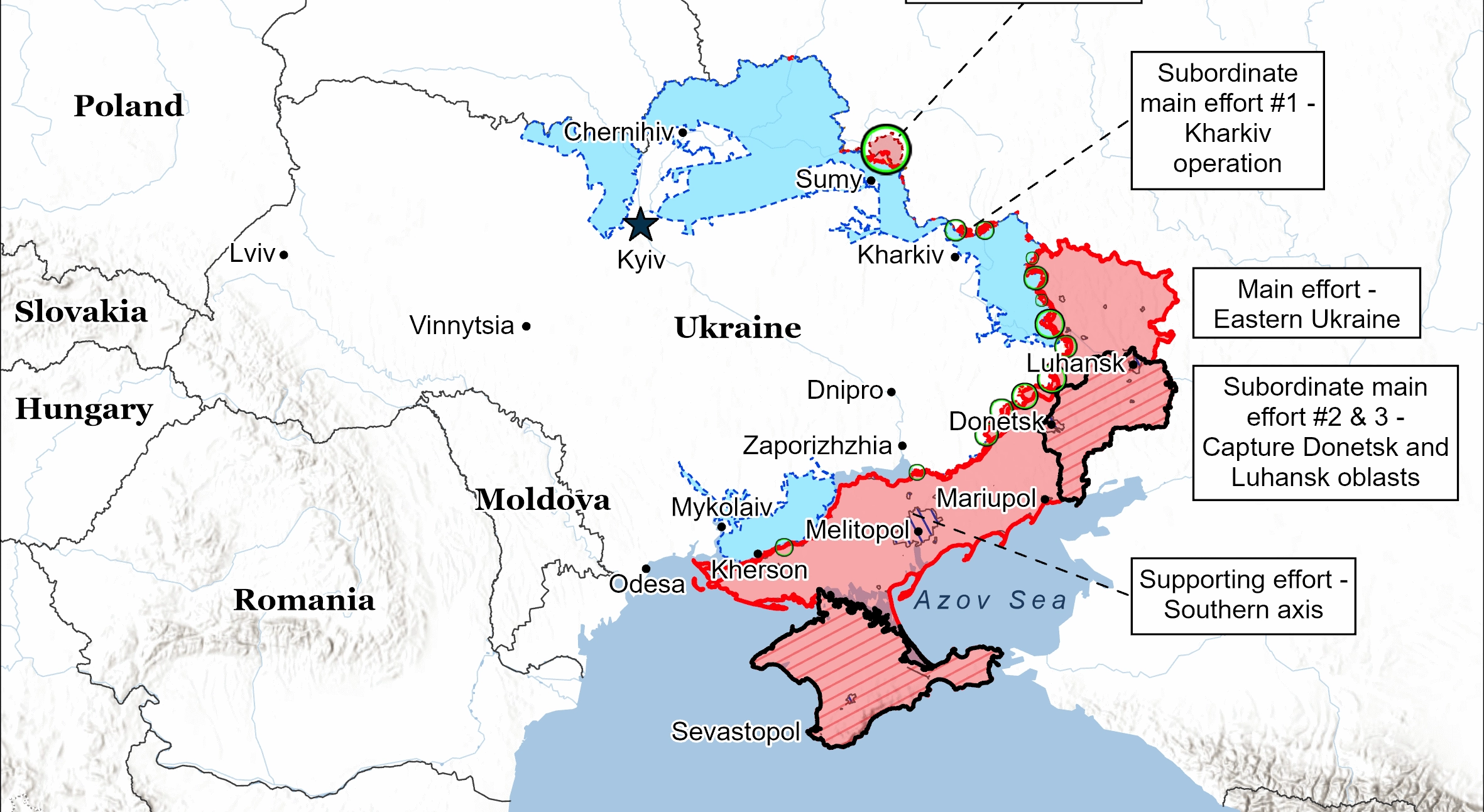
Latest from the Institute for the Study of War.
Key Takeaways from the ISW:
Authors: Olivia Gibson, Daria Novikov, Nate Trotter, Angelica Evans, Jessica Sobieski, and Kateryna Stepanenko.