What a mess of things Ukraine’s highly respected wartime president Volodymyr Zelensky, and his less admired immediate entourage, made of things last week. Let’s recall what occurred in what may turn out to be a pivotal juncture, point out some of the less obvious factors involved, and draw some conclusions.
In an abrupt and sneaky move, the president’s office (known as Bankova – the street on which it is situated) and their docile appointees in the government and faction in parliament – Servant of the People – attempted to emasculate the country’s vital independent anti-corruption agencies – the National Anti-Corruption Bureau of Ukraine (NABU) and Specialized Anti-Corruption Prosecutor’s Office (SAPO). This sent shock waves not only throughout Ukraine but also among Ukraine’s strongest supporters in the democratic world.
JOIN US ON TELEGRAM
Follow our coverage of the war on the @Kyivpost_official.
Faced by immediate and widespread protests at home and strong criticism from abroad, Zelensky was forced to retreat and implicitly acknowledge he had made a serious mistake. So, seemingly, by such a reckless act, Zelensky shot himself in the foot, damaged his authority, and needlessly placed Ukraine’s reputation and the direction it is headed in question.
Why? Clearly, there must be more to all this than meets the eye
First, a rather obvious general point.
What occurred can best be summarized as a clash between a would-be new oligarchy in Kyiv and the effervescent forces of democracy.
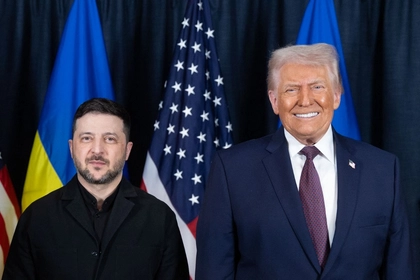
Trump to Join Zelensky for G7 Working Session on Ukraine Peace Conditions
By oligarchy is not meant the former pattern of rule by some of the country’s richest business tycoons when President Kuchma, Yanukovych and Poroshenko were in office through control of the media, political parties and key sectors of the economy.
In fact, to his credit, after becoming president in 2019, Zelensky moved to clip the wings of these self-absorbed magnates and, in one way or another, has either reduced their influence, removed them, or brought them into line. Indeed, leading oligarch of that era, Ihor Kolomoisky has been held in pre-trial custody since 2023.
What has been emerging in the meantime is an oligarchy in the very basic sense of the word – rule by a small group of people. In this case, the inner circle of the presidential administration, its office headed by Andriy Yermak, and their allies. Furthermore, reports have emerged suggesting that the president’s primary motivation for curbing the power of anti-corruption investigators was that they had “gotten too close to his own inner circle.”
Under the stewardship of Zelensky’s former business partner, Yermak, who was neither elected for office nor holds a role recognized by the country’s constitution, power and decision-making have become highly centralized in his hands and those of his aides.
Understandably, during wartime, strong central leadership is called for and Zelensky has provided it. But, unlike Winston Churchill, who he has been compared to, Ukraine’s war leader did not opt for creating a government of national unity (on becoming Prime Minister in May 1940, Churchill formed a British government of national unity which included members from the Labour, Liberal, and Conservative parties) but chosen to concentrate powers within a small circle of his closest political and business entourage.
But, unlike Winston Churchill, who he has been compared to, Ukraine’s war leader did not opt for creating a government of national unity.
Ministers, ambassadors, and military leaders have been fired, or abruptly replaced by those with more questionable credentials. Yermak, among other things, has assumed the role of Ukraine’s de facto foreign minister and chief negotiator with the US.
Zelensky seems to prefer to empower individual confidants to help him run things, even if the public expresses serious doubts about the degree of influence he gives them and the lack of openness and accountability it entails.
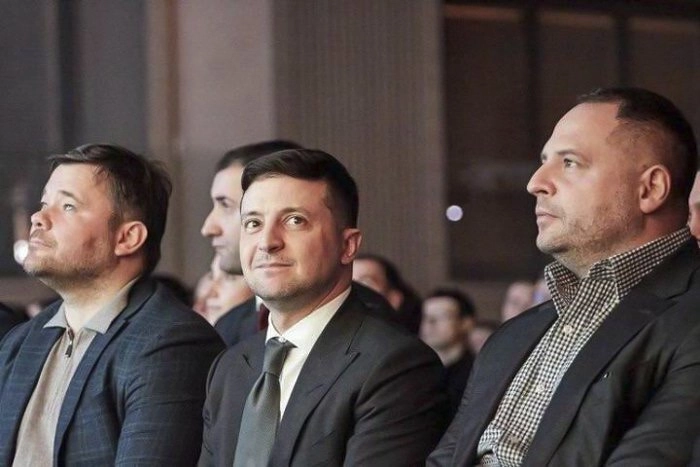
Before Yermak, there was the example of the more ebullient Andriy Bohdan. During Zelensky’s first year as president, as head of the president’s office, Bohdan made no effort to disguise his hold over him until he was suddenly replaced by a more traditional gray cardinal – Yermak.
So, what triggered the sudden moves against NABU and SAPO?
As mentioned, there has been a pattern of removing officials considered too independent by Bankova. Examples include Ukraine’s ambassador to London, Vadym Prystaiko, commander-in-chief of the Armed Forces of Ukraine, Valery Zaluzhny, defense minister Oleksiy Reznikov, foreign minister Dmytro Kuleba, and the head of Ukrenerogo, Ukraine’s power transmission network, Volodymyr Kudrytsky. Bankova apparently felt it had things under control and announced forthcoming changes in the government.
But more recently, the anti-corruption agencies stepped up investigating possible corruption within the presidential entourage itself, and Zelensky’s inner circle appears to have got the jitters.
Opposition lawmaker Oleksiy Honcharenko has revealed that NABU had been discovered wiretapping Timur Mindich – a business partner and close personal friend of Zelensky. He is reported to have left the country in June.
But more recently, the anti-corruption agencies stepped up investigating possible corruption within the presidential entourage itself, and Bankova appears to have got the jitters.
Then, on June 23, NABU filed corruption charges against deputy prime minister Alexey Chernyshov, an influential figure in Zelensky’s inner circle. It was unclear whether he would flee the country or face the music. He returned, but the ministry he headed was abruptly liquidated.
Zelensky and his closest associates, including the head of the Security Service of Ukraine (SBU), justified their decision to remove the independence of the anti-corruption agencies and carry out searches among their personnel as a necessary step to counter infiltration by Russian agents. But given the abrupt and underhanded manner in which they sought to thwart the work of the anticorruption agencies – the possible presence of bad apples among them, or selectivity in their approach notwithstanding – the argument was not convincing, and the move backfired.
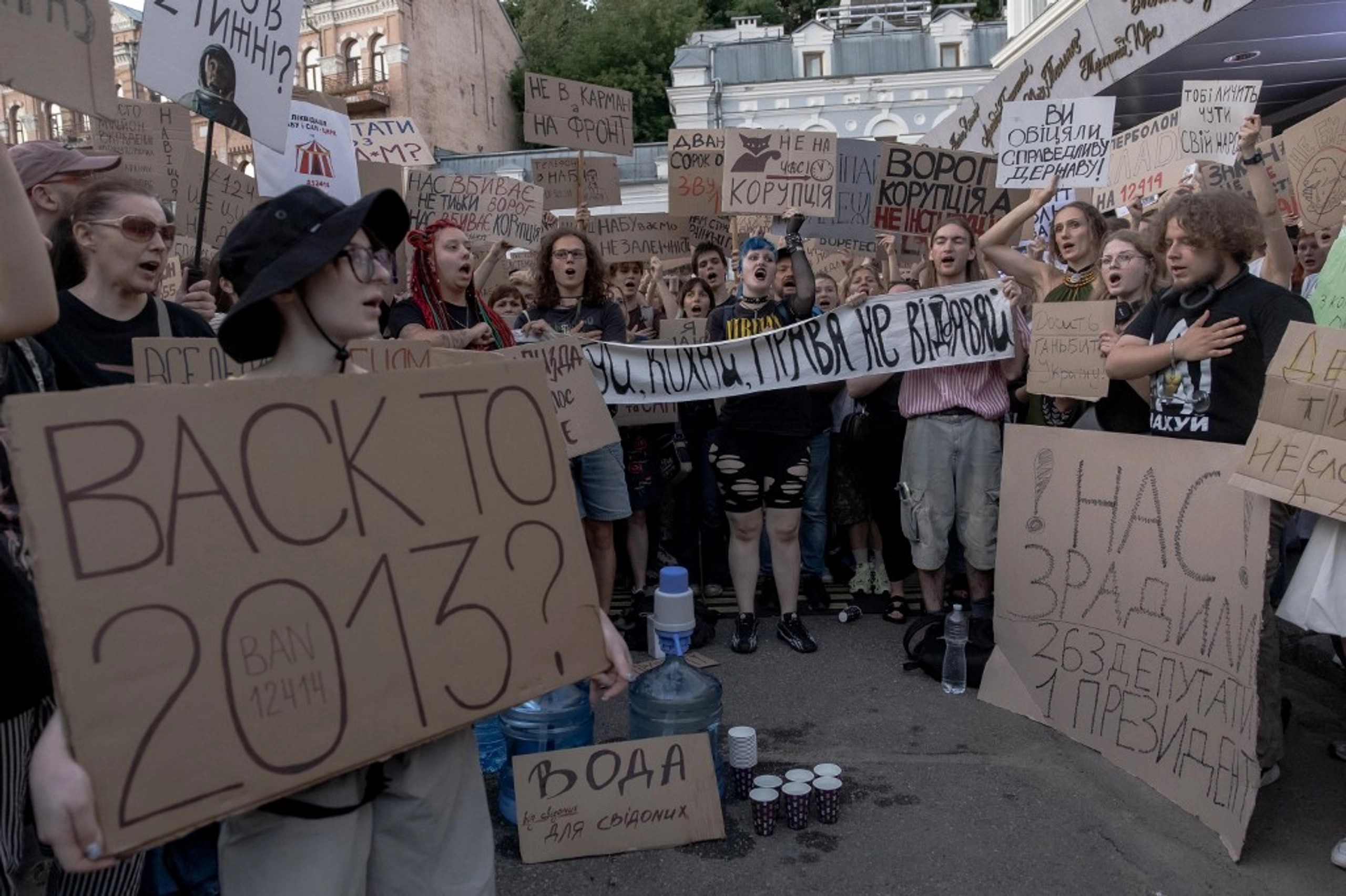
To the credit of Ukraine and its reputation, the unexpected blow against proper governance provoked an instant, strong and convincing reaction from Ukraine’s democratically-minded public, particularly its younger generation.
The ensuing mass widespread protests revealed an impressive level of democratic awareness, showing that the spirit of defiance and resistance to despotism, injustice and Russian imperialism inherited from the Revolution of Dignity (2013-14), Orange Revolution (2004) and even the Student Revolution in Kyiv of October 1989 lives on and remains strong.
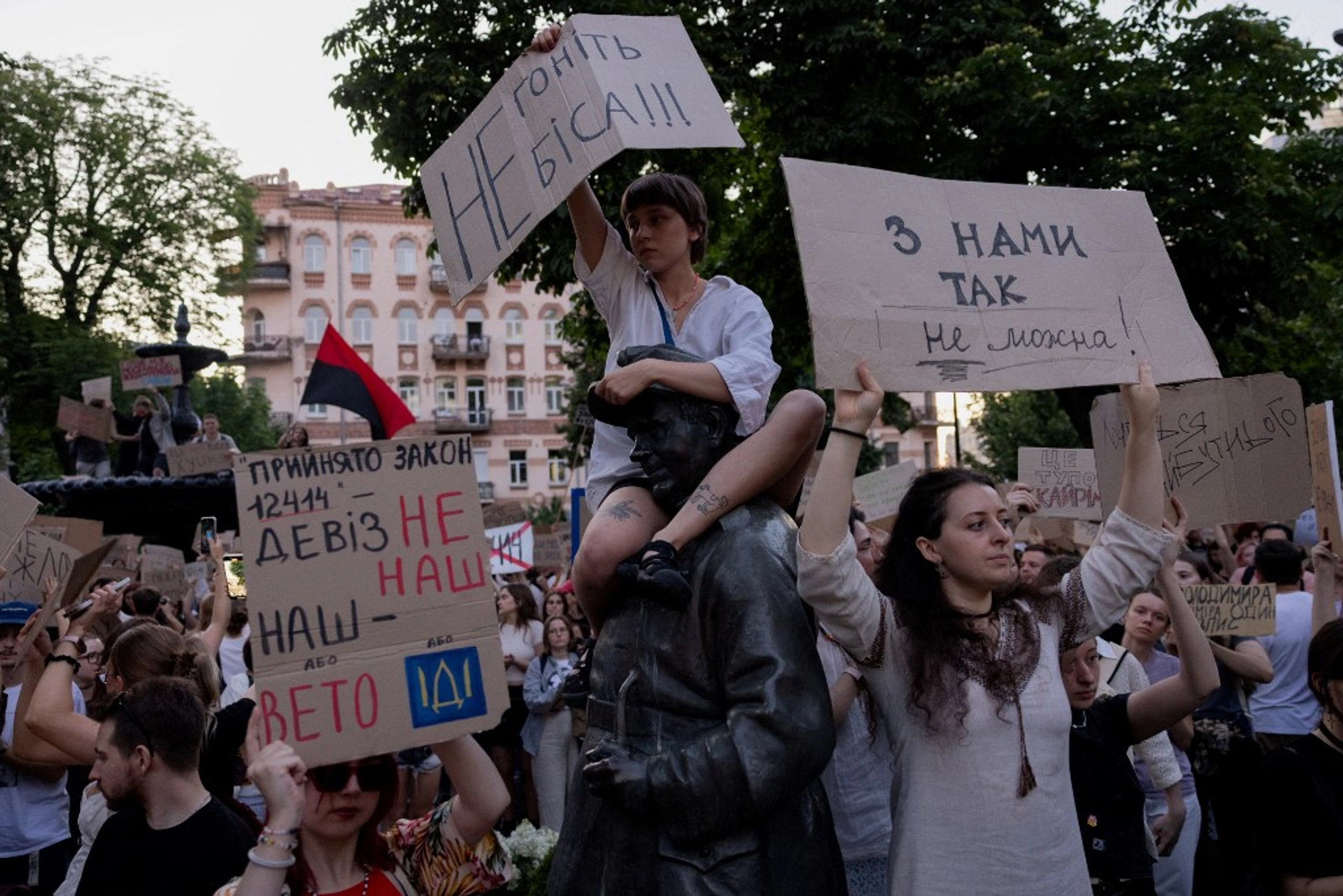
The challenge now for Zelensky is to somehow regain the confidence of the under-25s, many of whom will soon be mobilized into the armed forces if Russia’s war against Ukraine is not stopped. With his reputation as a democratic reformer at home shaken, he will need to think hard about how to repair the damage done.
Reversing the bill, enfeebling the anti-corruption agencies he signed into law, will not be enough, for doubts about the sincerity of this forced concession will remain.
The problem is even more serious than Zelensky’s own attitude has revealed
What was shocking last week was not only how the measure targeting the independence of the anticorruption measures were slipped into a broader bill with the collusion of the Speaker of the parliament and approved by the majority of the House. For what followed was even worse.
During the parliamentary debate about the controversial bill, Yulia Tymoshenko, the political veteran who has remained largely absent from the political scene during wartime, resurfaced and delivered a populist diatribe against Ukraine’s external democratic partners for linking their support to conditionality.
Ukraine does not need monitoring bodies, advisory councils imposed by foreigners, she declared. By constraining or removing them, together with the anti-corruption agencies, Ukraine was reasserting its sovereignty. Tymoshenko went as far as to claim that by adopting the new law, Ukraine was finally initiating a process of “decolonization.”
This, in 2025, during wartime, from a politician once regarded as a martyr for pro-European democracy when imprisoned under President Viktor Yanukovych, as Ukraine pleads to have its accession to the EU and NATO accelerated!
Tymoshenko went as far as to claim that by adopting the new law, Ukraine was finally initiating a process of “decolonization.”
And what was also unexpected was how well her speech was received within the parliament, not only by her own Batkivshchyna party, but also Zelensky’s Servant of the People with whom she made common cause that day. So, what do these lawmakers really want: to have their cake and eat it, to get away with impunity while assuming continuing support from Ukraine’s friends?
Will Tymoshenko, and those who upheld her position, eat their words when the counter-bill is introduced next week or when they next meet representatives of the EU and US? Or expect to be invited to Brussels or Washington?
So, what conclusions should be drawn?
Hopefully, the strong democratic impulses that remain within Ukrainian society will serve as a wake-up call to those currently at the helm during this intensely difficult period in the country’s history. To those who may have become complacent and, however initially well-intentioned, corrupted by power. Ukraine’s survival and the democratic values it is fighting for, not the security of the new oligarchy that has formed, is what counts.
One day, when the war stops and democratic elections can be held again, what we have just witnessed will not be forgotten. Ukraine will need a leadership prepared to accept, if not deliver, a democratic system with a proper balance of powers, the rule of law, accountability and governance, and yes, respect for the conditionality which Ukraine’s foreign partners have a right to expect.
One day, when the war stops and democratic elections can be held again, what we have just witnessed will not be forgotten.
As for the courageous young, principled people who have gone out to protest against any betrayal of the Revolution of Dignity, Ukraine’s European path, the lesson is that their time has come.
They should not wait but use their skills, know-how and contacts with the outside world to begin building modern political parties with programs and visions, (not just rely on NGOs) overhaul the system and ensure their places where decisions and history are and will be made, both in Kyiv and in the capitals of the broader democratic world.
As for Moscow, any unrest and tensions in Ukraine are welcome. But this time, the Kremlin can hardly report to its servile population that the West has again interfered and sought to impose democracy from outside. And hopefully, some Russians may actually be inspired by Ukraine’s latest demonstration of its unbreakable spirit.
The views expressed in this opinion article are the author’s and not necessarily those of Kyiv Post.
You can also highlight the text and press Ctrl + Enter