


EN

EN


EN
Stay informed with the most important Ukraine breaking news today. This page compiles the top headlines and critical updates from across Ukraine, offering a real-time snapshot of key developments.
Whether it’s military updates, political changes, or international reactions — we bring you the latest Ukraine news as it happens. All reports are carefully curated from verified sources and KyivPost correspondents on the ground.

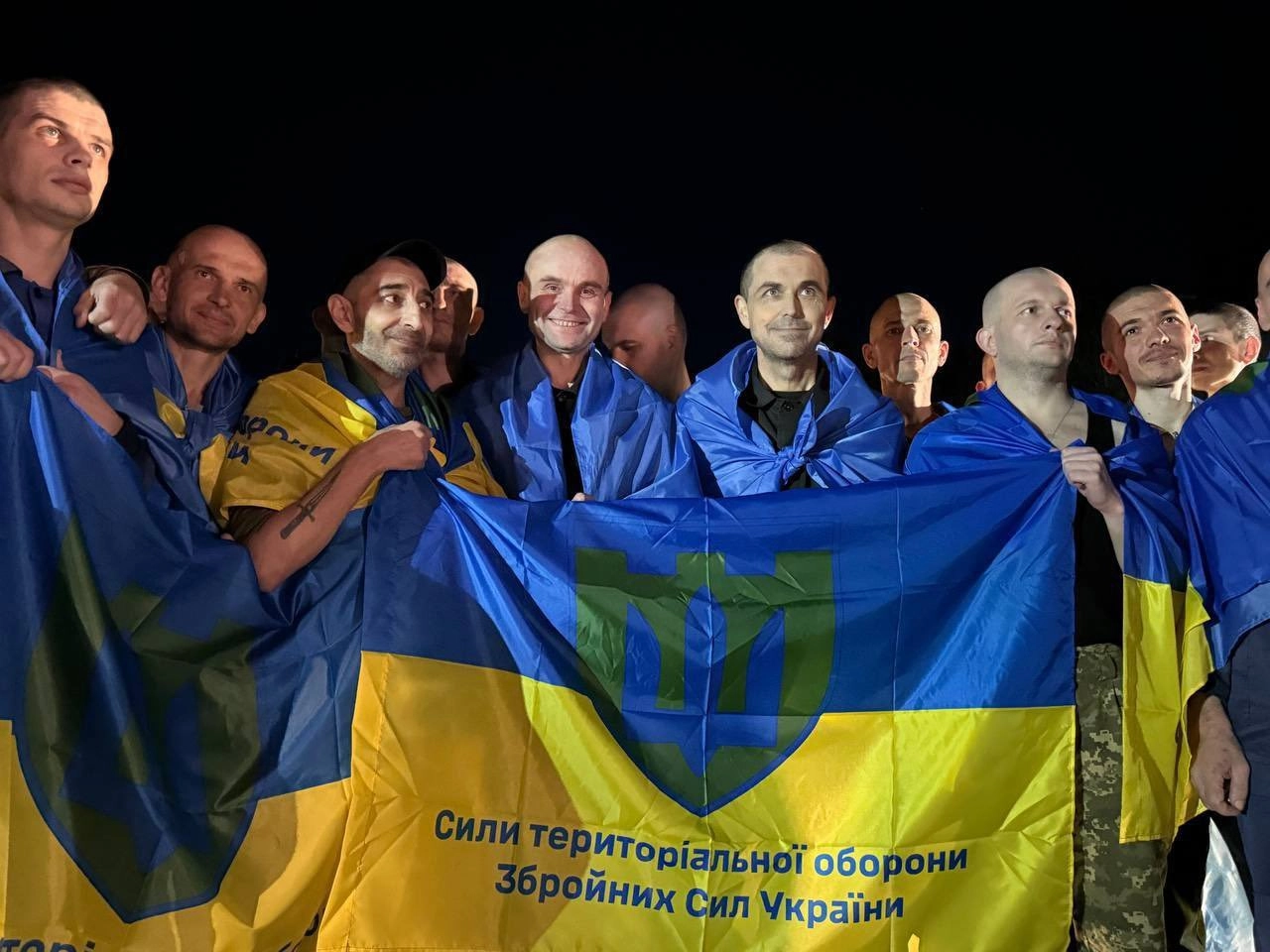
Large-scale prisoner exchanges were the only tangible result of three rounds of talks between Russia and Ukraine in Istanbul between May and July.
Russia and Ukraine each sent back more prisoners of war on Sunday in the latest in a series of exchanges that has seen hundreds of POWs released this year, the two sides said.
Large-scale prisoner exchanges were the only tangible result of three rounds of talks between Russia and Ukraine in Istanbul between May and July.

Without seeing each party’s in-house glossary, it appears on the surface that everyone has the same objectives as Ukraine‘s President, but the dictionaries may have drastically different definitions.
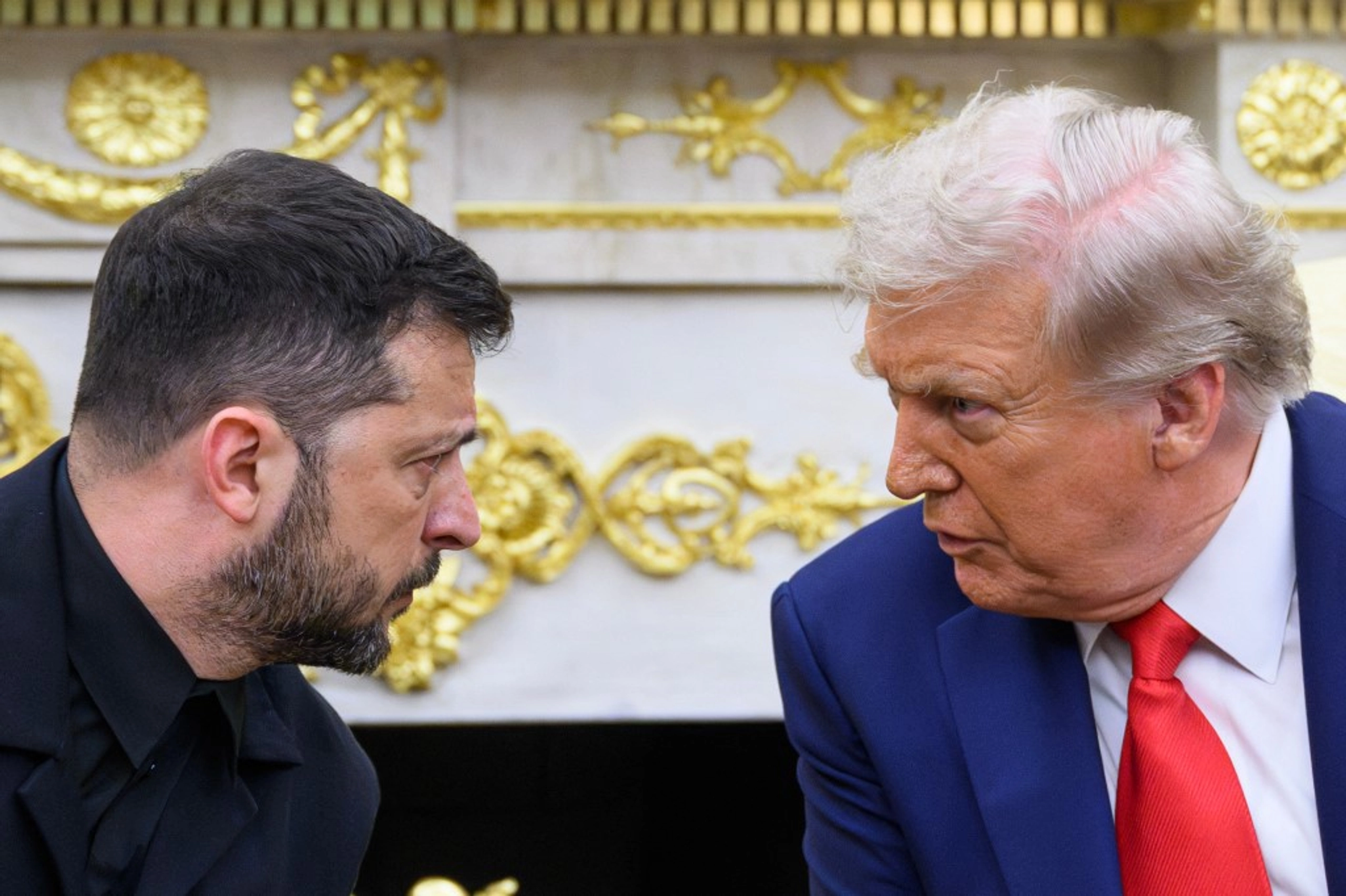
The cordial exchange of congratulations from the US President and Secretary of State to Ukraine, and the thank you offered back to the White House, may point to the key differences in what a real peace means for the two parties that actually want fighting to stop in Russia’s War against Ukraine. The keyword is guarantee and what that word means.
US Secretary of State Marco Rubio, on behalf of the US, congratulated the people of Ukraine on their 34 years of independence in a press release distributed on Sunday, Ukrinform reports.

From monarchy to Marxism, Ukraine’s experience of almost every permutation of human organization has equipped it with a unique richness. Its hard-won independence is worthy of its social wisdom.
It’s often the case that we judge the richness of a nation by its material wealth or its Gross Domestic Product. Or, if we are put off by economic comparisons, we might instead draw attention to hundreds or thousands of years of history as evidence of cultural depth.
However, I would like to suggest that the real richness of nations, in terms of their potential to encourage humankind toward better things in the future, is not money, raw materials or even the length of time they have existed, but rather the breadth of their experience in the multifarious ways in which people can be organized. It is within this knowledge that a nation can offer the rest of us guidance and perception on how to order ourselves to the most felicitous ends, and what arrangements might be attempted, and which ones are best avoided.
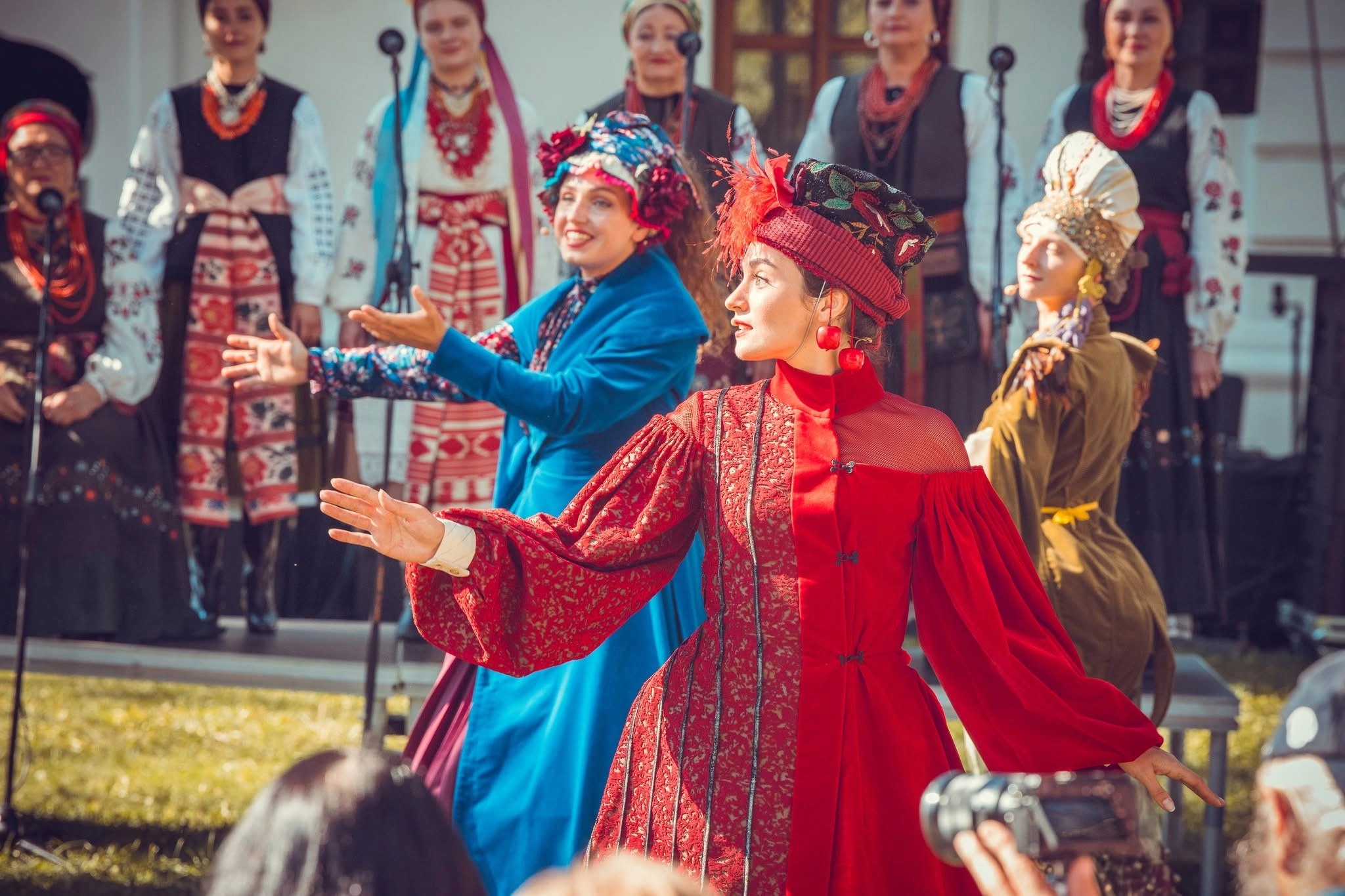
Bouquet Kyiv Stage Festival in its 8th year, is itself an act of resistance.
Kyiv is not an easy city to imagine as the heart of Europe. Too many maps through history – imperial, Soviet and even modern – have tried to push it to the edges, to the margins. Yet one needs only to stand in the gardens of the thousand-year-old Saint Sofia Cathedral this August when the “Kyiv Bouquet Stage Festival” unfolds, to directly understand the claim made by its curators: “The heart of Europe beats here.”
It is not a metaphor designed for comfort. A heart that keeps beating under bombardment, a heart that remembers its dead year upon year, a heart that insists on joy even while wounded. This is not Europe of glossy brochures or touristic entertainments and cliches. It is Europe at its most vital, most vulnerable, and most real.
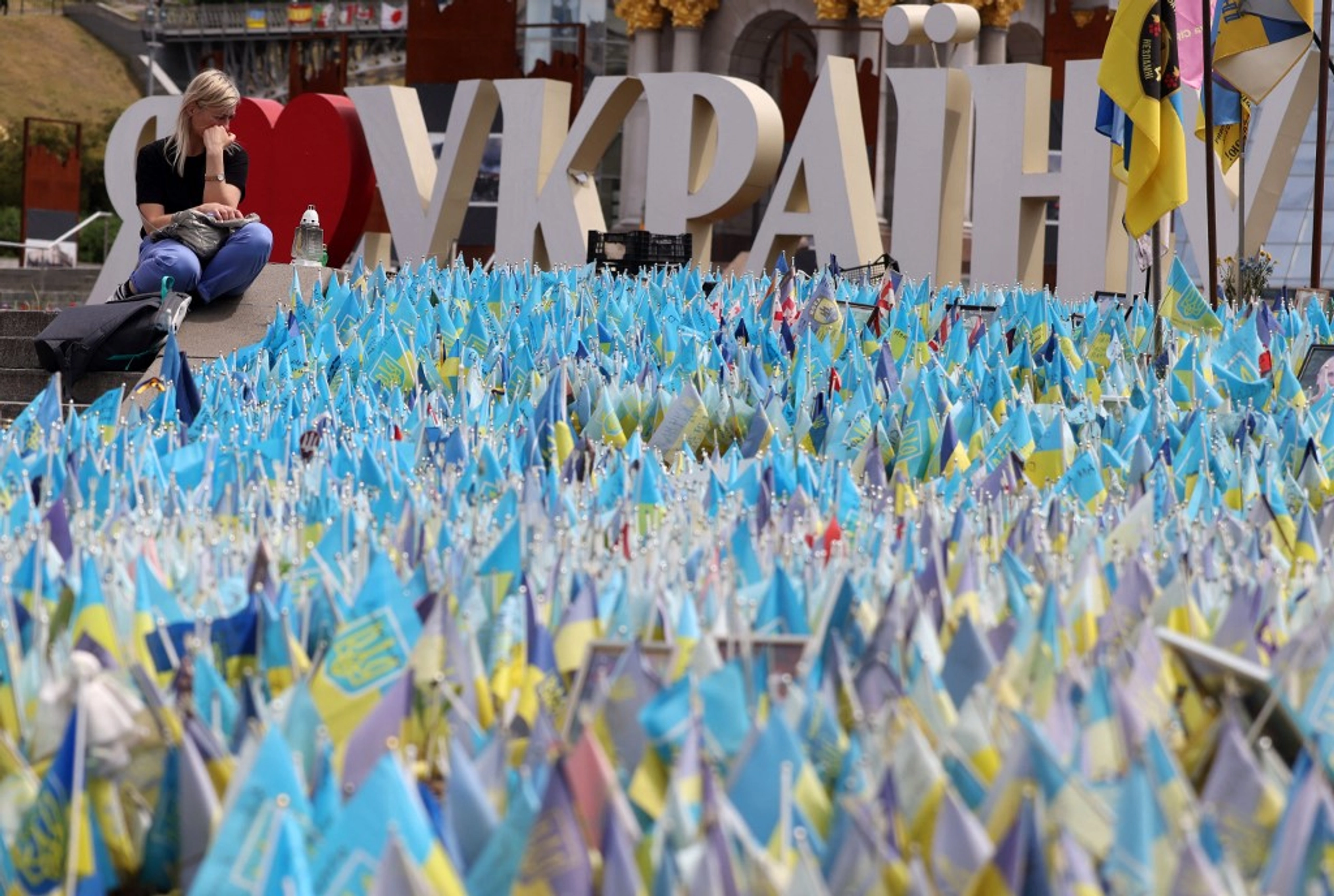
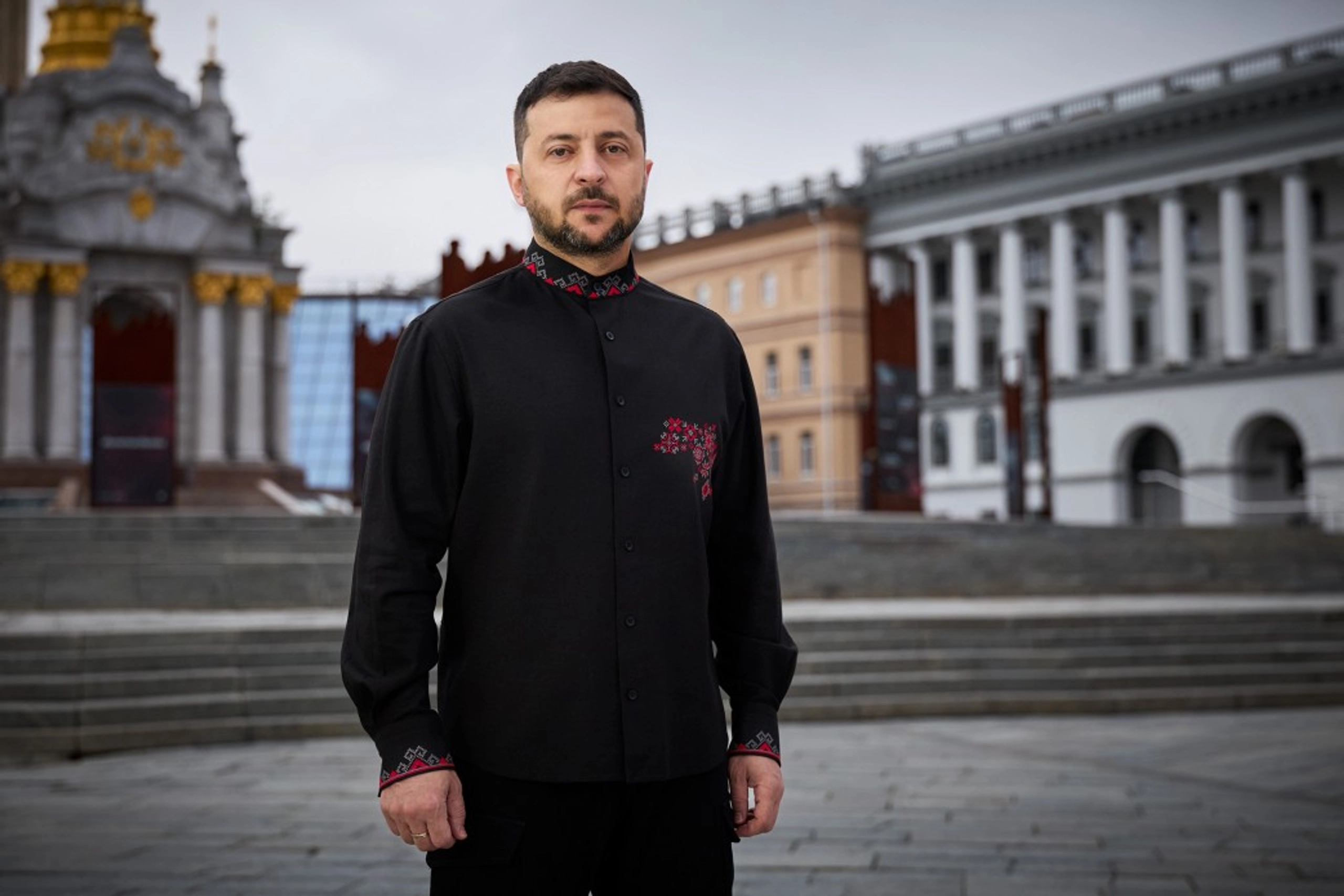
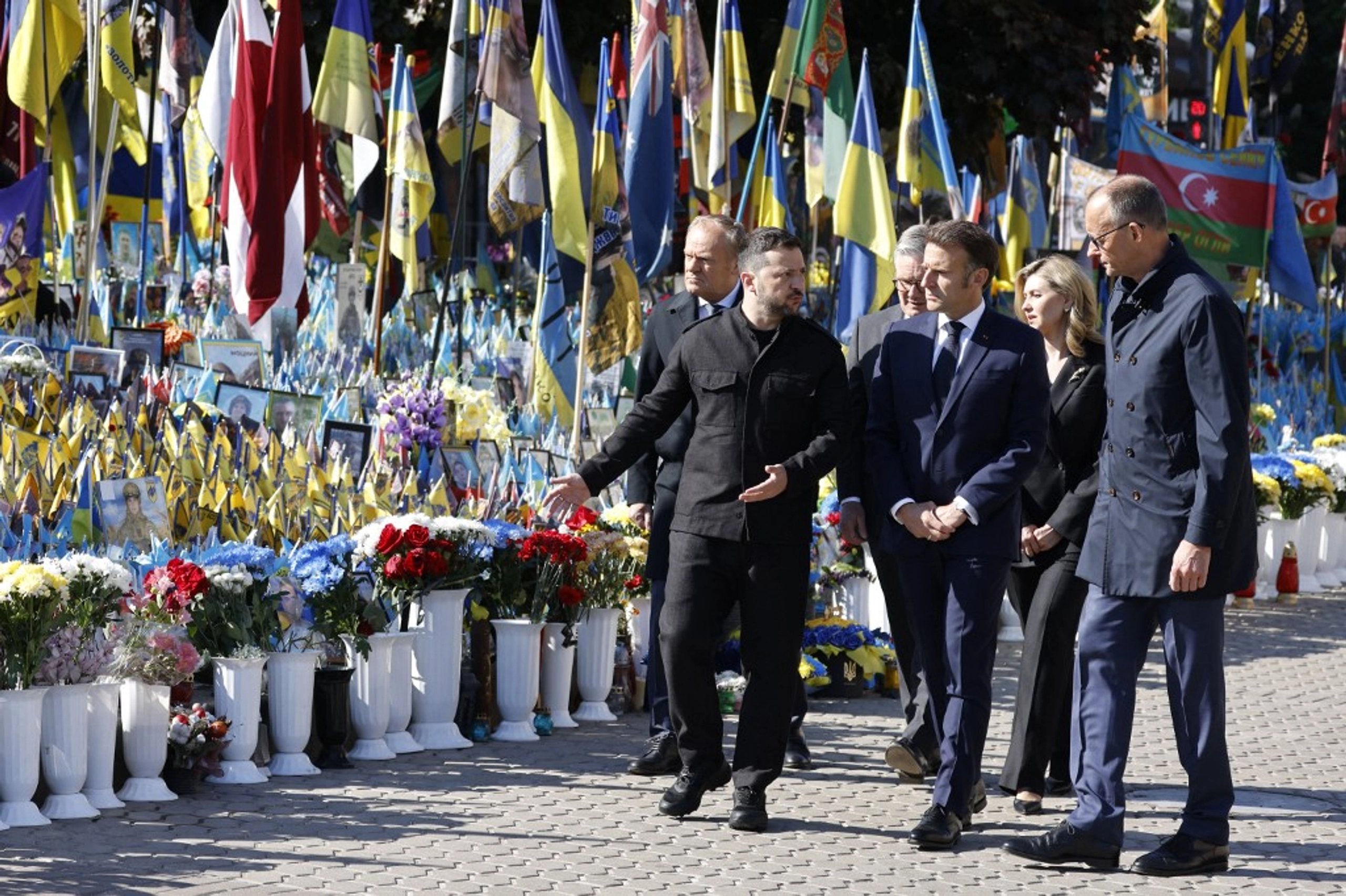
President Zelensky spoke from the “Zero Kilometer” on Maidan Nezalezhnosti, Ukraine’s Independence Square, where Ukrainians have always gathered to demand individual freedom and national sovereignty.
Dear Ukrainians! Dear people!
Today is Ukraine’s Independence Day.
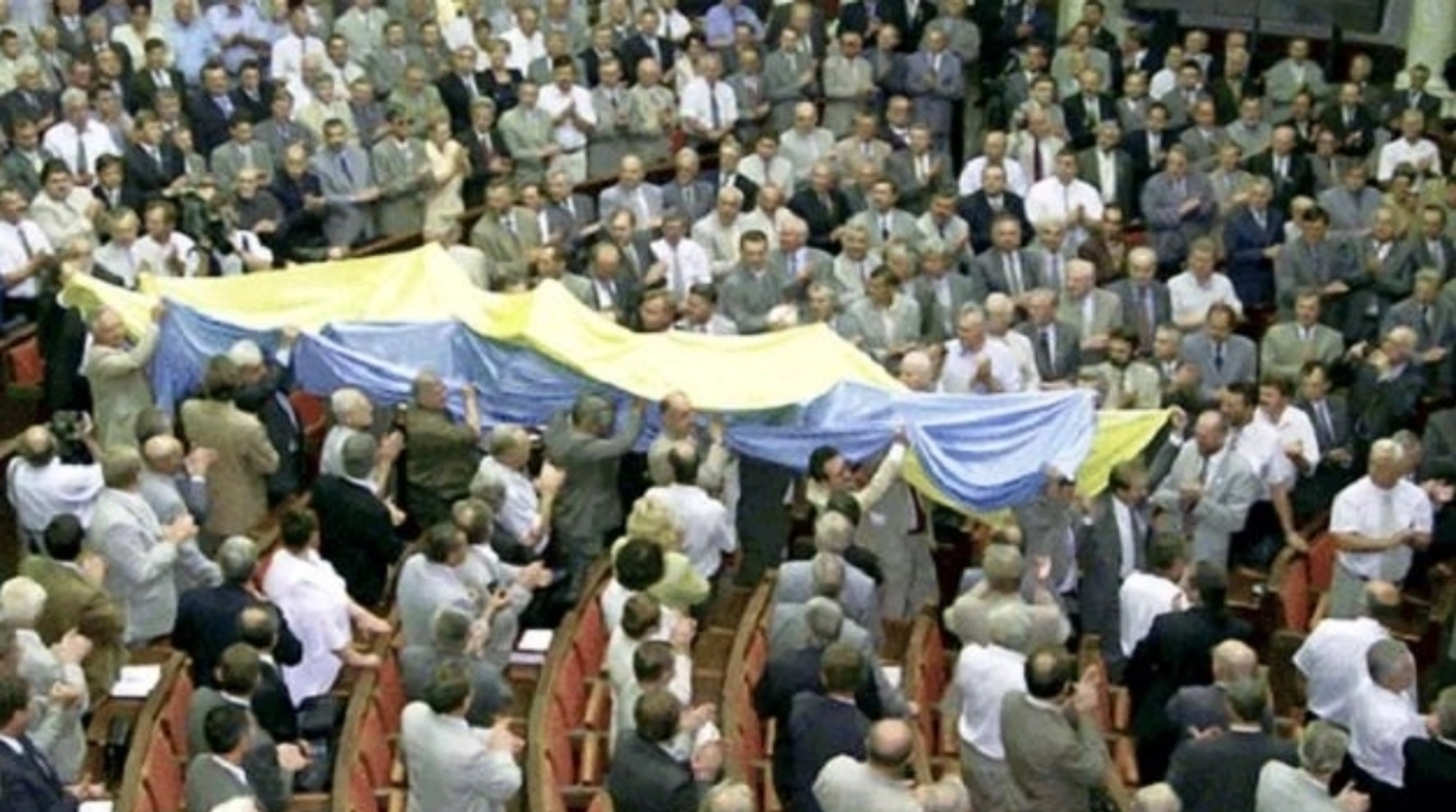
On Aug. 24, 1991, the then still Soviet Ukrainian parliament declared Ukraine’s independence. How and why?
What actually happened on that historic day in 1991, what precipitated the momentous breakthrough, and what did it signify?
Let me begin by sharing some insights drawn from my book “The Ukrainian Resurgence” (1999) which dealt with those critical years in Ukraine’s history.
Canada’s PM in Ukraine today, and Trump’s special envoy Kellogg also awaited.
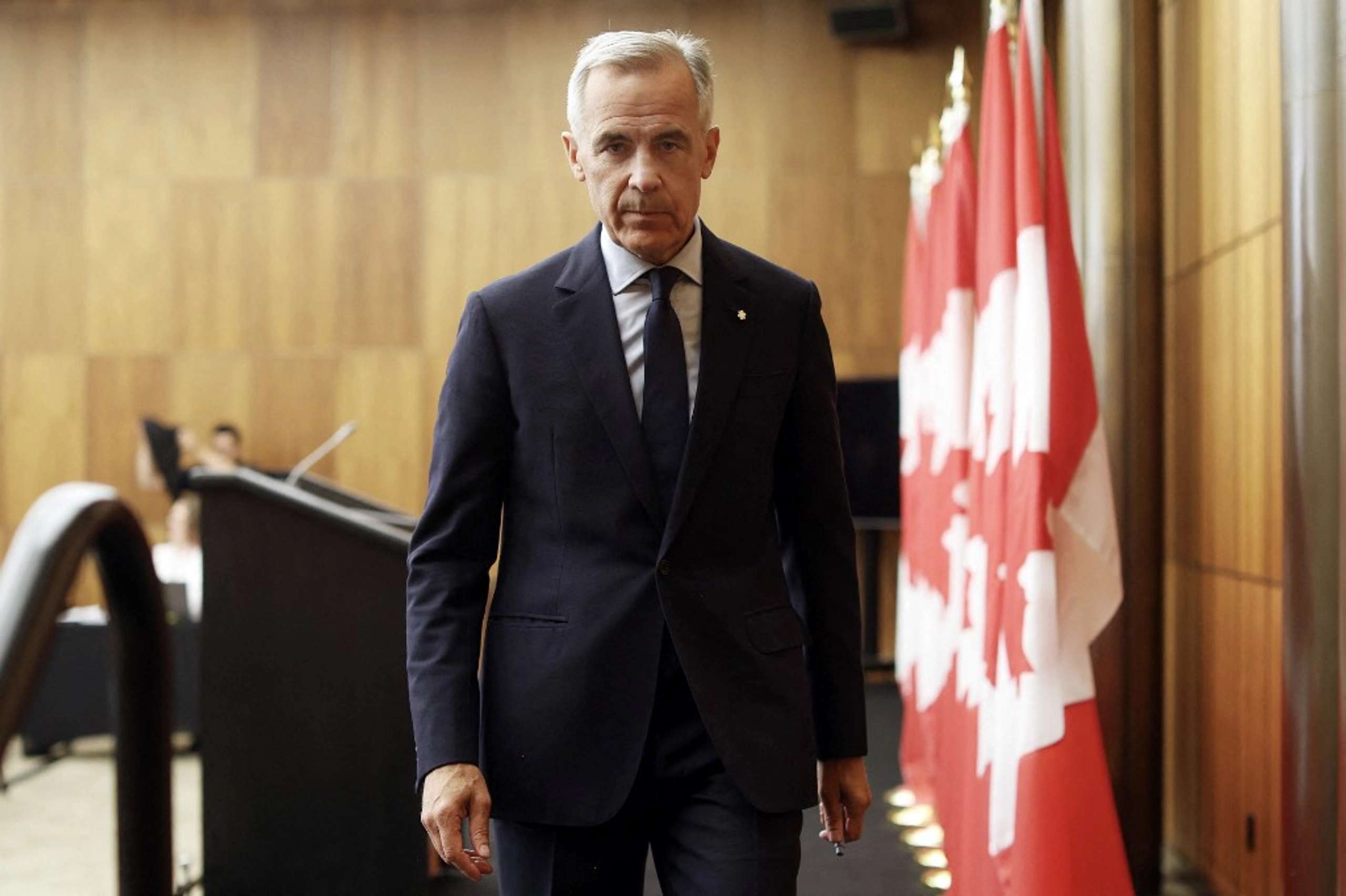
Canadian Prime Minister Mark Carney arrived in Kyiv on Sunday to mark Ukrainian Independence Day as world leaders push for an end to the war between Ukraine and Russia.
“On this Ukrainian Independence Day, and at this critical moment in their nation’s history, Canada is stepping up our support and our efforts towards a just and lasting peace for Ukraine,” Carney wrote on X as he touched down in the capital.
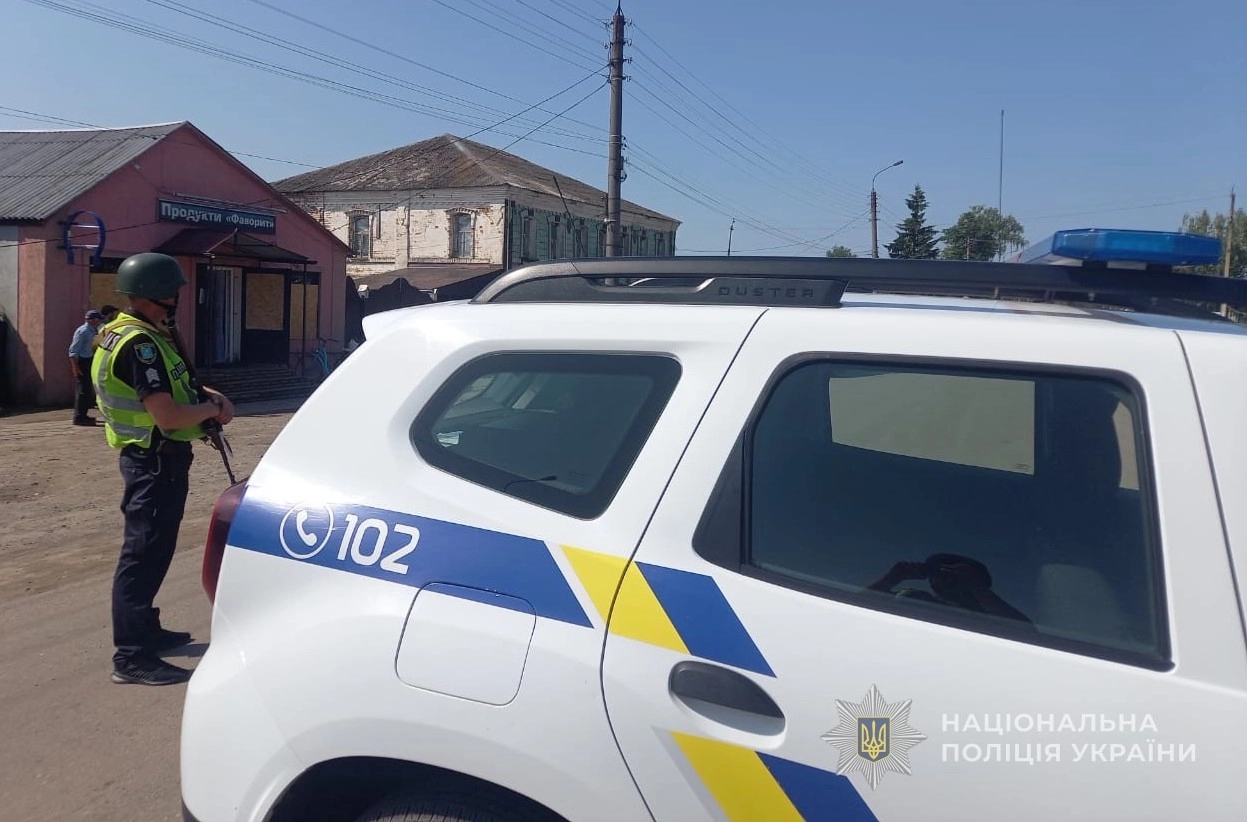
Sumy was attacked by enemy UAVs, explosions rang out in the city, no casualty or damage reports have been given by officials yet.
In the early pre-dawn hours of Sunday, August 24, explosions were heard in the northeastern Ukrainian city of Sumy as the region was under attack by Russian Shahed strike drones, according to the Ukrainian Air Force.
The Air Force reported that around 02:00 Kyiv time (23:00, Aug. 23, UTC), enemy strike drones were detected in the airspace over the Sumy region.
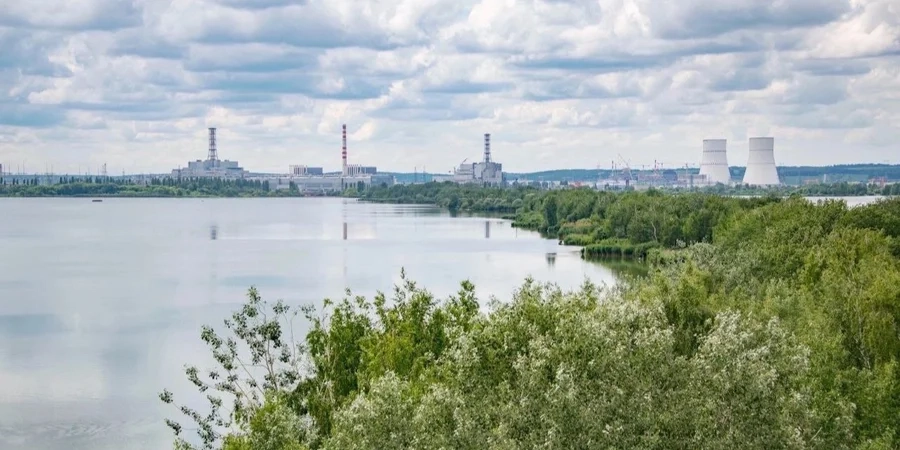
Did a Ukrainian drone hit a Russian nuclear power plant?
A fire broke out Sunday at a Russian nuclear power plant after the country’s military downed a Ukrainian drone, the facility said after the blaze was put out.
The “device detonated” upon impact at the Kursk Nuclear Power Plant in western Russia, sparking a blaze which the facility said “was extinguished by fire crews”.

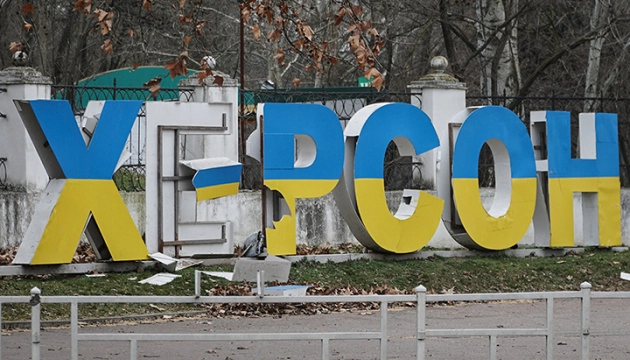
Near noon on Saturday, Russian soldiers dropped explosives from a UAV on a 15-year-old boy, now hospitalized with brain injuries and shrapnel wounds.
Russian soldiers dropped explosives from a drone on a 15 year old in Novoraisk, Kherson region, wounding the minor, midday Saturday.
Oleksandr Prokudin, Head of Kherson OVA, announced this in Telegram, Ukrinform reports.

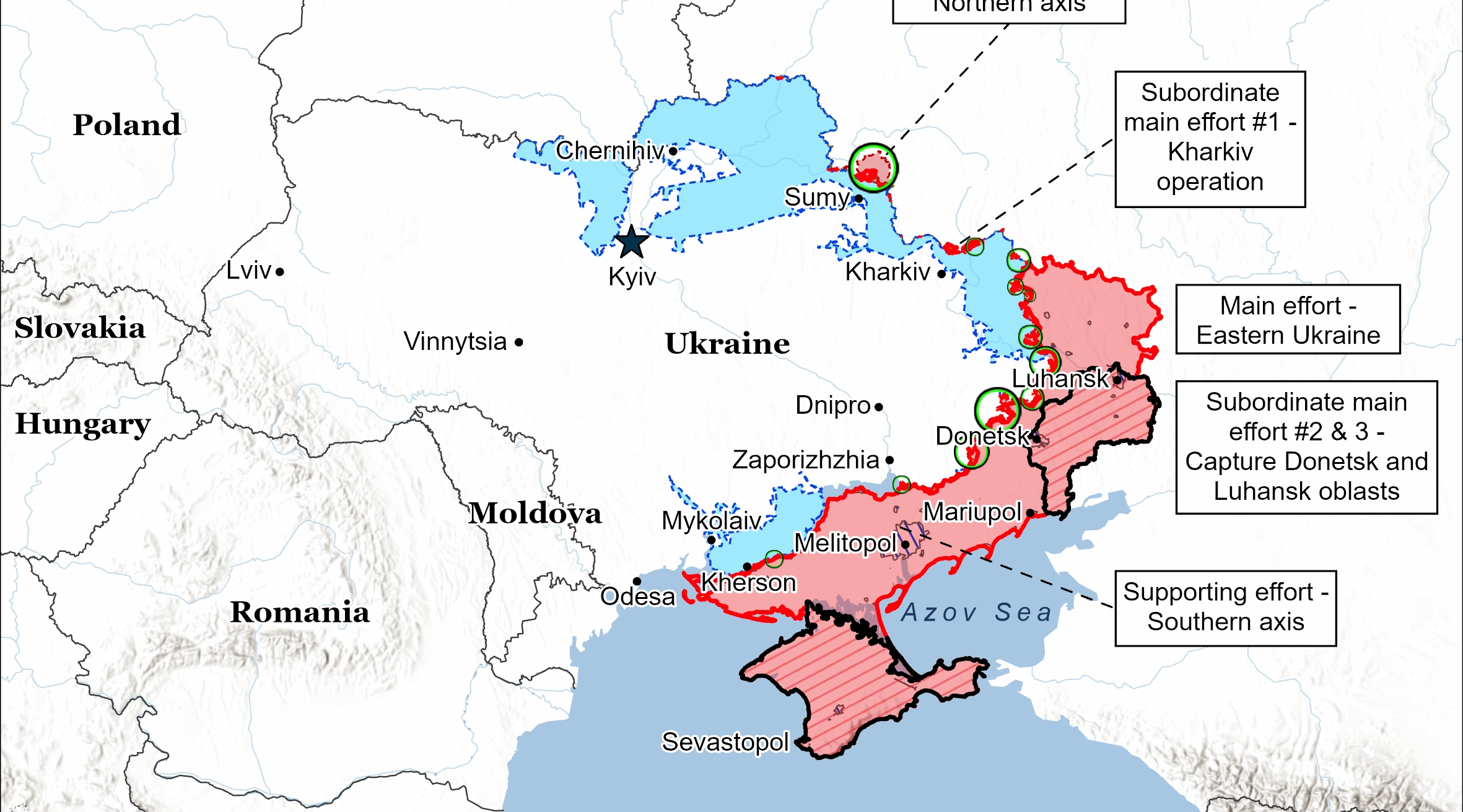
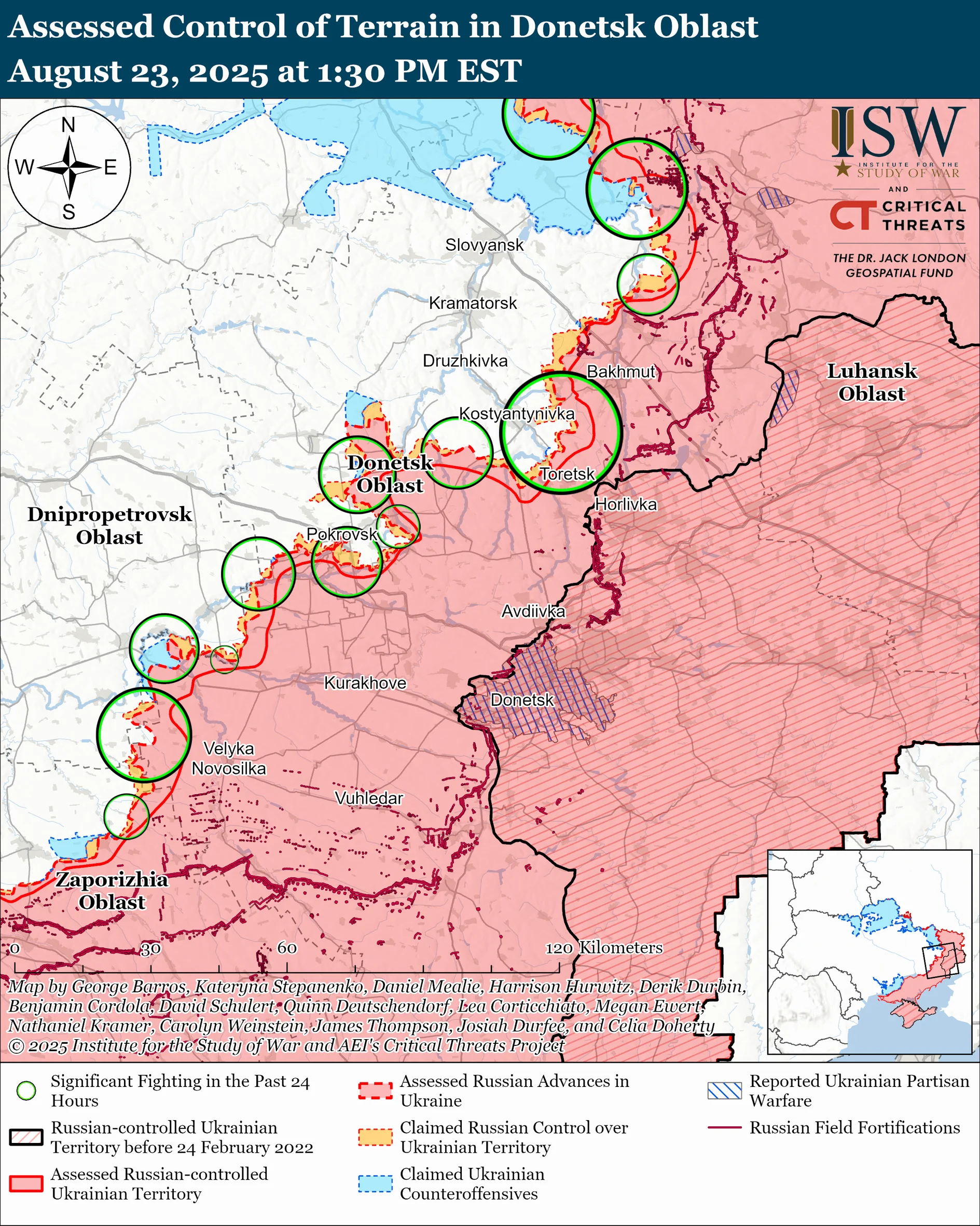
Latest from the Institute for the Study of War.
Key Takeaways from the ISW:
Ukrainian Intel released video and said 3 Russian soldiers who allegedly committed unspecified war crimes in the Bucha massacre were killed fighting in Luhansk by “an explosion.”
In the temporarily occupied territory of the Luhansk region, as a result of an explosion, three Russian soldiers who committed war crimes in Bucha, Kyiv region, were killed.
According to Ukrinform, the Main Intelligence Directorate of the Ministry of Defense of Ukraine reports this on Facebook.
Thirty-four years on – Ukraine embodies and defends Europe, whether some like it or not.
Ukrainians argue a lot about which European values, really, are part of the Ukrainian national DNA.
Get serious about corruption or score a sweet job for a relative? Grocery store vegetables or all the sweat and effort of working one’s own patch? Elect a responsible government or just throw the politicians out in a coup? Is smoking OK or not? Is my drunk neighbor entitled to free speech? Are shawarma stands good or bad for society? Should motorists always brake for cyclists and pedestrians?
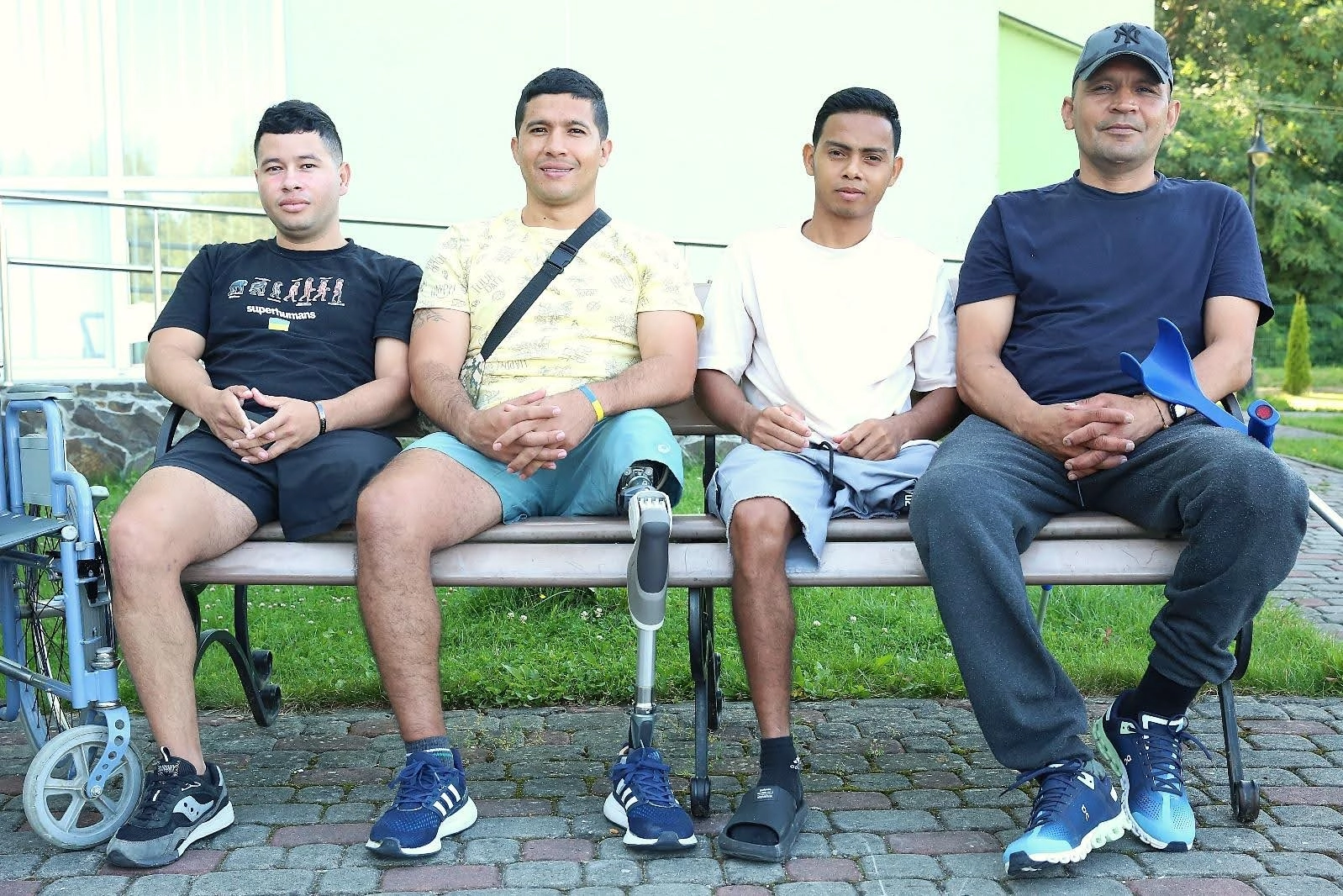
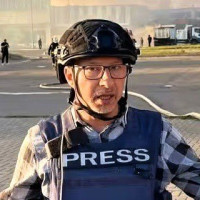
As they fight a war in a foreign land, the Colombian veterans are adjusting to a new reality, in a country that did not expect them.
Thousands of Colombians have travelled to Ukraine in the last two years to fight alongside the Ukrainian Armed Forces. While many have been killed at the front line, others have escaped with life-changing injuries that led to amputation.
Multiple challenges still await, however, in a country whose language they don’t speak and a system where they are not quite welcome.

Russia has a track record of flouting agreements it has signed. The only viable security guarantee for Ukraine is one that contains Russian aggression.
The war in Ukraine is well into its fourth year, and Russia has shown no sign of stopping. Since February 2022, Moscow’s campaign has never been just about borders or NATO expansion. It has been about erasing Ukraine’s sovereignty, its history, and even its right to exist. Vladimir Putin’s vision is imperial: Ukraine is not a neighbor but an illegitimate construct, a nation to be subjugated and folded back into Russia’s orbit. Every missile strike, every deported child, every destroyed church is part of this project of erasure.
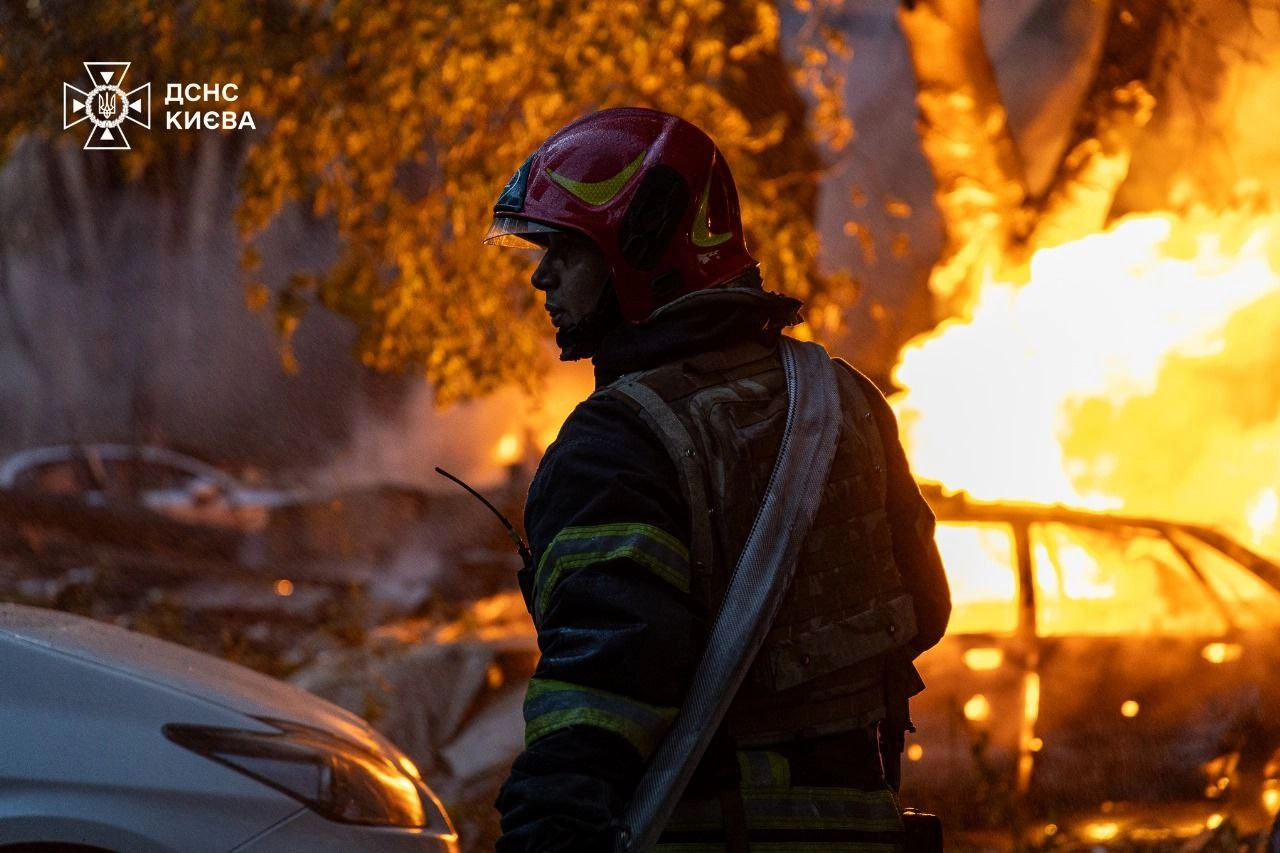
This month’s heavy bombardments of Kyiv and other cities reveal the strategy clearly. On Aug. 1, 2025, Ukraine’s capital suffered its deadliest strike of the year: 31 killed, more than 150 wounded, including children. Just days later, during President Volodymyr Zelensky’s visit to Washington, Russia unleashed another wave of 270 drones and 10 missiles, killing 15 more civilians. These are not random acts of war; they are signals. Each escalation coincides with moments of diplomacy, as if to remind the world that Moscow, not Washington or Brussels, controls the tempo of this war.