It’s often the case that we judge the richness of a nation by its material wealth or its Gross Domestic Product. Or, if we are put off by economic comparisons, we might instead draw attention to hundreds or thousands of years of history as evidence of cultural depth.
However, I would like to suggest that the real richness of nations, in terms of their potential to encourage humankind toward better things in the future, is not money, raw materials or even the length of time they have existed, but rather the breadth of their experience in the multifarious ways in which people can be organized. It is within this knowledge that a nation can offer the rest of us guidance and perception on how to order ourselves to the most felicitous ends, and what arrangements might be attempted, and which ones are best avoided.
JOIN US ON TELEGRAM
Follow our coverage of the war on the @Kyivpost_official.
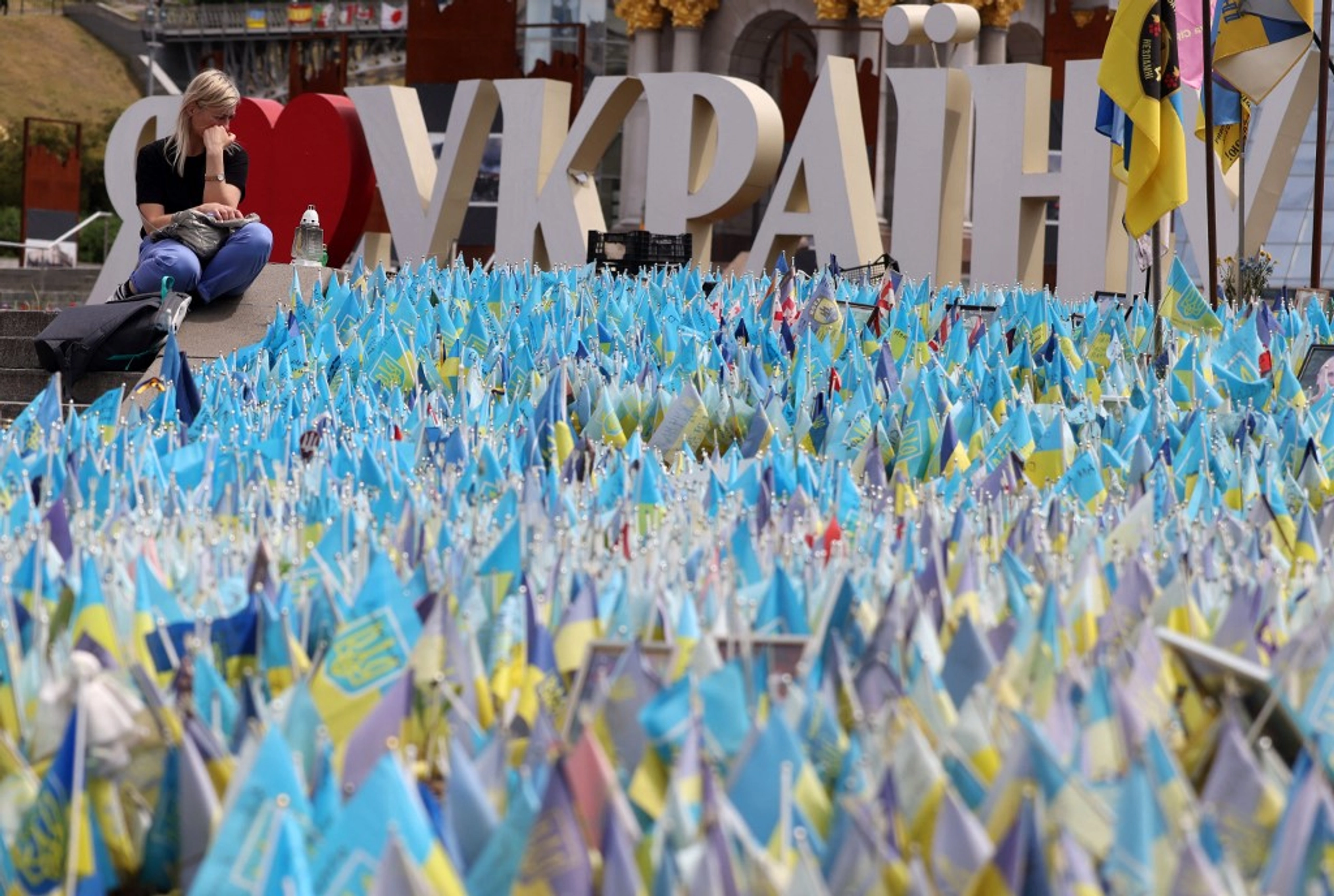
On this score, Ukraine marks itself out as a country with extraordinary wealth. Ukraine’s Independence Day is a good opportunity to reflect.
A breadth and depth of wisdom
During the last millennium the people who inhabit what is today Ukraine have experienced an astonishing diversity of humanity’s ideas about how to run a society.
A thousand years ago, Kyiv was the pivot of action for Yaroslav the Wise. The Grand Prince wasn’t especially despotic; he contributed enthusiastically to culture, law, and literacy. However, his reign was colored by the usual shenanigans of unrestricted monarchs. He imprisoned his brother, and his world was full of the swirling inconsistencies of court intrigue and power struggles. Under his leadership, the Kyivan Rus’ became a powerful kingdom in Europe and the crossroads of trade between east and west. Coursing through Ukraine’s collective memory is a knowledge of this monarchy and the experience of being at the center of it all.
Russia’s Summer Offensive: Barbaric Civilian Slaughter Reveals the Death Throes of a Weak Aggressor
Then came the Mongol invasion and for the next several centuries Ukrainian lands tested a kaleidoscope of aristocracies, quasi-republics, and semi-nomadic communities that pressed in from all quarters. The Grand Duchy of Lithuania, the Kingdom of Poland, the Ottoman Empire, the Muscovite Empire, the Austrian Empire, the list goes on. The black soils of Ukraine hosted the lot.
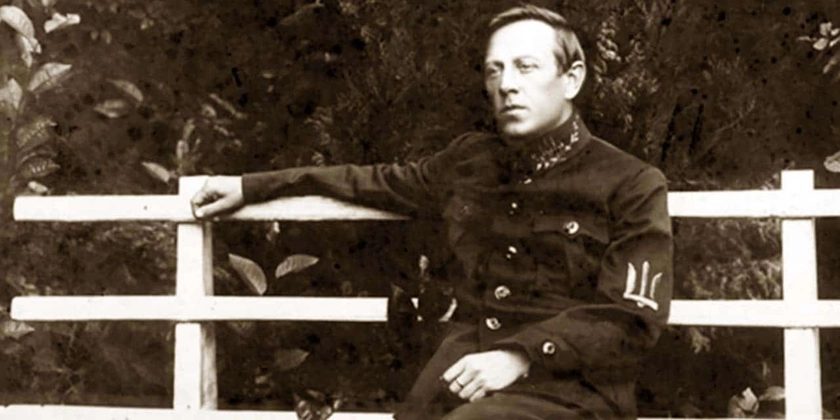
Turning to modern history, in the 20th century many nations experienced Bolshevism, but few were at the receiving end of this system from its inception. Unlike other members of the Communist Bloc, Ukraine was fully within the thrall of the Soviet experiment from 1922, not merely after the Second World War.
While others still enjoyed what peace remained of the early 20th century, Ukraine was under the stick of the Marxist-Leninist system with all its Stalinist horrors of the 1930s. These experiences were hideous for Ukrainians, but they must also be understood in terms of the richness of wisdom that they have inculcated into the nation that labored through them.
So too with Nazism. The Nazis were thorough in their brutality in Ukraine and the imprint of this aspect of human nature is stamped within the collective Ukrainian conscience.
In Britain, we fought the Nazis, but owing to Hitler’s failed ambition to cross the English Channel, we never had to live within the Nazi system itself. We can count experience in standing up to this form of government, but not a knowledge of the depredations that a system of fascist organization can impose upon a people.
So too with the Soviet system. Britons stood opposed to its creed, but we were never immersed within the leviathan itself. Despite some watered-down socialist governments of the 20th century, the knowledge of full-blown state socialism and its apparatus of state security is not within the British body politic or the collective experience of our people. Ukraine and her people know these systems to their core.
The modern significance
Of particular significance is that Ukrainians have endured the turmoil of extricating a nation from the mechanisms of totalitarianism, of transforming its institutions from an all-encompassing command economy to more democratic structures. The value and use of this knowledge to humanity cannot be overestimated.
No person has ever devised the perfect way to organize people into societies. Some attempts have been better than others; some have failings that have plumbed the depths of depravity. Those nations that have experienced the latter have a profoundly important role to play in warning the rest of us of those errors and how to avoid them.
Today, with a rising tide of populism and a casual forgetfulness of the cost and horror of despotism, Ukraine has an especially potent modern history that everyone would be sensible to examine. When a nation has experienced the world’s worst abominations, then surely it has gained the moral authority to express strong views on civilization’s direction?
Now, in its more recent history, Ukraine has transformed into a democratic republic, modelling its institutions and its aspirations on the traditions of modern western political philosophy, themselves the heirs of ancient Greek and Roman insights: the rule of law, impartial legal systems, accountable government, freedoms of expression.
Unlike other western European nations in the last 80 years, Ukraine has had to protect those institutions and its chosen course at enormous human and economic cost. Especially in the last four years, Ukraine’s efforts in defending democratic institutions have eclipsed any experiences of other nations in the 21st century.
Ukraine’s social wealth
Each generation is exposed to new circumstances that dilute the fashions, mores and outlooks of those who went before, but no generation can escape the mark of national memories that reach back across centuries, experiences that infuse their way into education, family traditions, architecture and institutional arrangements. And thus, each generation is an inescapable melting pot of all those influences. The greater the diversity of lives lived in the past, the richer the character of the people in every successive generation, the more powerful that nation’s contribution can become.
The remarkable fact of Ukraine is that it has seen methods of organization spanning the best to the most ruinous at almost every point along its history. In ancient times, the capriciousness of absolute monarchies and khanates followed by the enlightenment of early Renaissance republics. In the last century alone, the totalizing and ultimately genocidal demands of the worse “isms” that the human mind could contrive, through to the democratic aspirations of modern republics. Indeed, is there any form of human government and society that hasn’t swept into, or brushed shoulders with, Ukraine?
Some of these episodes may not fill Ukrainians with pride; they may not be periods of history that one cares to spend much time remembering, so filled they are with trauma. Nevertheless, they are part of the journey that makes the Ukrainian republic one of humanity’s richest nations.
What is so formidable about this form of wealth is that it costs nothing for other nations to mine. To access the rich seams of this resource requires only thoughtfulness, a willingness to read, and the curiosity and keenness to listen to the Ukrainian mind.
The views expressed in this opinion article are the author’s and not necessarily those of Kyiv Post.
You can also highlight the text and press Ctrl + Enter