What actually happened on that historic day in 1991, what precipitated the momentous breakthrough, and what did it signify?
Let me begin by sharing some insights drawn from my book “The Ukrainian Resurgence” (1999) which dealt with those critical years in Ukraine’s history.
JOIN US ON TELEGRAM
Follow our coverage of the war on the @Kyivpost_official.
First, it is important to remember that Ukrainians have a long history of struggle for their national rights and recognition as a nation and independent state. It has taken many forms over the centuries and included resistance to various invaders, would-be imperialists, colonizers and destroyers of their cultural identity and suppression of their language.
As far back as 1731, the outstanding embodiment of the European Enlightenment, Voltaire, emphasized in his history of Sweden’s warrior king Charles XII that “Ukraine has always aspired to be free.” He explained how because of its geopolitical predicament, being “surrounded by Muscovy (Later Called Russia), the Grand Signior [of Turkey] and Poland,” it ended up under “the Muscovite [Peter I], who did his best to enslave her.”
When the Tsarist Russian Empire collapsed in 1917, Ukrainian democratic forces in Kyiv declared the independence of Russian-ruled Ukraine on Jan. 22, 1918. Later that year, when the Austro-Hungarian Empire fell, Ukrainians in Western Ukraine battled for their independence against the Poles. Confronted by Russian “Red” and “White” forces in the east, and Poles in the west, the Ukrainian national forces were defeated militarily.
You Realize How Valuable Life Is When Death Feels Possible Every Day
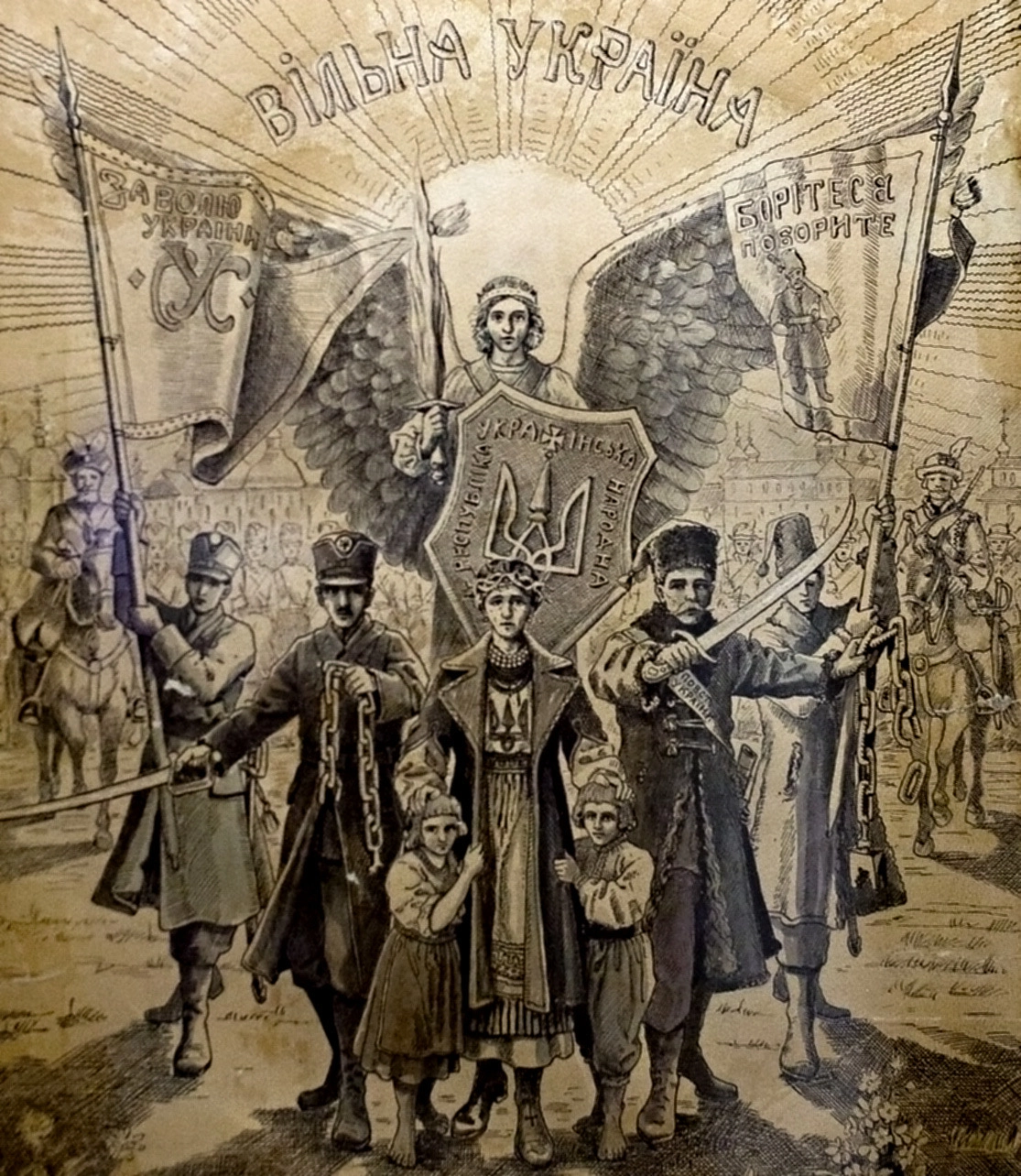
Nevertheless, the strength of the burgeoning Ukrainian national movement forced the Bolshevik leader Vladimir Lenin at the beginning of the 1920s to accept the establishment of a “Ukrainian Soviet Socialist Republic,” which was theoretically free, but in reality ruled by Moscow. Despite the terrible consequences of communist rule – the genocidal man-made famine (Holodomor) of 1932-33, oppression and terror, and Russification – in 1945, Iosif Stalin even allowed Soviet Ukraine to be one of the founding members of the United Nations.
Late 1980s – early 1990s
Moving forward four decades: in the second half of the 1980s, after Soviet leader Mikhail Gorbachev began to loosen political controls with his policies of perestroika (restructuring) and glasnost (opening), “Soviet” Ukraine gradually began to break free from the tight control that Moscow had imposed on it.
By early 1991, it had slowly caught up with the democratic and patriotic processes taking place in the other non-Russian republics, and Moscow itself, and was asserting the “state sovereignty” it had proclaimed in July 1990.
However, an attempted coup by communist hardliners in Moscow on Aug. 19- 22 that year jeopardized progress. The communist leadership of the republic, above all parliamentary speaker, Leonid Kravchuk, wavered. The democratic opposition, which was still in the minority, could not persuade him to call an emergency session of parliament until it was obvious that the coup had failed. It was scheduled for Aug. 24.
The mood and responses in Ukraine and other non-Russian republics were, paradoxically, largely conditioned by what occurred in Moscow. It was there that the disintegration of the Soviet Union was irrevocably set in motion by what occurred in response to the abortive putsch.
The mood and responses in Ukraine and other non-Russian republics were, paradoxically, largely conditioned by what occurred in Moscow.
On Aug. 22, in the Soviet capital outside the KGB headquarters, angry crowds toppled the statue of Felix Dzerzhinsky, the founder of the Soviet secret police. In Estonia and Lithuania, the Communist Party was banned. And in Kazakhstan, its Communist leader, Nursultan Nazarbayev, resigned from the party and ordered the “departization” of his vast Central Asian Republic, that is, stripping the Communist Party of its exclusive ruling role.
The following day, Kravchuk flew to Moscow where he witnessed the public humiliation of Gorbachev by Boris Yeltsin, who had broken with the Communist Party and was spearheading the movement for democratization within the “sovereign” Russian Federation.
Totally unexpectedly, Yeltsin suspended the activities of the Communist Party in the Russian Federation, ostensibly pending the investigation of its role during the attempted putsch. Communist Party offices were sealed in Moscow and Leningrad.
It was against this politically surreal background that Kravchuk returned home to face the music along with his stunned and beleaguered party colleagues. They were in effect fighting for their political lives.
Aug. 24, 1991
Kravchuk agreed to hold an emergency session of parliament on Aug. 24 – a Saturday. The extraordinary session lasted for over 12 hours and was broadcast live on state TV and radio. Initially, there was only one item on the agenda – the political situation in the republic after the attempted putsch, and how to safeguard the republic’s sovereignty from possible new threats in the future.
But the opposition was determined not to let Kravchuk and his comrades off the hook and to make the fullest use of this unprecedented situation.
As the heated exchanges continued, the latest news from Moscow again played a sobering and catalytic role. The Russian authorities were unilaterally taking over the center’s structures, including the KGB. Yeltsin was placing his people in key positions and the Russian government had taken control over all Union economic and communications ministries.
One angry Ukrainian deputy, Valerii Batalov, asked rhetorically whether Ukraine had any need of a union in which all the key positions would be held by Russians.
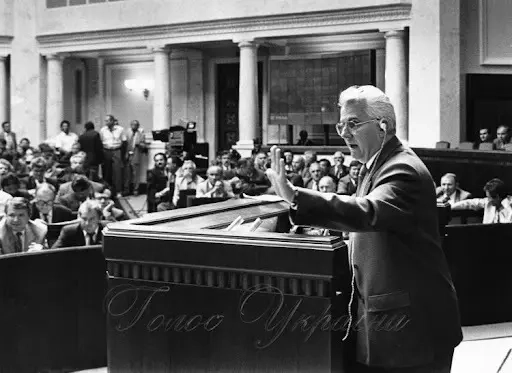
Kravchuk seized the opportunity to redeem himself and replied that he too had been “distressed and even annoyed” by the demands that “only Russians be appointed.” He warned that the democracy saved by Yeltsin had produced “a very dangerous” wave of “drunken democracy.” Unexpectedly, he now recommended that the deputies support a Declaration of Independence. Given this major concession, some of the tension subsided. But one of the leaders of the democratic opposition, Ihor Yukhnovsky, caused a stir in his own ranks, proposing that the declaration of independence be endorsed by a referendum to bolster its validity. Extending a peace offering to the Communists, he also advocated that an orderly transition be carried out and that there should be no recriminations against serving communist officials.
The overtures from the opposition turned out to be the lifeline that the communist majority had been seeking, and they eagerly grabbed at it. For the moment the question of banning the Communist party was left aside. Apart from agreeing to independence, the Communist majority accepted the departization of the republican procuracy, internal ministry, and KGB, and all military forces stationed in Ukraine.
But they exacted a significant political price, the implications of which are still with us today. To placate the communist deputies, no mention was to be made of the former attempts in 1918 to establish a democratic Ukrainian independent state.
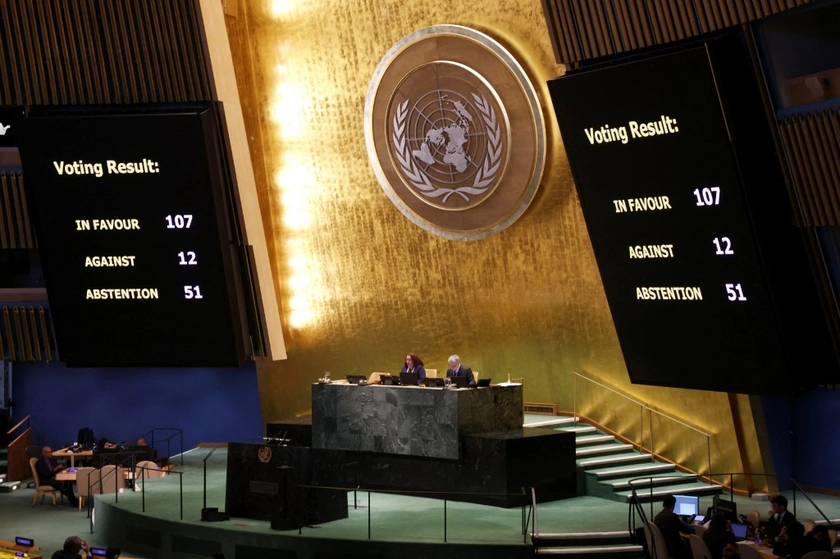
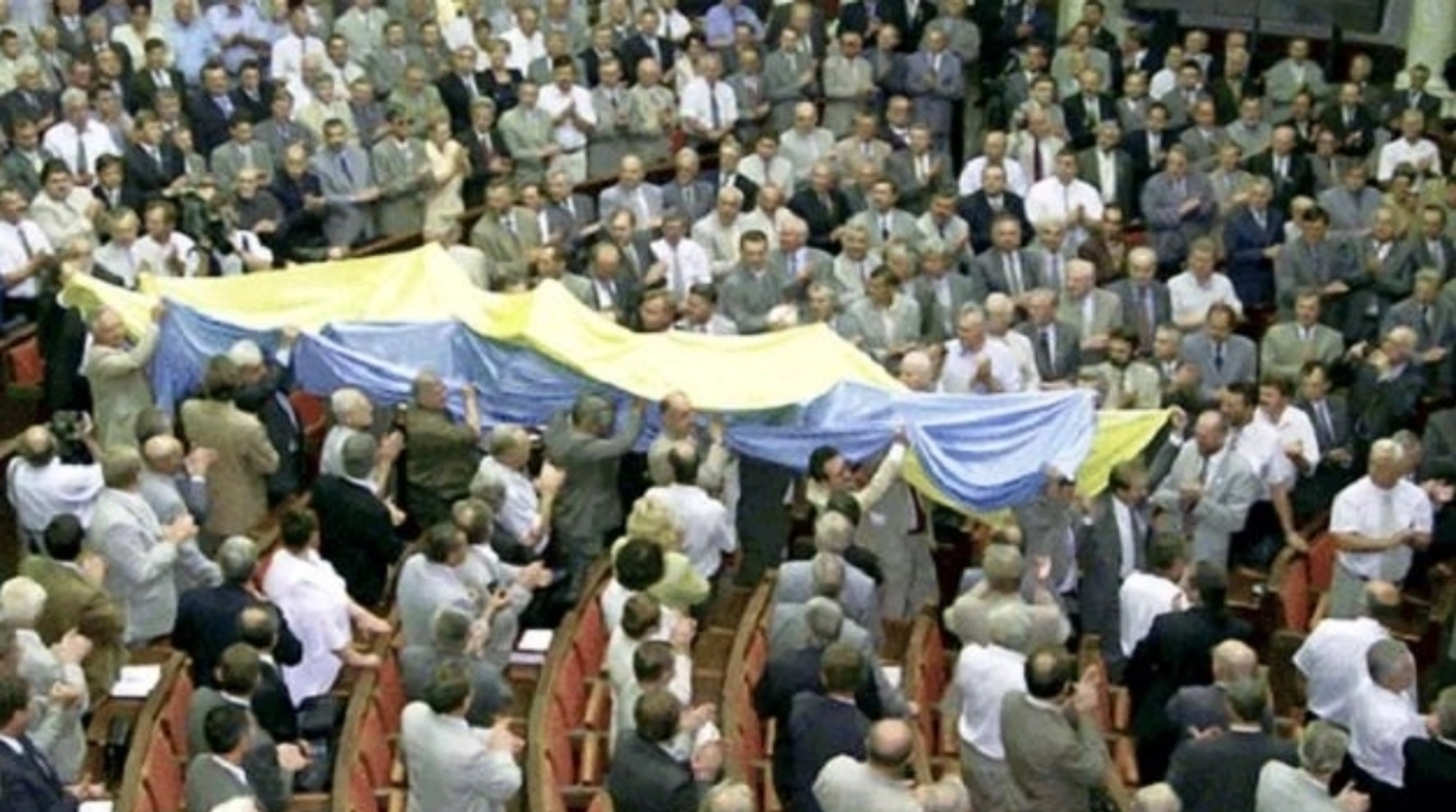
After more debate, just before 6 p.m. on Aug. 24, 1991, Kravchuk was finally able to read out a consolidated Declaration of Independence that skipped around the issue of departization. When it came to the vote, 346 deputies supported it, one voted against (Albert Korneev from Donbas), and three abstained. The declaration was to be put to a republican referendum on Dec. 1.
To placate the communist deputies, no mention was to be made of the former attempts in 1918 to establish a democratic Ukrainian independent state.
To place things in proper context, that same day Yeltsin effectively banned the Communist Party in Russia and took over its assets. He also recognized the independence of Latvia and Estonia. The following day, Belarus also declared independence.
Despite the victory of democratic forces in Moscow, Russian politicians were perturbed by the prospect of Ukraine going its own independent way. Within days, the parliament of the Russian Federation sent a high-level delegation to Kyiv. They witnessed Ukraine’s strong desire to be fully sovereign and for normal relations to be maintained with Russia based on equality. At a joint press conference with the Russian delegation on Aug. 29, Kravchuk referred to the “former USSR” for the first time.
On Aug. 30, under mounting public pressure, the presidium of the Soviet Ukrainian parliament eventually agreed to ban the Communist party in Ukraine and nationalize its property.
Finally, on Dec. 1, 1991, the referendum on independence produced a resounding vote in favor in all regions of the country. This was the final nail in the coffin of the Soviet Union. By the end of the month, after more than 70 years, the Soviet empire had ceased to exist.
A young democracy under threat
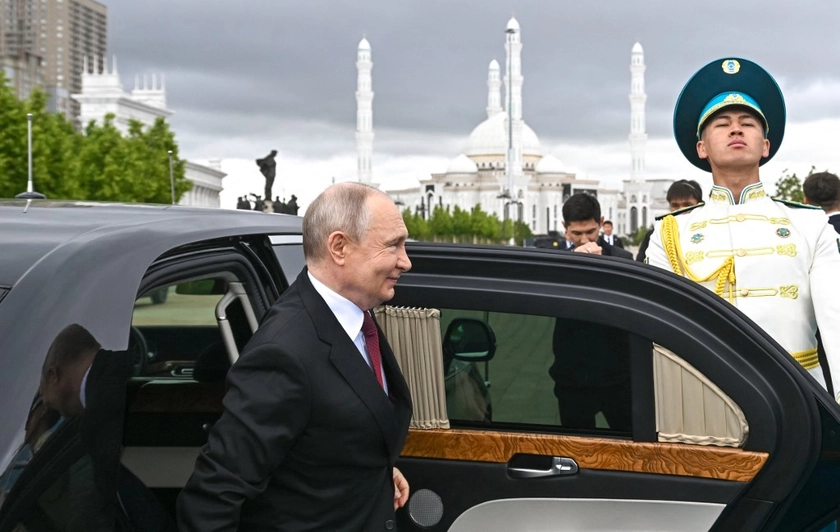
Today, 34 years later, Russian imperialists, revanchists, and revisionists embodied in Russian President Vladimir Putin’s regime are seeking to reverse history and restore their despotic imperialist hegemony by force.
But Ukraine is fighting back, strengthened by a young generation born in an independent country and by the support of much of Europe and the free world, which, like Voltaire three centuries earlier, has recognized not only the Ukrainians’ desire but also their right to freedom.
In short, the events of 1991 do not stand alone—they are part of a continuum, the culmination of generations’ worth of aspirations, sacrifices, and hard-won victories.
Regrettably, the precedent of 1918 was deliberately omitted from the 1991 Declaration of Independence, but the memory of earlier attempts at self-rule is crucial.
Regrettably, the precedent of 1918 was deliberately omitted from the 1991 Declaration of Independence, but the memory of earlier attempts at self-rule is crucial. This irresponsible concession to forces that then, and subsequently, have sought to revise and distort Ukraine’s modern history is, in today’s conditions, unacceptable and needs to be rectified without further procrastination.
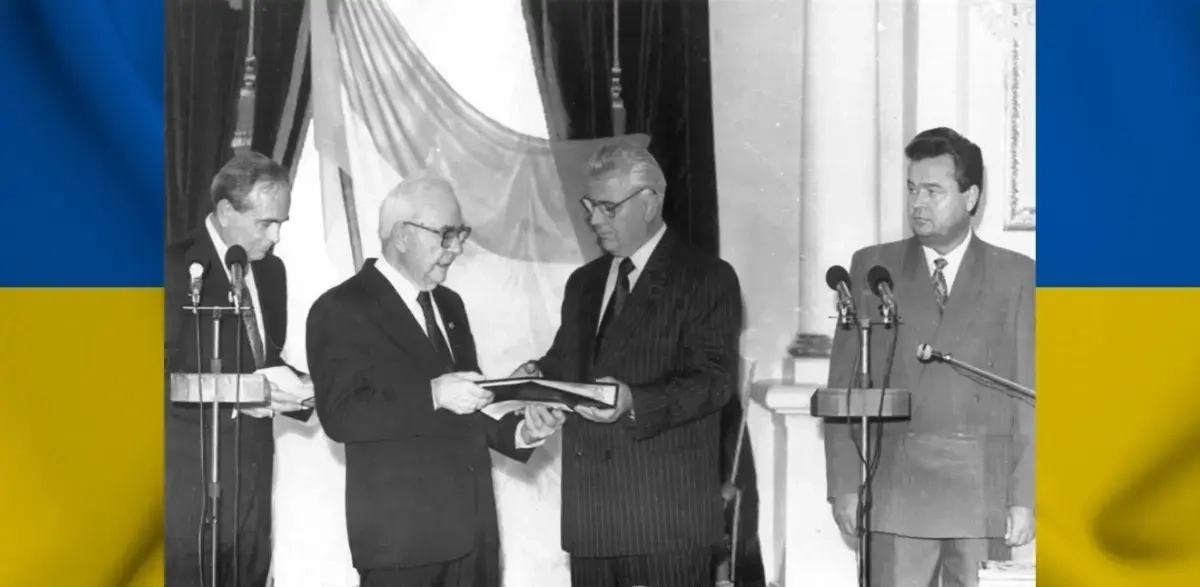
Without diminishing the significance of Aug. 24, 1991, Ukraine, Jan. 22, 1918 should also be observed as a state and public holiday – as the actual date on which modern independent Ukraine was born, and whose legacy was reaffirmed 73 years later.
See an earlier version of this article here.
You can also highlight the text and press Ctrl + Enter