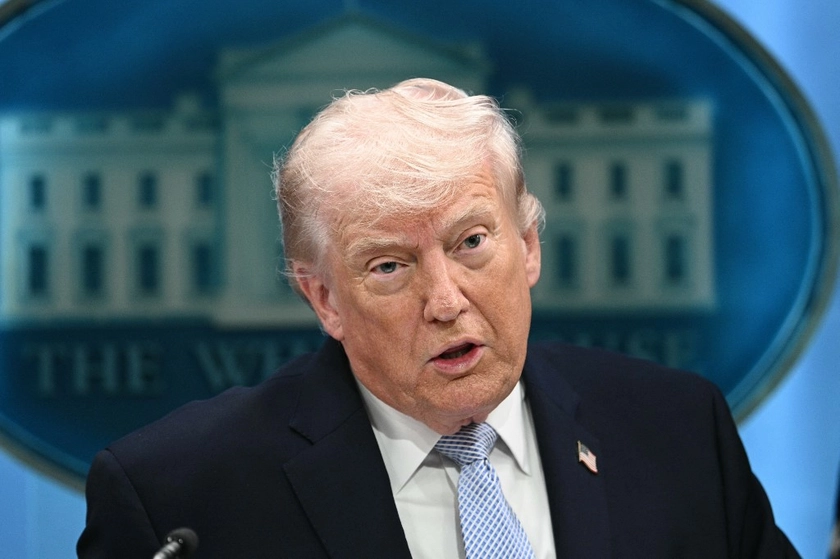
The Trump administration’s approach to its allies reveals a troubling pattern: it grants Israel unconditional support while demanding that Ukraine accept territorial losses. Personal preference, not principle, determines who receives support and who faces pressure.
The double standard in practice
The contrast is stark and systematic. Benjamin Netanyahu operates with maximum freedom – Israel expands settlements in the West Bank without Washington’s objection, conducts military operations without public rebukes, and pursues regional policies without micromanagement. The US administration brokered a ceasefire between Israel and Hamas, initiated what officials call a “fledgling peace process,” and maintained robust support for Israeli security. Trump welcomed Netanyahu to Mar-a-Lago, emphasizing his ongoing support. Netanyahu’s authority was acknowledged. His plans for territorial growth backed.
JOIN US ON TELEGRAM
Follow our coverage of the war on the @Kyivpost_official.
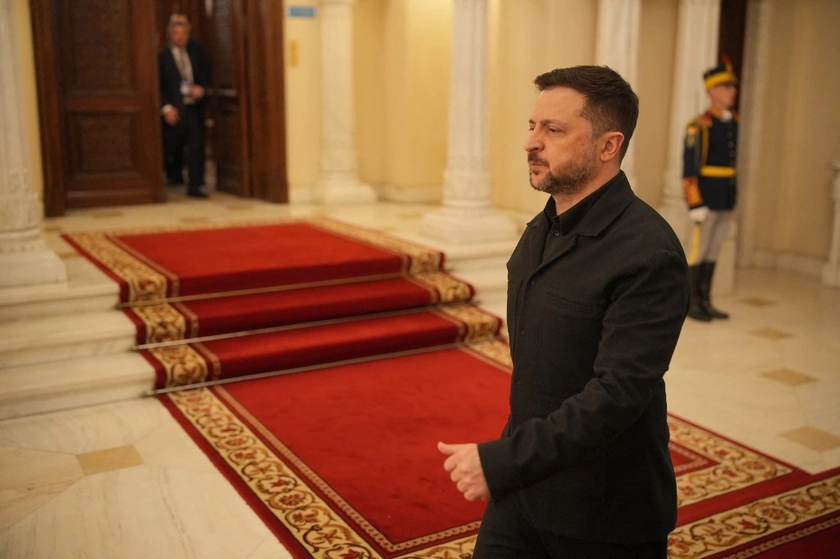
Volodymyr Zelensky receives the opposite treatment. Trump entered his second term boasting he could end Ukraine’s war in “one day.” By April 2025, he conceded the conflict had “proved trickier than anticipated.” His frustration was palpable: “I thought it would be easily settled.” Rather than pressuring Moscow, Trump redirected the onus toward Kyiv, anticipating it would capitulate to Moscow’s stipulations evidently endorsed by Trump’s own team of negotiators.
Zelensky: Russia Shifts Donetsk Capture Deadlines – Now at 15 Attempts
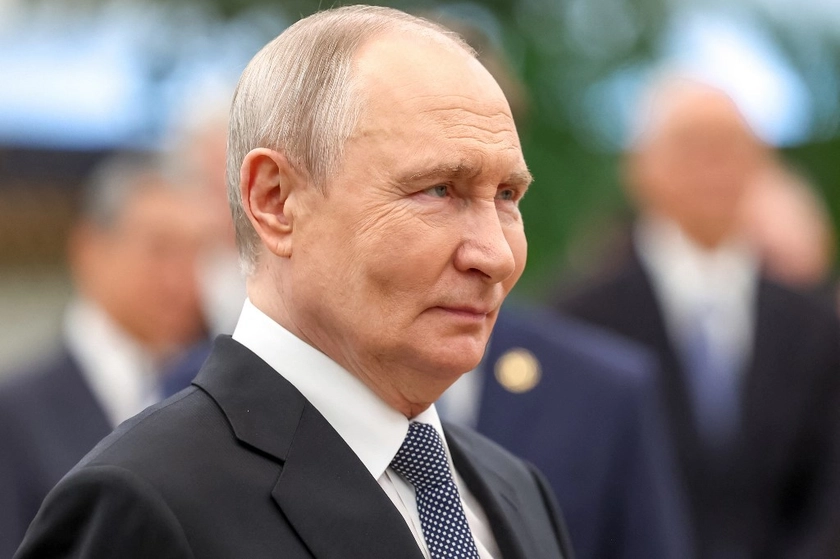
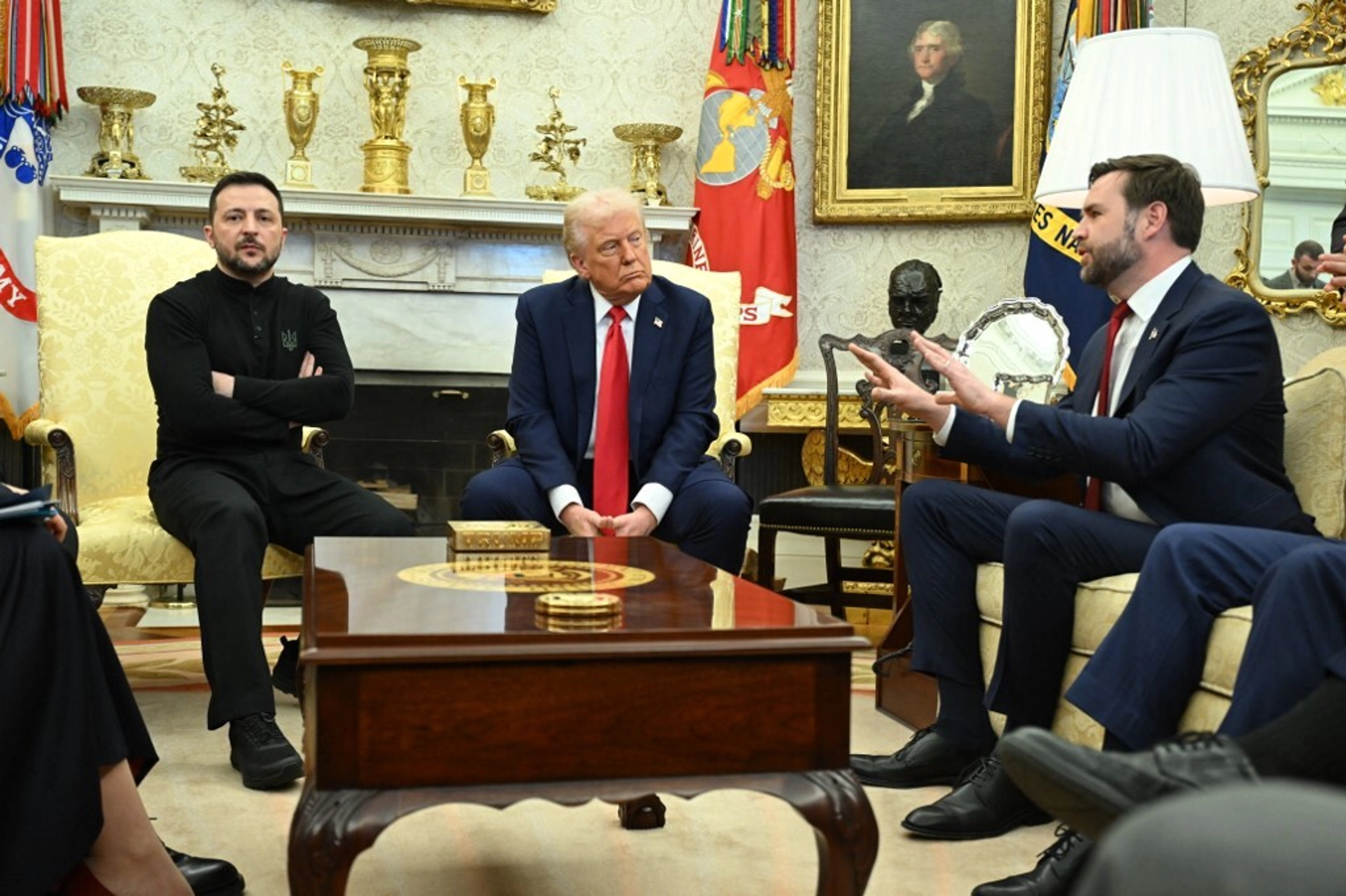
In August 2025, the meeting with Putin in Anchorage took place. This summit, in a sense, indicated America’s readiness to view the existing front lines as a basis for future talks. Ukraine and the EU were presented with this framework as a fait accompli. By October, Trump was preparing further talks with Putin in Budapest while Zelensky was summoned to the White House – the optics suggesting supplicant rather than partner.
The military support gap reinforces this asymmetry. Israel has continued to receive advanced weapons systems and intelligence sharing without restriction. Trump not only helped defend Israeli airspace but endorsed long-range strikes deep into Iran – operations that risked regional escalation but faced no American objection.
For Israel, Trump backs strategic decisions without seeming to question them. For Ukraine, he imposes conditions and constraints. The inconsistency is glaring.
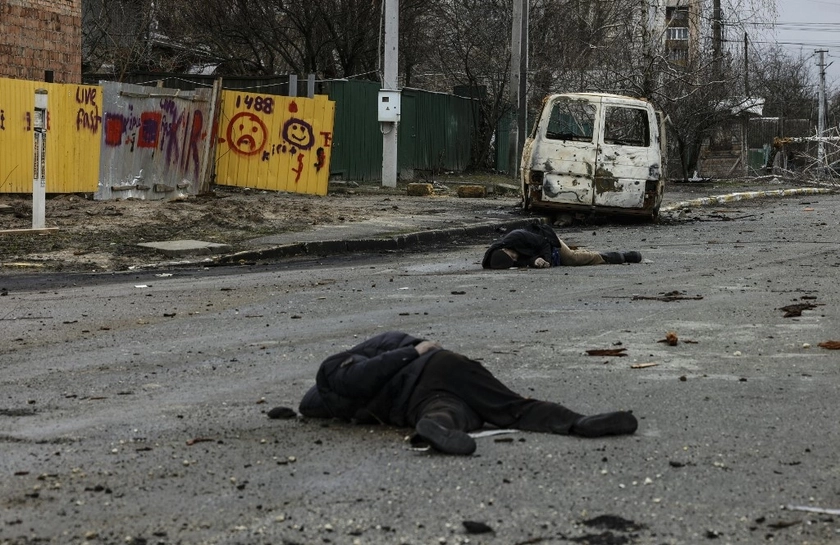
Ukraine, defending freedom on Europe’s eastern border and upholding democratic values, wages an existential war against Russia, which makes no secret of its hostility to the West. Yet Trump applies a different standard. He has blocked efforts to establish a no-fly zone over Ukrainian cities and withheld long-range missiles capable of striking deep into Russian territory – weapons that could shift the battlefield calculus.
For Israel, Trump backs strategic decisions without seeming to question them. For Ukraine, he imposes conditions and constraints. The inconsistency is glaring.
The Witkoff factor: friendship, finance, and foreign policy
Steve Witkoff, a New York real estate developer with no diplomatic experience, became Trump’s special envoy to the Middle East in November 2024 after reportedly pitching the idea over lunch. His portfolio has since expanded to include Ukraine negotiations with Putin and European security architecture.
Witkoff operates on personal loyalty – he and Trump are golf buddies – while maintaining business entanglements that create concrete conflicts of interests have been widely reported. Witkoff appears to have worked for months in his Middle East role before properly disclosing his financial interests to the public, contrary to ethical requirements. Congressional investigators have documented these violations, but the pattern has continued
The conflicts extend to Ukraine policy. Witkoff’s real estate company has reportedly been bankrolled by billionaire Len Blavatnik, a Ukrainian-born oligarch currently sanctioned by Kyiv as a “national security threat.” Despite these ties, Witkoff shapes US policy toward Ukraine.
According to reports from Ukraine’s Office of the President, Witkoff has coordinated directly with Kirill Dmitriev, Russia’s top economic negotiator and a key figure in Moscow’s efforts to influence Washington.
Witkoff has not operated alone. Jared Kushner, Trump’s son-in-law and a businessman also with Middle East business interests, has worked closely with Witkoff on Ukraine and Middle East negotiations.
Family members and personal associates – not career diplomats or subject-matter experts – are shaping policy affecting America’s most critical alliances.
The mechanism is straightforward: Trump backs leaders he admires or thinks he can make deals with and imposes constraints on those he doesn’t. Netanyahu gets deference, Zelensky gets demands, condescension and even attempted humiliation.
Zelensky’s defense agreements with Saudi Arabia, the UAE, and Qatar were a rejection of Trump’s asymmetric approach. He acted despite Trump’s direct objection –calculating that Ukraine’s independent value made compliance unnecessary.
Ukraine’s refusal: the calculus of independence
Last month, however, when Zelensky signed defense deals with Gulf states despite Trump’s explicit objection, Ukraine signaled it would not accept this framework – a refusal with profound implications for the transatlantic alliance and American credibility.
Zelensky’s defense agreements with Saudi Arabia, the UAE, and Qatar were an explicit rejection of Trump’s asymmetric approach. He acted despite Trump’s direct objection – not seeking approval but calculating that Ukraine’s independent value made compliance unnecessary.
The defiance was strategic. Trump had spent months pressuring Kyiv to accept territorial concessions, treating current Russian-occupied front lines as negotiation baselines, and demanding Ukraine defer to his timeline and preferences. The message: If Washington treats support as transactional and unreliable, Ukraine will build alternatives rather than accept subordination.
Ukraine possesses concrete assets that Trump’s framework ignores. Four years of anti-drone warfare expertise and indigenous long-range missile development make Ukraine uniquely valuable to Gulf states absorbing Iranian attacks. Its strategic geography matters to European security regardless of American preferences. Kyiv is deploying these assets to build relationships that don’t depend on Trump’s approval or American reliability.
The timing underscores the calculation. Zelensky concluded that US support under Trump cannot be assumed – and that diversification beats compliance with a framework designed to reward Russian conquest.
Implications for Ukraine and Europe
For Ukraine, the immediate stakes are territorial. Accepting Trump’s framework would mean legitimizing the loss of roughly 20% of its territory and leave it vulnerable to renewed Russian offensives. Any ceasefire without credible enforcement mechanisms is a temporary pause, not a settlement. Security guarantees from an administration that views Ukraine as a burden, if not irritant, are operationally meaningless – a piece of paper rather than a shield.
But Ukraine’s dilemma is Europe’s dilemma. The question rippling through European capitals is whether NATO’s Article 5 threshold remains credible. If Washington pressures a democratic ally under invasion to surrender territory rather than defending its sovereignty, what does that mean for the Baltic states, Poland, and Romania? These countries face a harder version of Ukraine’s calculation: they are locked into NATO, which means they are locked into American reliability.
That reliability now looks uncertain. NATO military planning assumes US reinforcements, logistics, and integrated command structures. Without that assumption, European militaries confront critical gaps: insufficient airlift capacity to move forces rapidly across the continent, depleted munitions stockpiles from supporting Ukraine, and integrated air defense systems dependent on American radar and coordination. The nuclear umbrella that has underwritten European security for over 70 years rests on American credibility –and credibility, once fractured, is difficult to repair.
Both Ukraine and Europe are already acting on this recognition. Defense budgets are rising across the continent. Nuclear deterrent discussions, long taboo, are now openly debated in Berlin, Paris, and Warsaw. The EU is building real capacity to support Ukraine independently of American aid. Ukraine has begun diversifying its security partnerships rather than waiting for American decisions made in its absence. European capitals are accelerating defense spending and exploring independent deterrent capabilities.
These are rational responses to demonstrated unreliability and the double standards that have come to characterize the Trump administration.
The views expressed are the author’s and not necessarily of Kyiv Post.
You can also highlight the text and press Ctrl + Enter