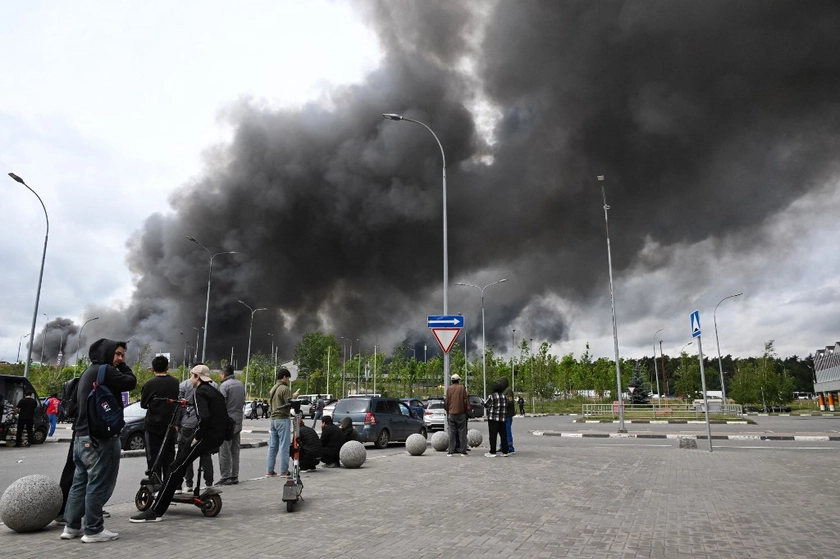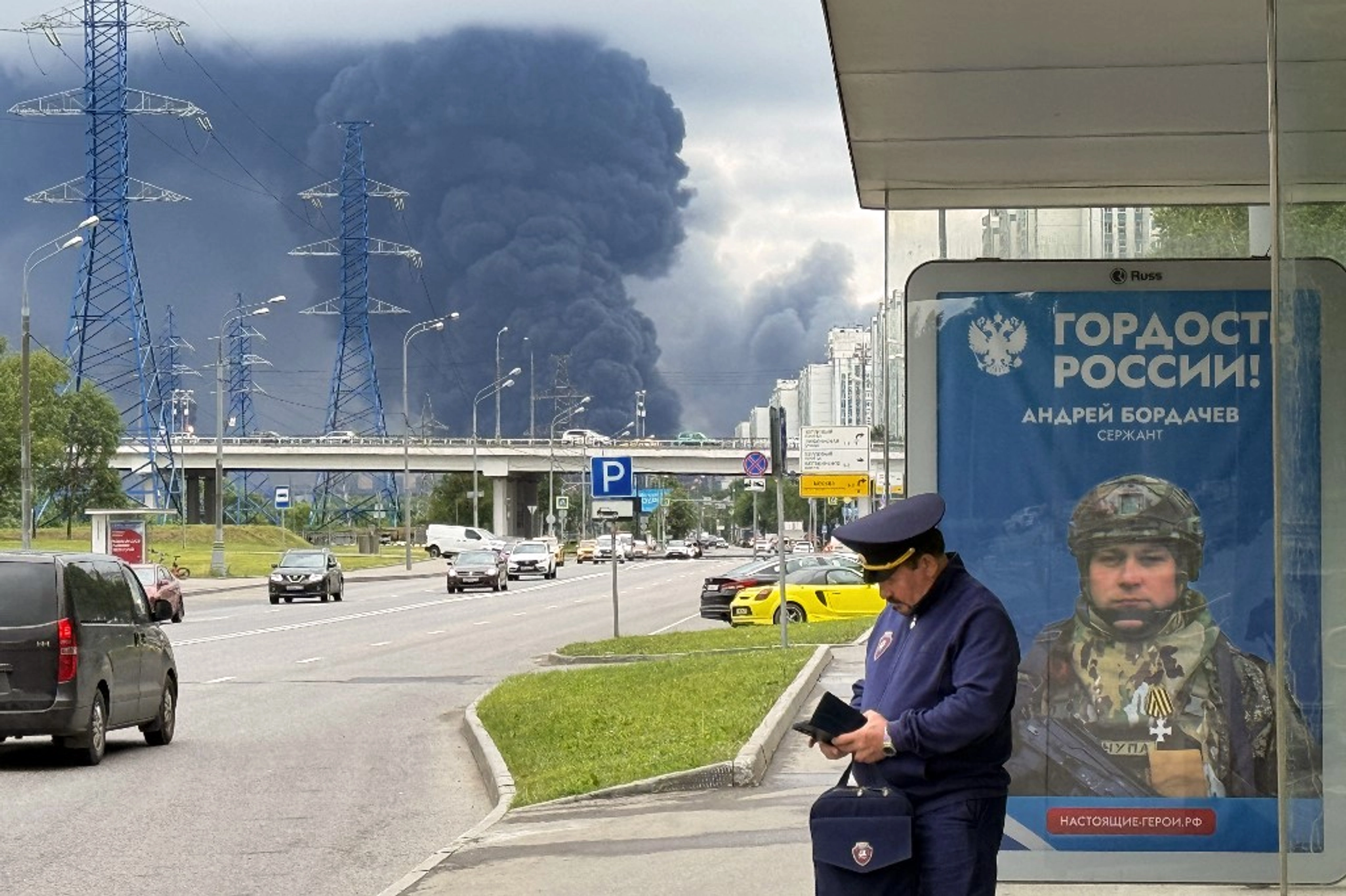
The big news last week (June 14-19) was the Ukrainian drone strikes against Moscow and the fires and chaos that followed. Much Sturm and Drang by Muscovites irate and stressing that the nasty “Special Military Operation” was allowed into the nice, clean Russian capital. Russia’s strike against Kyiv this week was smaller but more evil.
Also, the Ramstein Group met and decided on $4 billion more support to Ukraine, which surprised no one, so you can read about that somewhere else if you want.
JOIN US ON TELEGRAM
Follow our coverage of the war on the @Kyivpost_official.
Many images this week, this is what you get when big, combined strikes hit major cities full of people with smartphones.
The front
Kostiantynivka – Over the week, there were more reports of more Russian pressure, and on Thursday, the local command announced it had “liberated” 96 buildings in June. Maps show Russian infiltration from about 270 degrees around the city, but the official Armed Forces of Ukraine (AFU) stance is that positions are holding and the enemy is being killed.
There was a report that appeared on Tuesday that over the weekend, the Russian General Staff sent inspection teams to the various sectors to determine how truthful reports were about the actual progress of attacks, and further, that the inspectors, most interested in actually seeing the situation rather than attending a dog and pony show, were a pair of colonels assigned to figure out what is going on around Kostiantynivka.
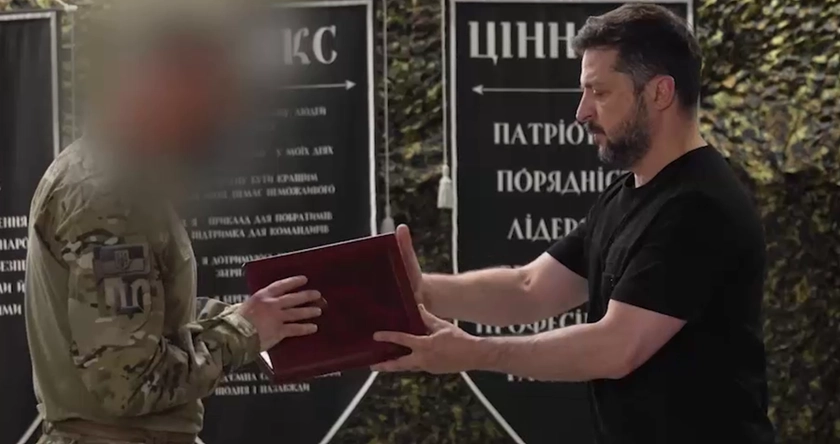
SBU’s Alpha Unit Marks 32 Years as Zelensky Honors Fallen Soldier
(I wish them luck, not even soldiers on the ground know what’s going on there particularly well, is my guess. The point of this factoid is that one of the unpredicted outcomes of drone-intensive warfare is that you can have great coverage of the battle zone, but since the troops have to hide, it’s really difficult sometimes to understand where the enemy is.)
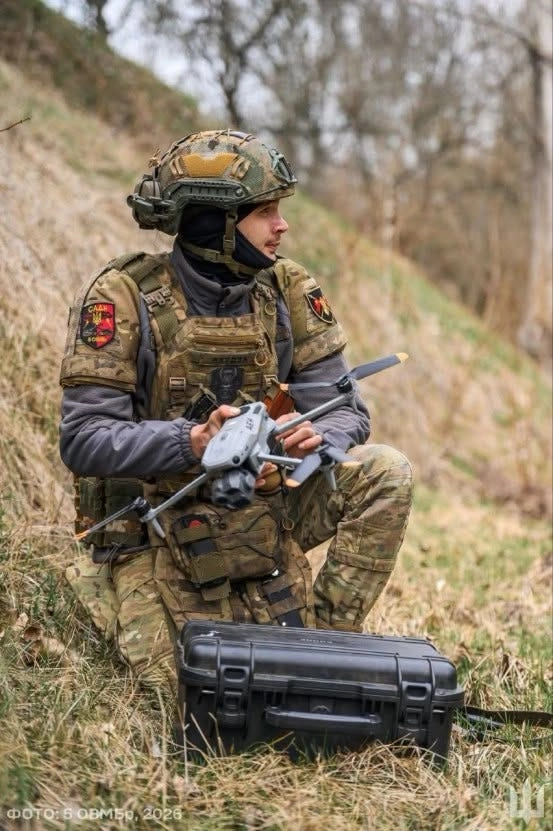
Sloviansk – On Wednesday, the 81st Air Assault Brigade and its associated drone battalion “Apache,” reported it had repelled a rare Russian “mechanized” attack heading toward the villages of Zakitne and Kryva Luka, in the Siversk sector. Total Russian forces, broken into two columns, were reportedly 28 motorcycles, about 50 infantry, one tank, three BMPs and five smaller vehicles. Both groups were annihilated by drones, mortars and artillery before reaching Ukrainian positions. First-person-view (FPV) drones hunted down survivors.
On Tuesday, the Russian Air Force hit Sloviansk with FAB-250 bombs and MLRS fire. On Friday, another system – presumably an MLRS – scattered cluster munitions over Kramatorsk. Early reports indicate that two middle-aged women were killed and about five people were wounded. A Russian bomb also struck Pavlohrad on Friday, detonating next to a house and killing an eight-year-old girl.
So, if you want more evidence that part of the Russian attack strategy is to make cities behind the Ukrainian front lines unlivable, and Kherson has not already convinced you, this week’s events provide another example.

This week, a spokesman for Ukraine’s joint forces south, Colonel Vladyslav Voloshyn, gave a big interview to a state-run outlet and a detailed rundown of the situation along the line in the south. According to him, right now the main Russian objectives in the south are generally Zaporizhzhia, with the intermediate objective towns, Orekhovo, Oleksandriv, Huliaipole, and Kherson itself.
Infiltration is still the big tactic applied by the Russians, and there have been attempts to use big gas pipelines, now unused, to sneak troops forward. The Ukrainian counter-tactics, he said, are detection and, as needed, mobile defense, i.e., the point is to kill and wound enemy soldiers, not fighting to hold a particular piece of ground. Counterattacks are taking place and are generally successful, but they are local.
Ukrainian milbloggers are now fairly widely reporting assault infantry-led penetrations into Russia-held territory 5-7 kilometers (3.1-4.4 miles) deep, in the vicinity of Ternivka – more or less the southeast Zaporizhzhia region. This is not confirmed by the AFU; however, Russian sources seem to think it’s real.
Around Kherson, according to Voloshyn, Russian forces are dug in “as deeply as Hamas in Lebanon,” and the main Russian effort is making Kherson unlivable by hunting civilians or anything else that moves in the city with FPV drones. Characteristically, Voloshyn has the same gripe as the Kremlin, i.e., since civilians have smartphones with internet and they get mad if they are cut off, it’s really hard to suppress enemy drones using the same mobile phone networks.
The Kakhovka Reservoir is not being used by either side for major military operations because it’s a swamp wilderness, not even with footpaths. If you want to cross it, it’s game trails or machetes and bushwhacking. Drones spot pretty much any human attempt to force a route through, and the thick foliage (willows mostly) makes running from a drone pretty much impossible.
Russia bombards Ukraine
Overnight on Sunday-Monday (June 13-14) Russia launched another big missile/drone raid against Ukraine, and again the main target was Kyiv. The worst part was the apartment buildings hit – a drone plowed into a 29-story, killing five civilians.
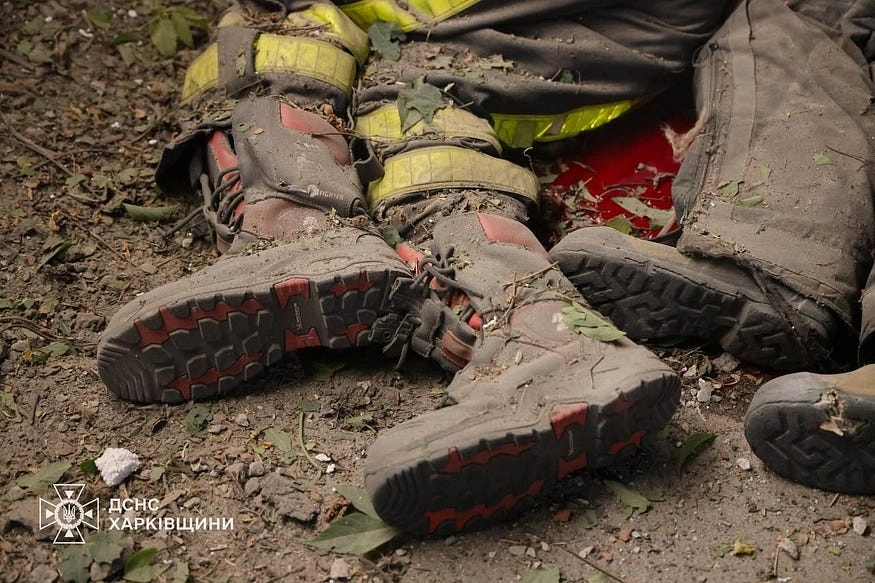
In Kharkiv, the Russians killed another five people – emergency responders to a missile strike. The Russians waited until the emergency crews showed up and then launched another missile. This is the double tap. It sounds cool in the movies. In Kyiv, 30+ were injured, including some children.
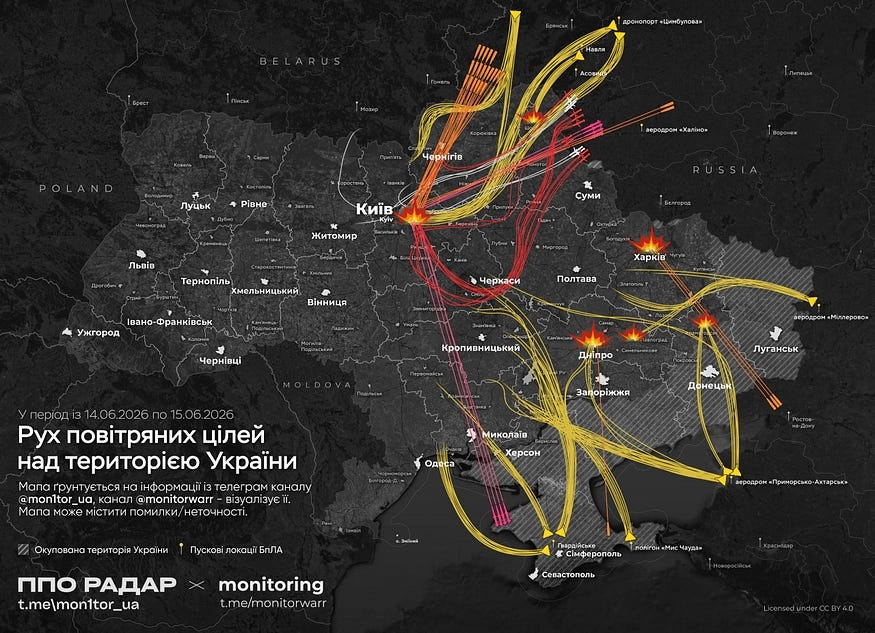
About 50 homes and civilian private structures were damaged, and even most Western news consumers (except for Fox, which ignored it) found out that one of the Russian drones smashed into the roof of the Dormition Cathedral of the Kyiv Pechersk Lavra, which is a 17th-century building. Fire burned, was extinguished, some damage from flames and water. Five other buildings near the Lavra suffered lesser damage. There are issues with the building’s stability, given its age.
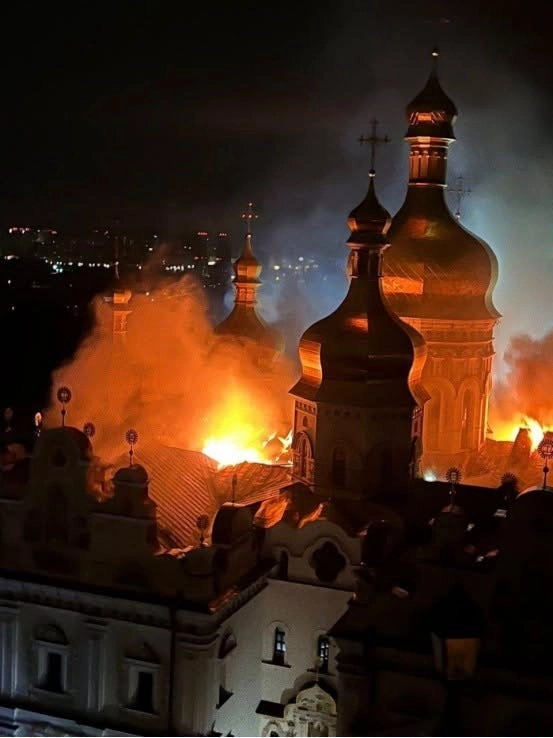
It goes without saying that Ukrainian media duly pointed out that the Pechersk Lavra is the founding site of Orthodox Christianity in the Slavic world. It, by legend, was founded in the 6th century by Greek monks. This is where the Varangians/Vikings converted from paganism; this is the place from which Christianity came to Russia, it’s a holy site – something like the Vatican to Roman Catholics – and by Russian propaganda’s own narratives, the Lavra is the very spiritual heart of Russian orthodoxy, loyalty to the state, family values, and so on. Again, mainstream Western media (except Fox) sort of referred to this in passing.
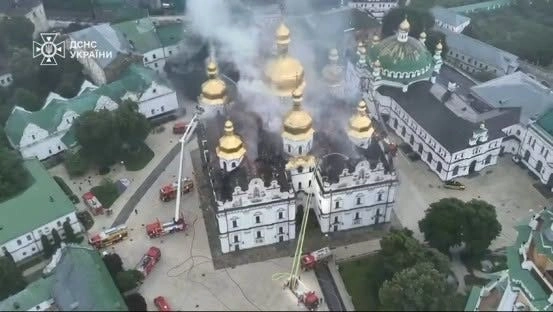
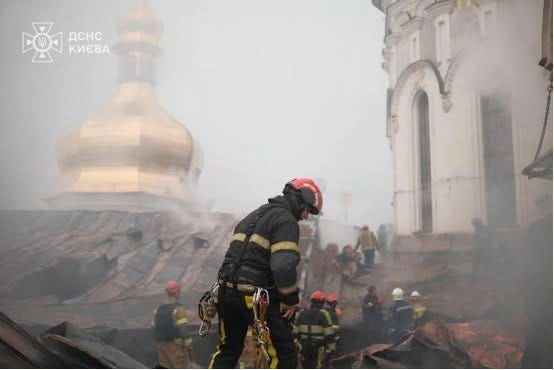
But a lot of stuff in Kyiv got blown up, which is important, but that didn’t necessarily make the international news. I include it here because the Ukrainians absolutely think blowing up stuff like this is evil, and they won’t ignore it, nor will they forget it. Like those schoolgirls in Minab, Hormozgan province, Iran.
One strike hit the Mystetskyi Arsenal, which is a Catherine-the-Great/Potemkin-era site next to the Lavra. In the old days, it was a munitions storage site; now it’s a museum and expo center. Also hit was the St. Sophia Cathedral, not as badly as the Lavra, but it’s a UNESCO site like the Lavra, and it dates back to the 11th – yes, the 11th century. It’s by far the oldest church in the former Soviet Union outside the Caucasus, and it existed three centuries before Moscow even existed. The standard comparison is that St. Sophia is the Ukrainian Notre Dame. Didn’t make the news much in the West though.
Also hit and mostly burnt were the Imedi Film Studios of Oleksandr Dovzhenko. The largest collection of film costumes in Ukraine was destroyed. On the modern side, a big Nova Poshta terminal was hit, 105,000-140,000 (figures vary) were left without power, there were ground strikes at 50 locations across the city, and at least 30 cars were burned. There was also damage to the Art and Culture Museum in Kharkiv and the main Orthodox Christian cathedral in Dnipro.
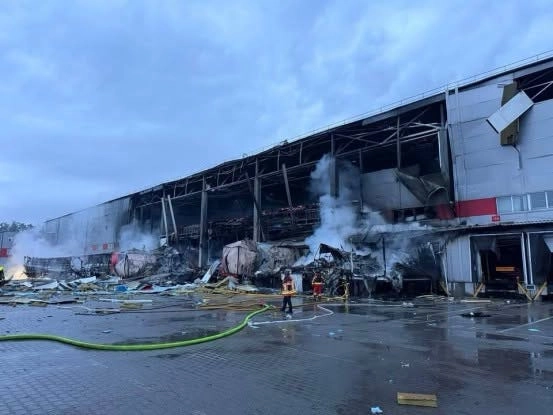
So, all in all, this was a lot of cultural sites hit in the strike, meaning either the Russians decided just to attack them, or the Russians decided to attack targets nearby, and Ukrainian air defenses/jamming, etc. pushed the incoming weapons into the edifices. Either way, in Ukraine, there is no discussion; if Russia hadn’t invaded Ukraine in the first place, churches in Ukraine wouldn’t be getting blown up by the Russians right now.
Because of damage to rail and power infrastructure across the country, following the strikes, the Ukrainian railroad announced that of the 150+ passenger trains it was running that day, eight would be about three hours late, all long-distance, like Odesa-Dnipro or Lviv-Kharkiv. This doesn’t sound like a big deal, but Ukrzaliznytsia is about as reliable as sunrise, and when they have more than three or four trains more than an hour late, for them, even in a war, that’s a big deal. The rail company statement apologized to passengers and said: “Thank you for your understanding. We will get everyone to their destination.”
As to scoring on the night of June 15, 2026, according to the Air Force report, the Defense Forces destroyed or otherwise disabled, out of the total weapons launched:
- 582 of 611 total weapons
- Five of six hypersonic cruise missiles 3M22 “Tsirkon”
- 15 of 34 ballistic missiles “Iskander-M” / KN-23
- 30/30 cruise missiles Kh-101/Kh-55 and 9M727/729 “Iskander-K”
So 95% of all UAVs neutralized, 50 of 70 missiles neutralized.
A reporter asked Zelensky on Monday afternoon what comment he had on the Russian strike. Zelensky told the journo, “Wait.”

Ukraine bombards Russia and Moscow
The thing to bear in mind with this section is that the Ukrainians pretty much never think a single step ahead. If you want to understand Ukrainian military behavior, don’t look at individual events; look at the process.
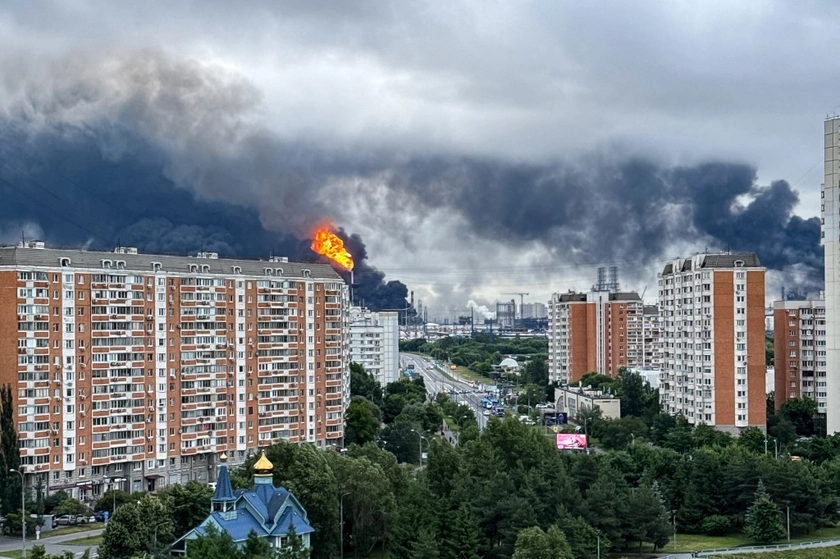
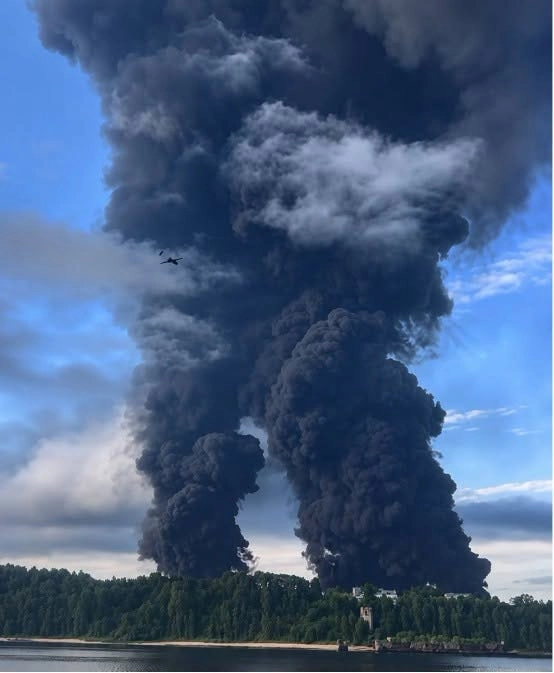
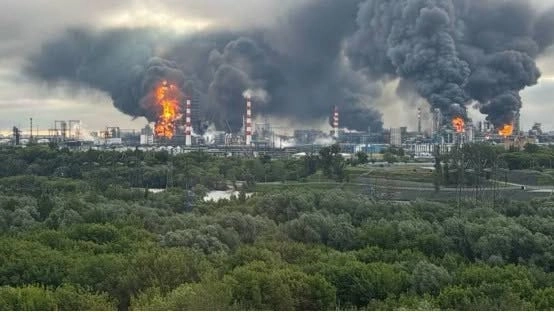
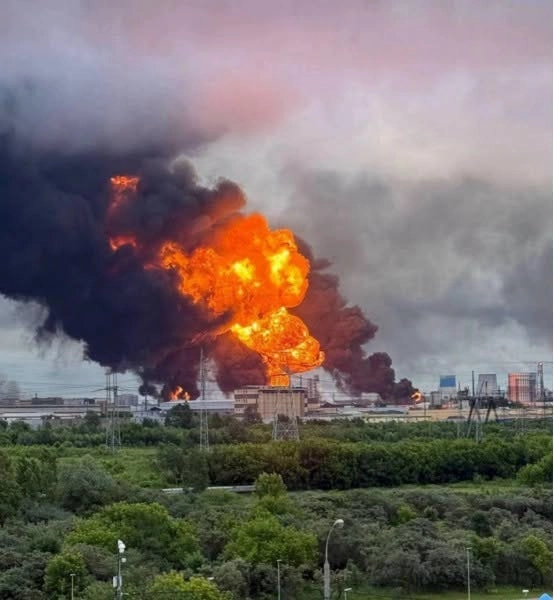
Overnight Monday-Tuesday, about 60-80 drones, which is substantial, flew north into Russia and attacked the Moscow Oil Refinery, and one of them hit the refinery’s main processing unit, which is called an ELOU-AVT-6.
Big fire.
The refinery was knocked offline, and roughly, it produces about half the petroleum products that greater Moscow uses. In Ukraine, the images of the burning refinery were an upbeat item on everyone’s news feeds, but a couple of smoke columns somewhere in Russia, even in Moscow, aren’t new. And “Moscow hit by Ukrainian drones” dropped off everyone’s news feed.
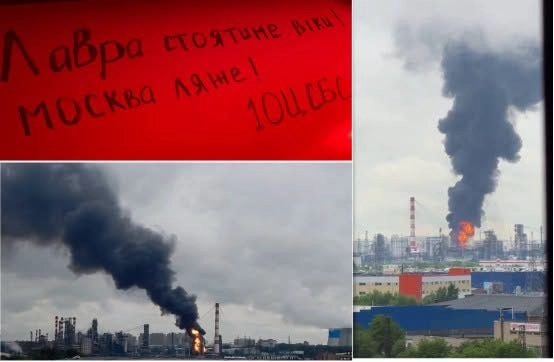
On Tuesday, conventional military strategists told each other the Ukrainians got lucky, or the Russians suck, or that “exquisite” weapons like cruise missiles are not comparable with primitive drones, but in any case, the Ukrainian strike was symbolic, not effective. Meanwhile, new age military strategists pointed at the big fire and asked what exactly is the difference between “exquisite” and “grossly overpriced and nearly useless in a major war where you need to shoot more than once.”
Russian talking heads huffed and puffed but called on the country to buck up, that this happens in war, don’t be a baby. There was some complaining about high fuel prices and fuel station shortages, but generally, Ukrainians making trouble with Russian fuel supplies on Tuesday was generally thought to be something in southwest Russia or Crimea, not Moscow.
Overnight on Wednesday-Thursday, first thing, and this absolutely was overshadowed by other news in Western outlets, Russia launched yet another missile+drone strike on Ukraine, sending 232 drones and four ballistic missiles, of which 216 drones and two missiles were shot down, and two missiles and 26 drones went on to blow things up in Ukraine. Distribution was across Ukraine except the west, so by experience, this was the Russians making sure the Ukrainians hadn’t moved any air defense radars. Outside of Ukraine, these strikes basically didn’t register.
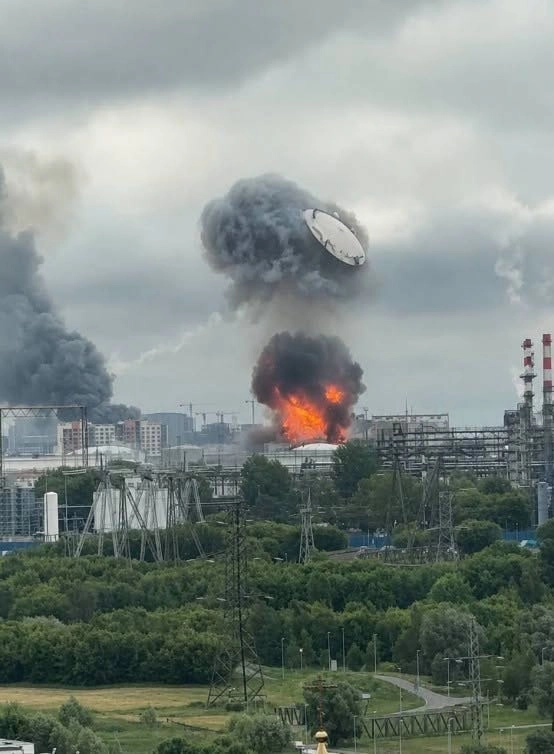
A few hours after those attacks went in, and pretty much simultaneously with the clean-up behind them, was one of the biggest drone strikes of the war, and absolutely the biggest drone strike, ever, to hit the Russian capital.
The Russians claimed more than 200 drones attacked the capital, more than 600 entered Russian airspace, and close to 600 were shot down. By the time the day was over, some Russian officials were talking about 1,000 drones launched at Russia during the night. The best guess is something like 500 aircraft got sent towards Moscow as either strike packages or diversion packages.
The Ukrainians’ secondary target was the Gukovo oil refinery in Rostov region, it was duly set ablaze. Trade publications by the end of Thursday were reporting that 47% of the Moscow refinery’s capacity was gone long-term.
In Moscow, it was chaos. This is a giant city with millions of people, far from all of whom believe there is a war on or see any reason not to record interesting things on their smartphones and upload them to the internet — so the video coverage of the strike was probably the most detailed and spectacular of the entire war. Drones flying through smoke. Pantsir missiles intercepting drones. More drones getting through Pantsir missiles. All manner of small arms firing ineffectually. Drones diving in on a giant refinery. Explosions, sometimes four or five in a minute. One explosion visibly lifting the entire roof of a massive fuel reservoir at least 100 meters into the air. It later emerged that one particularly striking sequence had been recorded by a Chinese news crew: they caught the entire flight of a Pantsir missile from launcher to its impact on the reservoir. Another video showed a drone being intercepted and crashing into a shopping center.
Another video showed a mix of drone types. An-196 Liutyi drones. Some kind of rocket-propelled drone, possibly the Bars. Workhorse FP-1 drones. Reports also mentioned Morok drones – shaped somewhere between a flying wing and a lawn dart, very fast – and Buhomot (just a flying wing) drones. Aircraft flew in singles, pairs, and even a few groups of three or four – not formations exactly, but call them flocks. The first aircraft appear to have arrived at about 5 a.m., and everything was over by around 6:30 a.m.
According to Ukraine’s Unmanned Systems Forces’ (USF) official statement – out well before midday – the usual suspects a.k.a. Ukrainian long-range strike first team carried out the attacks: 1st Separate Center, 412th Nemesis Brigade, 413th Raid Regiment, 414th Ptakhi Magyar Brigade, plus Ukrainian special forces (SSO), defense intelligence (HUR), and security service (SBU). The accompanying video – again geo-located – made Ukrainian comment superfluous. Fireballs and smoke clouds, six giant fires, drones flying past anti-drone missiles, anyone can just click and see for themselves. As in past strikes, sometimes the drones seemed to be trolling for anti-aircraft fire, so following drones could avoid it.
By the end of the day, the energy industrial pubs reported the refinery was smoked and probably would be for weeks if not months.
Reaction to the Moscow strikes
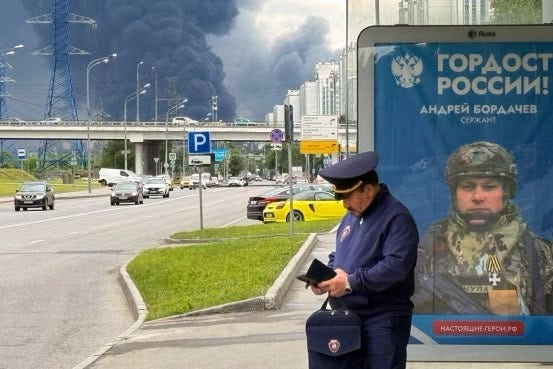
The Russian reaction was, for the most part, emphatic and emotional, excepting the Kremlin. The mainstream news of the day was that the strike never happened. Not reported at all.
The top news item was Kremlin leader Vladimir Putin chairing an economics conference in Kazan, the war item was a bus of Belarusian school kids supposedly hit by a Ukrainian drone in Crimea, international news was US-Iran, domestic news was flooding in Buryatia and the Caucasus. Not a word about a massed drone strike burning Moscow’s main fuel refinery. It never happened. There was an unconfirmed report, from Kazan, that Putin hadn’t even been told about the strikes while the conference was in progress.
(For the adults thinking about Russia’s war-fighting capacity and national government stability, this was a useful indicator. Assuming it wasn’t his double, Putin was out of the capital in Kazan, and at minimum, short term, it is clear that Russian state media can’t function fast enough to deal with an event of the scale and visibility of the Moscow strikes; they didn’t know what to say. That might be of use to an adversary of Russia. Or just Putin.)
The next day (Friday) Dmitry Peskov, Putin spokesman, acknowledged the attacks had happened, but insisted that actually Russian air defenses did quite well, and that “according to the indicators” Russia’s skies are extremely well-protected.
This is another red flag; this is classic behavior of an institution caught in its own propaganda and unable to challenge its internal narratives about how outstanding and excellent its component parts are. You see the exact, and I do mean exact, same behavior at the top of the Pentagon. This is not to take away from real capacity, which Russia obviously has, but rather, to identify the Kremlin’s inability even to consider internal failure or weakness. In the actual war, this means it will be some time – if ever – before Russia addresses the Ukrainian drone problem. Doing so is politically impossible.
In the Russian internet, of course, the content went nuts. Attractive young Muscovite woman influencers, some in nightgowns, appeared, telling followers they are frightened and it’s all unfair. Others asked followers why in the world this is happening. There was all manner of content of Muscovites seemingly unable, over and over, to think of anything to record about Ukrainian drones in the skies above Moscow and fires and explosions on the ground, except vulgarities. Everyone seemed quite surprised. One young lady was offended. OK, maybe Russian regions get hit, but the capital? This is Moscow! How is it possible that Moscow got hit by drones?
The rah rah Russia milbloggers, generally, took the opportunity to write “You Moscow morons, we told you so, you can’t pretend the Ukrainians out of existence” or “You lock us out of the internet and make it so we can’t communicate with each other or download information fighting a war, because of ‘security,’ and THIS is what your ‘security’ leads to?”
Offitser Na Peredovoi: “For the past three years, you keep saying ‘Wait, just a little more, we’re about to win!’ and meanwhile we’re burying our guys by the shipping container… Kremlin gentlemen, look into the eyes of those whom you sent to the front. But no. You won’t do that. You are afraid even to go among your own people without Rosgvardia escort. It’s not the Russian army that’s dissolving. It’s you that is dissolving it.”
The US Embassy, I’m not sure if this is to its credit, put out a warning to citizens: Stay out of Russia, it’s dangerous there. I don’t have much to do with the US Embassy Moscow, but if it took them until June 18, 2025, to decide Russia was unsafe for Americans and to leave immediately, then maybe Secretary of State Marco Rubio needs to take a closer look at how that Embassy analyzes threats.
The Kremlin on Friday, via the president’s office, predictably blamed the Russian public for recording all the strikes and explosions and air defense fire successful and unsuccessful, and called for quick and vicious prosecution of the citizens who recorded it. Fines aren’t enough; smartphone users need to go to prison, was the position taken.
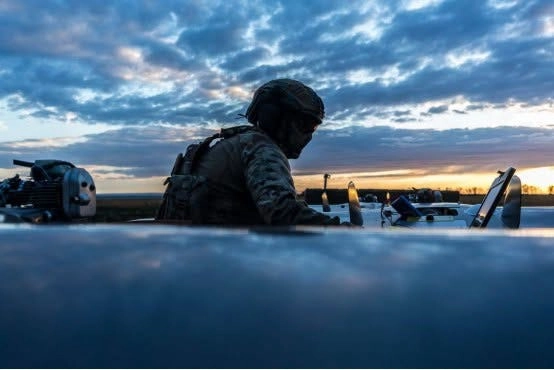
As for the Ukrainians, the next section covers wing art. Otherwise, it was a near tour de force of wartime messaging; the Ukrainians are at their best when they have just stuck it to Russia. By 10 a.m., edited video with excellent sound, plus raw drone video that was childishly easy to geo-locate, was out there on the internet.
So, probably Russia is mighty and the Ukrainians must lose?
So, two points on Ukrainian drone skill, first, launching 200-250 aircraft from multiple locations so that they show up in that kind of airspace was not an accident; it is not getting lucky.
There were confirmed four and probably five types of drones used in the strikes, all with unique flight characteristics and cruising speeds, and to get maximum effect the Ukrainians had to time things so that fast drones appeared simultaneously with slow drones, so different strike packages entered defended air space from different directions, and in general, at a distance of 800 kilometers (~500 miles), remotely, without aircraft pilots, orchestrate overmatch of the densest air defense network on Earth. Really. That’s how well-defended Moscow’s airspace is.
On the 17th, there were practically no Ukrainian long-range drone strikes anywhere. So, if you are a Russian honestly looking at the Ukrainian threat, that is a red flag. Whether or not that was spotted somewhere in the Russian General Staff, we don’t know, but what we do know is that on the 18th, the Moscow air defense network was defeated by Ukrainian drone swarms. Probably 250 attacked, and it looks like 30-50 reached terminal dive.
This was by any measure a very well-executed complex air strike, first class. Considering it was carried out with drones, at a scale never seen before anywhere, I suspect it rises to the level “brilliant,” but we’ll have to wait for the memoirs to be sure. Likewise, it seems obvious but can’t really be proven that no other military on Earth could have executed a massed drone strike on Moscow, with the skill and professionalism just displayed by the AFU.
Second, remember the smaller raid 48 hours previous? That’s the Ukrainian pattern; they’ve done it repeatedly. They send drones to find the air defenses, locate the gaps, and if a follow-up strike is needed, then it flies through the gaps detected.
Again, skill, and again, any Russian officer willing to look honestly at the opposition has to be mortified at the implications: If this is what the Ukrainians can do with 200-250 aircraft launched at a single target, WHAT DO WE DO WHEN THEY SEND 500?
By midday, Zelensky put out a statement: “It is time to put this war to an end, Russia should take the necessary steps towards diplomacy.”
Which sounds good, and as we recall, US President Donald Trump and Vice President JD Vance had a tantrum and yelled about Zelensky having “no cards” and “being a dictator” and being “not interested in peace” a little over a year ago, when Zelensky said in public that concessions to Russia without verifiable concessions in return are cutting your own throat.
But to me, and I’m not sure if many have picked up on this, Zelensky and the Ukrainians, now in their declarations towards Russia and calling for diplomacy, are approaching reverse psychology.
I’m sure it sounds reasonable in Washington. But if you know the Russians, the last thing Putin can allow himself to do is show weakness by acceding to conditions set by Ukraine. The more Zelensky calls for peace – I’m serious – the more Putin risks his job and indeed his life by even considering doing what the Ukrainians are calling for. Are the Ukrainians clever enough to be baiting Putin into continuing pointless offensives because the Ukrainian strategy is to force regime change in Russia by forcing the Kremlin to continue a destructive strategy in Ukraine?
I can’t answer that, but, from a national security point of view, Ukraine is certainly better off with a weak Russia in a succession crisis next door than with a temporarily peaceful Russia with Putin still in charge and now intent on rearming and making the next invasion work, next door. If the Ukrainians really wanted the Russians to be diplomatic, certainly the Ukrainians wouldn’t be demanding the Russians be diplomatic, of that I am sure.
A telling image
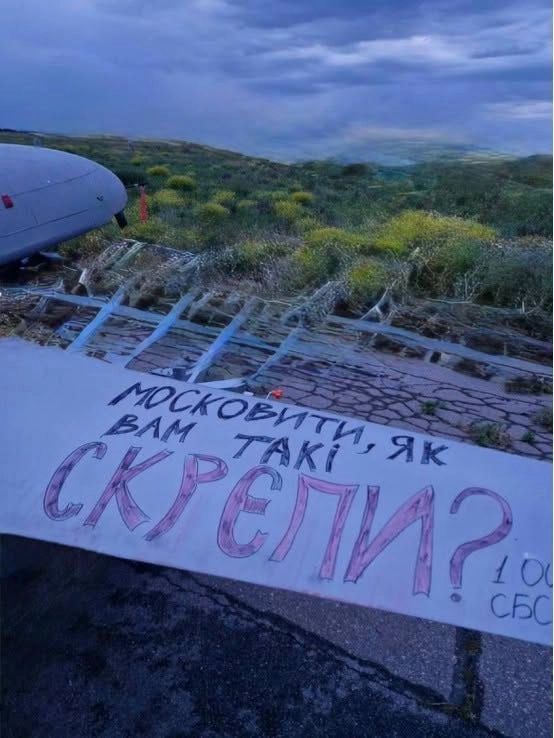
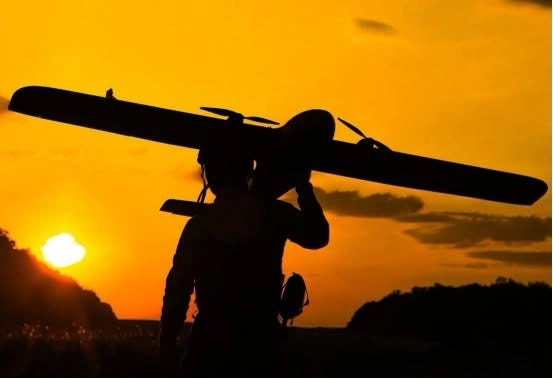
Above is an excellent image showing the depth to which the Ukrainians understand Russia and the Russians. It is also an excellent cautionary note for someone who would tell the Ukrainians how to fight Russia. This is the wing of an FP-1 about to be launched at Moscow. The writing reads, roughly, “You Moscow morons, how do you like THESE spiritual bonds?” Signed – 1st USF.
If you don’t know Russia, then this is gibberish. But if you do know Russia, you know that the term “spiritual bonds” is a catch-phrase at the basis of Russian state propaganda, pushing the idea that Russia is different and better than the rest of the world because Russians have a unique and indomitable spirit, and the rest of the world is lazy and materialistic. It’s a phrase you hear on Russian state TV and parroted by Russian officials all the time.
That’s the Russian side.
On the Ukrainian side, this isn’t an announcement by the office of the Ukrainian president; this is part of a messaging campaign run by the 1st USF, probably Ukraine’s most capable drone unit, which never existed before the war and formed because the normal Ukrainian army had no idea how to operate drones.
These guys’ main job is attacking high-value targets at distance with complex strike packages, with drones; they are probably the best in the world at what they do. How well-informed are they? Well, like pretty much anyone else in Ukraine who’s got a smartphone, they know perfectly well the Russian “spiritual bonds” messaging, and for them, throwing it back at the Russians’ face on the wing of an explosive-tipped drone about to blow up a refinery in Moscow, is just logical.
They are well aware it will get shared all over Russia’s black internet.
Now think about NATO bleating that the way to counter Russia is to demonstrate NATO doesn’t like Russian drones in its airspace, but avoid shooting them down if possible. Or the Americans who – not making this up – consider drones kind of a minor weapons system the US military needs to have in its tool kit, but when it comes to Russia and China, they’re not overly important.
This is a single image (although the 1st USF has been sending all sorts of messages to Russia on the wings of attack drones for some time now), but as an example of how war focuses combatants and teaches them to know the enemy and attack the weak points, it’s an excellent illustration.
Ukraine bombards Russia – Middle strike
The campaign is continuing, and the Ukrainians are returning to past locations to amplify damage or re-damage sites the Russians fixed. The Russians are trying to move their critical truck freight in convoys with soldiers, quite literally riding shotgun as air guards, and by routing trucks to secondary roads. It’s not clear how effective this tactic is, but the critical automobile fuel shortage in Crimea is still real, and also, to create a convoy, you have to mass the trucks first, and the Ukrainians have already hit freight truck assembly areas.
If you want a link to a lot of detail on the Middle Strike campaign with units and tactics and great granularity, KP just completed a four-part series on Middle Strike where you can find all that out. The link to the last article is here. Inside the article, you can find links to earlier articles.
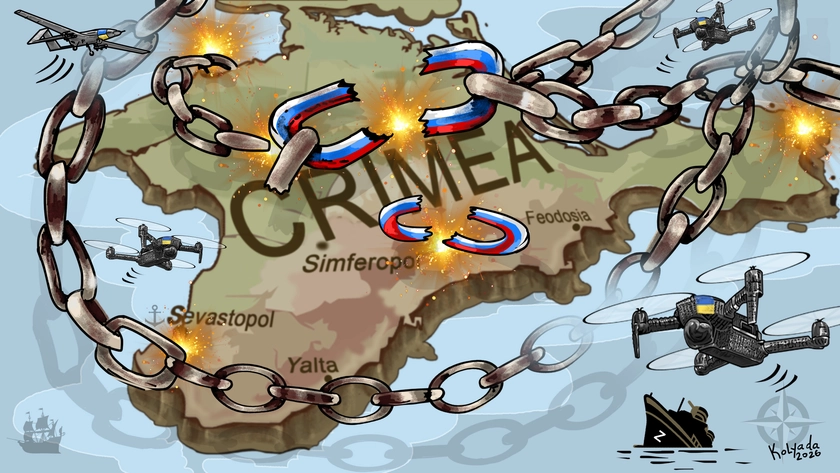
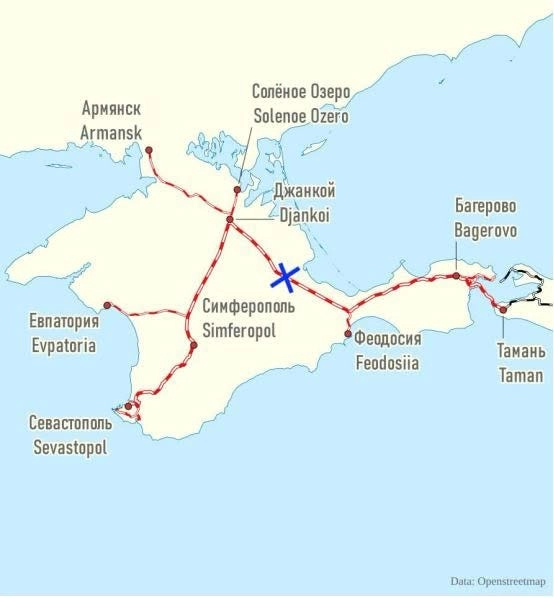
Over the week, we saw the following bridges hit in Crimea and substantial damage to some of them: Genichesk, Chonhar, Armyansk Rail, Armyansk road, causeways near Stavky, and Myrne. Pontoon bridges near Chonhar and Armyansk, as of Thursday, were in operation, but it seems like it’s not a permanent fix. The Ukrainian drones smash some pontoons, traffic stops, and the Russian engineers fix or replace the damage, traffic restarts, and the drones arrive again. A couple of Crimean milbloggers complained that at Chonhar, the Russians pre-positioned repair materials and bridging, near the actual bridge, so the Ukrainians attacked that as well.
I’ve attached some images purportedly of the Genichesk Bridge. Supposedly, this was damage done by FP-1 and Behemot drones. The latter, I know (talked to a company rep recently), can be fitted with a warhead designed to break up reinforced concrete.
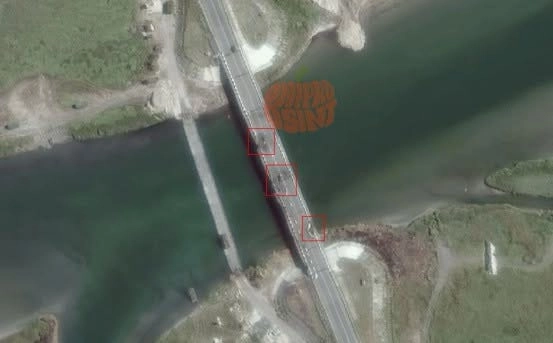
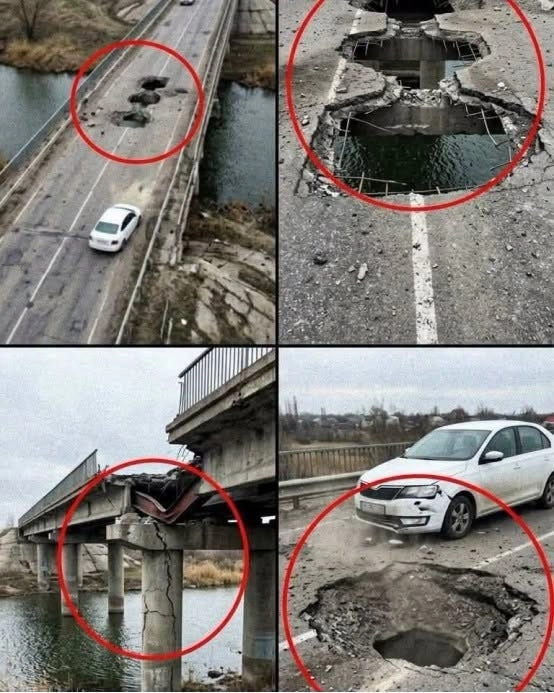
The Crimea occupation authority’s road advisories this week have day-by-day warned motorists that most major bridges connecting Crimea with the mainland are out, but detours for drivers with plenty of patience and fuel are possible. The Crimean fuel crisis is still real, basically rationing of 20 liters per auto per week.
The important point is that the Russians visibly lack air defenses to cover all the bridges, so the main question is, will the Russians run out of pontoons before the Ukrainians run out of drones? Considering the EU is buying Ukraine drones, my bet isn’t on the pontoons.
More estimates have surfaced regarding how many trucks the Ukrainians have actually hit. Right now, the figure seems to be between a low-ball/geo-located 250 trucks and a high-end/seems reasonable but not proof 500-600.
Evidence is pointing – this is not confirmed – that the ongoing, road watch side of the operation is being run by a joint headquarters called Phalanx, which is the brainchild of Dmitry “Perun” Filatov, commander of the 1st Separate Assault Regiment. When we last really heard about 1st Assault, they were fighting around Huliaipole; however, in recent weeks, Filatov has become a semi-official spokesman commenting on the course of anti-logistics operations in south Ukraine and Crimea.
Phalanx is, per Filatov, a fusion center/headquarters designed to link everything the AFU brings to a battle, from the individual helmet cams to dinky drones to Shark patrols to satellite imagery from the Europeans, into a single center with enough screens and analysts to run a flexible operation that can take ground and out-think the enemy.
My speculation – again, this is not confirmed, it’s journo spidey sense – is that given that resource and Filatov’s strangely public presence, and the otherwise peculiar credit to Phalanx for published drone strike video over Crimea, Phalanx is the coordinating HQ for the day-to-day Middle Strike operations and the intelligence flowing from it. This would be consistent with the AFU procedure to throw a resource at an operation and never really wonder if that’s how NATO would do it. In one of his comments, Filatov said that “it is impossible to completely block communication with Crimea with the forces of two assault regiments, but with a larger number of drones at the state level, this task is realistic.”
If you want to speculate, that’s a hint the AFU plan is an assault infantry-led ground offensive out of the Zaporizhzhia region towards Crimea to cut off Crimea, go ahead, but it’s just as easily Filatov just speculating himself.

F-16 to get IRIS-T
Someday, this is all going to be taught at Harvard Business School as a textbook way to lose a lucrative market, in this case, by the Americans, the market being foreign arms sales.
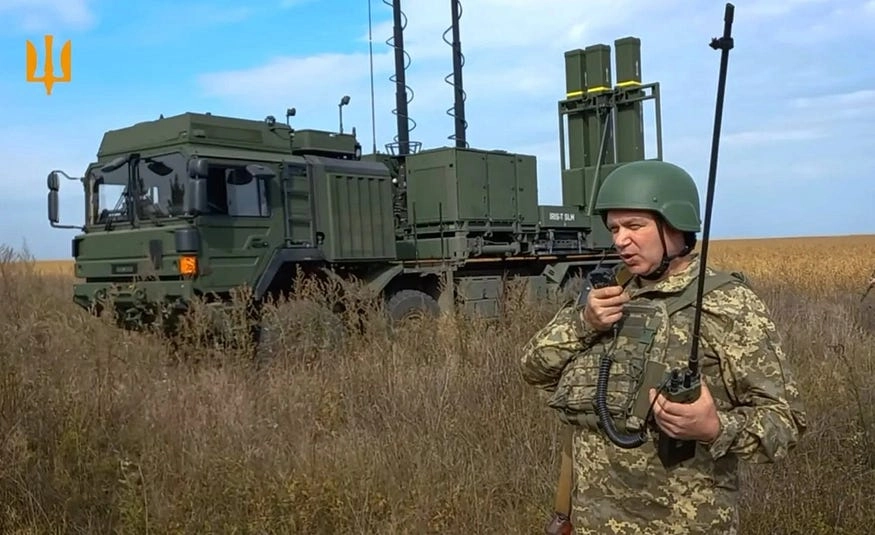
On Tuesday, a war-watcher named Tymofiy Mitrofanov reported Ukraine was planning to arm its F-16s with the German IRIS-T missile. The Ukrainians have operated IRIS-T for some time from ground launchers and are very pleased with them. The official number is that there are 10 IRIS-T systems in Ukraine, each with four launchers.
In Germany, IRIS-T is carried by fighters. However, Ukraine’s F-16 fleet flies US-designed fighters, so those planes carry the more or less American version of IRIS-T, called the AIM-9. IRIS-T is considered somewhat better but not dramatically so, and the Ukrainians have operated AIM-9 for some time as well.
Indirect confirmation of this came on Wednesday, when Myhailo Federov, in a TSN interview, said Ukraine and Germany had recently signed a deal “for large deliveries of air-to-air missiles.”
The key German player would be, drum roll, Diehl Defense, who, drum roll, manufactures the IRIS-T missile.
Also, Mitrofanov points out, Norway already modified its F-16s to fire IRIS-T, swapping out the older AIM-9L Sidewinders, and as we know, Norway is in the process of giving F-16s to Ukraine. Six are pledged F-16s, and more are to be delivered “for spare parts and training.” So as long as the money can be found to do the conversion, Diehl will sell more IRIS-Ts to Ukraine, paid for by, drum roll, European taxpayers, including German taxpayers. Pretty slick how that works out, huh?
On Thursday, Zelensky signed an agreement, with Diehl representatives providing, by which Germany would assist Ukraine with defense weapons development, including, of course, missiles. So the upshot was that if the US thought at the beginning of the week that Ukraine has no cards regarding air-to-air missiles for the F-16s bought by Europe for themselves and then handed over to the Ukrainians, then at the end of the week we have a standard story of the Americans thinking they can dictate terms and monopolize a market, the Ukrainians adapting flexibly, and the Germans winding up being the ones making the money.
As an aside, Mitrofanov said that the Ukrainian Air Force has and operates 21 F-16s, which sounds either right or a little low to me, but once broken jets and stuff getting maintained outside Ukraine are taken into account, it seems credible. Also, on Wednesday, Radio Liberty reported – which we have heard before, but repetition usually increases chances of its happening – that yes indeed, Belgium plans to donate seven F-16s to Ukraine this year, four for parts and three to fly. But this depends on US deliveries of F-35s to Belgium.
You can’t make this stuff up – Brezhnev’s great-grandson is a Ukrainian POW
This isn’t checked, but I assume it is true. According to Russian wires, Leonid Brezhnev’s great-grandson, Anton Milaev captured in Ukraine. Aged 45. Adopted grandson of Galina Brezhneva. Prior to the war, liked in Ukraine, then “went into politics.” Supposedly, he went to war in September-October 2025 as a sapper/engineer, and stopped contacting his family in November. A few months later, his family found out he was taken prisoner in the Kherson region.

If you think Ukrainian drone development is finished, think again
One of the benefits that we all would have been happy to live without has been to learn the difference between peacetime weapons development and wartime weapons development.
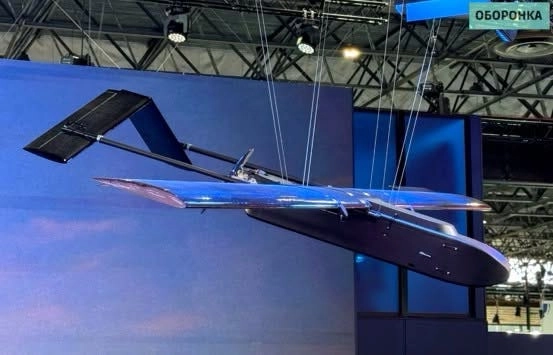
In Paris, there was the Eurosatory 2026 exhibition, at which companies displayed tech and aerospace stuff, and Ukraine’s Fire Point unveiled a new, improved FP-1 drone.
As we all know, the FP-1 drone is the generic workhorse drone the Ukrainians use to hit targets in the roughly 200-kilometer to 1,000-kilometer (125-mile to 620-mile) envelope. Its main selling points are low cost, simplicity, and ease of manufacture.
So, how to make it better? Besides a pretty Expo show model painted in US WW2 Navy blue. First thing, max out the use of carbon fiber that makes the air frame lighter. Next, with the weight saved, increase the size of the warhead. The new version will be able to carry a 200-kilogram (440-pound) warhead, which is more than twice as powerful as a US-made HIMARS rocket warhead, and arguably, the drone is far more accurate because it’s not dependent on GPS, which the Russians jam.
Also, more range is good, so, instead of two solid wings each fitted to one side of the aircraft, the new version will have a single wing covering both sides but made hollow so it can also serve as a fuel tank. This will increase the cost a bit but allow, with a smaller warhead, strikes out to 700 kilometers (435 miles) while maintaining the previous version of the warhead weighing 105 kilograms / 230 pounds (roughly the HIMARS standard), or, with a light warhead, strikes out to the range of 2,700 kilometers (1,689 miles). This will nearly double the current max range at the highest fuel efficiency for the aircraft, at 1,650 kilometers (1,025 miles).
Another modification will be an option to put two launch rails on the aircraft, each capable of carrying an S-5 unguided rocket, so, as the drone proceeds to its objective, it can launch on targets of opportunity or just do a rocket run or two before going kamikaze itself.
Progress!
The funny part is that the Paris Expo is still going on. So, on Thursday, the Ukrainians ran video to their exhibit’s big screen showing the Moscow strikes and all of the explosions. The sales pitch to potential customers was “See! Our drones work in the real world.” This wasn’t quite fair, because actually, there were Antonov drones and Culver Aerospace drones blowing up the Moscow refinery; it wasn’t just Fire Point drones. But business is business.
Reprinted from Kyiv Post’s Special Military Correspondent Stefan Korshak’s blog. You can read his blog here.
The views expressed in this opinion article are the author’s and not necessarily those of Kyiv Post.
You can also highlight the text and press Ctrl + Enter