(See Part 1 here)
History is the struggle against the erasure of crime, but it is also the primary basis of political consciousness. Perhaps we cannot ask other Europeans to show the same heroism as the Ukrainians, but we must at least demand that they do not give up on the legal and political consequences of these mass crimes.
JOIN US ON TELEGRAM
Follow our coverage of the war on the @Kyivpost_official.
What remains, therefore, is concrete action by the European Allies in the face of Ukraine’s fate – and their own. We can certainly point to some positive developments: The Russian threat is finally being taken seriously, at least in the rhetoric of most governments; the resolution to arm Ukraine more and provide funding for its arms industry, albeit still insufficient, is real.
An agreement with Moscow would also amount to erasing Nuremberg and what it represents historically, and that would be no small ideological gain for the Kremlin.
Strong statements about Putin’s determination to continue his war to the end show a necessary clarity, albeit far too late, as are those concerning Russia’s attacks, through means other than conventional warfare, but which are also acts of war, on European soil. Yet one cannot shake the feeling that the road ahead is still long.
Europeans thus continue to mold themselves to the narratives proposed by Trump and ultimately endorsed by Putin, who is determined not to give in on anything and to go to the very end of his war of extermination. These narratives, which are in reality fantastical, are those of peace agreements, which everyone knows are diplomatic fiction as long as Russia is not defeated.
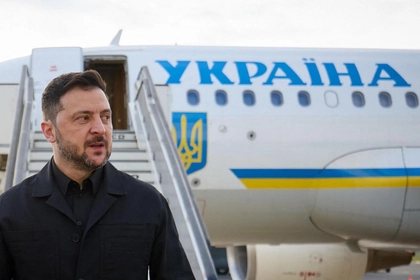
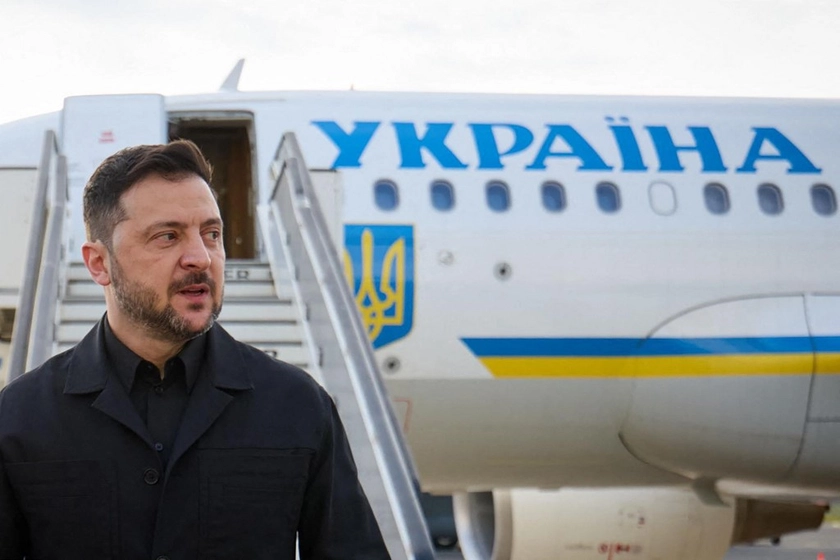
Zelensky Says Putin Rejected G7 Peace Talks Offer
I have already done justice to this idea, which is not only absurd but also extremely dangerous for Ukraine and Europe, because a kind of historical consistency suggests that any agreement to which Russia is a party is destined to be violated by it. An agreement with Moscow would also amount to erasing Nuremberg and what it represents historically, and that would be no small ideological gain for the Kremlin.
But this dimension of law and value is completely absent from the perspective of Trump and his team. The “sanctification” of permission granted to crime is undoubtedly not a dimension that this administration is capable of taking into account.
The ease with which it repeats Russia’s narratives and, even when it does not do so entirely, takes Putin’s words at face value is revealing of both absolute incompetence and ideological alignment.
Do Europeans have a more consistent position? The answer is still nuanced. Admittedly, there is no ideological complacency on their side, with the exception of Hungary and Slovakia mainly.
Europeans have clearly stated that Russia has no desire for peace and have stood firm on the principle of an unconditional ceasefire. They have decided on a 17th package of sanctions against Moscow and are preparing a further one, which is taking a long time to materialize after the threats made in this regard – one must certainly ask why they have not gone all the way since at least the beginning of 2023 or 2024.
They announced new military support measures for Ukraine in terms of both arms deliveries and financial aid to the Ukrainian military industry. However, this falls far short of what is needed. The coalition of willing is gradually taking shape, but again far too slowly and, as I have already pointed out, not without conditions and with no immediate prospects.
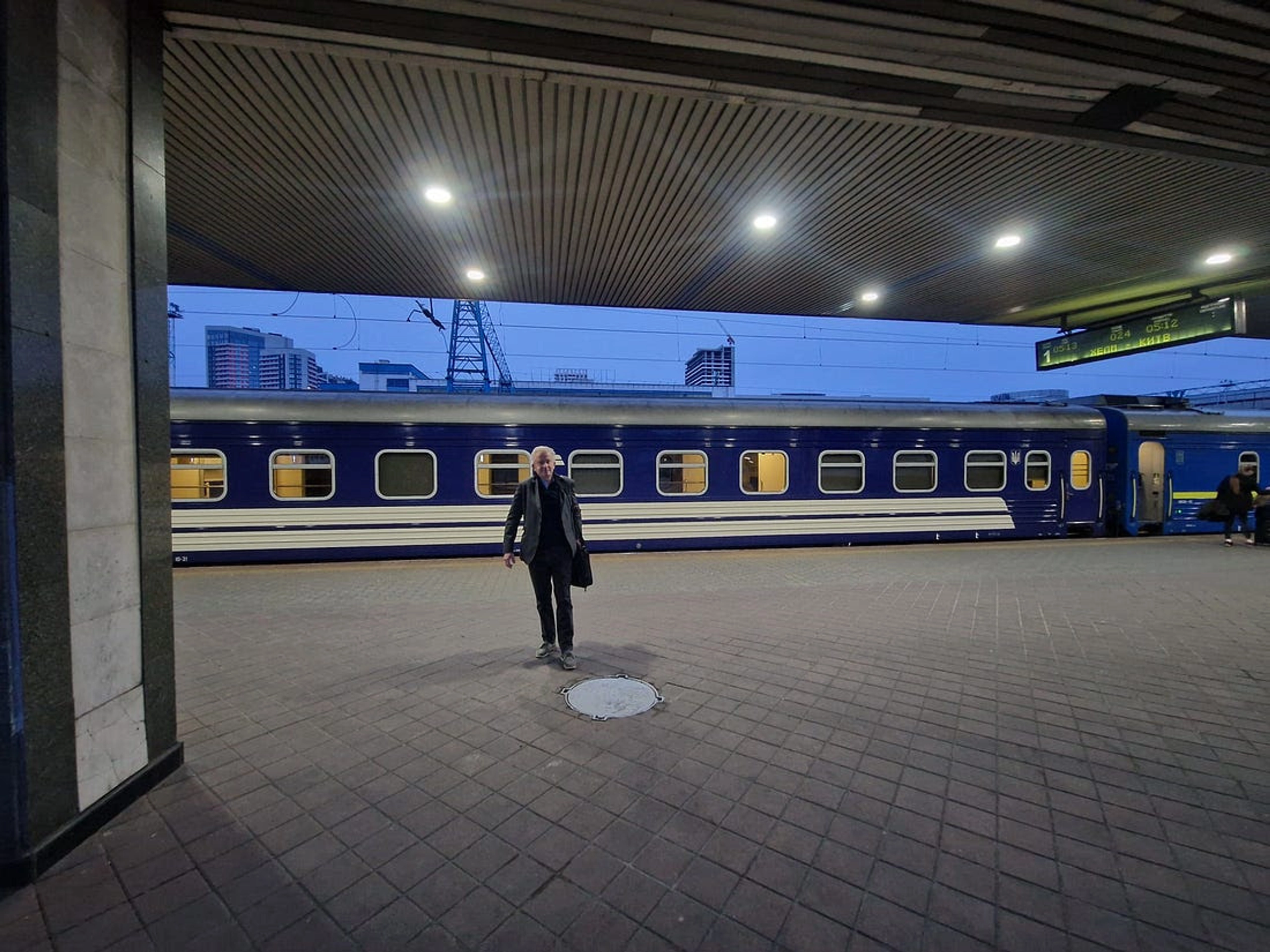
The symbolic significance of the simultaneous visit to Kyiv on May 10, 2025, of the four leaders of Europe’s major military powers – I was there at the time – was certainly strong, but it cannot be seen as a decisive step.
In fact, what is most lacking are decisive moments that translate into concrete actions capable of reversing the course of events.
Despite this progress, however slow, most European heads of state and government continue to embrace the fallacious narrative of a possible, albeit distant, peace agreement. Many even place themselves in this perspective.
At times, it seems as if some of them have been overcome by a defeatist mindset. With little belief in victory, they do not direct their words or actions toward this goal. They are still driven by the idea of a halfhearted outcome, despite the ominous nature of such a result.
They remain imbued with what I have repeatedly called a form of cognitive dissonance that leads them to rightly proclaim principles in accordance with international law – territorial integrity and sovereignty of Ukraine, return of deported children, punishment of crimes – without their actions being directed toward that end.
If such an agreement containing the word “peace” were to be announced, public opinion in European countries would cease to perceive the scale and imminence of the Russian threat.
I will not repeat here that a peace agreement with Russia is not only incompatible in terms of its wording, but would also call into question the credibility of democracies in terms of deterrence and imply acceptance of the violation of international law, both in terms of borders and in terms of humanitarian law, which prohibits a state from committing war crimes, crimes against humanity, and genocide with impunity.
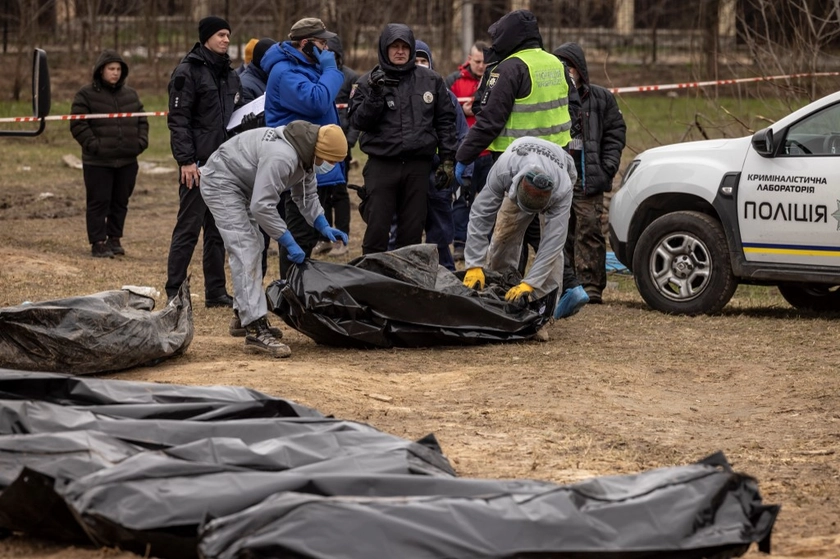
This is precisely what is happening in the territories occupied by Russia, where torture, rape, deportation of children, and summary executions are a daily reality. This alone would mean that a peace agreement with Moscow, as long as it retained even the smallest piece of Ukrainian territory under its control, would in itself constitute a victory for the criminal power.
Moreover, as Oleksandra Matviichuk points out, these territories would serve as a rear base for a stronger Russian army, which would benefit from the young Ukrainians forcibly conscripted – 1.6 million children live in Ukrainian territories under Russian rule, whose forced militarization and erasure of Ukrainian identity is already underway.
Beyond the initial crime itself, this would be a sad omen for the future. The credibility of democracies would be permanently undermined, and other world powers would see this as such, seeking agreements, alliances and cooperation elsewhere than in liberal countries.
However, another danger for Europe posed by a peace agreement is less apparent to the leaders of the free world. If such an agreement containing the word “peace” were to be announced, public opinion in European countries would cease to perceive the scale and imminence of the Russian threat.
On the other hand, the measures decided upon by the West seem completely unrelated to the reality of this war
They would cease to understand why it is necessary to continue supplying arms to Ukraine, to strengthen the Ukrainian army, the spearhead of European defense, and even why European countries themselves should accelerate their own defense efforts to bring them urgently to at least 5% of GDP.
Russian propaganda, which would itself be strengthened by such an agreement and would have even more free rein to undermine the consciousness and security of democracies, would further drive home the point to these opinions, pointing to the “warmongering” of Westerners directed against a Russia that is supposedly at peace – but which is in fact preparing a new offensive against Kyiv and much further into Europe, with increased military capabilities.
It is high time that Western leaders understood this reality.
It is necessary to address a concern here, which I began to explore in my book Notre Guerre. Le crime et l’oubli (Our War: Crime and Oblivion), without, however, formulating all of its implications at the time. This concern may seem moral, but it is also cognitive in nature.
On the one hand, we have the total war waged by Moscow, which involves the abominable crimes I have once again recalled. I have often demonstrated that this is neither an essentially territorial war, nor even primarily an “imperialist” war, whatever its dimensions may be, but rather a war aimed at eradicating a nation and a people.
We also know all too well that this war is perpetual in the minds of Putin and his people and that it has no intention of stopping either in Ukraine or at Ukraine’s borders.
On the other hand, the measures decided upon by the West seem completely unrelated to the reality of this war. Sanctions, however effective they may be – we must once and for all debunk the argument that they have no effect – remain incredibly limited in proportion to these crimes.
We have said it a hundred times: arms deliveries still seem derisory in view of the absolute evil committed by a radical enemy. I am not going to revisit the discussion on the seizure of frozen assets of the Russian Central Bank and their transfer to Ukraine. The financial arguments against this are questionable if all four major currency zones (euro, dollar, sterling, and yen) do the same.
The legal arguments have also been dismissed by a majority of legal experts, and there seems to me to be a compelling reason, both legal and political, to support their seizure: There is no precedent for such a sanction against a state engaged in a strategy of total destruction.
The case did not arise with Hitler’s Germany or Milošević’s Serbia. It is now a concrete reality with Putin’s Russia. In the face of radical evil, there can only be a radical response.
There is even something indecent about resorting to legal technicalities when faced with a radical crime.
The judges at Nuremberg decided to break new ground in response to Nazi crimes that reason could not comprehend by not applying the principle of non-retroactivity of criminal law. In the face of similar crimes perpetrated by Russia, invoking possible precedents is both despicable and reckless.
Yet everything is happening precisely as if Western leaders had not grasped, in a physical, visceral and personal way, the immensity of these crimes. Nor have they understood that we have passed the point of no return and that there will never be a return to the Russia of today.
In Our War, I described their fear of the radical nature of Russia’s actions, which led to a kind of repression. I will go further today: They have not grasped the significance of this radicalism and are therefore unable to conceive and construct the radical response that any civilized person would expect. For there is only one radical solution for those who want to end the war.
Many people often respond to me – admittedly, primarily employees in Moscow, but let’s admit that some of my opponents are sometimes also acting in good faith – that, in reality, I don’t want peace or that I would like war.
Today, I think I can say, in unison with the Ukrainians, that I am seeking peace first and foremost and that this – a “just and lasting peace,” as it is usually phrased in diplomatic language – is my primary goal.
However, what are currently referred to as “peace agreements,” to which so-called “negotiations” are supposed to contribute, have nothing to do with peace as long as Russia is not militarily defeated. They would be “war agreements,” or agreements that would set the stage for the next war. The so-called peacemongers are actually the most ruthless, consciously or unconsciously, warmongers.
Let us add another uncomfortable truth: security guarantees, as they are generally presented, would have little practical significance if Ukraine were not to regain its integrity and if Moscow were not defeated on the battlefield.
Western troops, assuming they are eventually deployed on Ukrainian soil, would be much more vulnerable in the context of an undefeated Russia that could rearm after a possible lifting of sanctions.
It could also benefit from increased depth by maintaining its hold on part of Ukrainian territory. In such a scenario, the likelihood of a direct confrontation with Moscow, which is currently low if free nations respond strongly, would be higher.
It is urgent that we do not prepare for a world where the erasure of crimes and their continuation would herald future wars. The Ukrainians understand this. Do we, or do we persist in the blindness of half-measures?
Reprinted with the author’s permission from his Substack blog Tenzer Strategics. See the original here.
The views expressed in this opinion article are the author’s and not necessarily those of Kyiv Post.
You can also highlight the text and press Ctrl + Enter