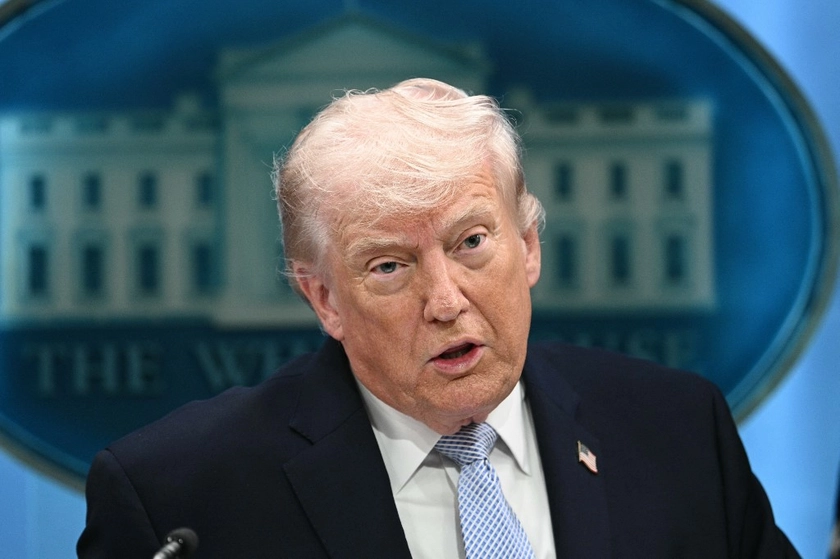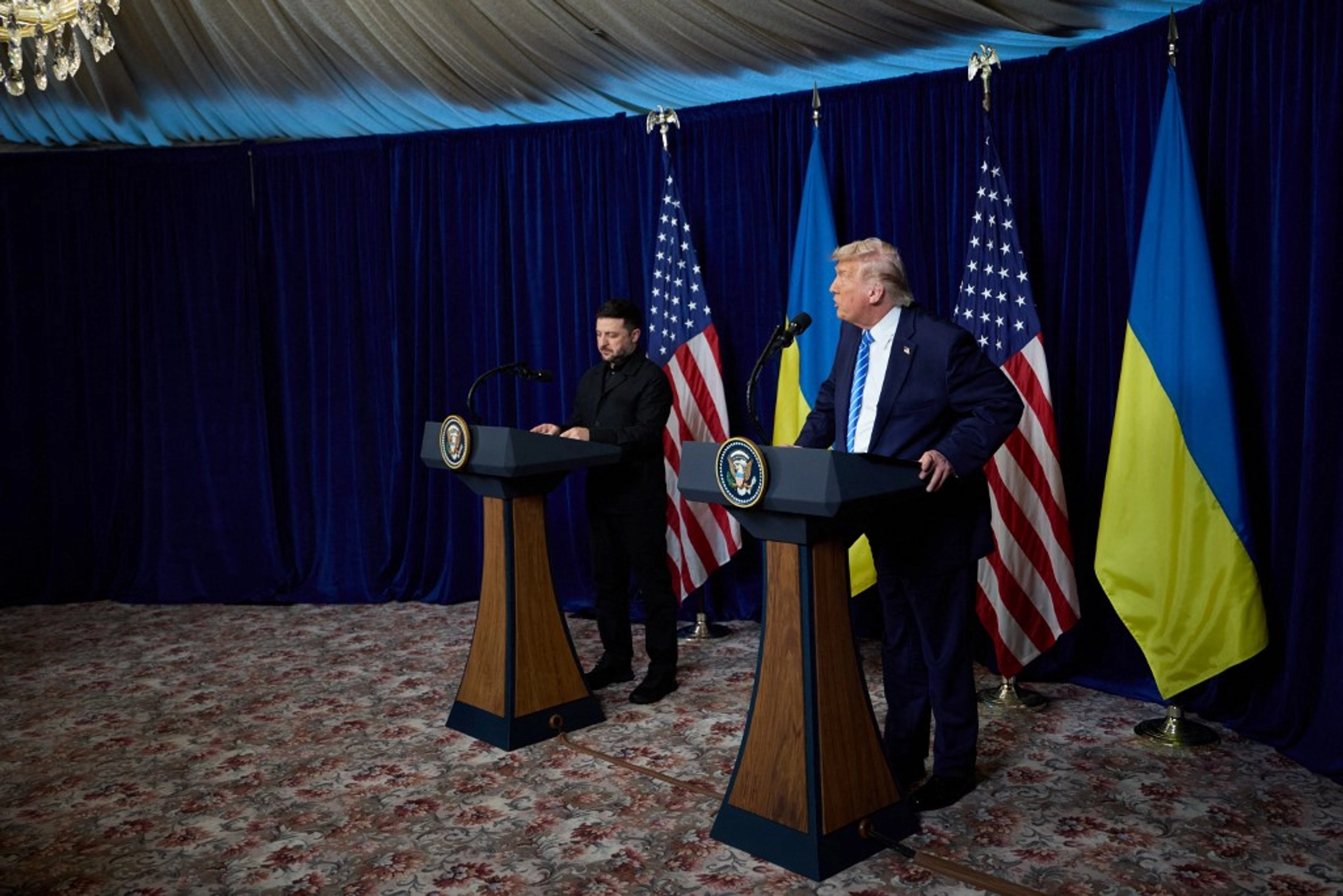
President Volodymyr Zelensky has revealed details of negotiations with US President Donald Trump and the current state of preparations for a peace agreement to halt the war in Ukraine.
While answering journalists’ questions following a meeting with Trump at his Mar-a-Lago resort in Florida, Zelensky confirmed that the so-called “20-point plan” is 90% ready, but that finalizing the document is being stalled by two critical issues: the status of territories and the functioning of the Zaporizhzhia Nuclear Power Plant.
JOIN US ON TELEGRAM
Follow our coverage of the war on the @Kyivpost_official.
Zelensky also referrenced the presence of international troops in Ukraine as a necessary condition for Ukraine’s security.
Two points holding back the agreement
Commenting on Trump’s words that “one or two issues” remain to be agreed upon in the negotiations, Zelensky confirmed the same and specified exactly what is involved:
“There are two questions that remain specifically in the 20-point document: how the Zaporizhzhia Nuclear Power Plant will function, and the question of territory. That is why I said that this 20-point plan is 90% ready, because there is no [current] agreement regarding these two points.”
“As for security guarantees, readiness is one hundred percent, with the only unresolved nuance being the duration of these guarantees,” Zelensky said.
Key safeguards for preventing a new war
Zelensky gave a clear answer to the question of whether he considers the presence of a foreign contingent in Ukraine as a necessary condition.
Ukraine's Banks Post Longest Credit Growth in 15 Years as Windfall Tax Threatens to Choke It Off
“Honestly, yes. I believe the presence of international troops constitutes real security guarantees. This is a reinforcement of the guarantees that partners are already offering us,” he stated.
In Zelensky’s opinion, the physical presence of allied troops will give confidence not only to Ukrainian citizens – both civilian and military – but also to businesses and international investors. This will serve as a safeguard against Russian leader Vladimir Putin waging war against a peaceful Ukraine again.
Journalists asked whether Ukraine retains the right to refuse proposals from partners if they contradict national interests. He clarified that the negotiation process is open, but is not simple. Zelensky emphasized:
“We say ‘no’ to each other a lot. Not just once to some questions, but to hundreds of questions and thousands of details... This lies at the core of [our] country’s independence and its independent position… This is what we are fighting for. This is what Putin did not want – he wanted to deprive us of the sovereign right to choose.”
He added that where proposals do not meet Ukraine’s interests, Kyiv speaks about it openly.
Key negotiators
Zelensky also spoke about the format of the technical negotiating groups (Ukraine-US, Ukraine-EU-US, etc.). In addition to the names mentioned by Trump – Secretary of the National Security and Defense Council Rustem Umerov, Chief of the General Staff of the Armed Forces of Ukraine Andriy Hnatov, and First Deputy Minister of Foreign Affairs Sergiy Kyslytsya – the composition of the delegations will be flexible and is set to involve:
- Oleksandr Bevz (advisor to the Head of the Office of the President)
- Representatives of intelligence (for monitoring issues)
- The military
- Representatives of the economic bloc, as was the case at meetings on economic issues
Finance
On the question of finance and funding, Zelensky noted that US terminology differs slightly from Ukrainian terminology, but the essence remains unchanged – Russia must pay.
“The Americans call this compensation, not reparations, because, I think, they don’t really like the word ‘reparation,’ to be honest. But for us, it is important to get the money to restore our state,” the president explained.
He provided a reminder about the mechanism of “reparation loans,” which has already been agreed upon with European partners, where the majority of frozen Russian assets are held.
“We will receive the first $100 billion in the next two years in equal tranches. If there is no war, we will spend this money on recovery. If we have to defend ourselves, then there is money to buy this protection,” Zelensky summarized.
Prospects for returning Ukrainian children
The return of deported Ukrainian children remains the most difficult issue.
Zelensky admitted that he could not be fully confident in a positive result, as this would involve dealing with Russia. However, he called on partners and journalists to constantly raise this topic so as not to allow the aggressor to “forget” about this crime.
This article is one of three companion pieces on President Zelensky’s behind-the-scenes remarks to journalists following his Dec. 28, 2025, Peace Plan summit meeting with Trump at Mar-a-Lago. To read the other articles, click here and here.
You can also highlight the text and press Ctrl + Enter