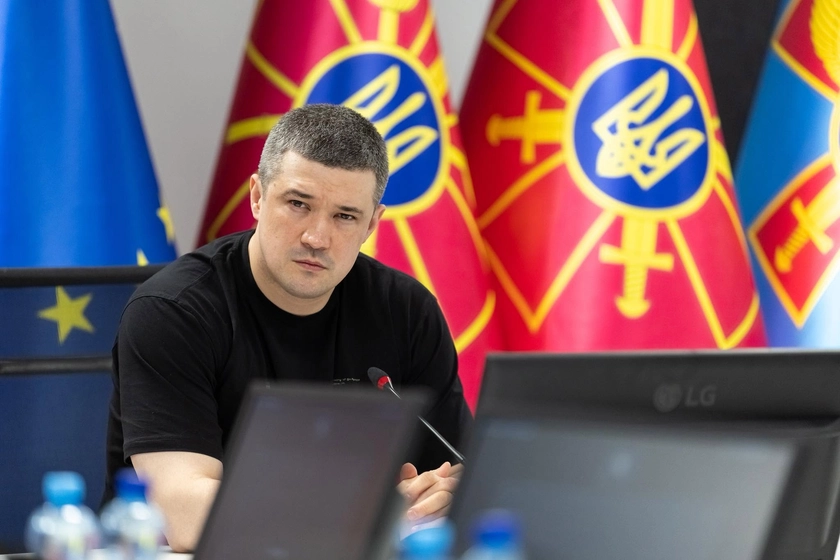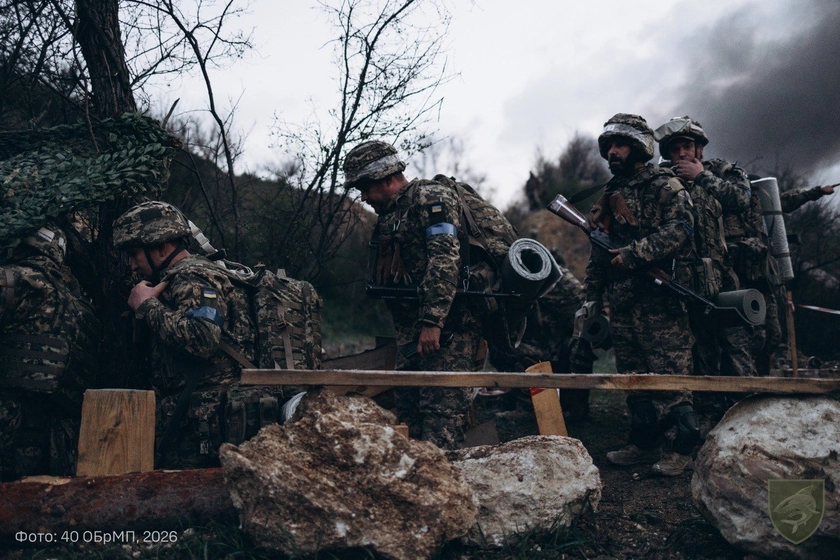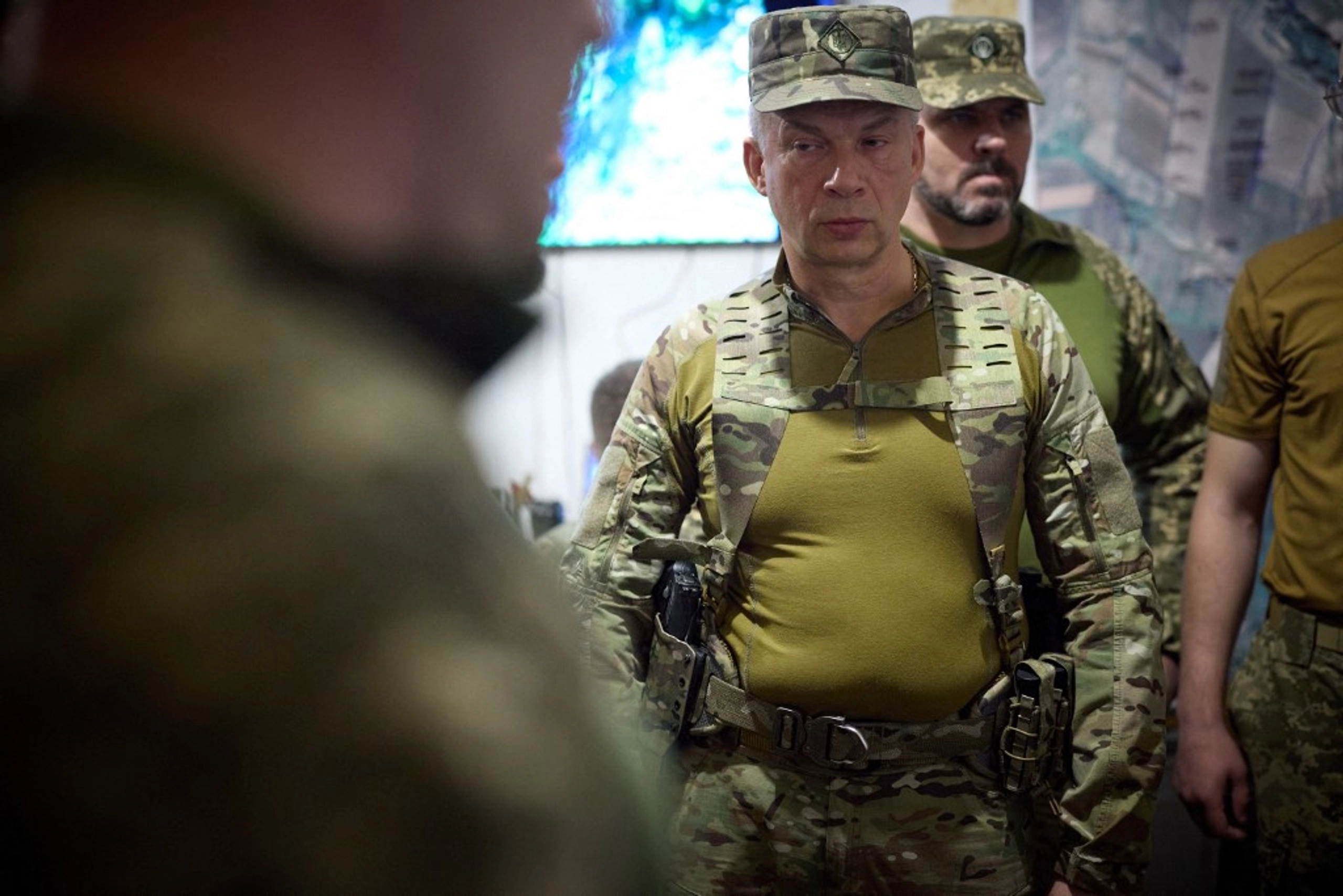
Ukrainian Armed Forces commander Oleksandr Syrsky in a Tuesday interview with TSN television said his troops are taking the war to Russia and successfully grinding down the Kremlin’s forces, but the end of the war isn’t yet in sight.
Kyiv Post transcribed and translated the 90-plus-minute discussion, and broke out six high points from General Syrsky’s comments about the progress of combat so far and battles in the future. The full English transcription is here.
JOIN US ON TELEGRAM
Follow our coverage of the war on the @Kyivpost_official.
The original interview video is here:
1. The quantity and intensity of Russian assaults is shrinking and Ukraine’s forces are attacking more.
Syrsky said the tempo of fighting is shifting in Ukraine’s favor. He said the Kremlin is still embarked on a strategic offensive with the objective of capturing major portions of Ukrainian territory, but those efforts are now visibly getting smaller.
Russian forces in past years had attacked along, roughly, 13 major operational axes, and now the assault effort has fallen to seven, Syrsky said. Ukraine’s campaign targeting Russian road freight and rail traffic, and logistics hubs and command infrastructure has reduced the number of Russian troops arriving at the front, supply of military material to them, he said, and Russian forces in the field have become less maneuverable, forcing Russia’s generals to concentrate effort in a smaller area.
Poland Calls Zelensky's National Pantheon Plan an ‘Escalation’
Syrsky cited armed forces statistics showing that about 45-50% of combat engagements along the front are initiated by Ukrainian forces. His point was not that Ukraine has gained strategic initiative across the front, but that Russian offensive activity has decreased while Ukrainian forces increasingly have been able to dictate the tempo by attacking themselves, in selected sectors. He pointed to a claimed 600 square kilometers (232 square miles) of net terrain gained from Russian forces since the start of the year, as evidence that Russian offensive capacity is degrading. Syrsky said:
“Previously, they (Russians) were attacking along roughly 13 major axes. Today... only about four can truly be described as the principal offensive axes…If you look at the total number of daily combat incidents…45-50% are now offensive actions carried out by our own forces.”
2. Ukraine’s armed forces still are the underdog.
Syrsky said Ukraine’s overall war strategy remains inflicting the maximum number of Russian casualties with the minimum number of friendly losses. He cautioned that the Russian army is still bigger and better resourced than the Armed Forces of Ukraine (AFU). He said Russia’s manpower advantage was still many times that of Ukraine’s and that the Kremlin’s willingness to use police state tactics and to force felons and debtors into military service makes it practically impossible that Russia will run out of new troops to feed into the fighting any time soon.
He said Ukraine’s main battle tactic will stay “active defense,” meaning AFU forces will try to hold Russia on its main axes of attack while launching local offensives wherever Russian forces are vulnerable. Asked whether the war had reached a turning point, Syrsky said that the trend of the fighting was possibly moving in that direction, but certainly no turning point had yet arrived.
A real turning point would be Russian forces so exhausted and so ruined in morale that Ukrainian forces might gain 18-20 kilometer (11-12 miles) in a single day of fighting, and the battlefield situation is nowhere near that. Syrsky said:
“We are containing the enemy on the main directions of its offensive... At the same time, we conduct offensive actions of our own…There are signs the enemy is becoming exhausted. But I must repeat – we should not underestimate them.”
3. Ukraine’s drone bombardment of Russia is part of a calculated, multi-level campaign that had the objective of breaking Russia’s ability to fight.
Syrsky said that Ukraine’s long-range strike campaign is much more than a series of headline-grabbing attacks. He said hundreds of strikes on refineries, factories, bridges, rail lines and fuel depots are all part of one campaign designed to make Russia less able to sustain the war.
He said Ukrainian planners have divided the campaign into three layers: deep strikes against industry, operational strikes against logistics, and frontline strikes against combat units. Each level of attacks supports the others – destroying fuel and industrial capacity limits what Russia can produce, attacking logistics makes it harder to move supplies to the front, and weakening the rear makes Russian troops easier to defeat in combat. That campaign is going well, but it cannot yet be called fully successful. Syrsky said:
“Modern warfare is no longer fought solely on the battlefield. It is also a war of economies and technologies…We don’t measure success solely by the number of enemy personnel killed. We also measure the damage inflicted on Russia’s economy and its ability to move and sustain its forces.”
4. Ukraine’s military leadership has implemented reforms and knows that more are necessary, and even if this is not easy while fighting a war, more reforms are coming.
Syrsky said Ukraine cannot wait until after the war to reform its military, and that building a more effective force is part of responsible war strategy.
Responding to critics who have accused him of creating attack units called assault regiments and keeping them under central army control, he said the policy was necessary because assault infantry regiments are the main ground element capable of carrying out critical attacks or “fire brigade” defense in threatened sectors, and that the AFU doesn’t have enough of these units to share equally across the entire front.
Speaking on force generation and to critics complaining AFU leadership seems to prefer creating brand new combat brigades rather than reinforcing old ones, Syrsky said the size of the front and continued Russian force growth make the formation of new brigades unavoidable, because otherwise there might not be organized units available to respond to a Russian offensive in a brand new sector.
The AFU’s recruitment problem is still serious, he said, so finding the manpower to create new units and reinforce old ones will be a big determinant of success or failure in future AFU operations. Syrsky said:
“The biggest [limitation] is our mobilization capacity. Everything depends on how many new service members we are able to recruit in order to replace those who leave the Armed Forces.”
5. The AFU is going all in on technology and adaptation; the goal is to become (even) more drone-intensive and flexible.
Syrsky said that the Russo-Ukraine War is a war of adaptation in which technology matters and can decide battles, but only if the armed forces learn faster than their opponent. He said drones, electronic warfare and communications have changed every level of warfare, from tactical engagements, to operational planning, to evacuation of wounded to how much ground a unit of soldiers can physically control. The AFU is well aware, moreover, that that is still changing, he said.
The speed and scale of technical change in war has forced the AFU to become not just a fighting organization but a learning organization, in which every operation is reviewed, successful tactics are quickly shared, and commanders are expected to adapt constantly, on their own, because the battlefield changes so fast. His point is that the AFU’s main advantage over Russia is just as much its ability to innovate quickly and react to the next war tech leap as it is to develop and field new war tech in the first place. Syrsky said:
“This war evolves continuously... Whoever adapts faster gains the advantage.”
6. Morale
Syrsky said that within the AFU and across Ukrainian society, people are tired, but that fighting spirit remains strong. Ukrainian soldiers, he said, are exhausted after years of continuous fighting, but they remain motivated because they know exactly what they are fighting for. Conflicts within the AFU, for instance, about controversial assault units, are natural and need to be accepted as normal conflict that takes place in any large organization.
Syrsky called on civilians and allies to stay clear-headed when seeing controversy within the AFU, and to remain calm even when personal emotions felt about an issue seem overwhelming. The military and the civilian rear depend on each other, and public debate about controversial issues should be calm and evidence-based, because fighting for social cohesion is itself part of Ukraine’s war effort. Syrsky said:
“Our soldiers are tired. Anyone who says otherwise would not be telling the truth…When [difficult situations] do occur, they must be approached calmly, objectively, and strictly within the framework of the law.”
You can also highlight the text and press Ctrl + Enter