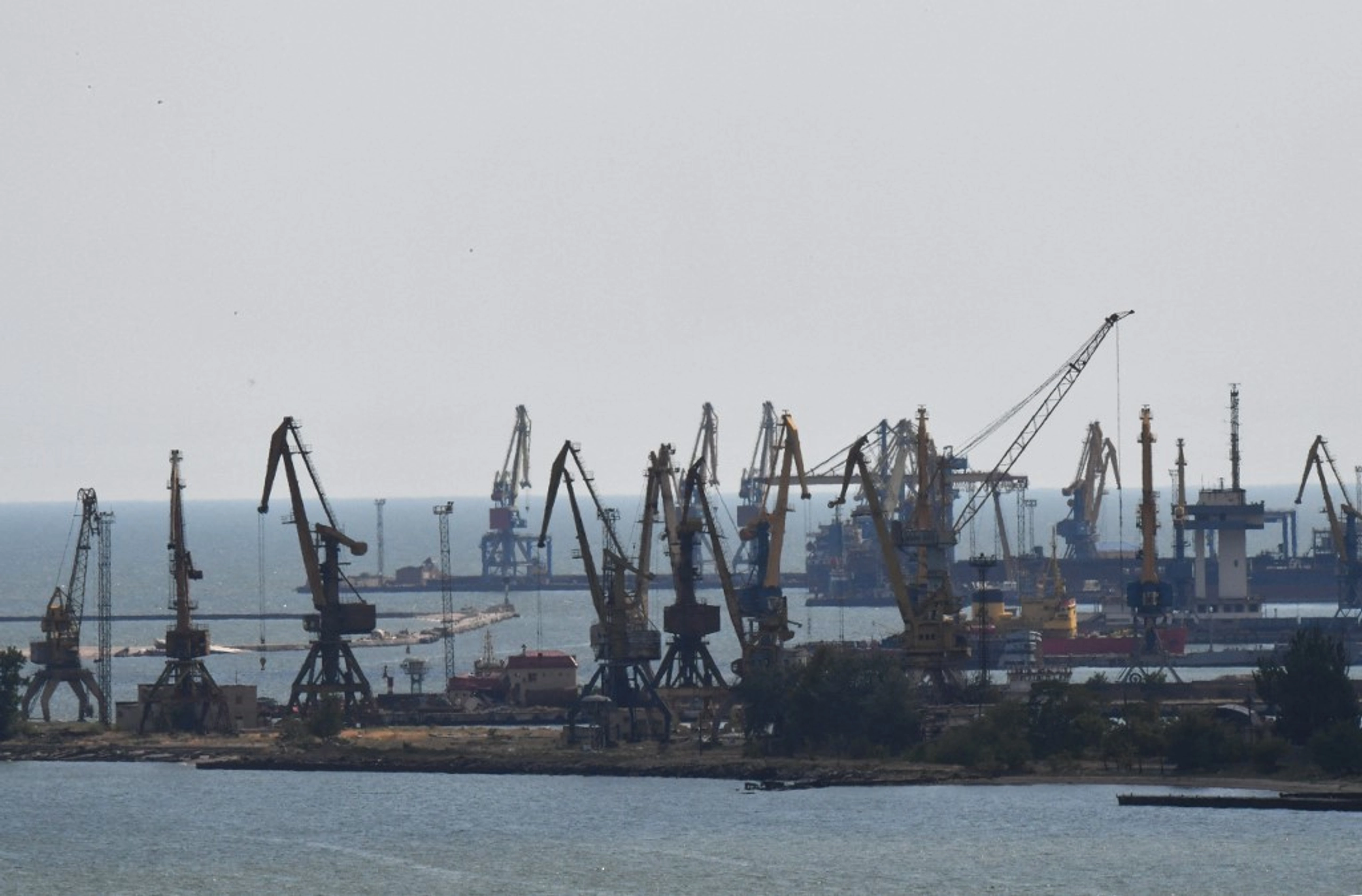
Russian officials are weighing the revival of international ferry routes across the Sea of Azov and the Black Sea, including a proposal to connect the occupied Ukrainian port city of Mariupol with Batumi in Georgia, Russian state media has reported.
“It may be possible to resume cruise services across the Sea of Azov to foreign countries. Previously, there was a cruise route operating from Mariupol to Batumi. Provided that a passenger pier is restored or constructed, the specified route could be reinstated,” Russian government documents cited by RIA Novosti read.
JOIN US ON TELEGRAM
Follow our coverage of the war on the @Kyivpost_official.
No Georgian authorities have publicly indicated any agreement to restart such services, and the reporting offered no timeframe for when the plan might move forward.
The same coverage named the Mustai Karim, a high-end, four-deck cruise ship designed to carry several hundred passengers, as the vessel being considered for the proposed journeys.
On Sunday, apparently in response to the reporting, the Foreign Intelligence Service of Ukraine (SZRU) accused Russia in a statement of “disregard for human life, cynical exploitation of captured territories, and ignoring international law.”
“In 2025, Russia intensified its use of the temporarily occupied Mariupol seaport, presenting it as ‘restoration,’” it said. “In reality, this is an illegal appropriation of Ukrainian infrastructure and its integration into the logistics system of the aggressor state.”
“The decision to open the port to foreign ships is an attempt to create the illusion of ‘legality’ and to circumvent sanctions... this confirms the intention to turn Mariupol into a key logistics hub for the temporarily occupied territories.”
Mariupol has remained under Russian control since May 2022, following more than two months of sustained attacks that devastated large portions of the city.
During the assault and subsequent siege, residents faced acute shortages of basic necessities including drinking water, food, electricity, heating fuel and medical supplies, as winter temperatures plunged below minus 10 degrees Celsius, exacerbating civilian casualties.
Ukrainian estimates suggest approximately 22,000 people were killed during the encirclement and takeover of the city, while around 300,000 residents, more than half of the city’s pre-war population of 540,000, were forced to flee.
In the years since, Moscow has repeatedly highlighted reconstruction projects in Mariupol, portraying the city as a showcase for its claimed rebuilding efforts and the so-called “integration” of occupied Ukrainian regions.
At the end of December, Russia reopened with fanfare the reconstructed Donetsk Regional Academic Theatre in Moscow, where up to 600 civilians were killed when Russian aircraft dropped two bombs earlier in the war.
That same month, Russian President Vladimir Putin approved a decree enabling occupation officials to seize properties in Ukrainian territories under Russian control, including Mariupol, if homes were left vacant by residents who were displaced or killed.
Under the policy, compensation is available only to those who obtain Russian citizenship.
You can also highlight the text and press Ctrl + Enter

Russia Hit by 660-Drone Overnight Barrage Targeting Moscow, Crimea and Key Military Sites