The US announced on Tuesday, that it will commit up to $100 million toward emergency repairs to the radiation containment system at the Chornobyl Nuclear Power Plant after a Russian drone strike severely damaged the structure last year.
In a State Department media note, Washington said the funding would support coordinated G7 efforts “to ensure the continued containment of fissile nuclear material” at the site in northern Ukraine.
JOIN US ON TELEGRAM
Follow our coverage of the war on the @Kyivpost_official.
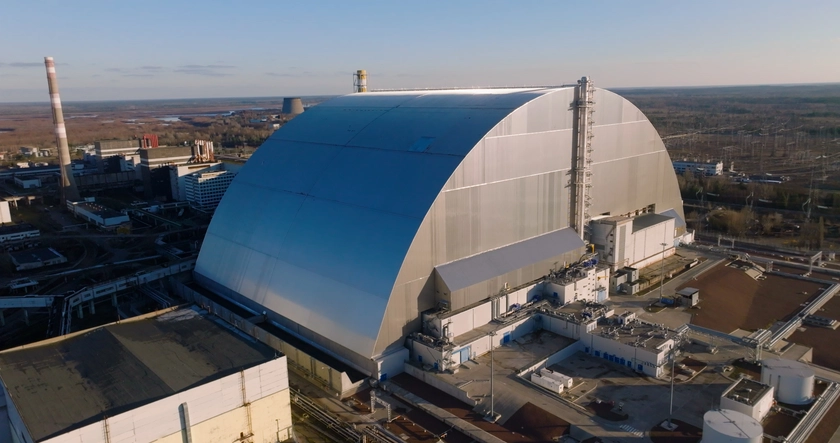
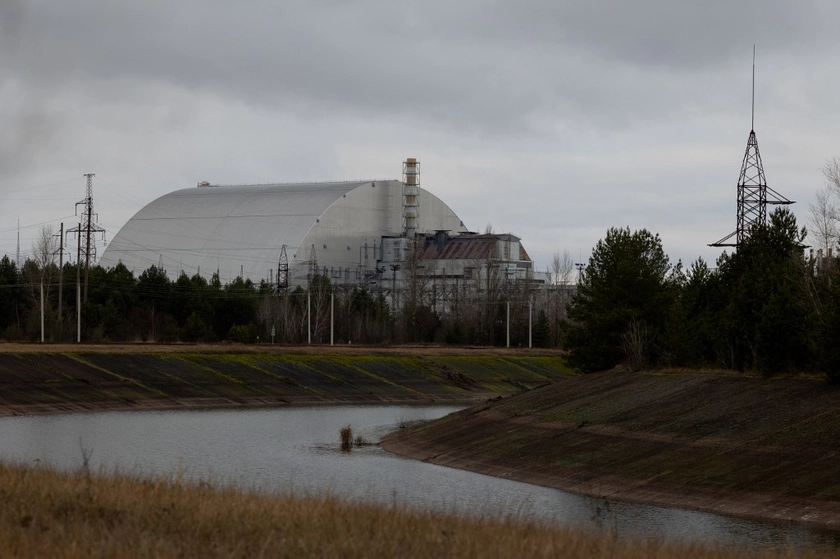
The contribution will cover roughly 20 percent of the estimated $500 million needed to restore the New Safe Confinement (NSC) arch, the massive steel structure that seals off Reactor Four, destroyed during the 1986 Chornobyl disaster.
“For three decades, the United States and G7 partners have led efforts to secure nuclear material at the Chornobyl plant,” the State Department said, noting that Washington has already contributed more than $365 million toward the construction and maintenance of the NSC.
The department warned that the structure can “no longer provide adequate protection” after it was damaged in a Russian drone strike in February 2025, creating “the specter of a dangerous leak of highly radioactive material in Europe.”
According to the European Bank for Reconstruction and Development (EBRD), the strike tore a 15-square-meter hole in the outer shell of the NSC and caused more than 300 smaller openings throughout the structure. Critical ventilation, pressure-control, and radiation-monitoring systems were also damaged, increasing the risk of radioactive dust escaping during future dismantling work inside the shelter.
Poland Warns Ukraine: No EU Entry ‘With Bandera’
The NSC, originally designed with a 100-year lifespan, was built to contain the unstable Soviet-era sarcophagus covering Reactor Four and allow for the eventual decommissioning of the site. EBRD experts have warned that the attack significantly complicated those efforts and could delay dismantling operations by at least a decade.
The State Department called on G7 and European allies to provide the remaining funding needed for repairs.
“We call upon our G7 and European partners to follow suit and make substantial financial commitments to share the burden of these essential repairs,” the statement said.
The Chornobyl exclusion zone remains one of the heavily contaminated places on Earth, and international officials have repeatedly warned that any further damage to the NSC could pose long-term environmental and nuclear safety risks far beyond Ukraine’s borders.
You can also highlight the text and press Ctrl + Enter