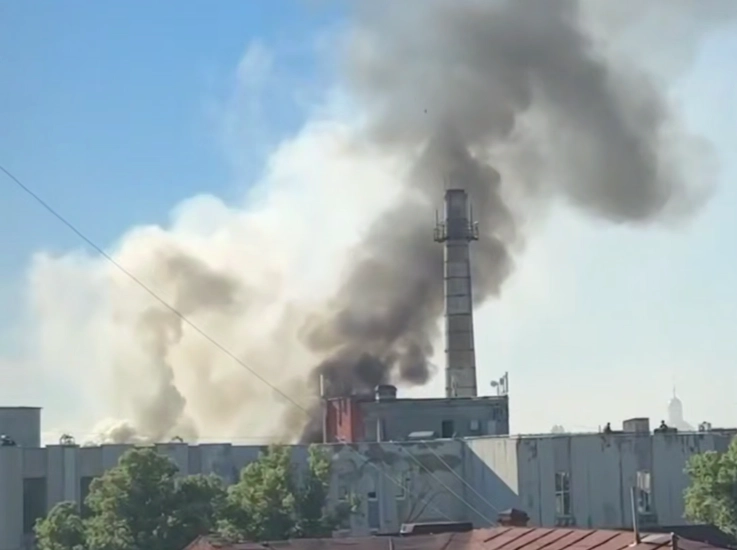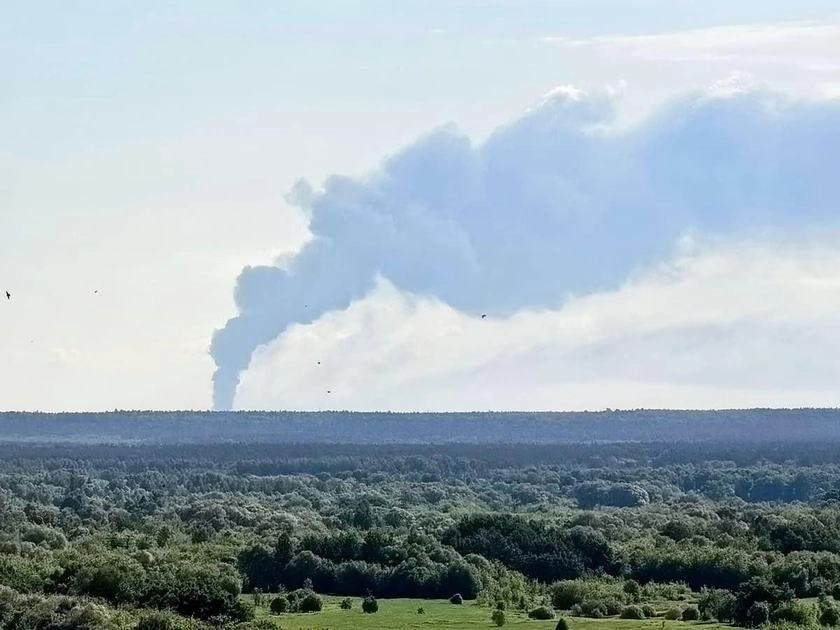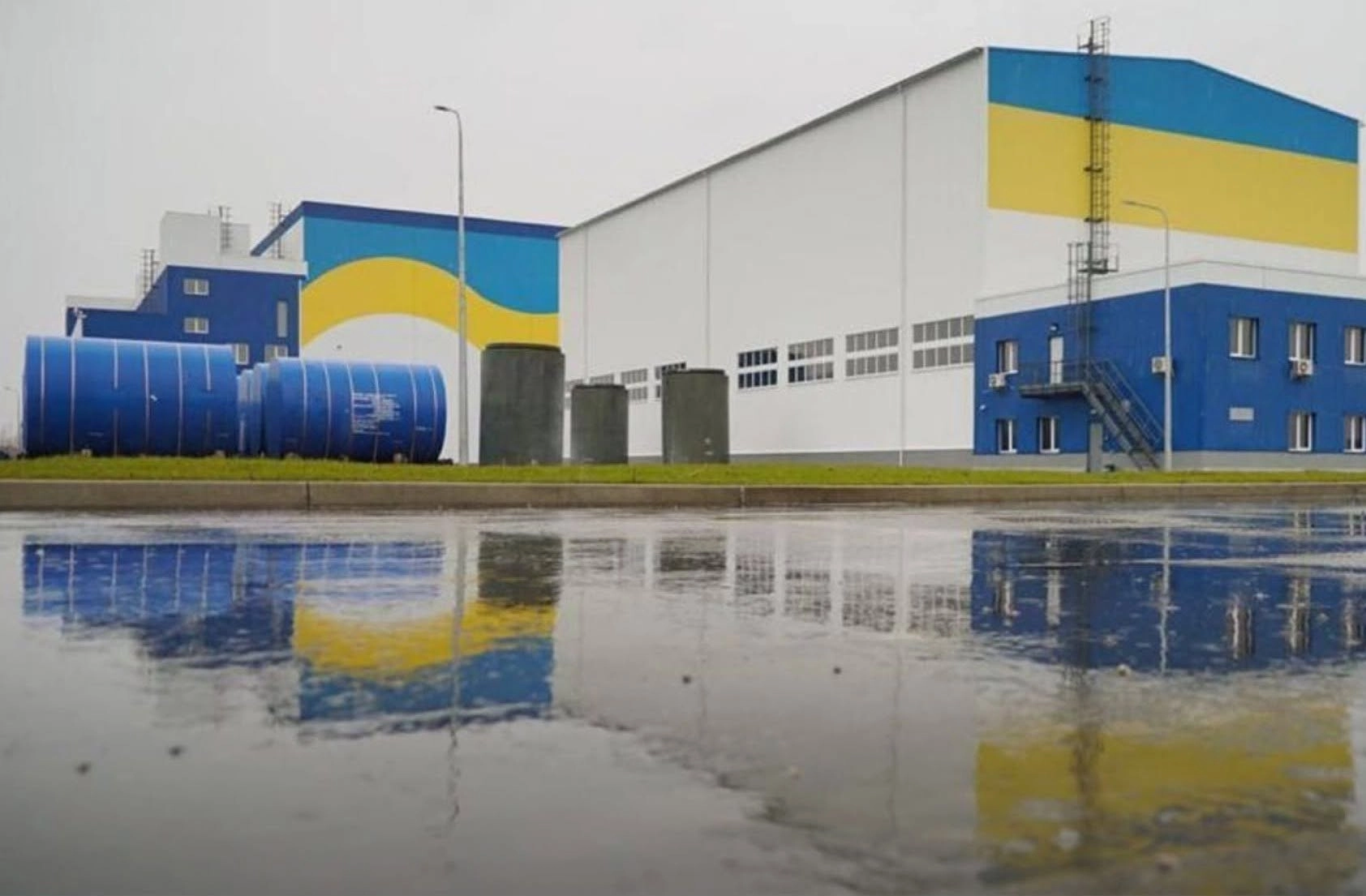
A Russian strike drone hit the Central Spent Nuclear Fuel Storage Facility (CSFSF) site in Chornobyl overnight Saturday-Sunday, June 7, partially destroying a specialized auxiliary building.
According to a statement on Facebook by Ukraine’s National Nuclear Energy Generating Company, Energoatom, the drone breach occurred at approximately 2:10 a.m. local time. The munition struck and partially destroyed the site’s container reception building.
JOIN US ON TELEGRAM
Follow our coverage of the war on the @Kyivpost_official.
Impact at the container reception site
The kinetic impact ignited a localized fire covering an area of 40 square meters. Emergency response teams deployed to the nuclear site managed to promptly isolate and fully extinguish the blaze. Energoatom confirmed that there were no casualties among the facility’s operational staff.
Crucially, the state operator clarified that no spent nuclear fuel was being held inside the specific reception building when the strike occurred. Automated monitoring systems and manual surveys indicate that the background radiation environment across the entire CSFSF platform remains completely stable and within normal regulatory limits.
In its public denunciation of the strike, Energoatom heavily criticized the Kremlin’s reckless targeting of nuclear installations.
“Another blow to a nuclear infrastructure facility has once again demonstrated to the entire world the true face of the Kremlin regime, which deliberately creates threats to nuclear and radiation safety,” Energoatom noted in its release. “Russia continues to act as a terrorist state and a nuclear terrorist, disregarding international law and the safety of millions of people.”
Ukraine Hits Russian Warplanes in Hangars at Crimea’s Saky Air Base
Zelensky slams Russian “audacity,” rallies international partners
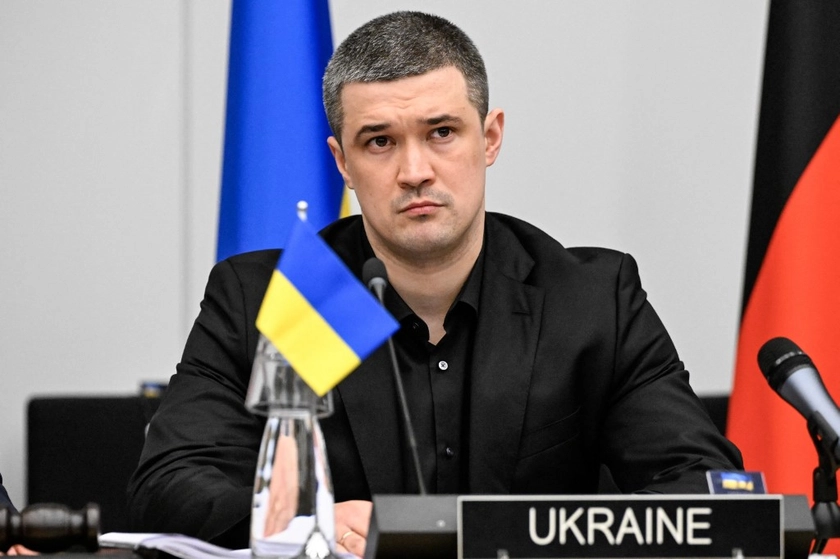
President Volodymyr Zelensky released a statement on Telegram directly addressing the targeting of the exclusion zone, labeling it an exceptionally low and malicious act of terror against an incredibly critical piece of infrastructure.
“Russia deliberately struck this very nuclear infrastructure facility,” Zelensky stated. “As of now, there is no exceeding of the background radiation norms. But there is definitely an exceeding of even the already sky-high Russian audacity. Ukrainian rescuers stopped the fire at this facility after the strike. And real new steps from the world are needed so that the Russians feel that such a terrorist war of theirs is a blow to Russia itself.”
The president added that Ukraine’s Ministry of Foreign Affairs, the Ministry of Energy, and all relevant state services are actively engaging with international allies to ensure that every global partner is fully briefed on the exact details of the Chornobyl strike.
The IAEA later reported that Ukraine had officially informed them of the morning attack on the nuclear facility, which caused significant damage to the storage facility’s infrastructure.
“The strike caused significant damage to the facility’s fuel reception building – including to the facade, windows and doors – and nearby buildings were also affected by the blast wave. Radiation levels at the facility remain within established limits.”
IAEA Director General Rafael Grossi called the incident “deeply alarming.” “The incident is deeply concerning as it occurred at a facility containing large amounts of nuclear material, held in storage just metres away from the attacked building,” he stated.
The agency head also emphasized that strikes on such areas are absolutely unacceptable and “in direct contravention of key nuclear safety principles, notably the 7 Indispensable Pillars for nuclear safety and security during a military conflict.”
Persistent risks in the Exclusion Zone
The radioactive landscape surrounding the former Chornobyl Nuclear Power Plant – the site of the catastrophic 1986 reactor meltdown – has faced repeated operational disruptions due to active hostilities since 2022. The area remains a highly sensitive zone where even minor technical accidents or environmental disruptions carry outsized radiation risks.
Just one month prior, on May 8, a separate Russian drone crash inside the Chornobyl Exclusion Zone sparked a massive wildfire that rapidly consumed over 1,100 hectares (2,718 acres) of protected forest. During that incident, strong wind gusts and unexploded landmines left behind by occupying forces severely hindered firefighting efforts, forcing emergency personnel to temporarily halt containment operations in highly contaminated sectors due to the risk of detonating ordnance.
While the background radiation levels remained within normal bounds during the May forest fires, the consecutive nature of these incidents underscores the systemic vulnerability of the zone’s containment architecture.
Energoatom stated that it is maintaining continuous, around-the-clock monitoring of the CSFSF site. Technical teams are working in full coordination with state emergency services and international atomic watchdogs to reinforce defensive perimeters around the storage facilities, which hold the vital task of isolating Ukraine’s accumulated radioactive waste.
You can also highlight the text and press Ctrl + Enter

Russia Hit by 660-Drone Overnight Barrage Targeting Moscow, Crimea and Key Military Sites