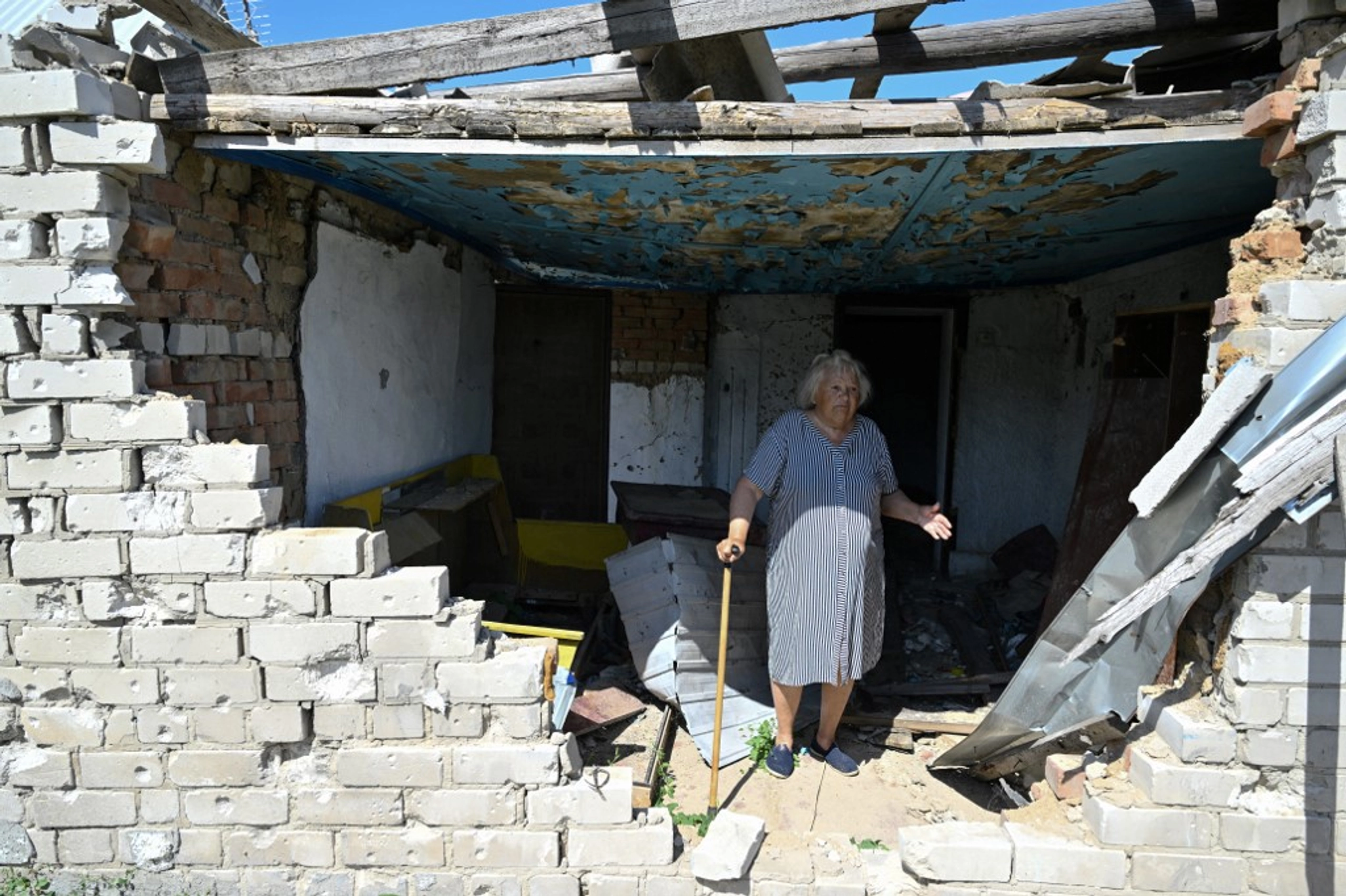
Ukraine’s Ministry of Foreign Affairs has warned of an acute humanitarian emergency affecting over 6,000 civilians, including around 200 children, in the occupied settlements of Oleshky, Hola Prystan, Stara Zburivka, and Nova Zburivka in the Kherson region.
Civilians lack water, food, medical care, medicines, electricity, gas, and communications. Critical infrastructure has been destroyed. Russian drones target civilians attempting to evacuate or obtain food. Russian occupying forces are blocking evacuations and obstructing the delivery of humanitarian aid, using civilians as a human shield.
JOIN US ON TELEGRAM
Follow our coverage of the war on the @Kyivpost_official.
The population in these areas has fallen sharply from approximately 40,000 to around 6,000, including a decline in Oleshky from 24,000 to roughly 2,000 residents.
Ukrainian officials, politicians, and civil society leaders are calling for increased international access and monitoring, including engagement from UN agencies, Human Rights Watch, and other international humanitarian bodies, to assess conditions on the ground and determine the extent of civilian harm.
Under drone siege
The humanitarian situation in Oleshky has deteriorated sharply since the ministry issued its warning on May 6.
Since May 26, no vehicles, including ambulances, have been able to enter or leave Oleshky, according to Ksenia Arkhipova, a volunteer from Oleshky now based in Ukraine-controlled territory, as roads leading in and out of Oleshky are heavily mined.
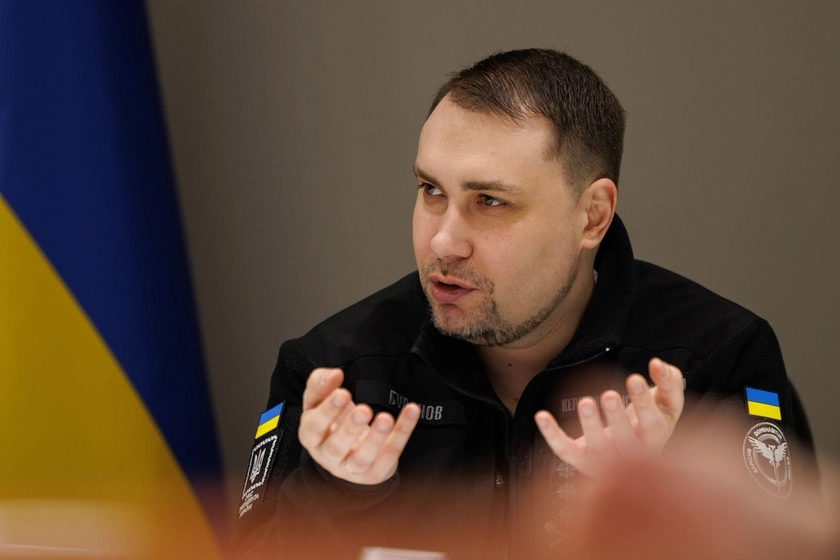
‘No Other Option’ – Budanov Says Ukraine Will Need Foreign Specialists
Anti-personnel mines make evacuation on foot life-threatening. No fuel or gas deliveries have reached the city. Residents report rapidly diminishing food supplies.
The local hospital, which operates on a generator, is running out of gasoline. Around 60 patients remain under treatment, including several critically injured people who require care unavailable in Oleshky. Medical evacuation to Skadovsk, where surgery is possible, is impossible. Injured civilians are transported to the hospital by wheelbarrows.
“Occupation is the worst thing that can happen,” said Oleksandra Kniha, the head of Kryla Foundation based in Kherson city. “People live in constant fear and uncertainty, under endless attacks, unable to move around the city without proper life support, food, medical support and security.”
Kryla, together with NGOs Helping to Leave and Nonviolent Peaceforce, recently prepared an advocacy brief documenting the humanitarian catastrophe in Oleshky.
The brief confirms a rapidly deteriorating crisis in Oleshky and the surrounding occupied settlements. The organizations describe a collapse of civilian protection mechanisms across occupied settlements on the left bank of the Dnipro River.
“This brief is particularly important as it highlights the situation of the civilian population in a territory where access for independent observers, journalists and international organizations remains extremely limited,” commented an official representative of Helping to Leave.
“In such conditions, each documented testimony helps to better understand the real challenges faced by people and does not allow their problems to remain invisible to the international community,” the official added.
She said such studies are critical to highlighting civilian needs and rights violations and to preserving evidence for future accountability efforts.
People are living in hell
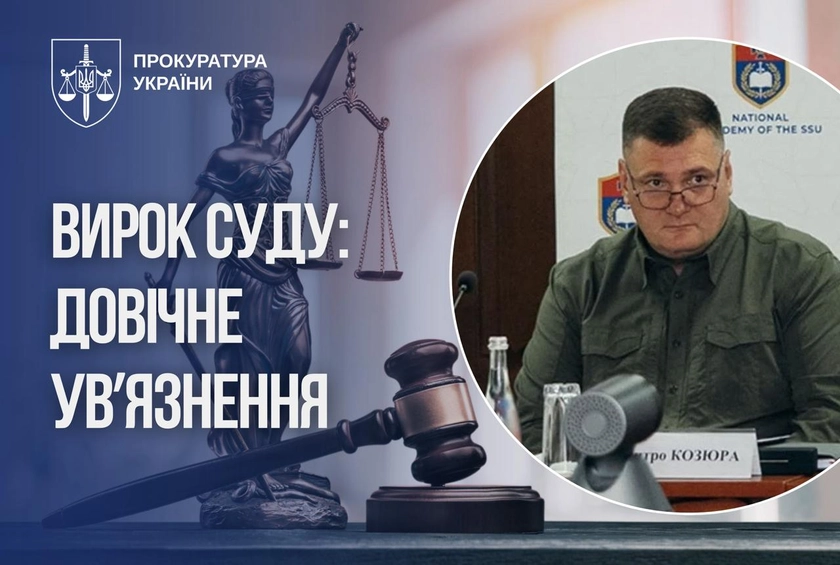
Serhiy Kozyr, a member of the Ukrainian Parliament and former head of the Kherson Regional State Administration, said in an interview that Oleshky, located approximately 1,500 meters (4,921 feet) from Kherson city, was among the areas most heavily affected by the destruction of the Kakhovka hydroelectric power plant in June 2023, when large parts of the city were flooded.
He said Russian occupying forces are now using civilians remaining in the city as a human shield while attacking Ukrainian-controlled territory.
“Both in Oleshky and Kherson, one can observe human safari,” said Kozyr. “This safari is not a hunter with a gun type. Drones chase people at a speed of more than 150 kilometers per hour [93 miles per hour].”
Kozyr, who was displaced first from Donetsk and later from Kherson following Russian aggression, said the situation in the occupied settlements needs urgent attention.
“We see genocide and human safari the world has not seen yet,” he said.
Mykola Kuleba, a Ukrainian human rights advocate, former presidential commissioner for children’s rights, and founder of Save Ukraine – which evacuates civilians from frontline and occupied territories and assists children affected by war, deportation, and displacement – said:
“In Oleshky and areas around it, the bodies of dead soldiers and civilians are scattered all over. You just can’t get them out or evacuate the civilians, including kids, because every minute you’re at risk of being killed by a Russian drone. The injured are there today without proper medical care because the Russians don’t allow it. They won’t let the wounded be taken out of this settlement.”
Kuleba said all attempts by Ukrainian authorities to reach agreements through intermediaries and international channels had failed to produce results and called on decision-makers in Canada, Europe, the US, and international institutions to intervene.
“Thousands of people, including kids, are living in hell… Thousands of people whom Russia is just using as a human shield for its criminal actions, for war crimes. These are crimes against humanity,” he added.
International humanitarian organizations
In a written interview with Kyiv Post, Ambassador John Herbst, senior director of the Atlantic Council’s Eurasia Center, commented:
“What is happening in Oleshky is one part – and perhaps the worst part – of the ongoing Russian war crime campaign in the Kherson region. Moscow remains embarrassed that it lost control of Kherson city in Ukraine’s successful counteroffensive in 2022. For some time, it had made Kherson civilians pay a brutal price by conducting a ‘human safari’ as Russian drones targeted civilians of all ages.”
“Oleshky is a town not far from Kherson city where thousands of civilians are trapped by a combination of Russian mines, troops and drones. There is no military value to Moscow’s targeting of these civilians – bereft of food and water – and refusing numerous requests to establish a humanitarian corridor for their evacuation to Kherson and elsewhere in unoccupied Ukraine,” he added.
Matthias Schmale, the UN resident and humanitarian coordinator in Ukraine, spoke to Kyiv Post, saying the UN is documenting growing civilian casualties in Oleshky and nearby settlements, primarily caused by drones and mines. He said humanitarian actors recognize likely violations of international humanitarian law but lack safe access and operational capacity to evacuate civilians or deliver assistance.
“Only a ceasefire could make meaningful protection possible, with no immediate practical way to stop the harm,” Schmale said. “A localized temporary ceasefire or window of silence would be sufficient to deliver humanitarian assistance and to conduct evacuations from Oleshky and other villages. This is achievable if the armed forces of both Ukraine and the Russian Federation agree to it.”
Following this, on Thursday, the UN Human Rights Monitoring Mission in Ukraine (HRMMU) issued a report.
Based on interviews with residents, the UN documented at least 29 civilians killed and 54 injured in two settlements in 2026 alone, most in first-person view (FPV) drone attacks, and reported that no food deliveries had reached Oleshky since May 26.
The mission called for a local ceasefire to allow evacuations and the delivery of humanitarian assistance.
Human Rights Watch Associate Director Yulia Gorbunova told Kyiv Post that interviews conducted with evacuees between October 2025 and May 2026 documented severe deterioration of living conditions across occupied settlements in the Kherson region.
“We spoke with residents who evacuated between October 2025 and May 2026,” she said in a written response.
“They said that in Russian-occupied cities within the Kherson region, especially Oleshky, Hola Prystan, Stara Zburivka, and Nova Zburivka, basic infrastructure has been shattered. The remaining population is surviving without electricity, gas, or reliable telecommunications. Residents have described facing a hellscape of ongoing hostilities, relentless drone attacks, and shortages of food and medical supplies. Many have managed to escape, but for those who remain and wish to flee, evacuation is a life-threatening gamble,” she added.
“Russian occupation forces must immediately ensure civilians are not denied items essential to survival – such as food and medicine – and facilitate safe passage to areas under the control of Ukrainian forces for civilians who choose to leave,” Gorbunova added.
Human Rights Watch is preparing a statement on the crisis.
Speaking at the Ukraine Recovery Conference in Gdańsk, Nobel Peace Prize laureate and head of the Center for Civil Liberties, Oleksandra Matviichuk, called for urgent international action and greater coverage of the crisis.
She stressed that while Russia ignores international law, pressure must be applied through sanctions.
Ukrainian authorities, local volunteers, international humanitarian organizations, members of parliament, child protection advocates, the UN, and Human Rights Watch have spoken about civilians trapped in Oleshky and the surrounding occupied settlements of the Kherson region.
What remains absent is a safe way out.
You can also highlight the text and press Ctrl + Enter

Attack on Moscow Oil Refinery: Putin Under Pressure?