EN

EN


EN
Stay informed with the most important Ukraine breaking news today. This page compiles the top headlines and critical updates from across Ukraine, offering a real-time snapshot of key developments.
Whether it’s military updates, political changes, or international reactions — we bring you the latest Ukraine news as it happens. All reports are carefully curated from verified sources and KyivPost correspondents on the ground.

Kyiv will allow the Russian marauders to keep the toilets they stole – a daily reminder of their grubby defeat, but not more.
Survivors of brutality tend to want the same things. Their suffering needs to be recognized. They demand safety – guarantees that the violence will not recur. They yearn for justice: for the perpetrators to be held accountable. Above all, they seek agency – to be heard, to shape the path to recovery, and to ensure their ordeal is neither forgotten nor repeated.
Ukraine is no exception.

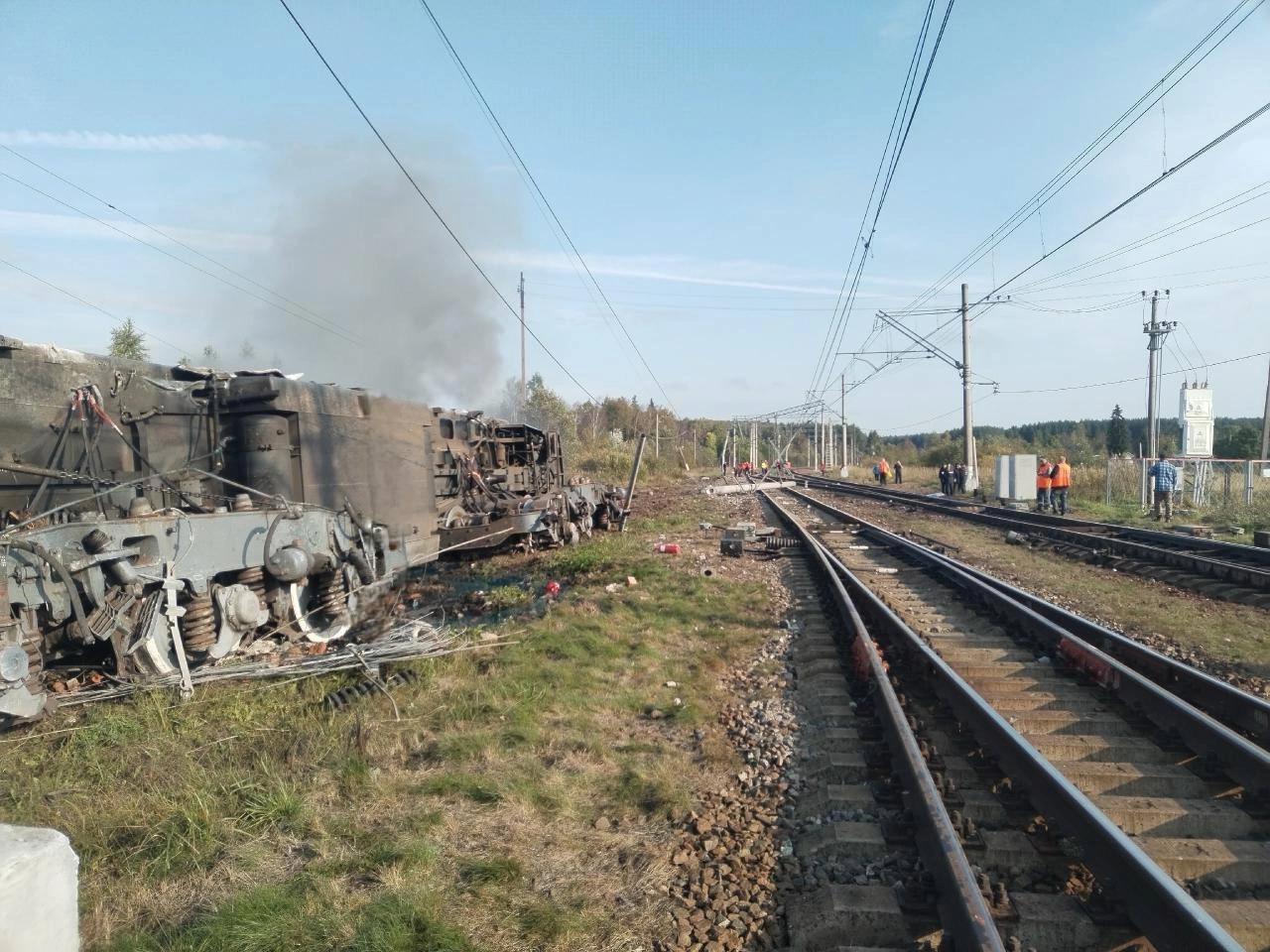
Seeking to maximize the effectiveness of its hits, Ukraine’s HUR and Special Ops disrupted two separate railway routes to compound logistics problems for the Kremlin.
Fighters from the Main Intelligence Directorate of the Ministry of Defense and the Special Operations Forces carried out a series of operations, unique in terms of their complexity, to disrupt railway traffic on the Orel-Kursk and St. Petersburg-Pskov routes.
According to sources in the Main Intelligence Directorate (HUR), two Russian guards were killed and another had his legs blown off as a result of the attack.

European leaders – who insist on behaving like gentlemen from a time long past – should step up and leverage their key strengths.
Europe has got stuck in a flawed discussion about security guarantees for Ukraine. It’s great that 26 countries want to stand up for Ukraine, this discussion is misconstrued. Former Defense Minister Andriy Zagorodnyuk has laid out how Ukraine needs to facilitate “strategic neutralization.” Europe needs to follow suit and needs to abandon several key myths.
Russia pursues an asymmetric war that the slow West fails to see as warfare. Instead, Europe should opt for contrarian asymmetric warfare, utilizing its strengths.

Kyiv will transform a Reitarska Street square into a “meta-garden” honoring Heorhiy Narbut, creator of Ukraine’s first banknotes and stamps.
On a quiet corner of Reitarska Street in central Kyiv, an overgrown public square is about to take on new life as a “meta-garden” dedicated to Heorhiy Narbut – the artist who, more than a century ago, gave Ukraine its first visual identity.
Narbut, often called the father of modern Ukrainian graphic design, was rector of the Kyiv Academy of Arts and played a central role in shaping the country’s visual identity during its short-lived independence after World War I.

Several European countries have pledged to send additional personnel and weapons to strengthen Poland’s defenses after NATO forces shot down Russian drones violating Poland’s sovereign airspace.
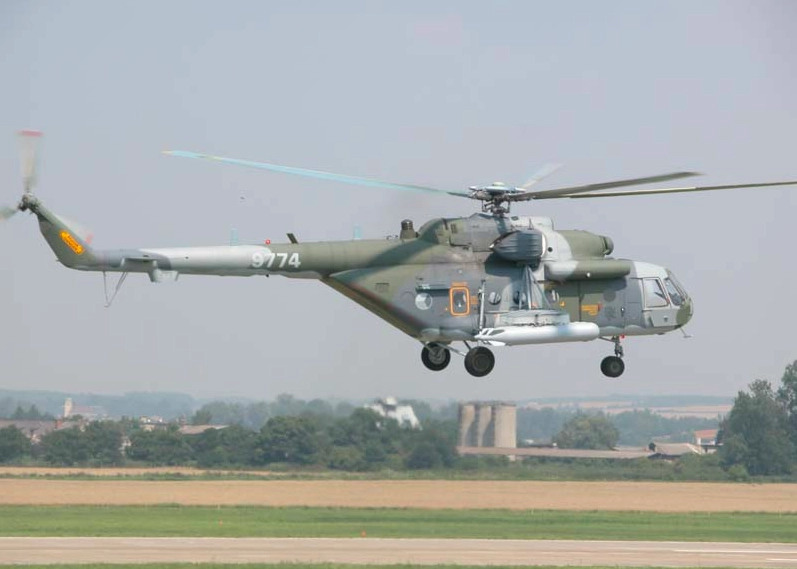
Czech helicopters have landed in Poland to bolster defenses against Russian drones, in a move that delivers a powerful display of NATO unity following Russia’s breach of Polish airspace.
Several European countries have pledged to send additional weapons to strengthen Poland’s defenses after NATO forces shot down multiple Russian drones during an unprecedented large-scale airspace incursion on Wednesday.
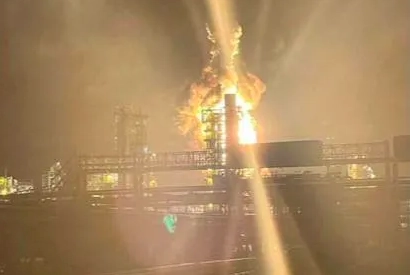
Overnight on Sept. 13-14, Ukrainian Special Ops and Drone Forces executed an attack on one of Russia’s largest oil refineries, starting fires in the Leningrad Oblast.
Ukrainian Special Operations Forces (SSO) and Unmanned Systems Forces struck the Kirishi oil refinery, one of Russia’s largest oil processing facilities, in Leningrad Oblast on the night of Sept. 13-14.
Russian Telegram channels reported overnight that drones attaked an oil refinery in Leningrad Oblast. Leningrad regional governor Alexander Drozdenko claimed that three drones were downed near the city of Kirishi, but their debris caused a fire on the plant’s premises.

Defending Ukraine’s skies is not the ultimate goal, but the first proactive step to make Moscow understand that NATO will no longer tolerate Russia’s hybrid war against Europe.
The Kremlin loves to play spy games and engage in hybrid aggression. This is exactly how Russia has acted in Ukraine for years – gradually “probing” the defenses, looking for weak spots and testing reactions. And only when Moscow, despite all its efforts, failed to achieve its desired results, particularly in the Donbas, did it resort to an open, full-scale invasion. But even here, the Kremlin “bit off more than it could chew” – they did not expect Ukrainians to show such unity and steadfast resistance.
The attack by drones that flew into Polish territory on the night of Sept. 10 was another episode in this hybrid game that Moscow has been playing in the West. The goal is clear: to destabilize Ukraine’s allies and undermine the unity of the NATO.

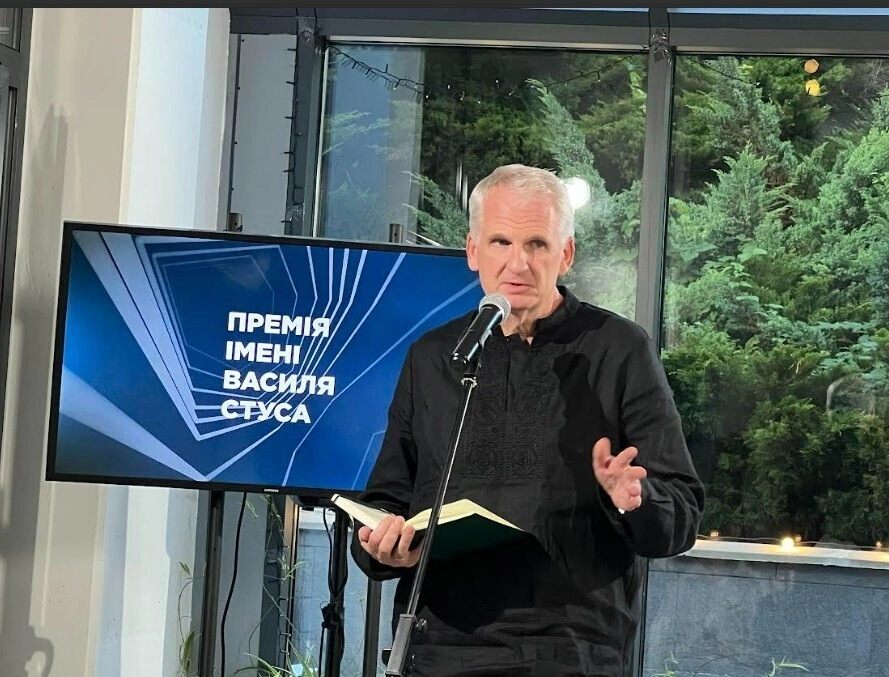
America’s preeminent historian of Eastern Europe has been awarded for his tireless work in giving the world a balanced view of what happened (and is happening) in Ukraine.
On Sept. 11 an important cultural event took place in Kyiv: the awarding of the Vasyl Stus Prize. The prize was first created in 1989 by the Ukrainian Association of the Independent Creative Intellectuals, which was headed at the time by Yevhen Sverstiuk (1928-2014). Today, the organizers of the award are the Ukrainian PEN, the Kyiv-Mohyla Business School, and the publishing house “Dukh i Litera.” The journalist Vadym Karpiak acted as master of ceremonies. He noted: “Times have changed, but Ukraine’s enemy, Russia, is still the same one Stus fought against.”
The historical context of the prize’s founding

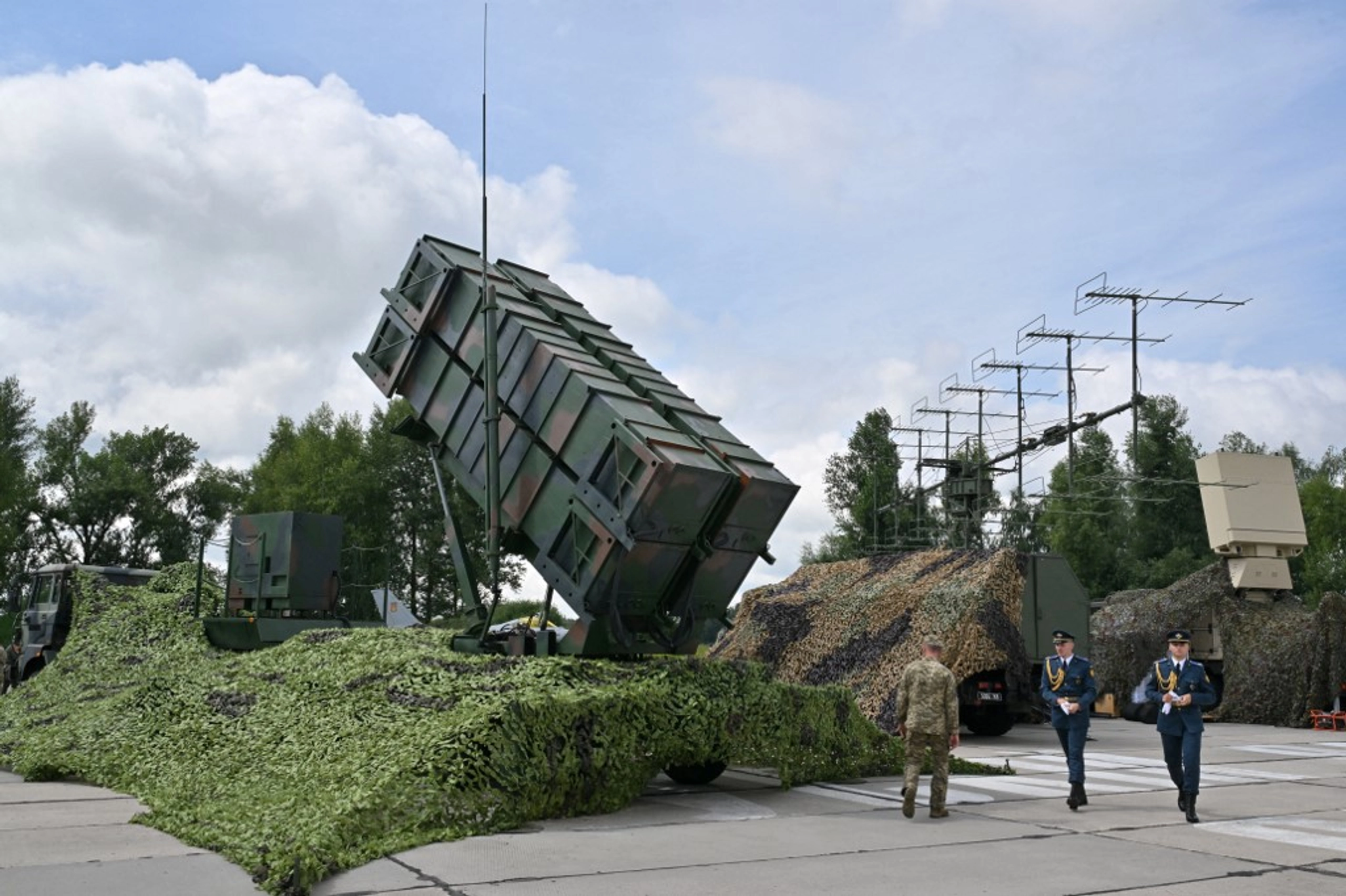
The EU is mulling over ways to keep Ukraine’s army supplied whatever happens.
Ukraine said Saturday that it needed at least $120 billion next year to fight Russia’s invasion and would need a similar amount to maintain its military, even if the war ended.
Ukraine spends around a third of its entire economic output on defense and relies on tens of billions of dollars of financial assistance from its Western allies to keep its economy afloat.

Italy and Europe’s efforts to shape post-war Ukraine have faced obstacles all along the way. Kyiv Post speaks to the European Council of Foreign Relations Rome chief.
Arturo Varvelli, Head of the Rome Office and Senior Policy Fellow of the European Council on Foreign Relations (ECFR), is one of the few Italian experts on foreign affairs who have visited Ukraine. In September 2024, he was in Kyiv, as a guest of the New European Center, to discuss Ukraine’s possible accession to the EU.
How does Italy see Ukraine now?
Rebuilding Ukraine is an immense challenge, requiring around $524 billion in private capital involvement to facilitate recovery and reconstruction; the EU plans this into its European Flagship Fund.
The EU has introduced a new instrument at the URC-2025, the European Flagship Fund, which encourages businesses to actively contribute to Ukraine’s reconstruction. Rebuilding Ukraine is an immense challenge that will require around $524 billion in private capital involvement to facilitate recovery and reconstruction, according to recent estimates.
What is the European Flagship Fund for Ukraine’s reconstruction? What are its goals, priority areas, and opportunities for Ukraine and its partners?

Trump and his advisors insist they are putting core US interests first and scaling back decades of wasteful and unnecessary commitments.
Donald Trump returned to the White House vowing always to put America first. In recent days, even longtime US allies have found out the hard way that friendship has limits.
Russia, which has rebuffed Trump’s pleas for a ceasefire in Ukraine, apparently fired 17 drones that landed Wednesday in Poland -- whose security is guaranteed by the US-backed NATO alliance and whose president visited the White House the previous week.

Are we closer to peace or facing escalation? Former Ukrainian Foreign Minister Pavlo Klimkin tells Kyiv Post what Russia’s drone provocation means for Poland, NATO and the war’s future.
Recently, a large number of Russian drones violated Polish airspace. What was Russia’s objective in doing this?
PK: First of all, it was a pure provocation. Secondly, it should be placed in a broader context, which – in my opinion – is not being noticed either in Poland or in the domestic Ukrainian public debate. The “Zapad” military exercises are starting in Belarus, and Russia must show the world that it can effectively exert pressure and raise the stakes. The Russians are conducting a hybrid and cognitive war, and they also want to demonstrate that the ongoing war can – and in their view probably should – spill over into other countries. I also believe that this event is significant: Russia is testing how far it can go.
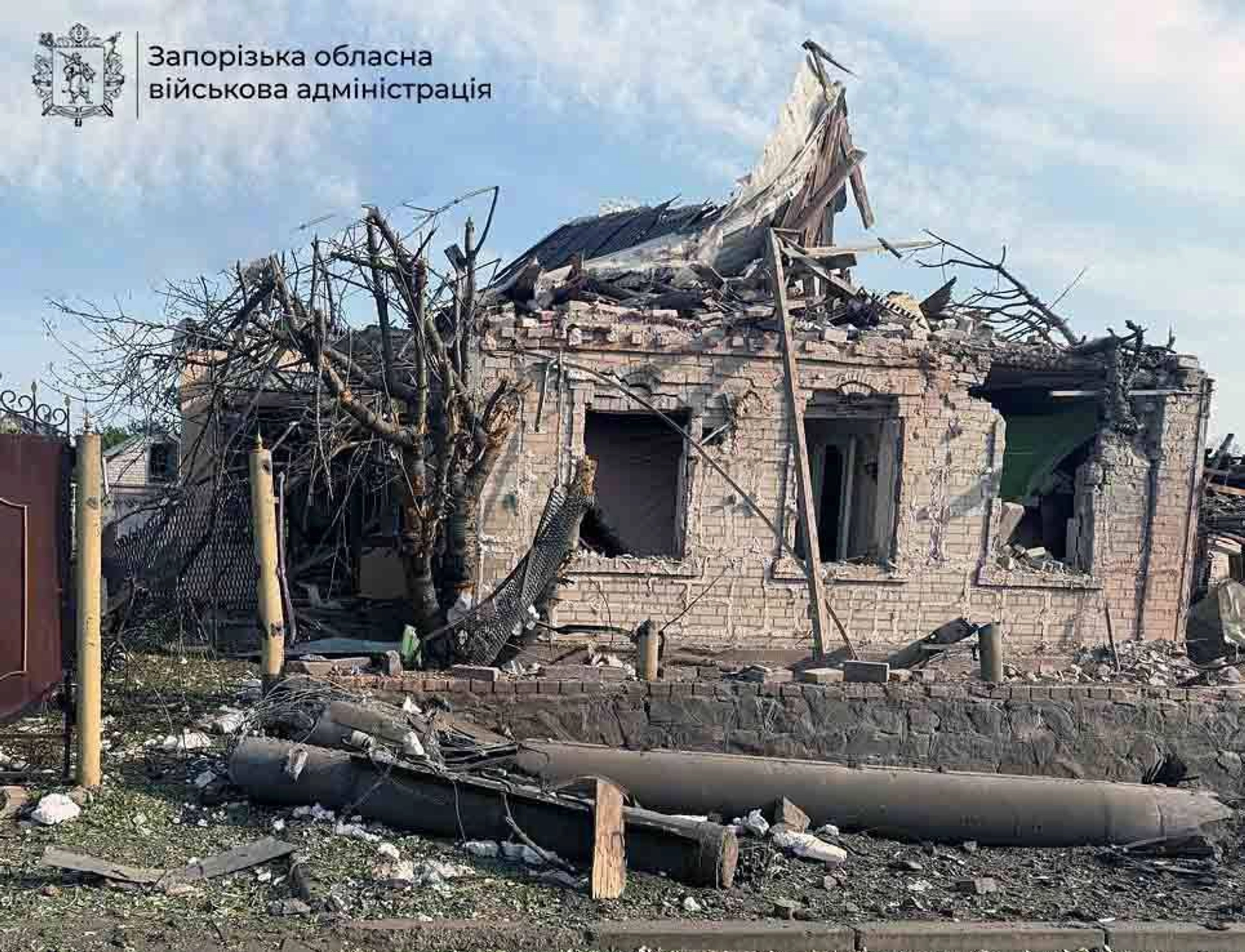
Russian forces executed 475 strikes on Ukraine’s Zaporizhzhia region over the past 24 hours, using airstrikes and artillery, with dozens wounded.
Over the past day, Russian forces carried out 475 strikes on 15 settlements in Zaporizhzhia region.
According to Ukrinform, this was reported on Telegram by Head of the Zaporizhzhia Regional Military Administration, Ivan Fedorov.

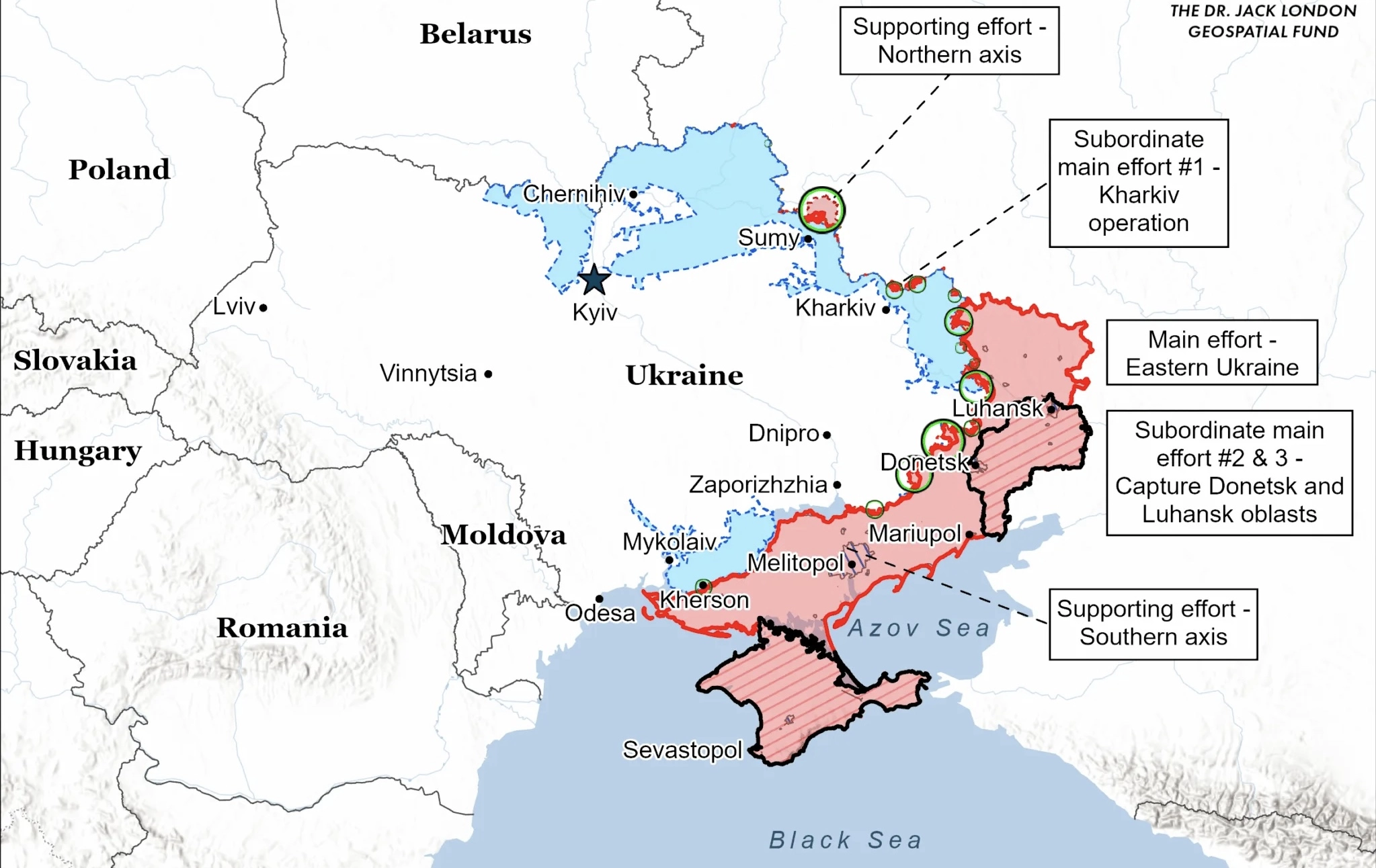
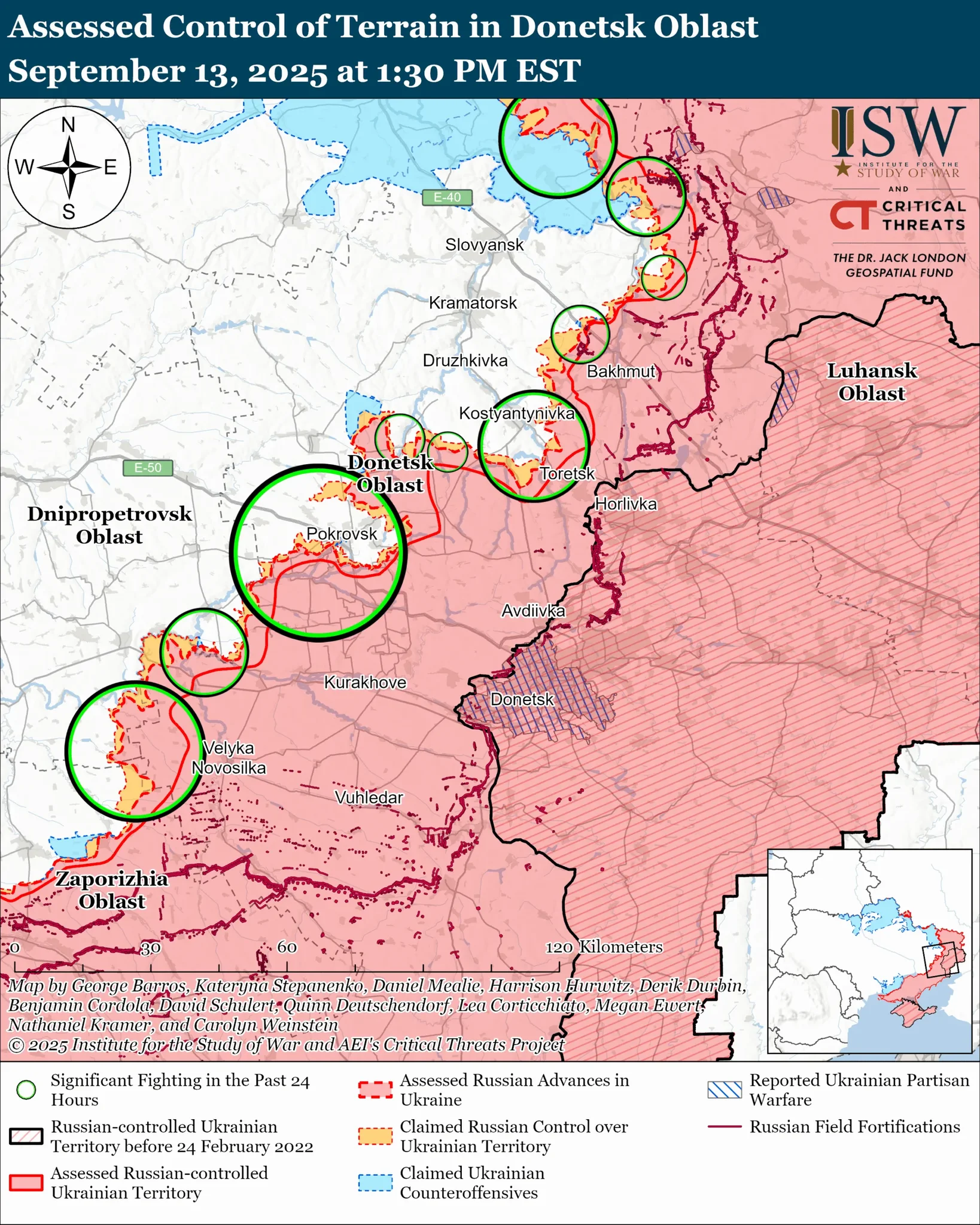
Latest from the Institute for the Study of War.
Key Takeaways from the ISW:

While praised as a necessary step, a new legislative maneuver to punish Russia draws criticism from analysts who see it as potentially more for political messaging than for real change.
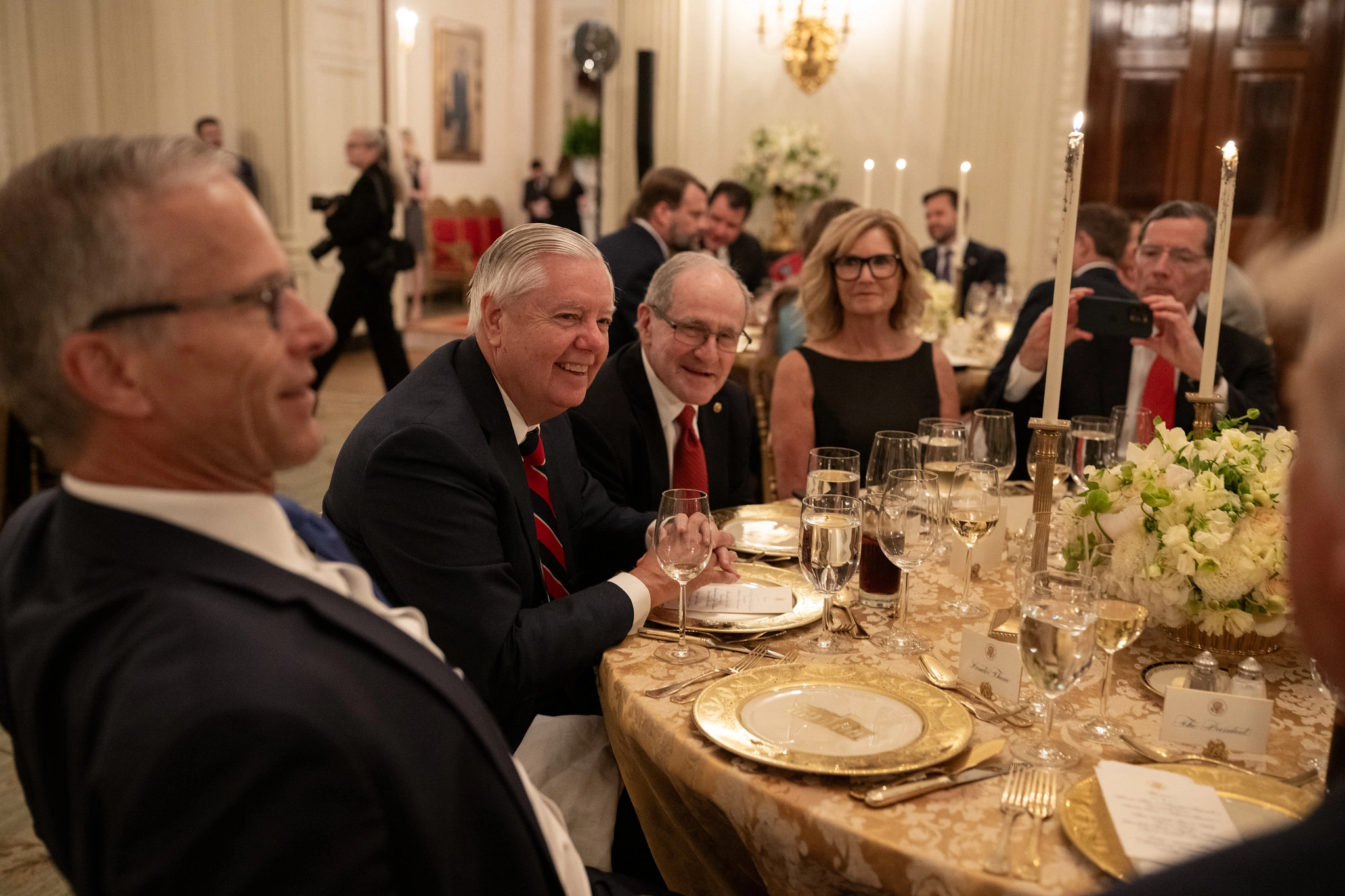
WASHINGTON DC - A pair of leading US lawmakers from the Republican party are attempting a high-risk, high-reward legislative maneuver to impose sweeping new sanctions on Russia.
Senator Lindsey Graham (R-SC) and Congressman Brian Fitzpatrick (R-PA) announced Saturday they will push to attach a sanctions bill to a must-pass government funding measure, a move that could force a showdown over the US strategy toward the war in Ukraine.
The US Secretary of State’s comments come after Poland contradicted Donald Trump and insisted the Russian drone incident was a deliberate act, not a mistake
WASHINGTON DC – US Secretary of State Marco Rubio said on Saturday that the recent Russian drone incursion into Poland was an “unacceptable and dangerous development” but that the US has not yet made a final determination on whether it was intentional.
Speaking to reporters at Joint Base Andrews before departing on a trip to the Middle East, Rubio confirmed that the drones were “intentionally launched,” but stressed that the key question is “whether the drones were targeted to go into Poland specifically.”