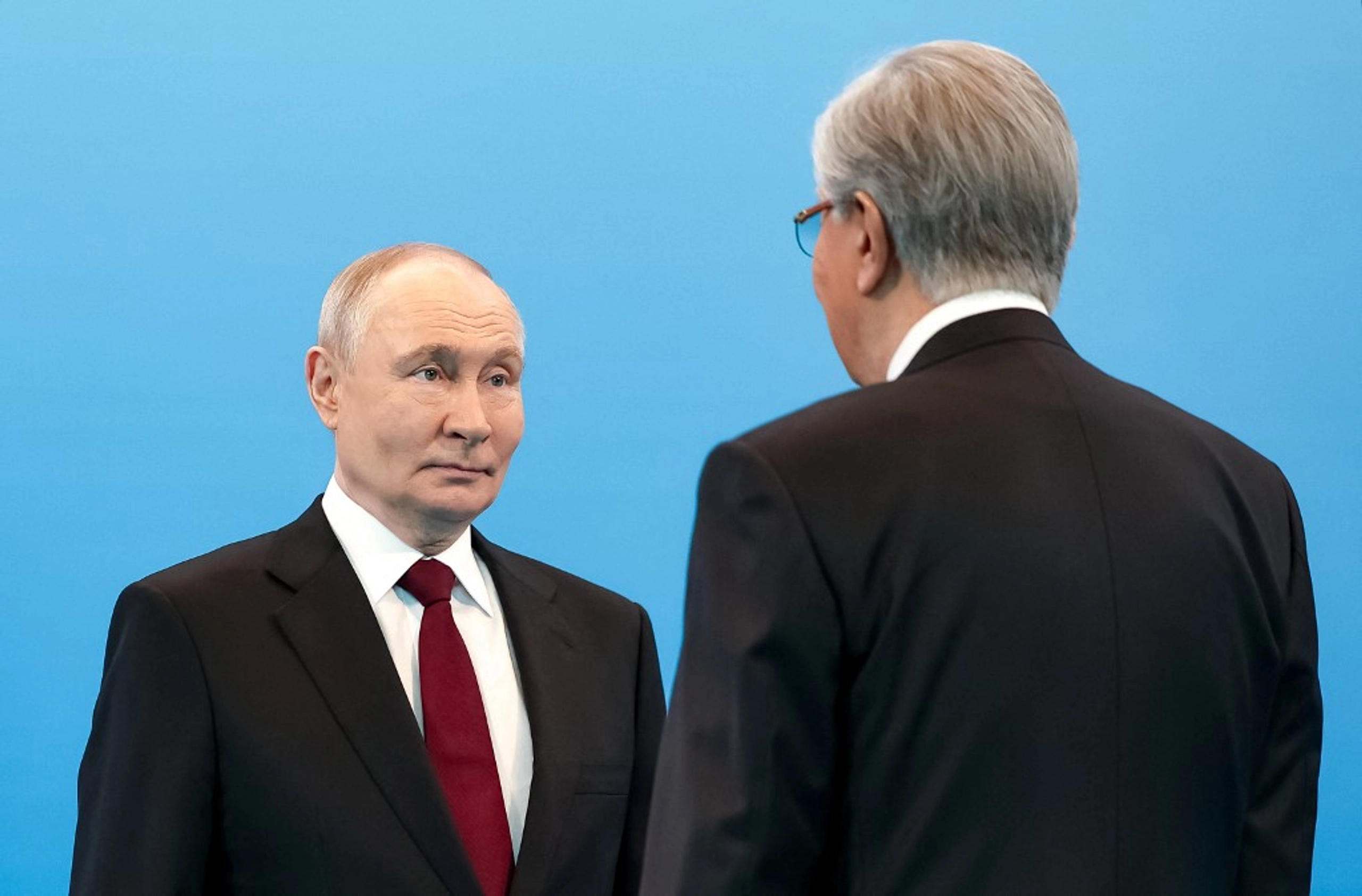
Russian President Vladimir Putin’s recent diplomatic push into Central Asia yielded high-minded rhetoric but few substantive gains, as Kazakhstan resisted Kremlin pressure on trade and labor, foreign policy expert Paul Goble told Kyiv Post.
Faced with limited returns in Astana, Putin dedicated a significant portion of his post-visit press conference to lecturing Armenia – a move Goble described as a sign of Moscow’s anxiety over its fading influence in the former Soviet space.
JOIN US ON TELEGRAM
Follow our coverage of the war on the @Kyivpost_official.
The remarks came as Moscow has intensified pressure on Yerevan over its pro-European course. Russia has warned Armenia that it could lose preferential fuel and energy arrangements if it continues its EU path, while the Moscow-led Eurasian Economic Union has raised the possibility of suspending Armenia over its European ambitions.
No real wins for Russia in Kazakhstan
While Moscow hoped to secure critical concessions during the high-level talks, Kazakh President Kassym-Jomart Tokayev used his diplomatic experience to protect Astana’s strategic autonomy, Goble said.
“Putin didn’t get everything he wanted in Kazakhstan,” Goble said. “Kazakhstan has a president who is very skilled as a diplomat, who gives on some symbolic things and tries to take away substantive things.”
According to Goble, this left the Kremlin with little more than public-relations language it could use at home.
“If one examines what’s happened, Putin gets a lot of nice words he can quote,” Goble said. “He gets a lot fewer things that Russia really wants.”

‘We’ve Seen No Escalation’: Ukrainian Army Rebuffs Putin’s Claim of Russian Advances on Kupyansk
One major point of friction, Goble said, is Kazakhstan’s continued support for East-West trade routes that bypass Russia. These routes are increasingly important as Central Asian states seek direct access to European and Western markets without allowing Moscow to control regional transit.
That matters because Moscow has long used transport corridors, energy links and labor flows across the former Soviet space as tools of influence. Kazakhstan’s refusal to abandon alternative trade routes limits Russia’s ability to use geography as geopolitical leverage.
The migrant worker dispute
Another unfulfilled goal for Putin’s inner circle, Goble said, was securing a stable labor supply from Kazakhstan to help Russia deal with domestic manpower shortages.
The Kremlin, according to Goble, wanted access to a new wave of Kazakh migrant workers who could be more easily integrated than laborers from Uzbekistan, Kyrgyzstan and Tajikistan.
“It did not get what clearly some people in Putin’s entourage wanted, which was a commitment to help supply Russia with a new wave of migrant workers,” Goble said.
Moscow’s interest in Kazakh labor, he added, is partly linguistic and cultural.
“It’s simply the case that Kazakhs are more likely to speak Russian than people from those other three countries,” Goble said. “They’re more likely to adapt to Russian realities.”
But Kazakhstan did not appear to give Moscow the commitment it wanted, denying the Kremlin an easy answer to one of Russia’s worsening domestic problems.
Putin’s Armenia obsession
Unable to secure major gains in Kazakhstan, Putin pivoted sharply during his final press conference, dedicating an unusual amount of time to Russia’s deteriorating relationship with Armenia.
For Goble, that focus said a lot. Armenia was once considered one of Moscow’s most dependable allies in the former Soviet space. Now, under Prime Minister Nikol Pashinyan, Yerevan is reducing dependence on Russia, moving closer to the EU and seeking better ties with its neighbors.
“Five years ago, if anyone said, ‘What’s the last country on the territory of the former Soviet space that Moscow will have influence over?’ The first answer most people would have given was Belarus. The second answer would have been Armenia,” Goble said.
For decades, Moscow positioned itself as indispensable to Yerevan’s security.
“Russia was able to portray itself as Armenia’s only defender against Turkish influence and actions by Azerbaijan,” Goble said.
That relationship has now changed dramatically.
“Now, there’s a government in place in Armenia that is trying to get into the European Union, that is moving toward the West, that has taken steps to reduce Russian influence,” he said.
June vote as a turning point
Goble said Armenia’s upcoming election could become a decisive moment in the country’s break with Moscow’s orbit.
If Pashinyan and his party win a renewed mandate, he said, Russia’s remaining levers inside Armenia could come under direct challenge.
“I think the question of Russian ownership of railways in Armenia is going to become central after the election, assuming that Mr. Pashinyan’s party and he are kept in power,” Goble said.
He also predicted that Armenia would continue reducing Moscow’s role in its security policy and broader foreign alignment.
“I think you’re going to see Armenia leaving Russian-led post-Soviet integration projects, CIS and all the others,” Goble said.
Kremlin panic and election interference fears
Putin’s fixation on Armenia, Goble said, reflects deep concern in Moscow over a potential strategic defeat.
A Reuters report on Friday said Russia is using disinformation and covert tactics to halt Armenia’s westward pivot before the June 7 election. Documents reviewed by Reuters showed Moscow even considered sending up to 100,000 Armenians living in Russia back home by trains and planes to vote against Pashinyan.
Goble said the reported plan underscored the Kremlin’s panic, but questioned whether Moscow could pull it off logistically and warned it could trigger a major political backlash.
“The idea that Mr. Putin is going to be responsible for the outcome of this election rather than the Armenian people isn’t going to sit well with a lot of people in Yerevan and elsewhere,” Goble said.
A visible loss for Putin
If Pashinyan secures a new mandate, Goble said, the geopolitical map of the South Caucasus could be permanently altered.
Armenia is increasingly cooperating with Azerbaijan and Turkey, opening trade routes and positioning itself as part of the emerging East-West transit zone. For Moscow, Goble said, that would represent a major strategic setback.
“Mr. Putin is taking a big loss and he’s playing a very tough game,” Goble said.
Putin’s dwelling on Armenia during his Kazakhstan visit signaled deep anxiety rather than regional strength.
“The fact that he felt compelled to talk about Armenia in Kazakhstan is an indication not just of how worried he is, but how much of a loss he and Russia will take if Armenia continues its move to having good relations with its neighbors,” Goble concluded.
You can also highlight the text and press Ctrl + Enter