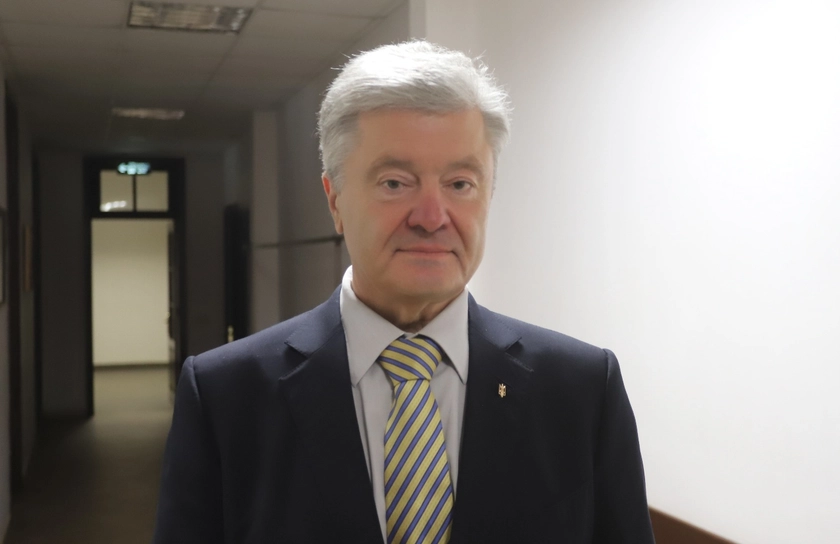
Petro Poroshenko, who served as president of Ukraine from 2014 to 2019, led the country in the aftermath of the Revolution of Dignity, as it was gripped by demands for sweeping reforms while Russian forces began marching across its borders.
His presidency coincided with the onset of the conflict in eastern Ukraine and the annexation of Crimea, while the state also struggled with entrenched corruption and a legacy of post-Soviet bureaucratic structures.
JOIN US ON TELEGRAM
Follow our coverage of the war on the @Kyivpost_official.
During his time in office, Poroshenko and his administration worked amid limited Western engagement in the early stages of the war and resistance from domestic power structures that had developed under previous governments.
Since leaving office, Poroshenko has remained a prominent political figure as the leader of the European Solidarity party, one of the main opposition forces in Ukraine’s parliament.
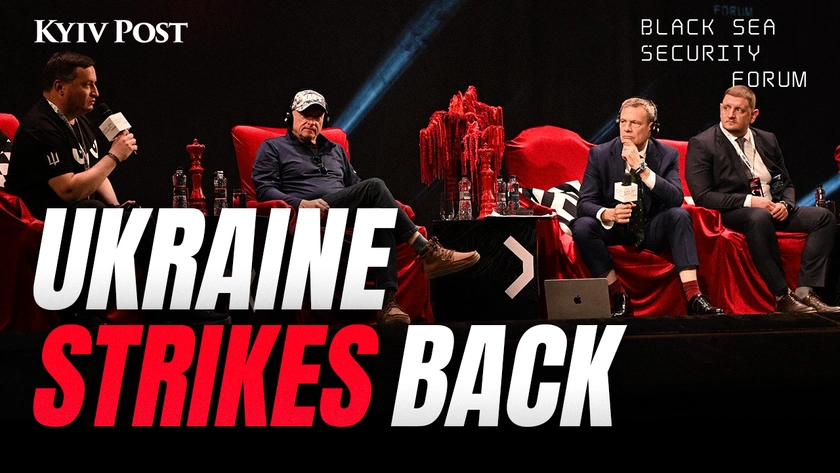
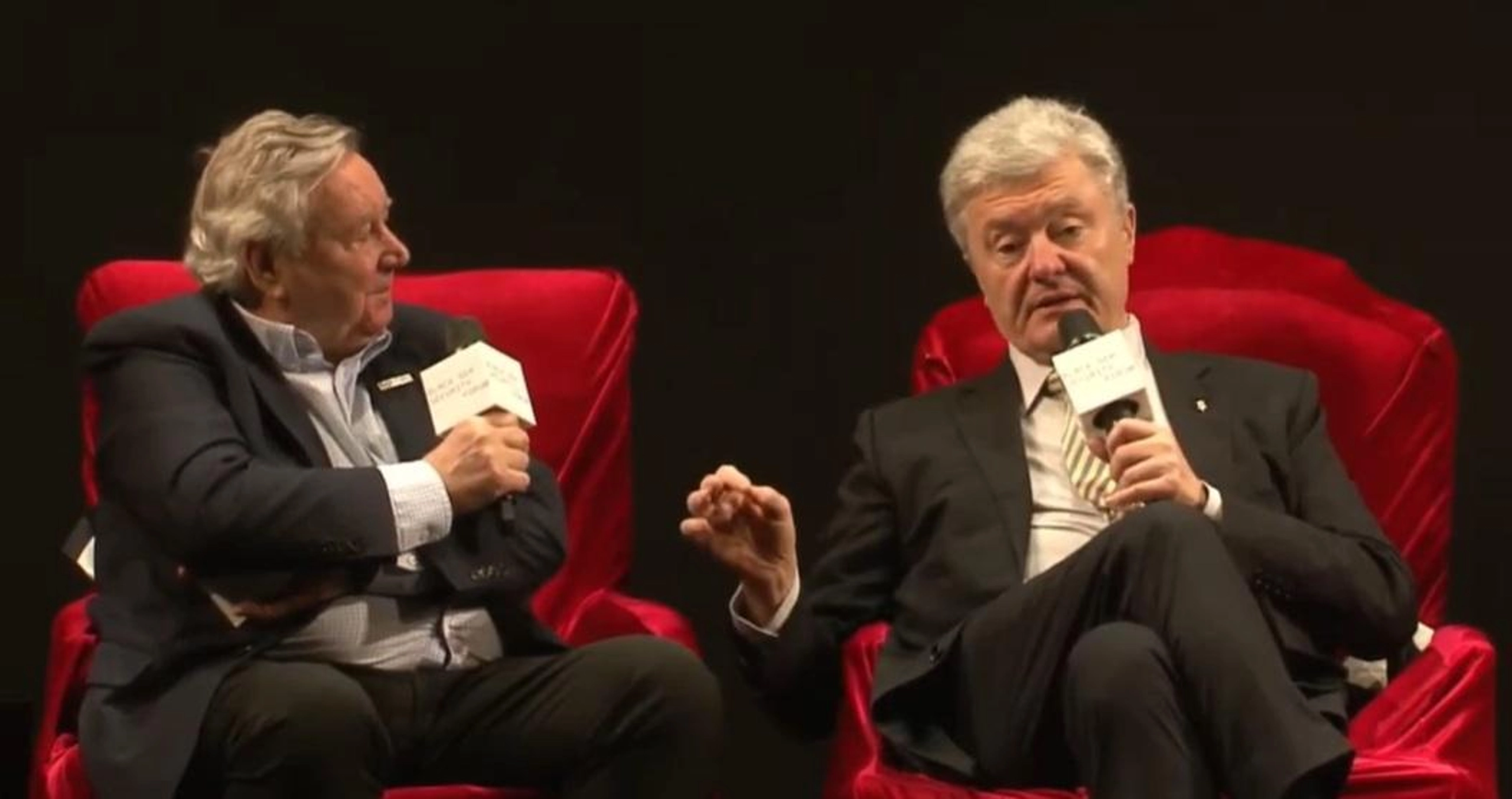
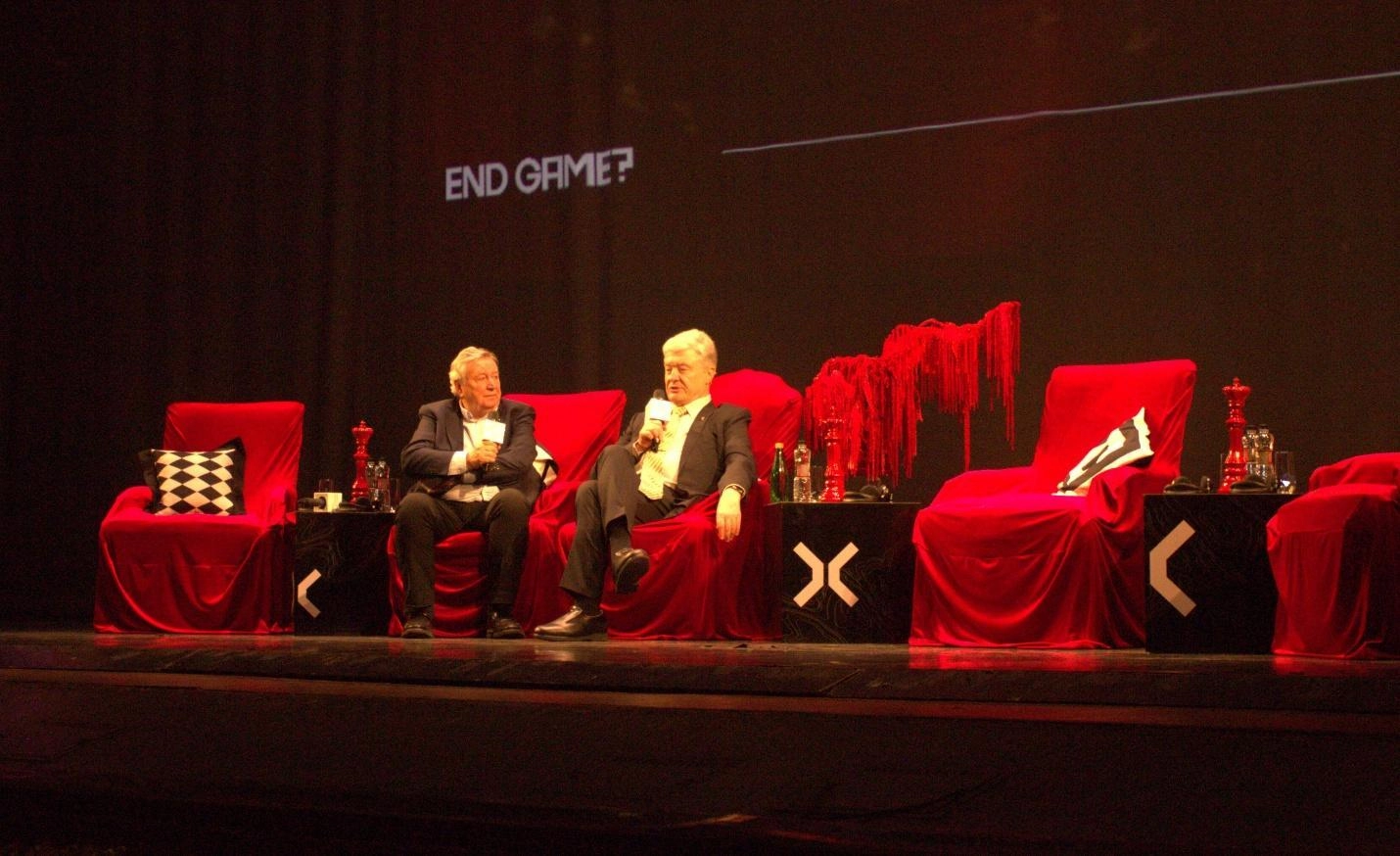
At the Black Sea Security Forum 2026, Poroshenko had a separate panel session, where Kyiv Post Editor-in-Chief Bohdan Nahaylo conducted a one-on-one conversation with Ukraine’s fifth president.
The questions covered a wide range of topics – from how the current situation differs from 2014, when Russia first invaded Crimea and the Donbas, to possible formats for security guarantees for Ukraine, and how much the country has changed during this period.
Prior to the panel, Poroshenko also said there’s a genuine opportunity to compel Russia to make peace, and that it must be achieved by uniting efforts both from abroad and within the country.
Russia Jails LGBTIQ Club Staff in First ‘Extremism’ Case, Sentences Up to 7 Years
Bohdan Nahaylo: Here I want to present to all of you Mr. Petro Poroshenko. We all remember that he was president for five years. He is a distinguished political leader now, but he was also the foreign minister at one stage, even before he became president. So I think his insights are going to be very relevant to Ukraine’s situation today. But, Mr. President, I understand you have a few opening comments, statements, or perhaps thoughts to share.
Petro Poroshenko: First of all, thank you very much for being here this very early morning. It is extremely important for us to have this dialogue. We will devote only a small part of our time to discussing the present, but we should definitely discuss the future.
I’d like to remind our audience that President Poroshenko was president when Russia launched the war – not the full-scale invasion, but the seizure of Crimea and the incursions into and occupation of eastern Ukraine. He was there when it was happening. And it’s strange to think that this year, in August, we will be celebrating 35 years of Ukraine’s independent statehood in its modern form. One-third of that period has been spent at war with Russia in one form or another.
And I think you, Mr. President, are probably more qualified than anyone to comment on the parallels, the lessons learned, and the way forward. But let me ask you, off the top of your head: After 35 years of independence, what has that meant not only for Ukraine, but also for you personally in your development as a businessman, politician, and statesman?
Let’s divide these 35 years and try to define what has been good, what has been bad, and what has been ugly during these 35 years.
Are you intending to say that we’re a Western country?
At the end of the day, Ukraine is a Western country now. So what is good?
The good thing is that Ukraine still exists after 12 years of war with what was once considered the second most powerful army in the world, led by the crazy dictator [Vladimir] Putin. At the beginning of the war, the Russian army was regarded as the second strongest in the world. Many wondered how Ukraine could possibly survive. Today, for the first time, I can say that Ukraine has the strongest army in Europe. Undoubtedly, nobody questions that.
And because of the Ukrainian people, and because of the Ukrainian Armed Forces – the strongest on the continent – Ukraine still exists.
Point number two, which is also good: Ukraine is no longer a post-Soviet territory, no longer a former USSR republic.
Ukraine is an official candidate for future membership in the European Union. I hope that Ukraine still has the opportunity to become a future member of NATO as well. Because it is impossible to create a sustainable security system on the continent without having the continent’s strongest armed forces as part of its strongest security organization.
And point number three: It is about who we are. I have no doubt that in the minds of Ukrainians we have said farewell. We have said farewell to Russia. There will be no return to the Russian Empire.
Now for the bad things.
The bad thing is the war. And we definitely need to make enormous efforts to seize the current opportunity and stop the war now. By now, I mean not within three years, not sometime next March, but as soon as possible. To achieve that, we need a plan, concentration, determination, and reliable partners.
And what is ugly? The ugly thing is Putin.
And we definitely need to do everything possible to bring an end to Putin’s Russia. Not to raise the Ukrainian blue-and-yellow flag over the Kremlin, but to put an end to Putin’s Russia – a country of dictatorship and terrorist aggression. Because this is the ugliest thing not only for Ukraine.
Take any country in Europe – or even beyond Europe: Poland, the Baltic states, Finland. Just yesterday, in one short speech, Putin launched verbal attacks against Poland, the Baltic states, Finland, the Scandinavian countries, Ukraine, Armenia, and many other nations.
But from my personal experience, I remember visiting Japan and meeting a good friend of mine, the great Prime Minister Abe. He said, “Look, we are on different sides of the planet, but unfortunately we share one ugly neighbor.”
And that ugly neighbor is Putin.
Mr. President, thank you for that clarification. Perhaps, are we talking about Putin’s Russia, or are we talking about Putin as the embodiment of imperial Russia, with its long traditions dating back to the Tsarist and Soviet periods? Putin is not the beginning of the problem that we’re facing.
Maybe I will say something a bit unpopular, but Putin is the beginning. Because Russia under Yeltsin and Russia under Putin are two different Russias, and Putin has brought about a disastrous transformation of Russia.
In Russia, there is no democracy. In Russia, there is no pluralism. In Russia, there is no independent judiciary. In Russia, there are no independent mass media. In Russia, there is no opposition.
And do you know what? I am doing my best, and I am fighting to ensure that Ukraine, even under wartime conditions, never changes, never transforms into a Putin-type state – with no democracy, no rule of law, no independent media, and no opposition.
That is why our fight against Russian aggression is extremely important.
But our fight for democracy, our fight for a European future, our fight to strengthen the Ukrainian Armed Forces, our fight for “Armia-Mova-Vira” [Editor’s note: It stands for “Army, Language, and Faith” – the conservative triad introduced during Poroshenko’s presidency], is the condition for Ukraine to remain a European nation and the foundation of our future.
Mr. President, I’m just thinking out loud now. Do you not think that President Zelensky has effectively adopted your strategy, but is now going even further and potentially alienating Poland with his recent emphasis on Melnyk and Bandera?
Let’s separate these two questions.
First, I have even heard rumors that President Zelensky has somehow taken “Armia, Mova, Vira” from President Poroshenko. This is not true.
I gave him “Armia-Mova-Vira” as a gift, and he is definitely using it because the principles of Army, Language, and Faith belong to everyone. This no longer belongs to Poroshenko or Zelensky. It is a defining principle of a new democratic European state that is independent from Russia.
And I think that the only way we can build a new Ukraine is to make these principles fundamental. Now it is not only “Armia, Mova, Vira.”
It is also “Armia, Mova, Vira,” the EU, and NATO. And all five of these factors together mean a final farewell to Russia. That is why they make Putin so angry. The creation of our independent church made Putin angry. In that sense, he has already been defeated.
The protection and development of the Ukrainian language – with quotas for Ukrainian films, Ukrainian radio programming, Ukrainian television programming, and a strong Ukrainian-language internet segment – is the second powerful strike against Putin.
And then there is our army. Our army is so different, and it is so powerful.
Because if you ask me, as a former foreign minister or as the fifth president of Ukraine, what the key and most powerful factor of Ukrainian diplomacy is, my answer would be the Armed Forces.
And now, in addition to the diplomacy of partnership and strategic partnership, we have also added the diplomacy of drones. You should notice what a major transformation drones have brought about.
In 2014, drones were often regarded as little more than cameras for wedding videos, not something necessary for the Armed Forces.
Today, however, we are talking about drones potentially bringing an end to the era of tank warfare – not only in Russia but around the world.
In 2022, we saw Russian tank columns moving toward Kyiv. Believe me, the era of Russian tanks is coming to an end because of Ukrainian drones. That is why drone diplomacy is so effective.
And that is why it makes me angry when I hear proposals from our government, presented in the Ukrainian parliament, suggesting that we should take Hr.40 billion [$902 million] away from the Ministry of Defense’s drone procurement programs and redirect those funds to some populist initiatives.
Drones are a factor of diplomacy. Drones are a factor of European integration. Drones are a factor in Ukraine’s survival and its future.
Okay, let’s step back a little to 2014 in order to draw some lessons from that period. You were elected president and were seeking a peaceful solution. This was before the Minsk Accords.
I remember that I was in Geneva at the time, working for the UN. There was a meeting in Geneva attended by representatives of the US and, I believe, Poland. Then suddenly, under President Obama, the Americans stepped back, and it was left to Chancellor Merkel and the French president to lead the negotiations that became known as the Minsk Accords.
Today, we see America withdrawing again, while Europe is being galvanized and slowly – but perhaps surely – getting its act together.
What lessons or parallels do you see between 2014 and 2026?
Look, immediately after I was elected president, based on the promises I made during the election campaign, I did my best to stop the war.
In 2019, candidate Zelensky also said that he would stop the war. His message was not about a peace deal; it was about an immediate ceasefire.
I declared that I would give Putin seven days – one week – to agree to a ceasefire. It did not happen. I had never made statements like that before. But by September 2014, I did not have a single battalion available outside the front line to stop Putin’s troops.
Why? Because immediately after Yanukovych fled, we had fewer than 5,000 troops ready to fight. That is why volunteers went directly from the Maidan to Petrivtsi (Editor’s note: Novi Petrivtsi was a training ground near Kyiv that was used by volunteer battalions in 2014), and then straight to the front line.
They traveled in school buses. They wore sports shoes and civilian clothes. They did not have proper body armor. They did not have sufficient weapons or ammunition.
Given those circumstances, it was almost a miracle that we developed a strategy that allowed us to achieve a ceasefire.
The ceasefire did not begin on Feb. 12-15, 2015. The first ceasefire began on Sept. 5, 2014. Then came the memorandum of Sept. 19, 2014. And nobody believed – nobody believed – that we could stop Putin’s offensive operations.
Mr. President, sorry for interrupting. I was working at the UN at the time, representing the Department of Political Affairs, and we used to come to your office at 2 a.m. with Under-Secretary-General Jeff Feltman. You were very eloquent and honest in describing Ukraine’s situation and needs. But you also appealed for UN blue helmets in late 2014, and there was no serious response to that proposal. What about today? Who will monitor any ceasefire line if we ever get to that stage? Hopefully, we will. What lessons do you draw from that experience? Is it feasible to demand that allies – not neutral parties with little interest in Ukraine – actually take on the role of peacekeepers?
For a period in 2014, 2015, and even 2016, that was definitely possible. And when I made that appeal in 2014, many people had serious doubts about it.
But I can tell you that during my negotiations with President Xi in 2015 and 2016, I received firm assurances that China would support a UN Security Council vote on a blue-helmet mission in Ukraine. Can you imagine that during my meetings at the White House – not only with Obama and Biden, but also later with President Trump – I discussed this issue?
And you can confirm that Trump hated the United Nations. He has consistently taken the position that the organization wastes American taxpayers’ money because of its inefficiency. But after two hours together in the Oval Office, Trump immediately asked to be connected with the US Permanent Representative in New York and said, “I instruct you to support the proposal for blue helmets in Ukraine.”
That was in 2016 or 2017.
And at the Berlin summit attended by Putin, Hollande, and Merkel, Putin himself said that the idea was acceptable and open for discussion. The debate concerned what form it should take. Should it be a police mission? Should the blue helmets be deployed on the border between Ukraine and Russia?
But whether a blue-helmet mission could work today – I have serious doubts. Do you know why? Because after Russia’s full-scale aggression against Ukraine, Russia remains one of the permanent members of the United Nations Security Council.
Russia has effectively destroyed the most important security mechanism created after WWII. That is why I am skeptical. Theoretically, it would be a good solution. Theoretically, it is still possible. But today, security guarantees for Ukraine should take the form of boots on the ground. And that is why, indisputably, this is what we should demand. Not another 28-point plan. Not another 20-point plan. Not Anchorage. Not another list of 41 security guarantees.
Forget about all that. The only thing we urgently need now is a comprehensive, immediate, and unconditional ceasefire.
And to achieve that, we must use every instrument available to us: drone strikes, the capabilities of the Armed Forces, sanctions imposed by our partners, new weapons deliveries, financing for Ukraine’s defense industry, and every trump card we still hold.
At the negotiating table, Europe must be present. Because just as we say “nothing about Ukraine without Ukraine,” we must also say “nothing about Europe without Europe.” The US must be there. Europe must be there. Russia must be there. And these negotiations should begin when the war is, if not fully ended, then at least suspended. And I can tell you that we should approach this in the same way we did in 2015.
Because I continue to believe that the Minsk agreements were among the greatest achievements of Ukrainian, European, and global diplomacy. They gave us a chance. They gave us breathing space. They gave us time to build an army, build state institutions, establish a financial foundation, and strengthen the economy. At the end of the day, they gave us time to build Ukraine.
Now we should use a ceasefire in the same way. We must build up our defense industry. We must establish security guarantees in the form of boots on the ground. The first line should be the Ukrainian Armed Forces. The second line should be the allied forces deployed on the ground. And the third line could be stationed in Poland, Romania, or the Baltic states. That line would consist of air-defense systems capable of closing the skies over Ukraine. That is my formula for peace. That is my formula for stopping the war.
Okay, that’s very clear. We’re coming to the end, so let’s elaborate a little further. A ceasefire gives us breathing space. But in the longer term, what kind of peace settlement would be required for Ukraine to live securely and confidently? Are we talking about a new security architecture in Europe? A reformed NATO? A transformed European Union? In a few words, what do you think Ukraine needs for long-term stability and peace?
That is a very good question. I have a detailed plan, and if I were to answer properly, I would need about 40 minutes. But if you ask me to answer in one phrase, it would be this: EU and NATO membership for Ukraine.
Please do not forget about NATO. Please do not try to find a replacement for NATO in the form of Budapest Memorandum-style security guarantees. Ukraine wasted years trying to build alternative security arrangements and security guarantees involving everyone from Liechtenstein to Monaco.
It does not work. The only real solution is NATO. Even if some people say that NATO’s doors are closed to Ukraine, I do not believe it. Because NATO is an alliance of democratic states.
Those politicians who oppose Ukraine’s membership may eventually leave office, fail to be re-elected, or simply see their political careers come to an end.
But Ukraine will continue to exist. And therefore the final objective of our strategy must remain Ukrainian membership in NATO. When, after a ceasefire, Ukraine becomes both a member of the European Union and a member of NATO, that will be the final defeat of Putin. But for that we need more than just a ceasefire.
First, our European integration process must be merit-based. We must deliver reforms. We cannot simply knock on Europe’s door as an unreformed, non-democratic country without a functioning rule of law. That approach will not work.
Second, the process must be inclusive. European integration cannot be solely the responsibility of President Zelensky, the government, or the parliamentary majority.
It must be the responsibility of all Ukrainians. That is why national unity is a key factor in our European integration.
And third, there are the Armed Forces. Whether there is a ceasefire or not, the only security guarantee outside NATO membership that I fully recognize is a powerful, modern, and highly motivated Ukrainian Armed Forces.
You can also highlight the text and press Ctrl + Enter