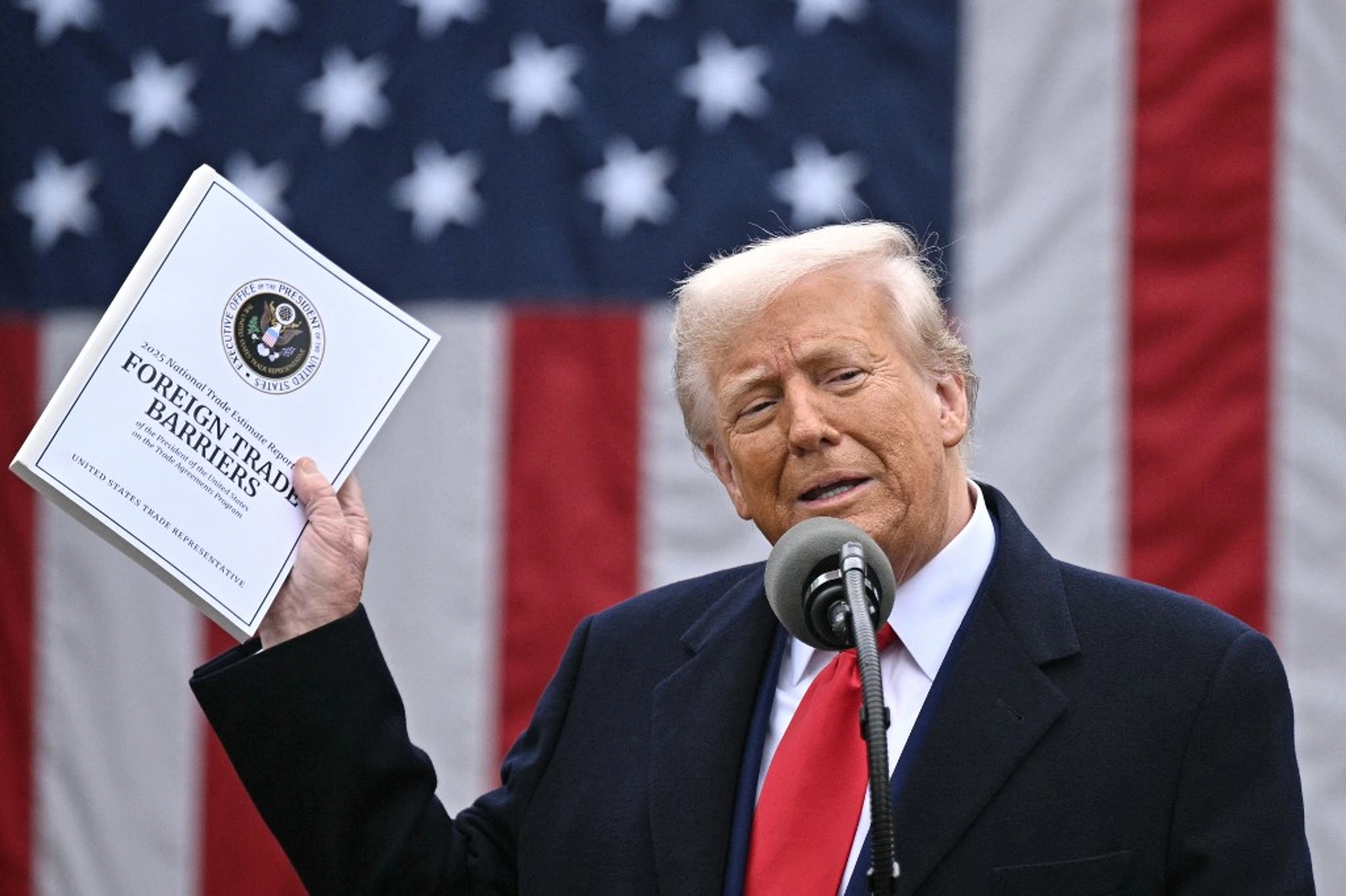
Donald Trump’s tariff policy, which is likely to become a cornerstone of his presidential campaign and potential second term, is more than just a response to economic rivalry with China. It is a bold attempt to reorder the global economy under new rules – ones that prioritize US national interests over longstanding international agreements and multilateral frameworks.
This emerging tariff model does not spare even America’s traditional allies. The new logic is clear: either adapt to America’s priorities, or risk exclusion from supply chains, manufacturing hubs, and investment flows.
JOIN US ON TELEGRAM
Follow our coverage of the war on the @Kyivpost_official.
Under this pressure are not only strategic competitors like China, but also close US partners such as the EU, Japan, Vietnam, and Canada – countries that have built their trade with Washington on predictability and compromise. Today’s US trade policy represents a paradigm shift: tariffs are no longer just tools for economic balancing, but instruments of political leverage and alliance-building.
But where some see threat, others can find opportunity – especially countries like Ukraine.
Ukraine is not yet deeply embedded in the old global supply chains. Paradoxically, this is our strength. While traditional US partners fight to hold their ground, Ukraine can present itself as a new, trustworthy ally – offering an educated, technically skilled workforce, experience in defense sector reform, NATO-standard alignment, and, most importantly, political and value-based affinity with the West.

Ukraine Says Strikes on Russia’s Shadow Fleet Are Legal
In defense production and advanced technology, Ukraine has already shown its ability not just to receive solutions, but to generate them. We must articulate this clearly to our American partners – across government, Congress, and the private sector.
Crucially, Trump’s tariff policy is unpredictable. That’s the main complaint from allies: it provides no long-term planning horizon and is guided by political expediency rather than rules. But unpredictability breeds demand for stability. In a world full of uncertainty, partners who can offer reliability and clarity are in high demand.
If Ukraine can provide not only industrial capacity but also a consistent government strategy for cooperation with the United States, we have a unique opportunity to become part of the next-generation economic architecture.
This opportunity is reinforced by another trend: tariffs are increasingly becoming a fiscal tool in the US, not just an economic weapon. The Trump team sees them as an alternative to raising taxes – potentially funding new benefits and programs. In effect, this is a revival of early 20th-century practice, when tariffs were a primary source of state revenue.
However, this path carries risks. Market reaction has already been negative –S&P 500 has lost over $3 trillion in capitalization. This signals deeper tremors in the global financial system. It’s also another argument for building safe and resilient economic chains – with Ukraine in them.
We cannot wait for an invitation. Ukraine must lead – initiating direct talks with US manufacturers, extending localization offers, and proposing defense, electronics, and engineering cooperation. We must be ambitious and persuasive. The new global model will be shaped by those who act, not those who wait.
And above all, we must shed the notion that Ukraine is merely an object of geopolitics. We are ready to be a subject – an active player in the economic reshaping of the world, now accelerated by America’s tariff revolution.
The views expressed in this opinion article are the author’s and not necessarily those of Kyiv Post.
You can also highlight the text and press Ctrl + Enter