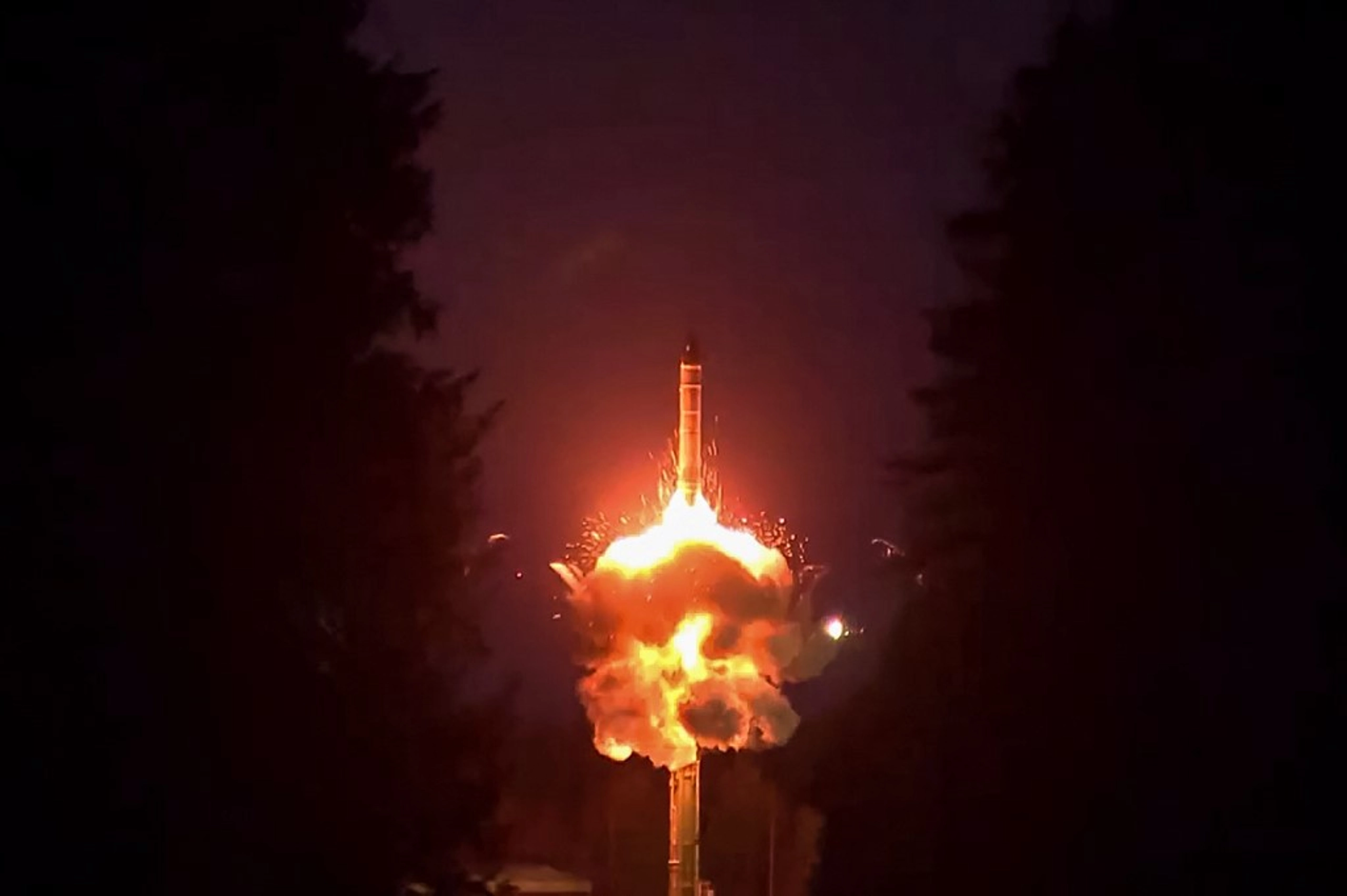
Russia said Sunday it had successfully test-launched an intercontinental ballistic missile capable of carrying nuclear warheads from one of its submarines.
The launch of the "Bulava" missile, the first in just over a year, comes as Russia ramps up nuclear rhetoric since revoking its ratification of a key nuclear test ban treaty.
JOIN US ON TELEGRAM
Follow our coverage of the war on the @Kyivpost_official.
"The new nuclear-powered strategic missile submarine cruiser Emperor Alexander the Third has successfully launched the Bulava sea-based intercontinental ballistic missile," the defence ministry said.
It said it fired the under-sea missile from an undisclosed location in the White Sea on its northwest coast, to a target thousands of kilometres away on the far eastern Kamchatka peninsula.
"The missile firing took place in the normal mode from an underwater position," it said, adding: "The missile heads arrived at the designated area at the appointed time."
The 12-metre long Bulava missile was designed to be the backbone of Moscow's nuclear triad and has a range of over 8,000 kilometres (close to 5,000 miles).
The West has accused Moscow of using reckless nuclear rhetoric since it launched its offensive against Ukraine last February.
President Vladimir Putin earlier this week signed a law revoking Russia's ratification of the Comprehensive Nuclear Test Ban Treaty, a move strongly criticised by the United States.
The 1996 treaty outlaws all nuclear explosions, including live tests of nuclear weapons, though it never came into force because some key countries -- including the United States and China -- never ratified it.
Montenegro to Introduce Visas for Russians Ahead of EU Accession
You can also highlight the text and press Ctrl + Enter