“Trump has caused the collapse of the Ukrainian book market!” my Ukrainian publisher Olexander Krasovitsky lamented as we sat down in Kyiv’s Bar 13.
I knew that President Trump and Elon Musk had dented the world market for Tesla cars, but what did Ukrainian books have to do with US policies?
JOIN US ON TELEGRAM
Follow our coverage of the war on the @Kyivpost_official.
“After the scandal in the Oval Office and the public humiliation of Zelensky by Trump and Vance, Ukrainians stopped buying books,” Olexander explained. “And not only books but many other things that you can live without. Books were mostly purchased by active citizens, and the scandal in Washington has sent them into depression. Depressed people don’t buy non-essentials.”
“You know, alcohol sales in Ukraine have increased since Trump took office,” said Olexiy Volkov, an expert in the alcohol market and a sincere lover of good beer. This development is good for the market, but not necessarily good for Ukrainian society.
The reality is that trade in such non-essential goods can easily be affected by the news. Bad news can turn alcohol into a “staple product”, but there is only one quick and safe cure for bad news – good news – and you can’t get that at the pharmacy.
Unlike alcohol and reading matter, patriotism and humane social values are not commodities, but their prevalence can influence how secure people feel. Instances of Ukrainian citizens selling information to the Russians or committing terrorist acts against the Ukrainian military and the civilian population are an all-too common feature in the news.
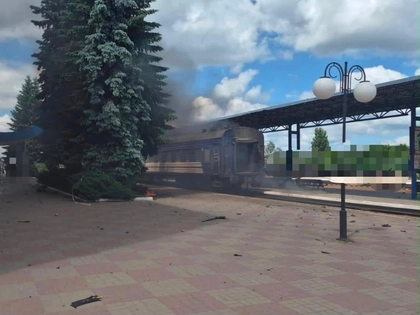
Russian Attacks Kill Railway Worker, Damages Energy and Logistics Site
The almost daily reports of arrested traitors give no cause for optimism, although the arrests do indicate that the Ukrainian special services are hard at work in the territories controlled by the Ukrainian government. This was not always the case. Eleven years ago, the Ukrainian police and special services sometimes carried out pro-Russian commands or, at least, did not protect the sovereignty of Ukraine the way they do today.
We have been reminded of this by the recent decision of the European Court of Human Rights, concerning the events of the “Russian Spring” in Odesa on May 2, 2014. The court in Strasbourg finally identified those responsible, finding the Ukrainian state guilty of violating human rights, failing to prevent violence, and not taking timely action to save people who were inside the Trade Union House during a fire that killed more than 50 people.
The court also found that Russia actively contributed to the destabilization of the political situation in Odesa and other Ukrainian cities. In the court’s conclusions, there was no specific mention of the Odesa city authorities or city police department whose actions contributed to the tragedy. During the street battles, the police stood by and allowed pro-Russian activists hiding behind them to shoot at pro-Ukrainian activists.
The death of several dozen pro-Russian activists in the Trade Union House fire prevented Russia from carrying out its “Russian Spring” operation in Odesa and ended their attempt to seize power in this seaside city with the help of street unrest.
The day after the decision of the European Court of Human Rights, a high-profile murder occurred in Odesa. The victim was Demyan Ganul, a well-known right-wing radical activist – former head of the Odesa branch of the “Right Sector”, and a participant in the events of May 2, 2014, as well as many other political actions.
Recently, someone anonymously offered $10,000 for his murder and Ganul unsuccessfully requested protection from the security services. Then, on March 14, a former Ukrainian army officer and deserter approached Ganul on the street, shot him three times, and calmly walked away. The killer was soon arrested, but this murder has shocked Ukrainians and reminded them that mortal danger can await even far away from the front.
Another shocking incident, involving two teenage friends from Ivano-Frankivsk – one of our most patriotic cities – has further dented our confidence in the social cohesion of Ukrainian society. On the instructions of Russian curators, the friends – 15 and 17 years old – rented an apartment near the train station in their hometown and assembled two bombs from components taken from a cache disclosed to them by their curator.
One of the bombs exploded as they were carrying it to the train station, killing the older boy instantly and ripping off the legs of the 15-year-old. The second bomb, left in the apartment, also exploded, causing a huge fire in the residential high-rise. Both bombs were detonated remotely by a phone call.
Perhaps these young people from Ivano-Frankivsk did not consider themselves traitors when they agreed the deal with the Russian curator. They were promised $1,700.
They were probably not part of the population that fell into depression because of the scandal in the Oval Office. It is unlikely that they were following the bad news from Kursk or Sumy region. They simply lived in a big city and felt the need for some extra cash, but what they lacked most was a social conscience – an essential quality for a healthy society.
The views expressed are the author’s and not necessarily of Kyiv Post.
You can also highlight the text and press Ctrl + Enter