The fact that Russia interferes in elections and democratic processes through various means to destabilize societies, fuel existing conflicts, or carry out cyberattacks is well known. Therefore, no one will be surprised to learn that the Kremlin is conducting active operations against Poland, where the first round of the presidential election will be held on Sunday, May 18.
On Wednesday, May 7, a brutal murder occurred on the campus of the University of Warsaw. “Mieszko R” a 22-year-old Polish citizen killed a university employee using an axe. The authorities responded quickly and apprehended the perpetrator. In next to no time, social media was flooded with the false claim that the attacker was an older Ukrainian citizen. This disinformation was spread, among others, by the anonymous “Coolfon” on X. The channel has tens of thousands of followers and regularly posts anti-Western, and anti-Ukrainian content.
JOIN US ON TELEGRAM
Follow our coverage of the war on the @Kyivpost_official.
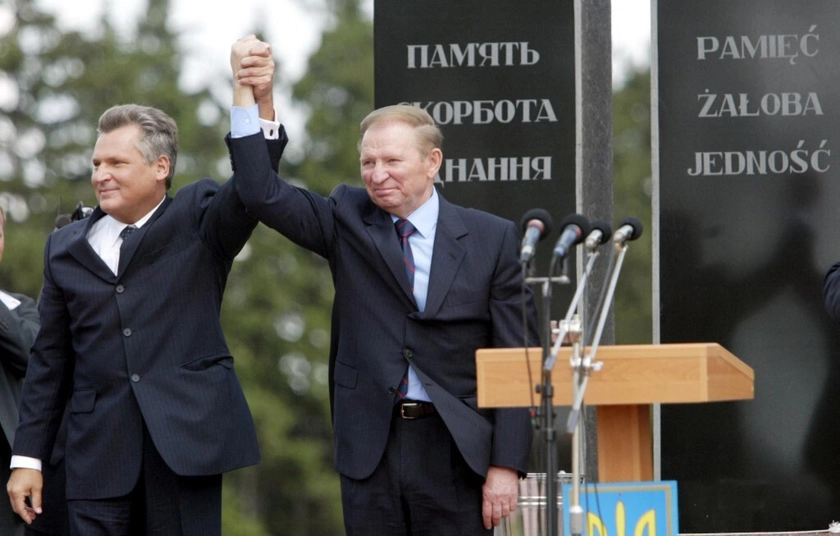
That same week, a story circulated that the Union of Ukrainians in Poland was sending proposals to design a monument honoring Ukrainian nationalists responsible for the Volhynia massacre, during which many Poles were murdered. This at a time when there’s been a breakthrough in Polish Ukrainian dialogue on Volhynia for which Kyiv has now granted permissions for search and exhumation efforts.
The Union of Ukrainians in Poland has denied sending any such memorial proposals, and a closer look reveals that the offers came from a fake email address similar to the actual address.
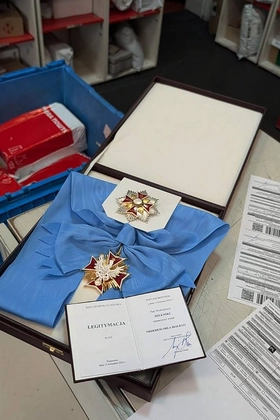
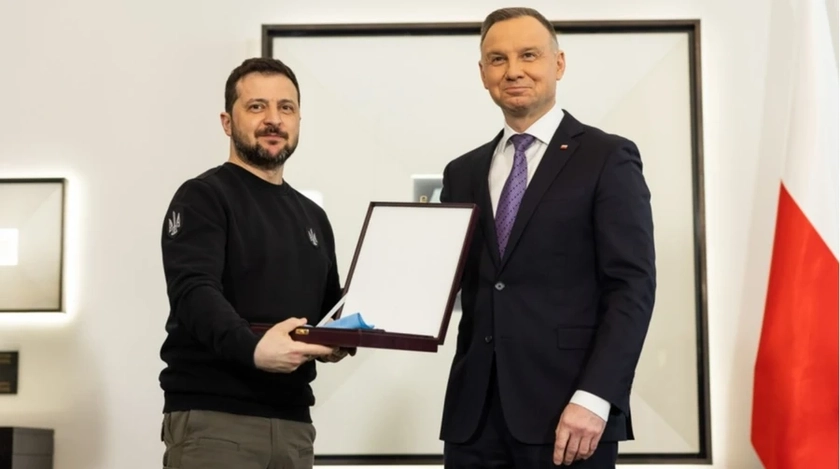
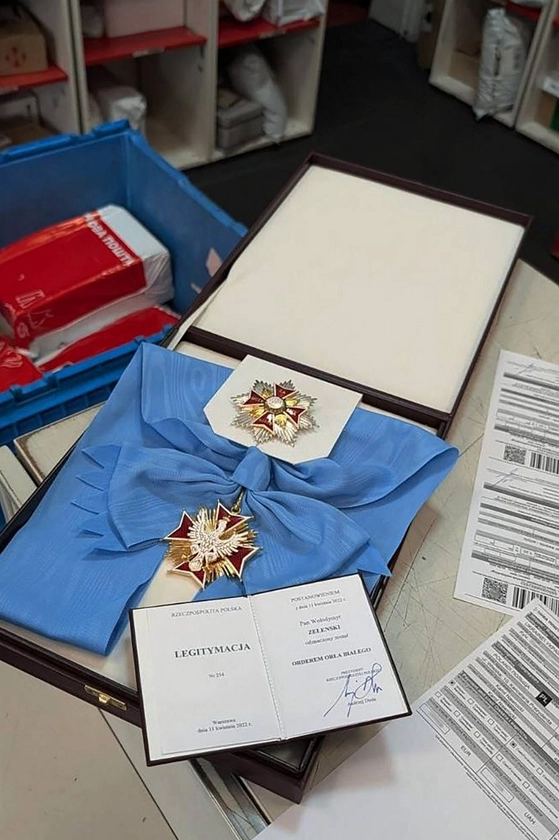
Warsaw Receives Order of the White Eagle Back From Zelensky, Sends to Special Archive
Both of these incidents are connected to Ukraine and occurred shortly before the presidential elections. However, Russia’s hybrid operations targeting Polish democratic processes are far more extensive.
“For a long time now, we have seen cyberattacks carried out directly or inspired by Russian and Belarusian services. These include attacks on critical infrastructure and operations in the information space. This year, these actions have intensified ahead of the presidential elections,” Krzysztof Gawkowski, Polish Deputy Prime Minister and Minister of Digital Affairs, said in an interview with Kyiv Post.
In Russia, Poland is labeled a hostile country. Moscow’s modus operandi includes not only overt support for pro-Russian politicians – who enjoy minimal support in Poland –but also the exploitation of social tensions, widespread dissemination of disinformation, efforts to undermine trust in state institutions, Western alliances and values, as well as hostile cyber operations.
Hybrid operations targeting Poland’s elections
“Every day, we repel cyberattacks and report instances of disinformation and impersonation of election candidates to various platforms. The goal is clear—destabilize public sentiment, increase societal polarization, and erode trust in the state,” Gawkowski told Kyiv Post.
Today, especially online, narratives often prevail over facts. Of course, not every case of disinformation originates from Russia. Many fake news stories are created as part of political or business campaigns, and conflicts within society are natural and have many different causes.
Whether cultural, class-based, or otherwise, Russia not only fuels them-it benefits from them.
What action is the Polish state taking?
“This year, Poland will invest more in cybersecurity than ever before. We are strengthening the protection of state institutions and supporting local governments that manage access to water and electricity. We’re intensifying training and have launched the Election Umbrella project, which is actively combating disinformation and protecting the democratic electoral process from foreign interference and destabilization,” Gawkowski added.
Europe has seen evidence of Russian involvement in the UK’s Brexit campaign and the Catalan separatist movement’s call for independence from Spain. It would be strange if there wasn’t any in neighboring Poland, which has for years strongly supported Ukraine as well as opposition movements in Belarus and Russia.
Attempts to interfere with elections, state functions, and public debate – both in cyberspace and in the information domain – have long been present in Polish public discourse and have become part of the local landscape. Alongside the real threat, Polish politicians frequently accuse each other of working in Russia’s interest – claims that, in most cases, are unfounded. Unfortunately, this contributes to increasing public apathy. After all, repeated false alarms dull vigilance – especially when a real fire breaks out. The only one who benefits from this is the arsonist.
The first round of the presidential election in Poland will take place on May 18, with the second round two weeks later. Similar incidents to those described at the beginning of this text are likely to continue until then, although it is unlikely we’ll see a crisis as heated as the one recently observed in Romania.
On Monday, Poland announced the closure of the Russian consulate in Kraków in response to Russian hybrid operations.
You can also highlight the text and press Ctrl + Enter