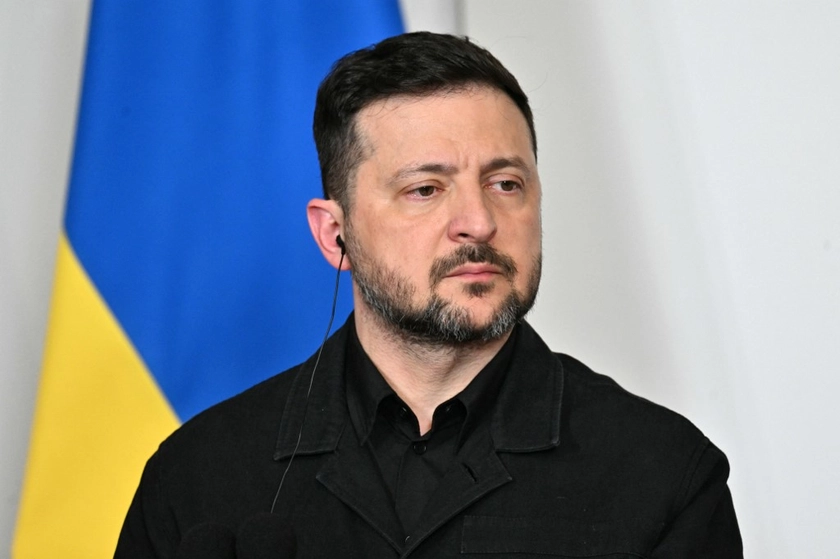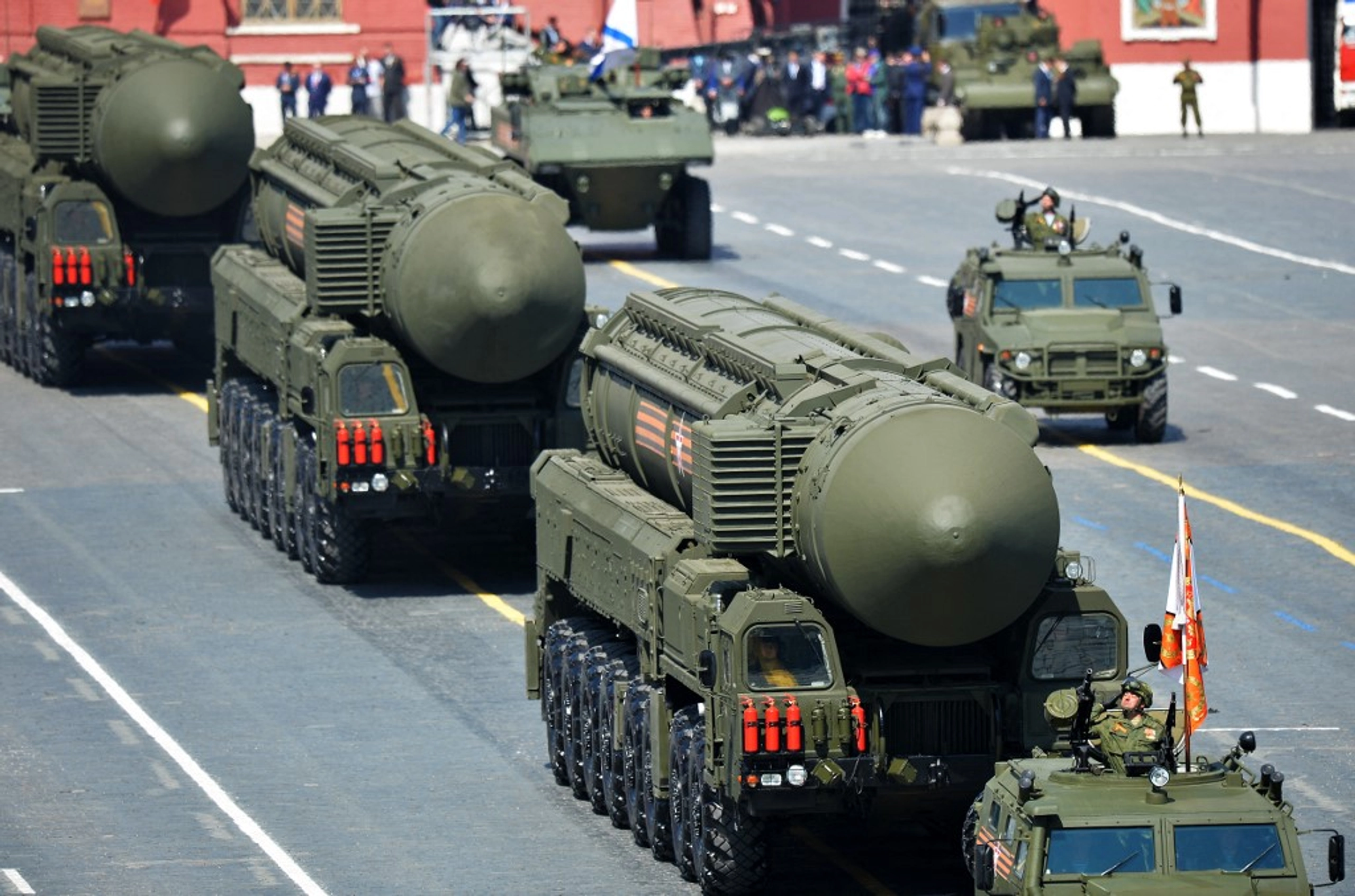
The head of Ukraine’s Foreign Intelligence Service, Oleh Ivashchenko, stated that Belarus hosts only carriers capable of delivering nuclear weapons, but no actual warheads are present – nor are does it hold any “Oreshnik” medium-range ballistic missile systems.
“There are carriers. That’s true. There are aircraft and Iskander short-range ballistic missiles. But there are no nuclear weapons in Belarus. That’s a fact,” he said.
JOIN US ON TELEGRAM
Follow our coverage of the war on the @Kyivpost_official.
Ivashchenko also said that Belarusian leader Alexandr Lukashenko’s previous announcement that Minks would acquire Oreshnik missiles by the end of the year, as wishful thinking rather than a realistic goal.
“This looks more like wishful thinking. As of today, none of them exist, and it’s highly unlikely they will appear,” Ivashchenko told Ukrinform.
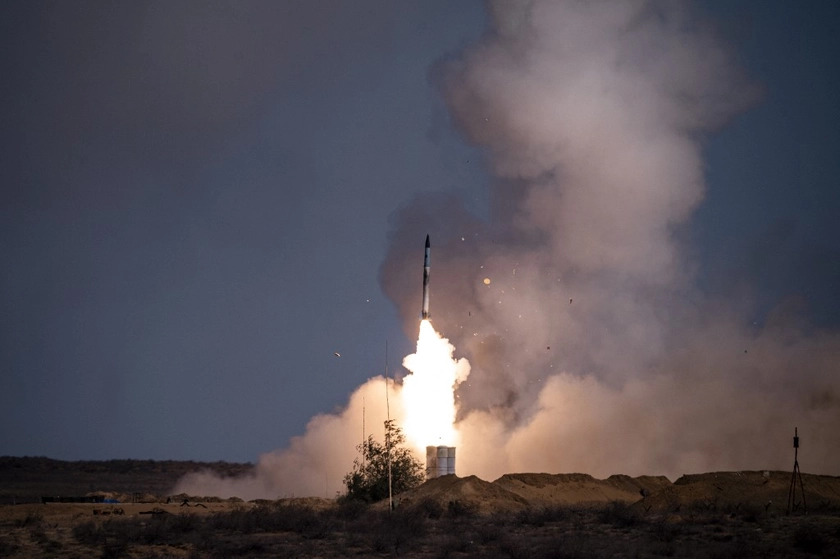
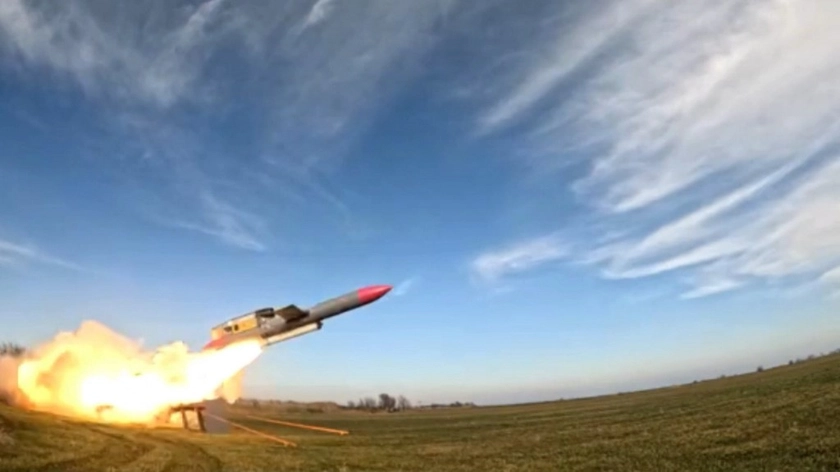
The Oreshnik medium-range surface-to-surface ballistic missiles can be equipped with either nuclear or conventional warheads.
The missiles’ technical specifications are unclear, although Russian President Vladimir Putin has claimed the missile can strike targets at speeds of up to Mach 10 – around 3 kps(1.9mps), which Ukrainian sources say could be an understatement and a claimed range of 5,500 kilometers (3,450 miles).
The missiles each reportedly carry six independently targetable warheads, each containing submunitions, making it a difficult target for interception although some modern anti-missile defense systems are specifically designed to counter such threats.
Zelensky Says NATO Needs Ukraine More Than Ever, Offers to ‘Share Priceless Experience’
In addition, Ivashchenko said that the Belarusian army currently lacks the capacity for large-scale combat operations. According to him, about 2,000 Belarusian troops are stationed near the Ukrainian border solely to divert Ukrainian forces.
“In other words, their combat strength is limited. Even before the war, they were incapable of conducting offensive operations, and morally their servicemen are not prepared for it,” he added.
Although Belarus is not directly engaged in combat against Ukraine, it has effectively become an accomplice to Russian aggression by providing its territory for the initial invasion, missile launches, and troop movements.
The regime of its self-proclaimed president, Lukashenko, remains a close ally of the Kremlin, fully supporting Putin’s policies and cooperating actively under the so-called “Union State” framework. An almost total dependency on Russia has turned Belarus into a strategic staging ground for hostile actions against Ukraine and other neighboring countries.
Ivashchenko also stressed that Russia has not abandoned its imperial ambitions. The Kremlin continues to seek full control over Ukraine and to maintain influence across the post-Soviet space.
He noted that the question is no longer whether Russia might launch a new attack – but rather when and who will be the next target.
“Poland, the Baltic states, and Northern Europe are all at risk. Our analysts are no longer asking if Russia will strike again – they’re asking when and from where,” Ivashchenko said.
In February Kyiv Post reported that Russia does not see itself as a federation; it considers itself to be an empire, said the head of Ukraine’s Main Intelligence Directorate (HUR), Lt. Gen. Kyrylo Budanov.
“The empire that the current leadership of the Russian Federation is leaning toward is modeled after the Soviet Union – but with the countries of the Warsaw Pact,” Budanov said, adding, “Imagine the worst-case scenario, and yet it happened that three countries united into one, even though that is almost impossible,” he said speaking at the YES conference event held in Kyiv by the Victor Pinchuk Foundation on Feb. 24 – the third anniversary of the Russian full-scale invasion – as reported by Kyiv Post.
“Next will be Poland – I’m telling you this directly. And there’s no need to fear it; you just need to be aware,” Budanov said.
“After that, it will be the Czech Republic, Hungary, and Bulgaria – they will all come under control. For the countries of the former Warsaw Pact, that’s the bare minimum if an empire is being formed, and then, who knows what might follow, excuse me,” he added.
You can also highlight the text and press Ctrl + Enter