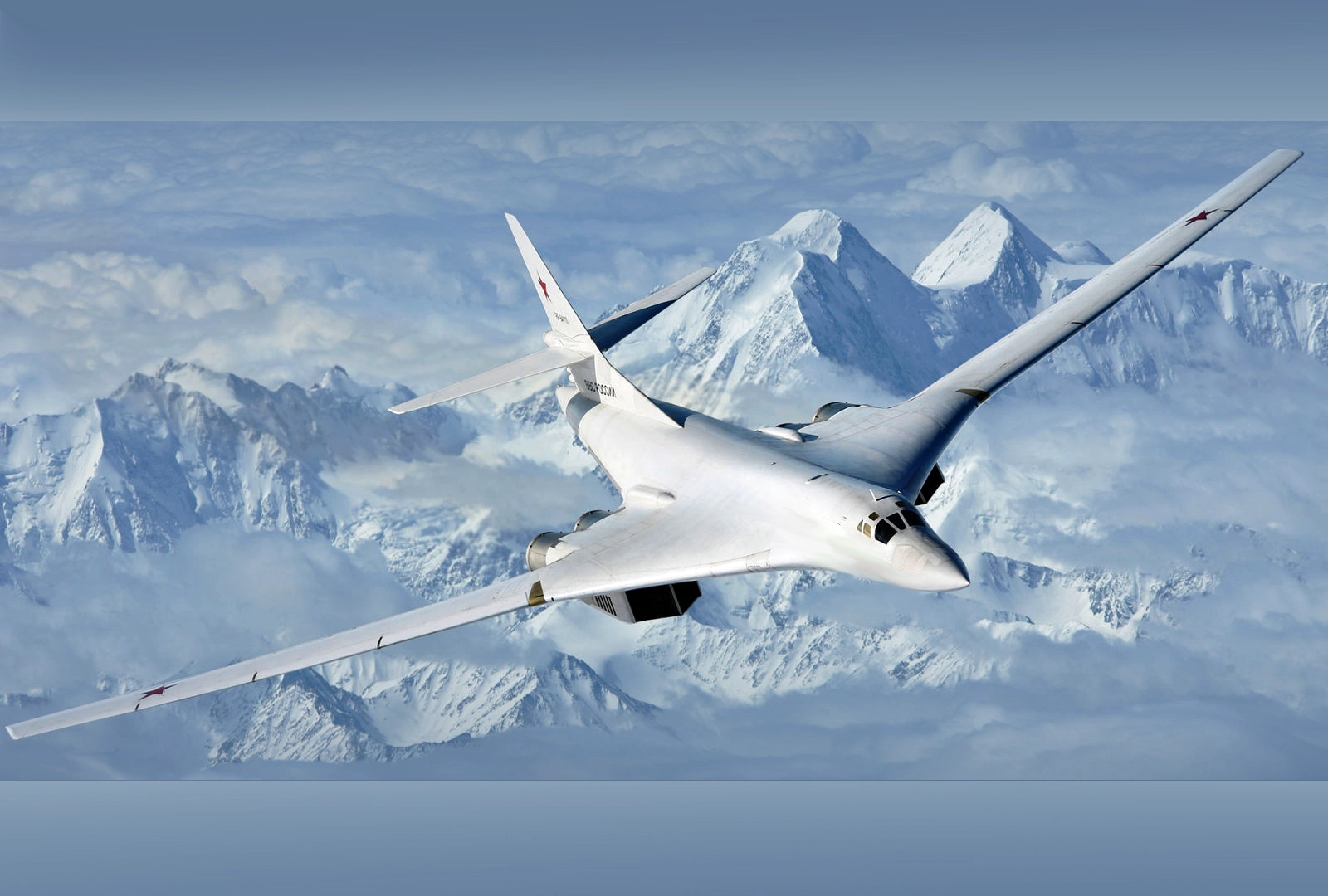
Following Ukraine’s Spiderweb drone attacks on Russian strategic aircraft one week ago, the Kremlin has begun to disperse its TU-160 “White Swans” (NATO: “Blackjack”) strategic bombers “out of harm’s way”as far from Ukraine as possible – including Russia’s Far East.
The Ukrainian open-source intelligence (OSINT) analysis project AviVector posted a satellite image on X that showed a Russian Tupelov Tu-160 long-range strategic bomber, previously stationed at the Belaya airfield in the Irkutsk region, on the tarmac at the Anadyr / Ugolny airbase. The airbase is located on the Yakutia Peninsula of the Chukotka Autonomous Okrug – 6,750 kilometers (4,218 miles) from the Ukrainian border and 660 kilometers (410 miles) from Alaska.
JOIN US ON TELEGRAM
Follow our coverage of the war on the @Kyivpost_official.
The move followed the June 1 attack on five Russian airbases in the Irkutsk, Murmansk, Ryazan and Ivanovo regions, using first-person view (FPV) drones concealed in truck-borne mobile homes – Operation Spiderweb – which destroyed or damaged almost a third of Russia’s strategic bomber fleet along with two Beriev A-50 (NATO: “Mainstay”) airborne early warning and control (AEW&C) platforms.
The Anadyr airbase, also known as Ugolny, was constructed during the Soviet era as a base for its strategic bombers and reconnaissance aircraft intended to monitor US military activity in Alaska and the Bering Sea. It has grown in importance as Moscow increasingly focuses on the strategic value of the Arctic where it hosts other strategic assets including Tu-95 (NATO: Bear) and Tu-22 (NATO: Backfire) heavy bombers.
SBU Says Drones Hit Russian Military Ships in New 40-Day Crimea Campaign
The base is physically isolated – there are no road connections with access only by air or sea – which makes the base invulnerable to sabotage or land-based attack such as Spiderweb and from more conventional air attack.
Military commentators suggest that the choice of Anadyr with its proximity to the US highlights the fact that Moscow’s immediate need to protect its bombers from Ukrainian drone attacks currently outweighs concerns about wider strategic deterrence.
The Tu-160 White Swan was designed in the late 1970s and is the world’s heaviest supersonic bomber and a key component of Russia’s nuclear triad. It is 54 meters (177 feet) long with 55.7-meter (183-feet) variable-geometry wings whose NK-32 turbofan engines gives it a cruising speed of Mach 1.5 and maximum speed of more than Mach 2 and a range in excess of 12,000 kilometers (7,500 miles)
The aircraft has two internal weapon bays allowing it to carry almost 45 tons of weaponry – primarily conventional or nuclear tipped cruise missiles including: the Kh-55SM and its modern Kh-555 version with a range of 2,500 kilometers (1,560 miles); the Kh-101 and its Kh-102 nuclear variant with a range of 4,500 kilometers (2,800 miles); the Kh-47M2 “Kinzhal” hypersonic missile. It is also capable of carrying both free-fall and “iron bombs” as well as the KAB series of aerial glide bombs.
You can also highlight the text and press Ctrl + Enter

Attack on Moscow Oil Refinery: Putin Under Pressure?