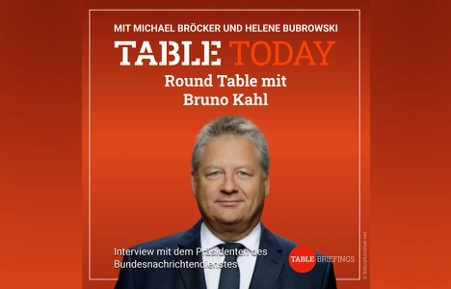
Bruno Kahl, head of Germany’s Federal Intelligence Service (BND), said that there are clear intelligence indications that the Kremlin is preparing to test the ability of NATO’s members to enforce its Article 5 – the collective defense obligation that considers “an attack on one is an attack on the whole.” The comments came while speaking to the German current affairs channel Table Media’s “Table Today” YouTube podcast on Monday,
The intelligence has assessed that the hawks in President Vladimir Putin’s regime – having seen what it categorizes as the Alliance’s weak collective response to its “special military operation” in Ukraine – are becoming increasingly determined to test NATO’s resolve by extending its actions beyond the borders of Ukraine.
JOIN US ON TELEGRAM
Follow our coverage of the war on the @Kyivpost_official.
“We are quite certain, and we have intelligence showing that Ukraine is only a step on [Russia’s] journey westward,” Kahl said.
“That doesn’t mean we expect tank armies to roll westwards, but we see that NATO’s collective defense promise is to be tested.”
Kahl wouldn’t be drawn on the sources that had led to his intelligence assessment, but he indicated that there were ongoing conversations among senior Russian officials as to when would be the right time to test the West’s resolve, particularly that of the US, to respond to Moscow’s aggression. Kahl said these actions would likely fall short of full military engagement:
Germany Pledges $400M for Ukraine Air Defense Missiles
“They don’t need to dispatch armies of tanks for that,” he said. “It’s enough to send little green men to Estonia to protect supposedly oppressed Russian minorities.”
The term “little green men” was coined to refer to Russian military personnel who were masked, carried regular weapons and equipment, and dressed in unmarked uniforms during the opening stages of Russia’s first invasion of Ukraine, which included the annexation of Crimea in 2014.
The use of its forces in this way initially gave the Kremlin an element of “plausible deniability” at the end of February 2014. But that fiction did not last long. After claiming the troops were “local self-defense units,” by the end of March Putin was congratulating Russia’s military for their conduct during the Crimean operation, followed eventually by the issuing of a “victory medal” after the “return of Crimea.”
Germany and others think that the “success” of Russia’s strategy a decade ago could be the blueprint for Moscow’s future asymmetric attack on the West.
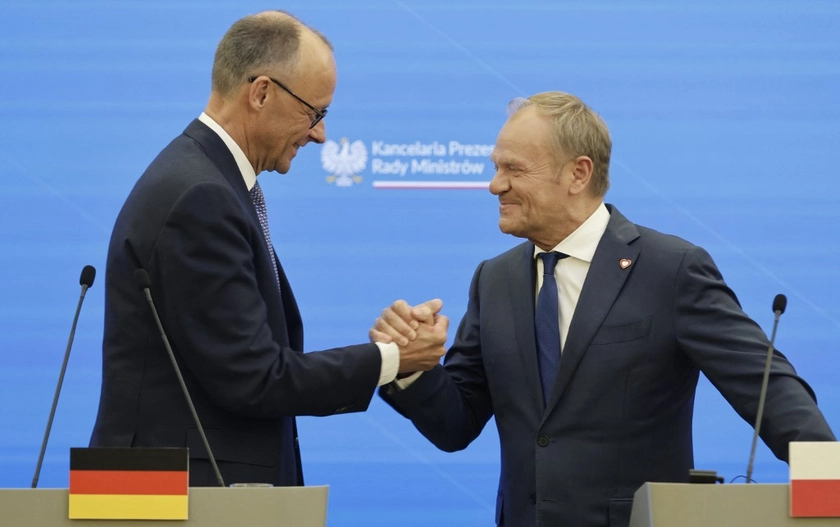
Under the new government of Chancellor Friedrich Merz – already the second-largest provider of military and financial aid to Ukraine in its war with Russia – Germany has stated it will continue its support and has pledged to assist Kyiv in its development of new weapon systems, including long-range missiles.
Merz also pushed back on US President Donald Trump’s assertion that Ukraine and Russia shared responsibility for the war when they met in Washington last week, pointing out that Ukraine was targeting military assets while Russia continued to strike civilian areas in Ukraine’s cities.
Kahl said that his contacts with US intelligence and security agencies had convinced him that they understood these Russian threats and were taking them seriously.
You can also highlight the text and press Ctrl + Enter

Poland, Germany Clash Over €6.6B in EU Funds for Ukraine
Germany Warns of Russian Orbital Nuclear Threat