As was reported last month, the acclaimed poet and former Soviet political prisoner Ihor Kalynets died in Lviv on June 28. Today would have been his 86th birthday.
I was fortunate to have known and helped this legendary figure from among the cohort of Ukrainian patriots who were imprisoned, placed in mental hospitals, sent into forced exile, or even killed during the post-Stalin era in Soviet (read Soviet Russian)-ruled Ukraine.
JOIN US ON TELEGRAM
Follow our coverage of the war on the @Kyivpost_official.
So here are a few personal reminiscences about this patriotic literary figure and defender of Ukraine’s culture and national rights.
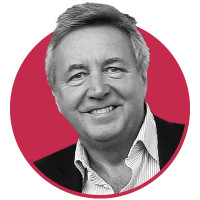
I was born in the UK to Ukrainian war refugees. In the late 1970s, after postgraduate studies at the London School of Economics, I was appointed head of Amnesty International’s unit for the defense of “political prisoners” in the Soviet Union.
At that time, most of the political prisoners among them were Ukrainians. And many of them were writers, journalists and historians. So naturally, I tried to bring their plight to the attention of organizations and publications that promote freedom of expression, such as the International PEN Club or the London-based journal Index on Censorship.
You Realize How Valuable Life Is When Death Feels Possible Every Day
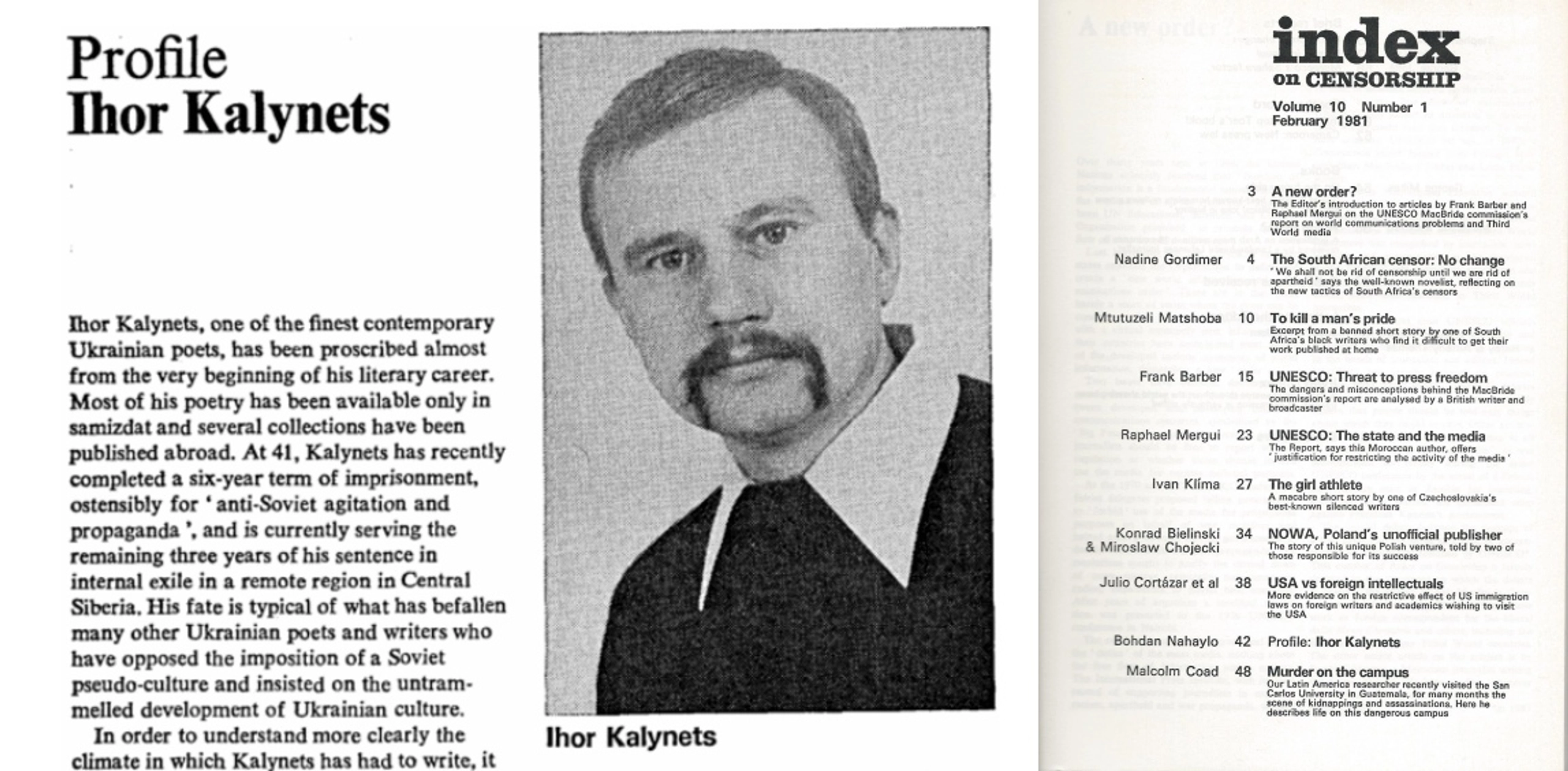
In February 1981 I published a profile of Kalynets in Index on Censorship. I wrote:
“Ihor Kalynets, one of the finest contemporary Ukrainian poets, has been proscribed almost from the very beginning of his literary career. Most of his poetry has been available only in samizdat (self-published typescripts) and several collections have been published abroad. At 41, Kalynets has recently completed a six-year term of imprisonment, ostensibly for ‘anti-Soviet agitation and propaganda,’ and is currently serving the remaining three years of his sentence in internal exile in a remote region in Central Siberia. His fate is typical of what has befallen many other Ukrainian poets and writers who have opposed the imposition of a Soviet pseudo-culture and insisted on the untrammeled development of Ukrainian culture…
“While his early poetry exuded an aura of fascination and reverence for the spiritual values and cultural achievements of his nation and was steeped in its mythical, folkloric and linguistic heritage, he now concentrated increasingly on the theme of social protest. According to Danylo Husar Struk, ‘What makes Kalynets unique, at least in Ukrainian poetry,’ is that he has expressed this theme in the most sophisticated modern poetry yet to appear in the Ukraine.”
After completing the first part of his sentence, Kalynets was allowed to serve his three-year internal exile in a remote settlement in the Chita region, around 6,000 kilometers east of Moscow, together with his wife Iryna Stasiv, who was also a political prisoner. There, Kalynets worked as a stoker in extremely harsh climatic conditions.
While he and his wife were in forced exile, I wrote to them from London, as I did to several other political prisoners in internal exile (e.g. Ivan Svitlychny, Yevhen Sverstiuk, Mykhailo Osadchy and Vyacheslav Chornovil) under the pseudonym Marko Siry – Mark Gray. I used to send them messages on inspirational postcards and art books that they could sell on the spot. They replied with letters that often contained their latest non-political poems.
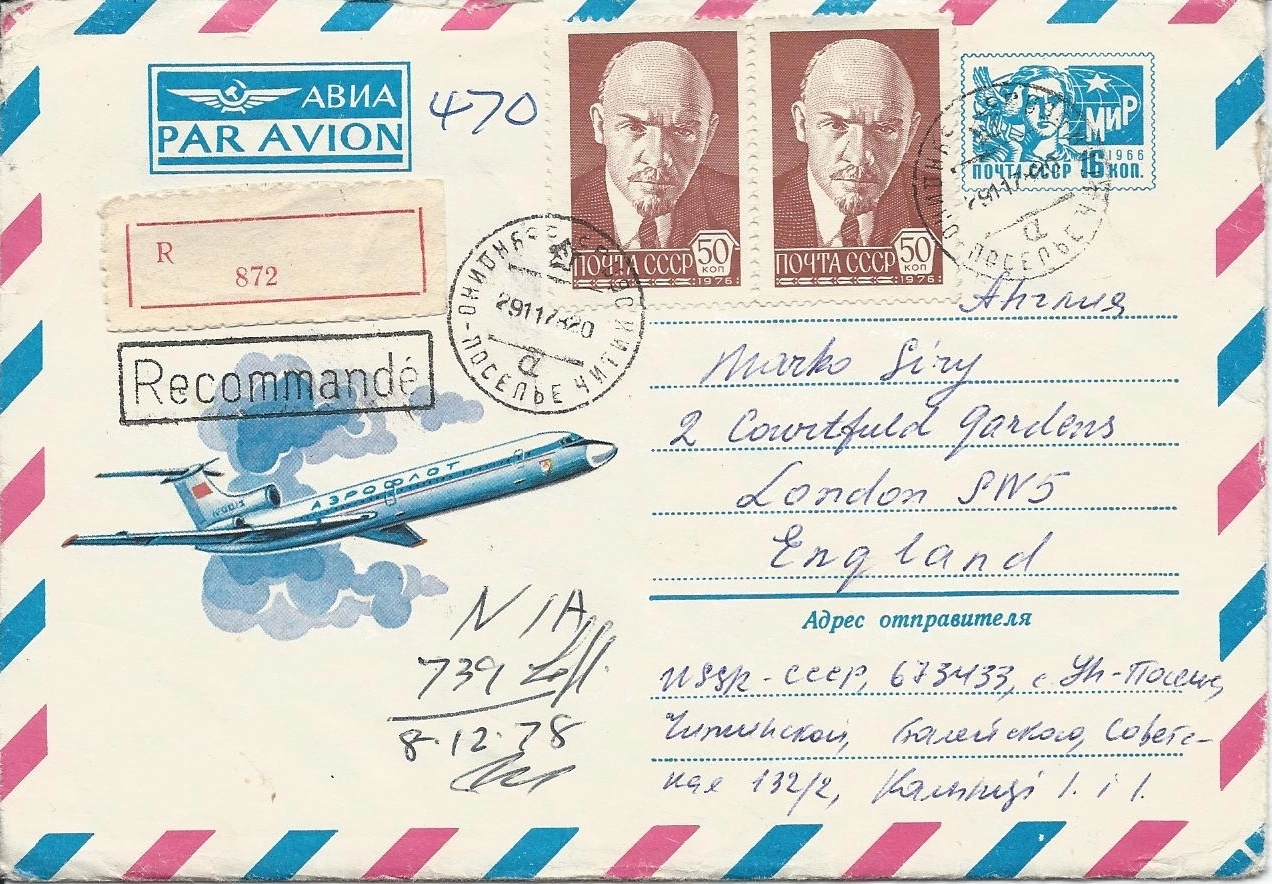
As the Soviet Union under Mikhail Gorbachev began to weaken internally, in the second half of the 1980s they and the other political prisoners were gradually released and returned to Ukraine, where many of them became active in the resurgent movement for democracy and independence.
By then, I was the director of the Ukrainian service of the US-funded Radio Liberty, based in Munich, which was broadcasting to the USSR. Obviously, we featured and popularized works by Kalynets, and his colleagues, such as the poet Vasyl Stus, who died in a labor camp in 1985.
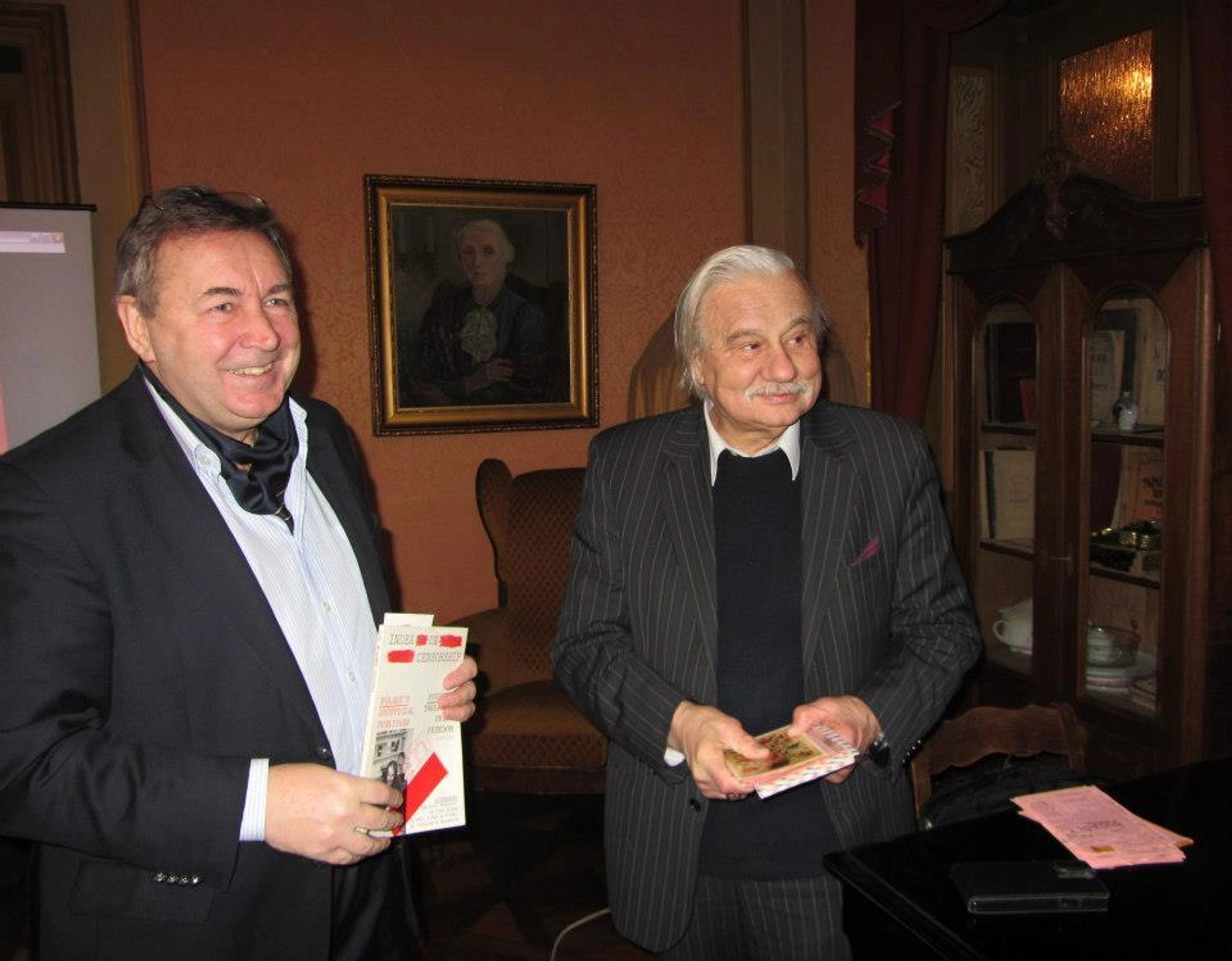
Finally, almost exactly 35 years ago, during my first visit to Ukraine in 1990, I was able to meet Kalynets in private in the Dniester Hotel in Lviv. We certainly had plenty to talk about.
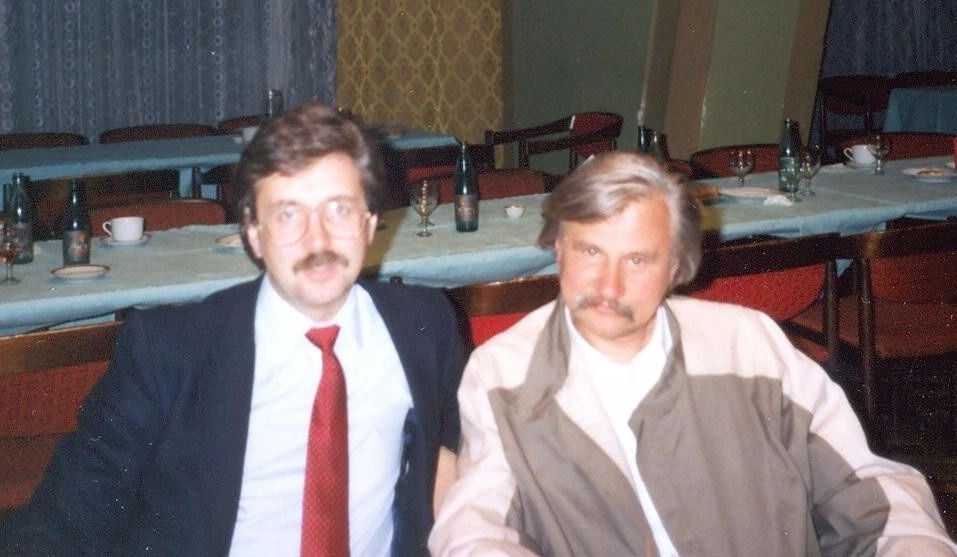
I had the good fortune to meet the poet and now respected local public figure on several other occasions. I was proud that when it was important I was one of those who made Kalynets’ case and that of others like him better known not only in the outside world but also in Ukraine itself.
You can also highlight the text and press Ctrl + Enter