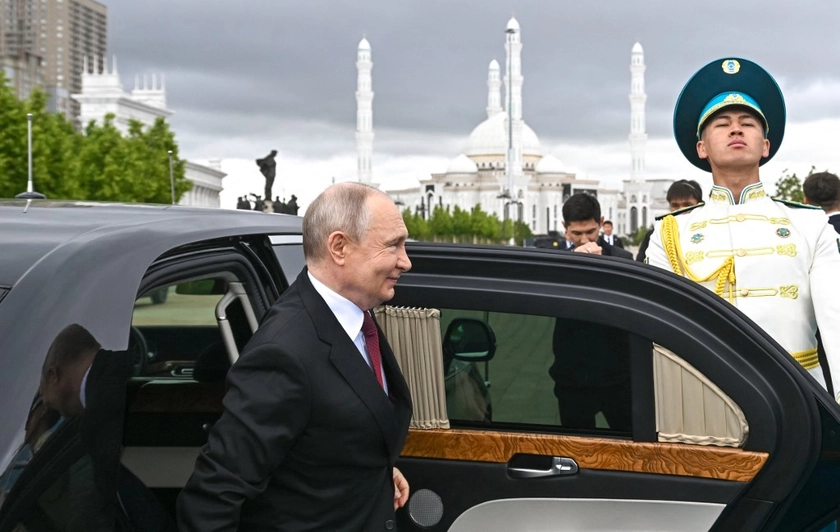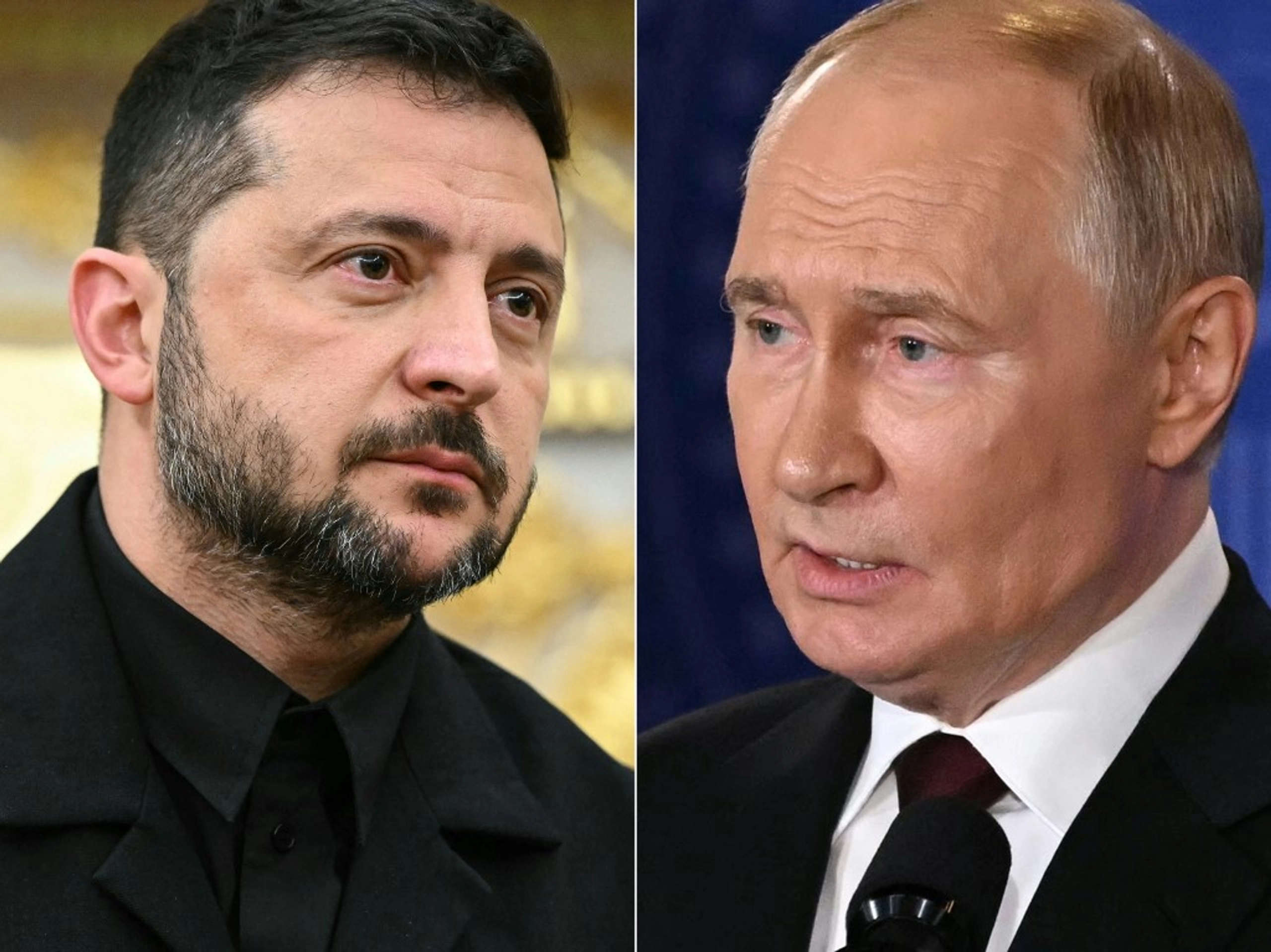
A peace deal to end the war between Russia and Ukraine is not something that is elusive, it is an illusion. There are, despite what others may believe about “proxy wars” or Boris Johnson’s instruction for Ukraine to keep on fighting, just two parties to the conflict. Ukraine, defending itself against invasion, and Russia, who chose a war of aggression. It is therefore exclusively those two parties who can bring the war to an end.
The obstacle to peace is not bickering over a piece of land in Ukraine’s east, the obstacle to peace is that Russia has never really outlined what it would take for them to end their war of choice.
JOIN US ON TELEGRAM
Follow our coverage of the war on the @Kyivpost_official.
Some onlookers view a possible solution to the war through a transactional prism – to use a real estate analogy, a seller lists their property at x value and a buyer offers a percentage below that, the deal being struck according to who is the most desperate to conclude the transaction. This is absurdly naïve.
The most common saying from Kremlin officials since they got bogged down in this quagmire is that “the goals of the ‘Special Military Operation’ will be fulfilled.” Nothing more. As a reminder, those goals include the demilitarization and denazification of Ukraine. Ukraine will not be demilitarized, it has grown into a military powerhouse and after the war it will be a significant global player in terms of defense technology exports. A country that is not, by any definition, “Nazi” can’t be “denazified,” by definition.
You Realize How Valuable Life Is When Death Feels Possible Every Day
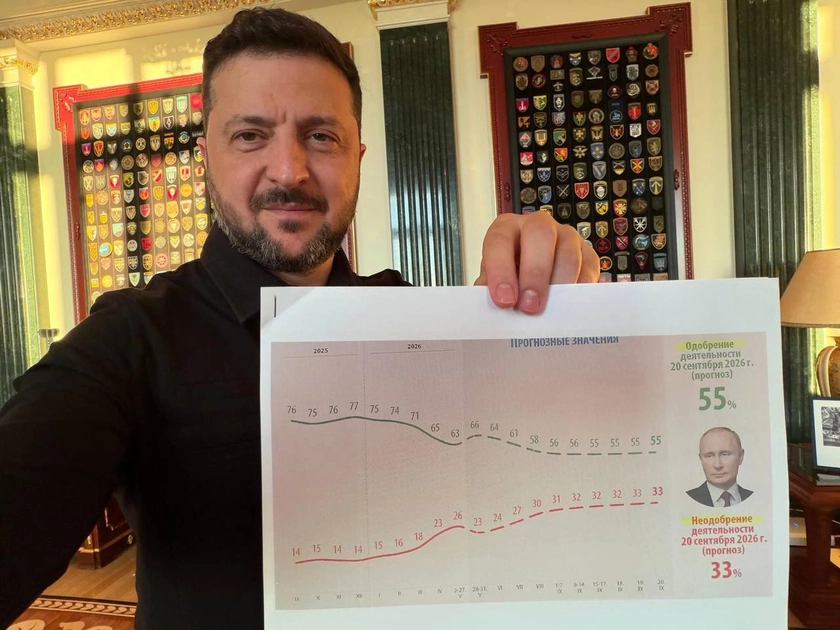
Prior to President Volodymyr Zelensky’s June 4 open letter to Vladimir Putin, the only recent statement of anything resembling detail of how Russia sees the war coming to an end came from Kremlin spokesperson Dmitry Peskov some two weeks ago. He said that Ukraine’s withdrawal from the remainder of the province of Donetsk was the prerequisite not for a peace deal, but simply for a ceasefire. “After that, then there will be negotiations, and they will be tough negotiations,” according to Peskov.
This is not ambiguity over Russia’s demands, it is an obvious obfuscation of Russia’s demands. As yet, they are unstated. There are some who seem to think that Zelensky is (for whatever reason) the obstacle to peace. The answer to those people is this: “What deal is on the table?” What do people think Zelensky is refusing, when the party waging the war won’t tell the world what they want in order to stop it?
There have been attempts to bring a “negotiated” end to this war: famously envoys of the US President Donald Trump (Steve Witkoff and Jared Kushner) have visited Moscow on multiple occasions and come back empty handed.
The party that started the war has consistently refused to take an off ramp – even when their partners in Washington have tried to gift wrap one for them.
There has been an attempt from pseudo-journalist Tucker Carlson to get an explanation from Vladimir Putin as to why there even is a war in the first place, the response was a 30-minute lecture on the pseudo-history of this region going back to the ninth century. More obfuscation. Carlson, not having received anything resembling an answer, moved on through his prepared set of questions and came away gushing about how the Russian dictator had been very gracious in even sitting down with him.
Which brings up another oft-stated excuse from the Russian side:
“The war cannot end until the root causes of it have been addressed.” This was stated by Russian Foreign Minister Sergey Lavrov three days after the Zelensky open letter.
On the face of it, that seems reasonable. But when the “root causes” are Putin’s ahistorical rants about what happened on this eastern tip of Europe centuries ago, how is any of that going to be addressed in the modern era, or indeed, in a world where facts still matter to the rational part of society?
US Secretary of State Marco Rubio recently noted that the US is no longer putting any effort into trying to resolve the largest war in Europe for 80 years, the fact is that the US negotiating team did nothing to get to us to an end point in this war other than trying to persuade or blackmail Ukraine into capitulating to what Moscow itself says is only the start point for negotiations, as in the terms to get to a ceasefire and not a full peace?
There is now talk that Trump may once again be asking Ukraine, “but first, do me a favor” (the phrase that famously led to his first impeachment) by agreeing to a ceasefire to boost his party’s chances in the November midterm elections.
Similarly, any passing of the baton to Europe itself to mediate is also doomed to fail, not because the root causes are not clear to the Europeans or because the terms of a permanent cessation of hostilities have not been stated, but because one of the parties to the war (the party that started it) has consistently refused to take an off ramp – even when their partners in Washington have tried to gift wrap one for them.
If one were to guess at what Russia’s further demands to turn a ceasefire into a proper peace deal were, we would most likely be looking at some kind of de-facto control over Ukrainian sovereignty. With changes to the constitution of an independent country being demanded by their former colonial masters.
Such constitutional changes would likely include, for example, the imposition of Russian as a state language. This would be presented as necessary “to protect the rights of Russian speakers” when in fact the rights of anyone in Ukraine to use whatever language they feel comfortable with has never actually been infringed upon.
Imposing Russian as a state language is actually a step towards a return to the russification of Ukraine. An experiment that came with a deadly cost during the rule of the Russian Empire and the Soviet Union.
The russification of Ukraine, through adopting an official language that literally everyone can speak anyway may seem like only a small issue, it is in reality an essential tool towards wiping out Ukrainian statehood, by stealth and over time. We have seen all of this before. It ended with Ukrainians voting to take charge of their own affairs 35 years ago.
The only consistent thing about Russia’s stance towards Ukraine is that it changes all the time.
Here are three more truths that anyone wanting to take on the job of seeing if they can bridge the gap between the warring parties must consider. The first is that Russia is in no position to be making any demands. The second is that Ukraine is in no need of accepting any of Russia’s demands, whatever they may turn out to ultimately be. And the third is that whatever Putin, or his successor, may say, the only consistent thing about Russia’s stance towards Ukraine is that it changes all the time.
There was a time when Putin himself stated that there were no territorial disagreements with Ukraine. Then there was a time that Crimea has always been and will always be a part of Russia. There was a time (the 2002 NATO-Russia Summit in Rome, to be precise) when Ukraine was free to choose their own associations, then a war was created as punishment for Ukraine’s European ambitions and NATO had pinky-swore not to ever expand to the supposed Russian sphere of influence. At some point in the future, Russia is inevitably going to conjure up yet more bogus reasons why a war against Ukraine is somehow necessary in Moscow’s eyes.
We know this, because we don’t have to have a very long memory to recall the last time it happened.
In early February of 2022, Peskov was claiming that the 200,000 Russian troops on Ukraine’s borders were simply on a training mission and would return to their bases when the exercises were over. There was zero talk of an imminent threat to Russia that was concerning the Kremlin. In the middle of February that year chief Russian propagandist Margarita Simonyan was joking that as Russia had not invaded on the 16th, the West was thus just inventing stories that any invasion was going to happen at all. There was no word from her then about the supposed serious problem with Nazis in charge of Ukraine’s government, an argument that she deployed a week later and has repeated a million times since.
If somebody thinks it is President Zelensky who is obstreperously rejecting reasonable compromises, let them lay out a point-by-point plan of what they and Russia see as the path towards ending this war. I’ll wager, and am literally doing so by having this challenge published for literally anyone to respond to, nobody can.
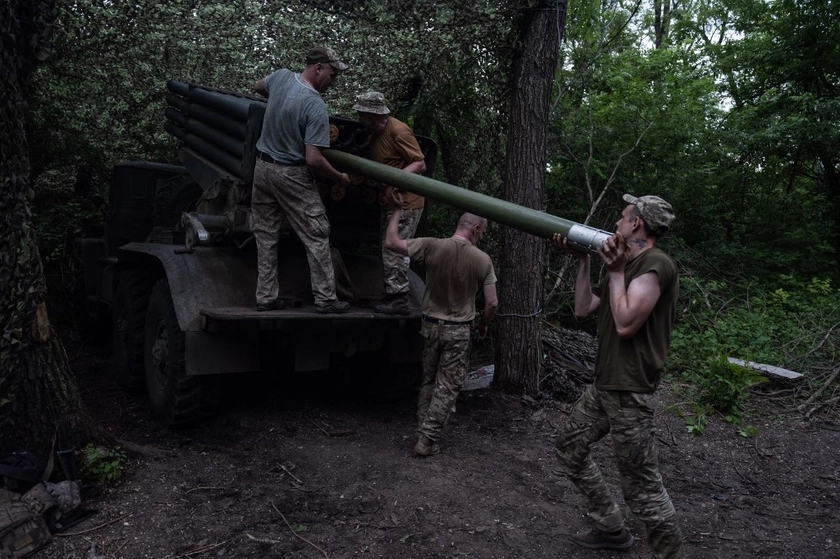
In the meantime, Ukraine’s negotiating team is on the battlefield. Because Russia’s negotiating team isn’t doing anything resembling negotiating, and so there is no other choice than to continue to fight this war until Russia no longer can.
Considering the current blocking off all Russian supply routes across southern Ukraine, and almost all points of ingress and egress to the occupied Crimean peninsula being shut down, and the deep strikes destroying the Russian economy one oil refinery at a time, we might not have long to wait before we see a point when Russia can no longer continue to fight.
That’s when there will be a peace deal. It will encompass the total restoration of Ukraine’s territorial integrity, an agreement over reparations to Ukraine, and war criminals being brought to justice.
The views expressed in this opinion article are the author’s and not necessarily those of Kyiv Post.
You can also highlight the text and press Ctrl + Enter

Putin’s Worst Nightmare