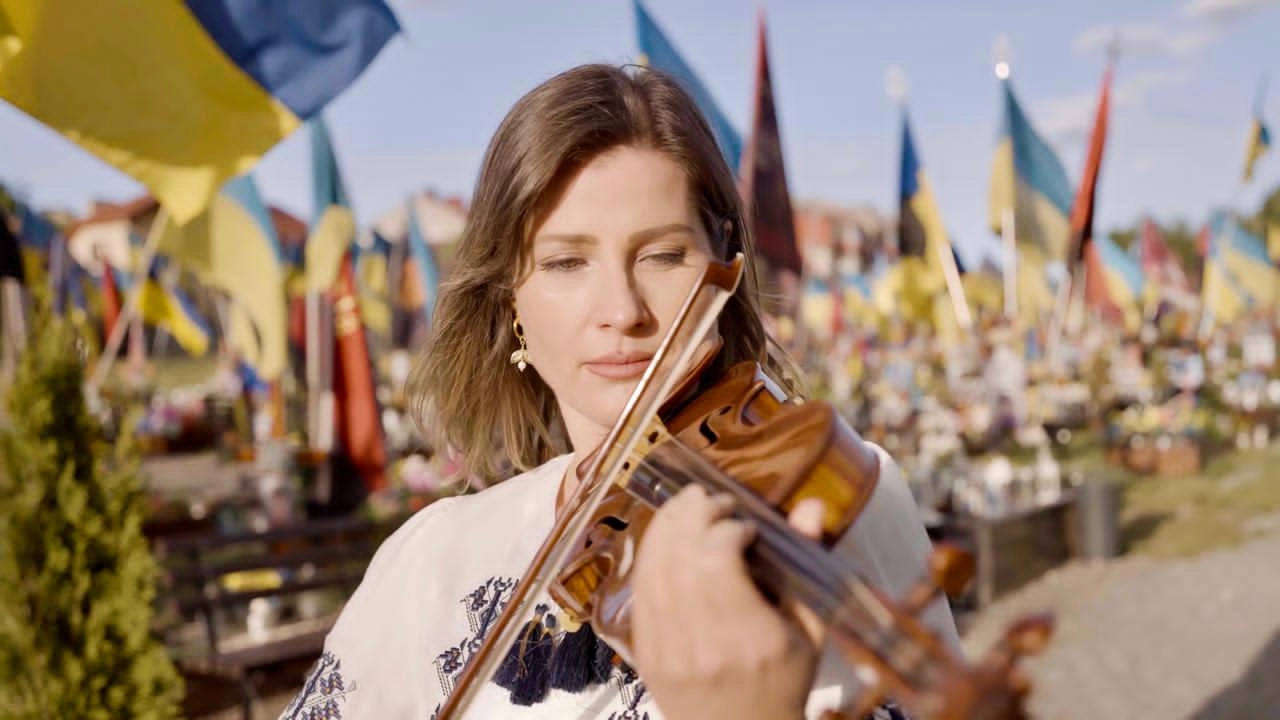
The world-renowned Georgian violinist Lisa Batiashvili has arrived in Ukraine. Following its Swiss premiere, her highly anticipated musical performance “City Lights” was brought directly to the stage of the Lviv Philharmonic on May 30. Featuring orchestral arrangements and conducting by Nikoloz Rachveli, with a script and direction by Teo Jorbenadze, the performance was brought to life in collaboration with the acclaimed INSO-Lviv Symphony Orchestra.
As the full-scale Russian war against Ukraine grinds through its fifth year and the international community grapples with the creeping threat of “war fatigue,” cultural diplomacy and the direct presence of global artists are taking on a powerful new meaning.
JOIN US ON TELEGRAM
Follow our coverage of the war on the @Kyivpost_official.
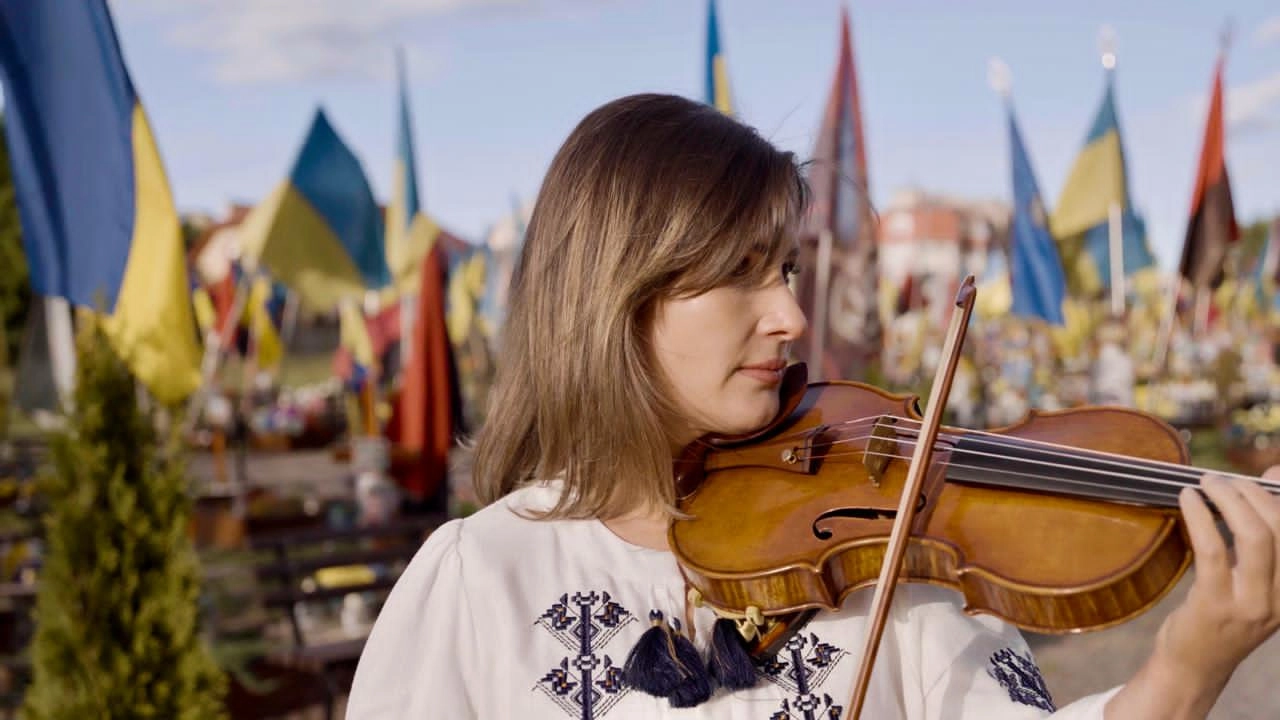
The most striking testament to this commitment took place at Lviv’s Marsove Pole (Field of Mars) military cemetery on May 28.
Standing by the grave of Roland Kharaishvili – a Georgian volunteer fighter killed in action defending Ukraine – Batiashvili performed Gia Kancheli’s masterpiece, “Herio Bichebo.” The gesture transcended a standard act of mourning, serving instead as a profound symbol of the shared grief and common struggle for freedom binding the peoples of Ukraine and Georgia.
Stalwart Denmark Announces 30th Military Aid Package for Ukraine
A nightmare well into its fifth year
In an exclusive interview with Kyiv Post, Batiashvili spoke candidly about the psychological terror and everyday resilience she witnessed firsthand. Enduring air raid sirens and descending into shelters multiple times a night during her stay, the violinist experienced a fraction of the reality Ukraine has navigated for years.
“To convey this magnitude of pain seems impossible,” Batiashvili said. “Ukraine has been living in this nightmare for years. Yet, these brave and heroic people have chosen life. They refuse to sink into despair – one minute a siren goes off and you are running to a shelter, the next you are heading to rehearsal, and later they are inviting you out to dinner. They constantly find a positive way forward.”
Musical diplomacy: from the hospitals to the stage
This visit was far from a standalone gesture. Batiashvili’s advocacy for Ukraine goes back 12 years to 2014, when she performed a moving Requiem on Kyiv’s Maidan during the Revolution of Dignity. In the years since, she has organized and performed in numerous benefit concerts across Europe and the United States, rallying colleagues to raise substantial funds for medical supplies and financial aid for Ukrainian musicians.
For this journey, the team chose Ukraine as the immediate next destination for the City Lights project. Alongside the grand performance at the Lviv Philharmonic, the musicians made it a priority to hold intimate concerts directly in military hospitals, performing for wounded soldiers undergoing treatment and rehabilitation.
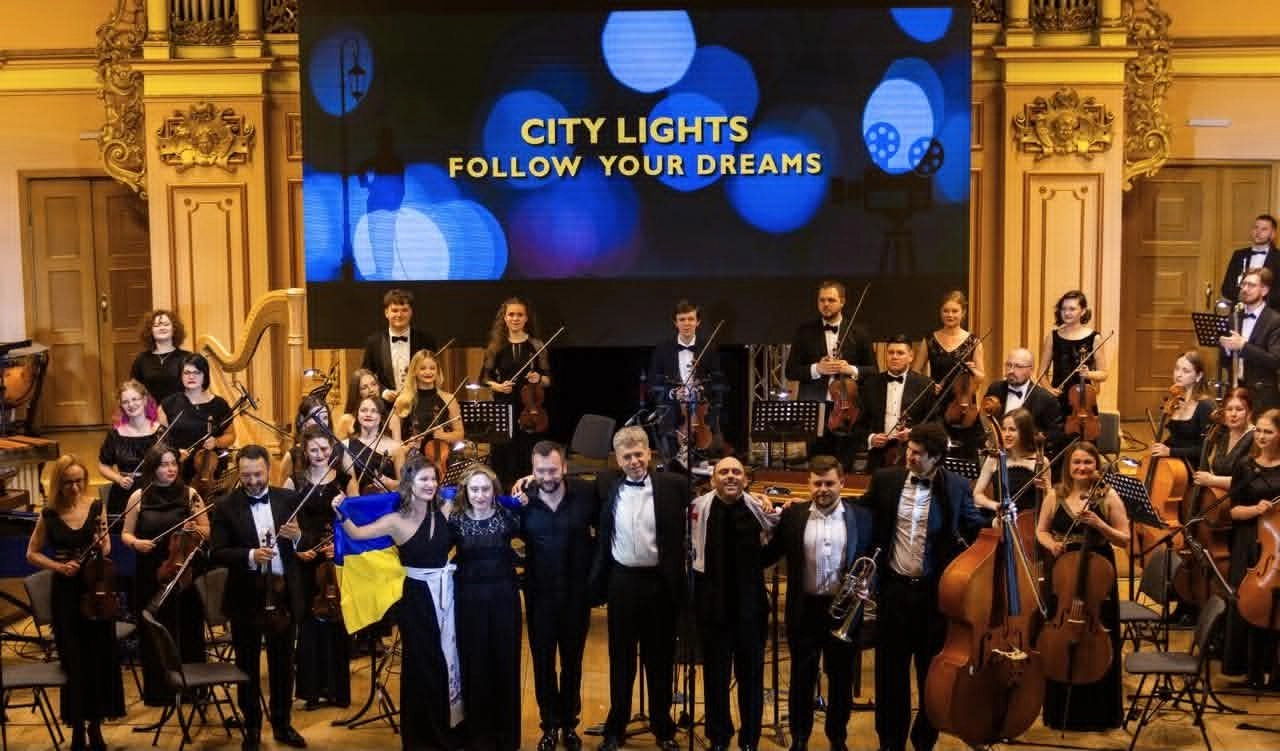
“I am glad that together with Nikoloz Rachveli and members of the INSO-Lviv orchestra, we also held concerts in hospitals,” Batiashvili said. “We met heroic soldiers fighting in the war. It was incredibly emotional when we later saw them from the stage in the hall of the Lviv Philharmonic; of course, we went down to them and thanked them.”
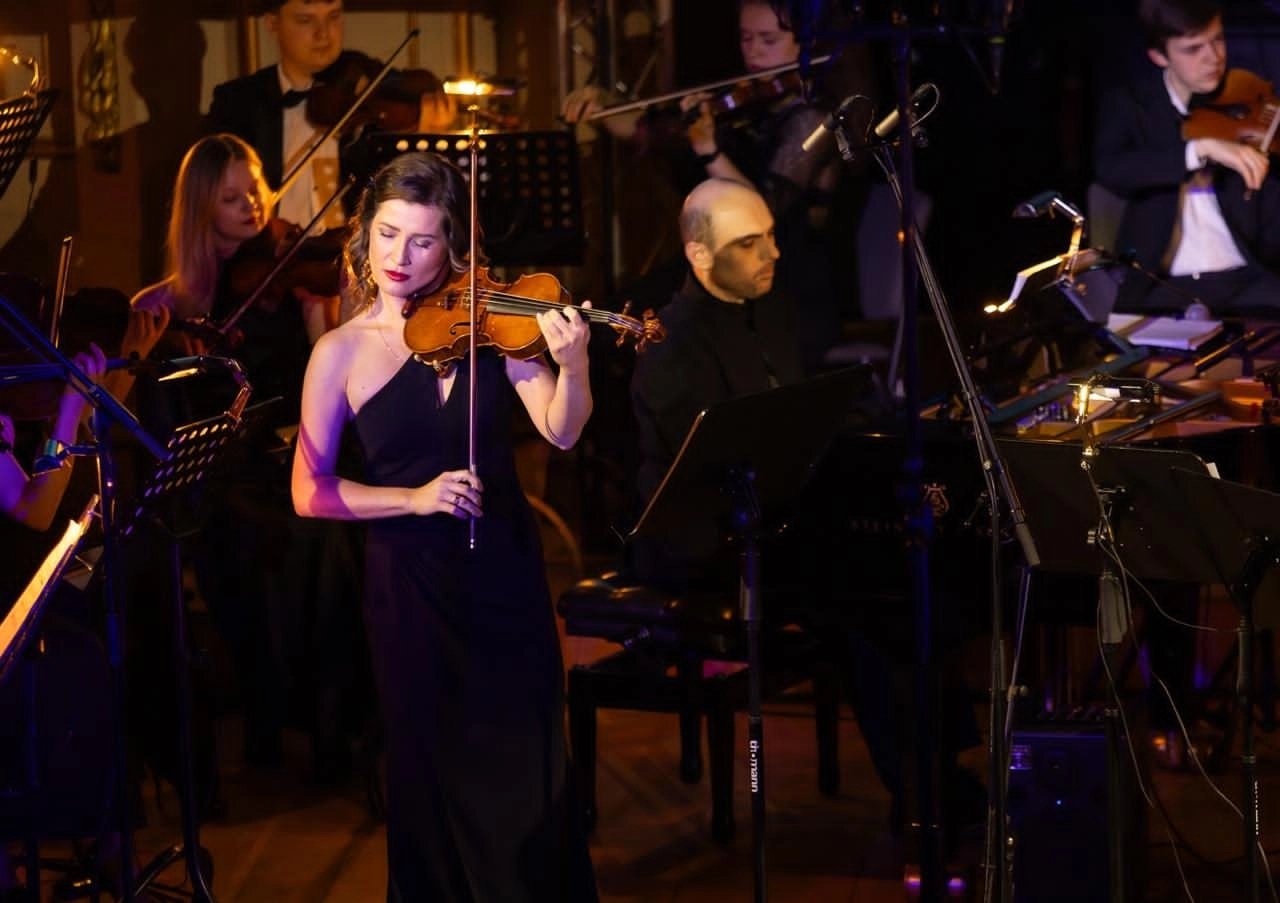
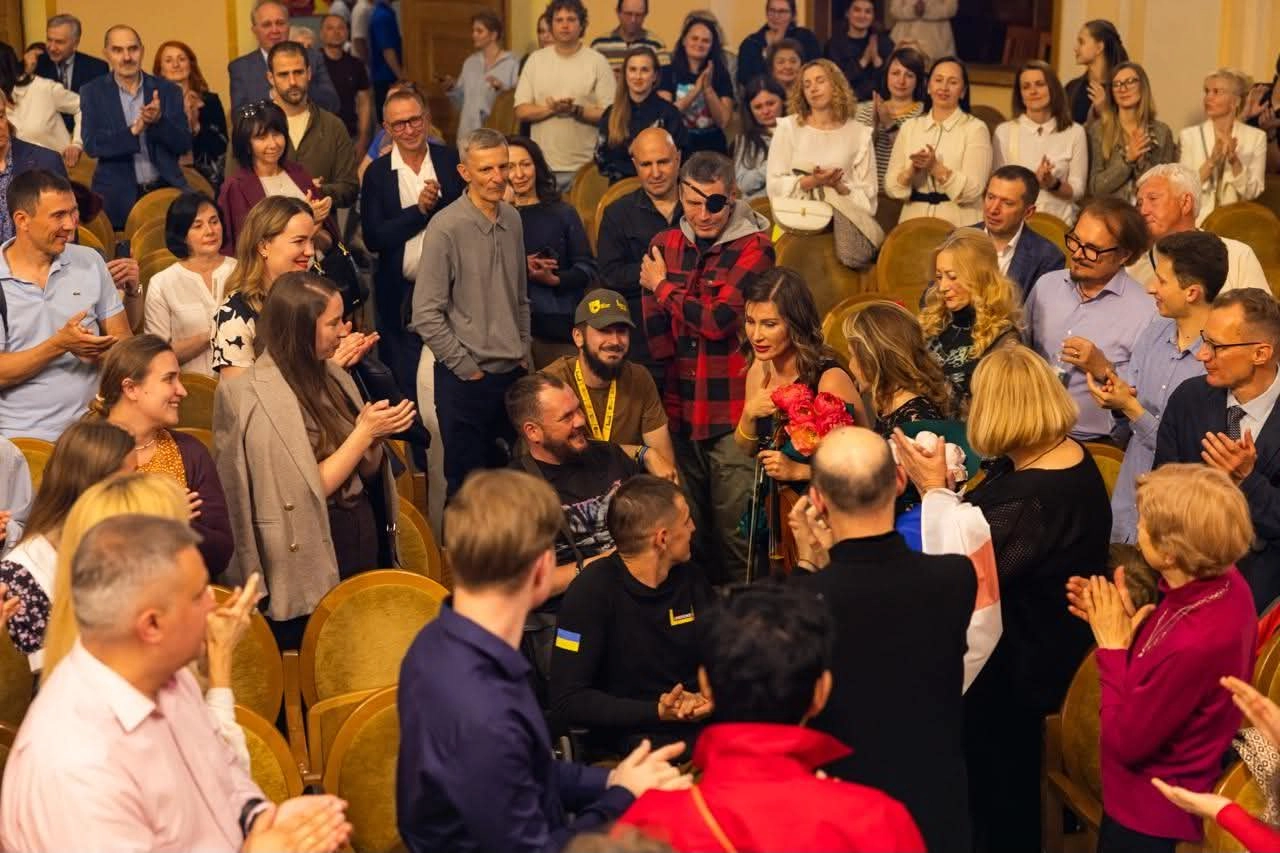
The profound connection between the artists and the front line came full circle during the main concert evening. Wounded servicemen and Ukrainian heroes were present in the audience at the Lviv Philharmonic. In a deeply moving moment, Lisa Batiashvili descended from the stage directly into the hall, walking among the seats to personally look the soldiers in the eyes and express her profound gratitude for their bravery.
Kancheli’s legacy and the uncompromising moral stand
The choice of “Herio Bichebo” at Marsove Pole carried deep historical weight. For the late composer Gia Kancheli, freedom was an absolute value. Following the 2008 Russian invasion of Georgia, Kancheli vocally and consistently condemned Moscow’s imperial aggression, withdrawing his presence from Russian stages. Batiashvili noted that while words often fail in the face of the brutality experienced by families who have lost fathers, husbands, and sons, music retains the unique ability to preserve memory and shake the global conscience.
“I know he would be happy and would support us in everything,” she reflected on Kancheli’s legacy. “Generally, for Gia Kancheli, as for every true artist, freedom was the main value.”
Batiashvili emphasized that the international community cannot afford to look away for a single moment, as victory for good on Ukrainian soil is the fundamental cornerstone of global security. “The world should not lose interest even for a single second,” she urged.
“Everyone must understand how important the victory of good is here, on this land. We all need this very much, so the whole world must stand by these people even more organized and effectively.”
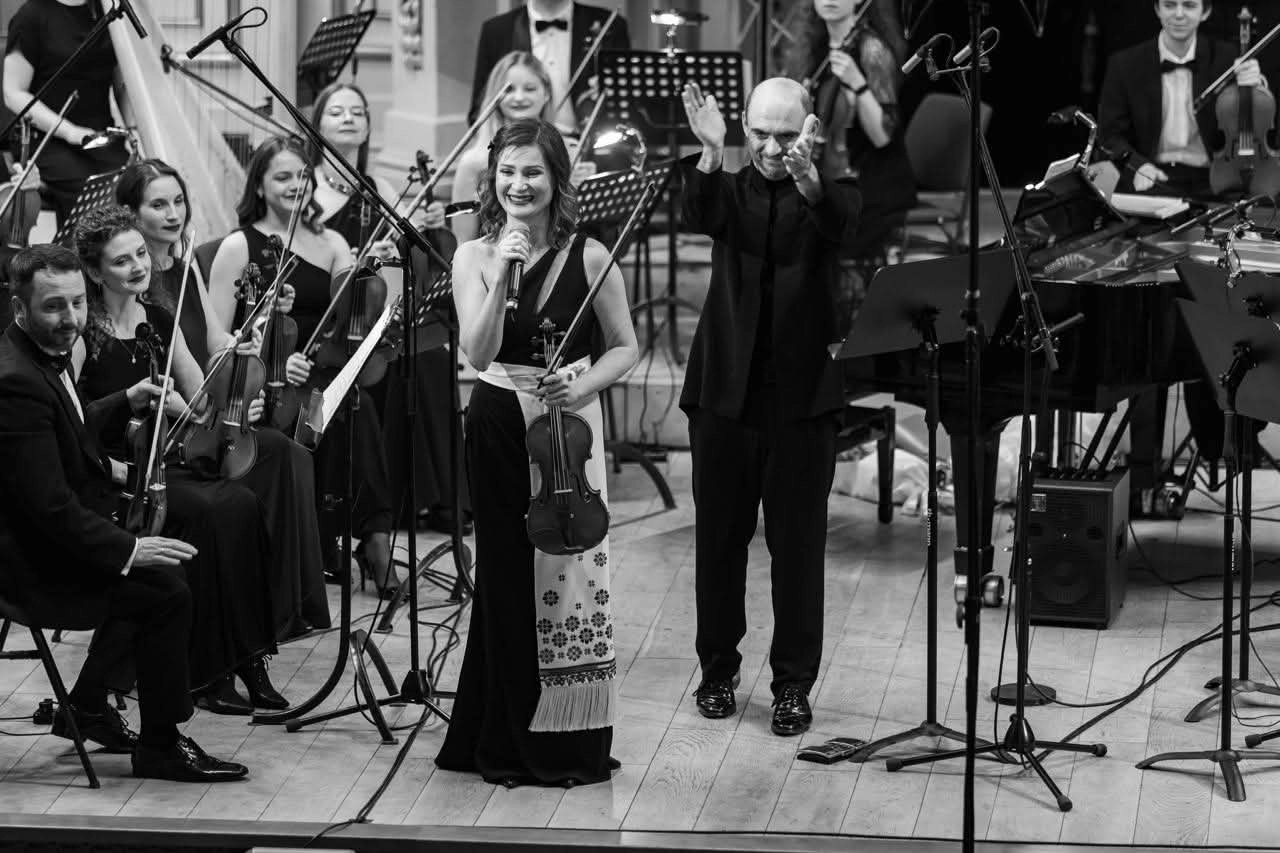
This message resonates far beyond the concert hall; following her trip, numerous high-profile international artists contacted Batiashvili, expressing their own desire to travel to Ukraine and join the solidarity movement.
“After they found out that I went to Ukraine, many of my colleagues wrote to me that they also want to come, which made me very happy,” she said. In her eyes, the very definitions of core human values have shifted through this crucible. Today, words like “freedom,” “dignity,” and “solidarity” are defined first and foremost by one’s physical and moral willingness to stand directly beside the Ukrainian people.
You can also highlight the text and press Ctrl + Enter