





Key Takeaways from the ISW:
- Russia will likely implement new policies to augment its military administrative capacity to significantly expand the rate at which Russia can call up a larger volume of conscripts and reservists.
- Russia has planned the gradual expansion of the Russian military since 2022, and the proposed changes to Russia’s personnel processing system are likely intended to support ongoing efforts to increase the size of the Russian military.
- The expansion of Russia’s administrative capacity to process conscripts and mobilized personnel would allow Russia to mobilize forces faster and more efficiently both during a protracted war in Ukraine and a possible future war against NATO.
- Reductions in the bottlenecks in the Russian conscription process would also impact Russia’s ability to wage future wars.
- Kremlin officials continued to signal Russia’s unwillingness to engage substantively in efforts to establish a lasting peace in Ukraine during the third round of bilateral talks in Istanbul.
- Ukrainian President Volodymyr Zelensky submitted a draft bill to the Ukrainian parliament on July 24 aimed at bolstering the independence of Ukraine’s anti-corruption agencies in response to public backlash against the controversial bill that Zelensky signed on July 22.
- The US State Department approved two Foreign Military Sales (FMS) to Ukraine totaling $322 million.
- Ukraine and Russia conducted their ninth prisoner of war (POW) exchange on July 23, in accordance with agreements reached during the June 2 bilateral negotiations in Istanbul.
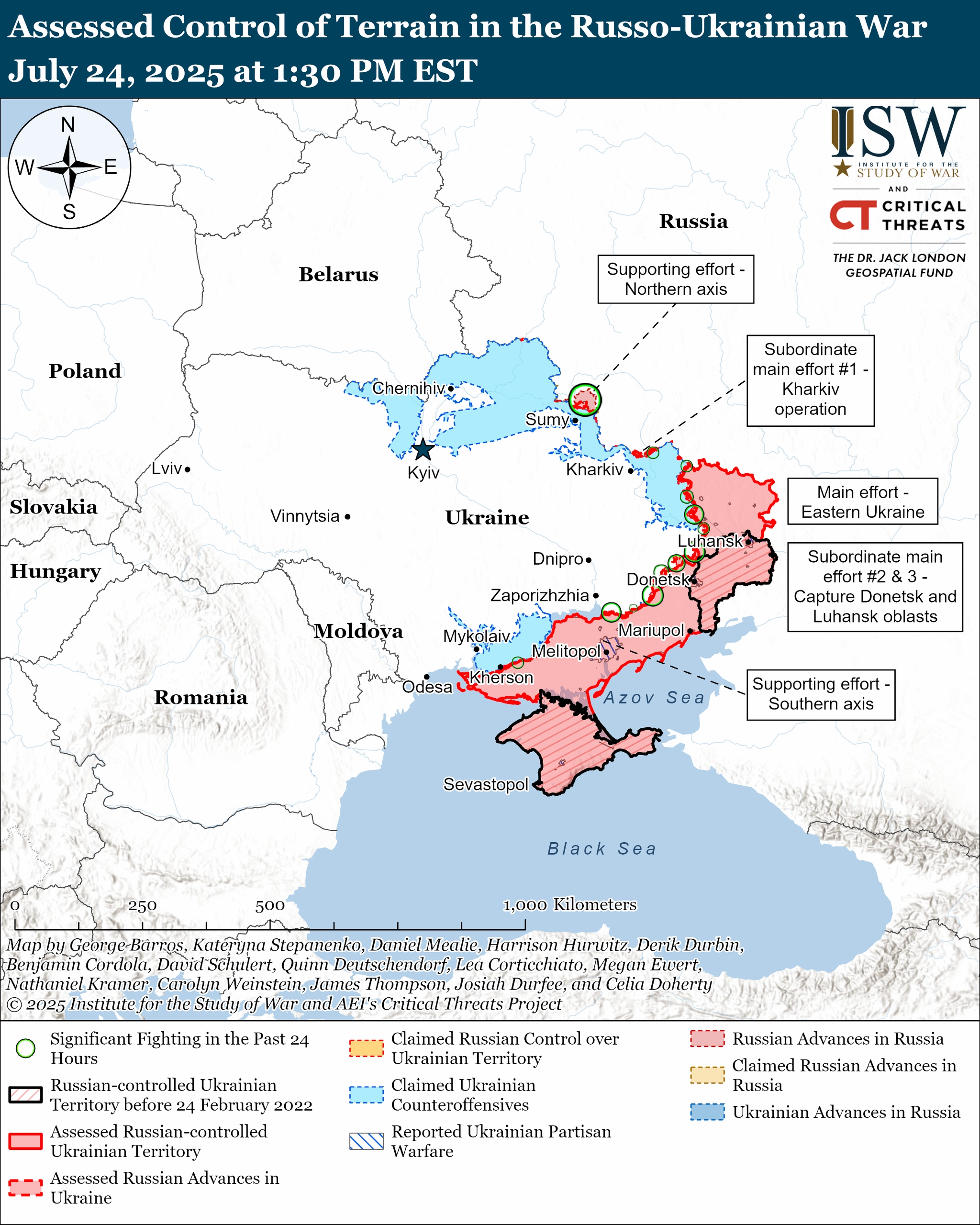
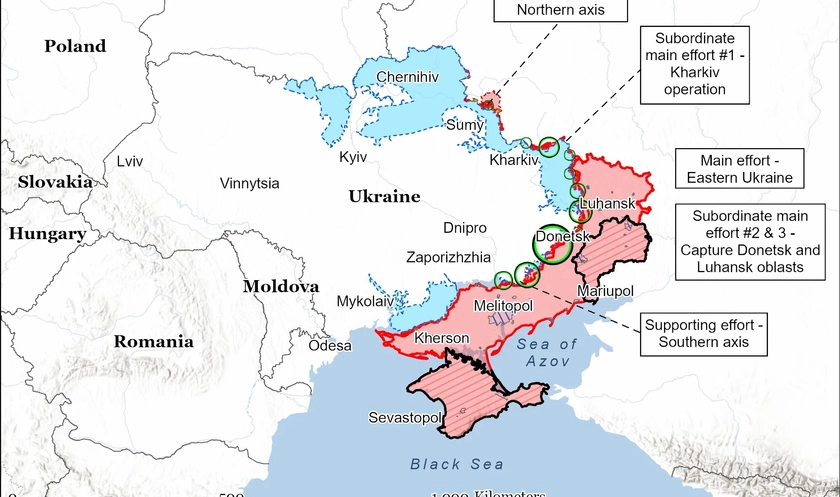
- Russian forces recently advanced in northern Sumy Oblast and near Kupyansk, Borova, Toretsk, and Novopavlivka.
JOIN US ON TELEGRAM
Follow our coverage of the war on the @Kyivpost_official.
Authors: Jennie Olmsted, Angelica Evans, Daria Novikov, Olivia Gibson, and Kateryna Stepanenko.
See the original here.
To suggest a correction or clarification, write to us here
You can also highlight the text and press Ctrl + Enter
You can also highlight the text and press Ctrl + Enter

ANALYSIS: Why Ukraine has Abandoned Four Years of Caution over Belarus
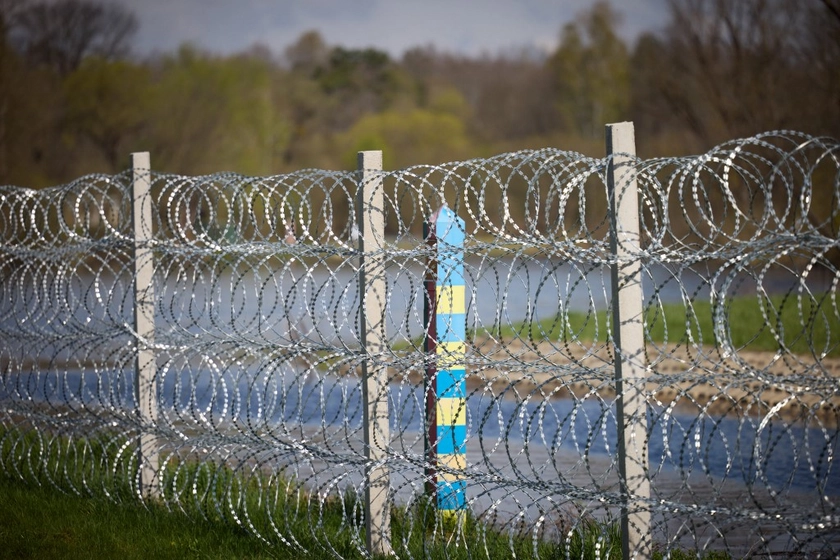
Ukraine has issued a public ultimatum to Belarus, demanding the removal of relay equipment used to guide Russian drone strikes.
June 28, 2026