


EN

EN


EN
The meeting between the US and Russian heads of state had started at around 10:30 p.m. Kyiv time, which would see the two discuss the war in Ukraine and potential ties restoration – stay tuned.
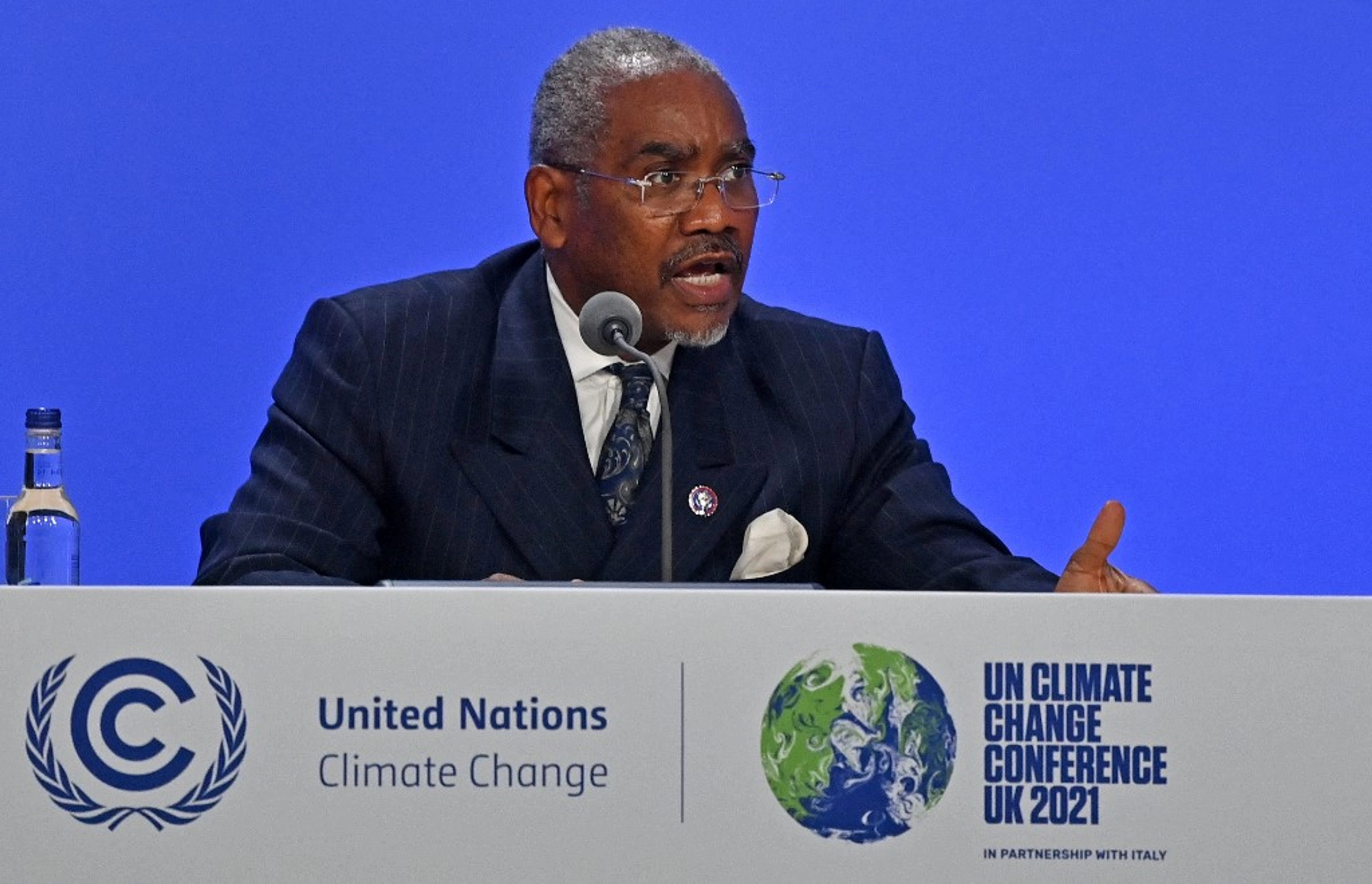
The top Democrat on the US House Foreign Affairs Committee criticized President Donald Trump on Friday for meeting with Russian President Vladimir Putin, calling the summit an “undeserved reward” for the Russian leader.
Rep. Gregory Meeks, D-NY, said in a statement that Trump “literally rolling out the red carpet” for Putin on American soil legitimized Russia’s aggression against Ukraine and “whitewashed Putin’s war crimes.”
Meeks said the meeting took place without Ukraine present and with no concessions from Russia, which he noted has continued to bomb Ukrainian schools and hospitals and abduct children.
“President Trump should have pressured Putin by imposing crushing sanctions on his war machine and providing Ukraine with the tools it needs to defend itself,” Meeks said.
The congressman also implored his Republican colleagues to “recapture the bipartisanship they once showed” in supporting Ukraine and to pass new sanctions and provide new assistance to the country.
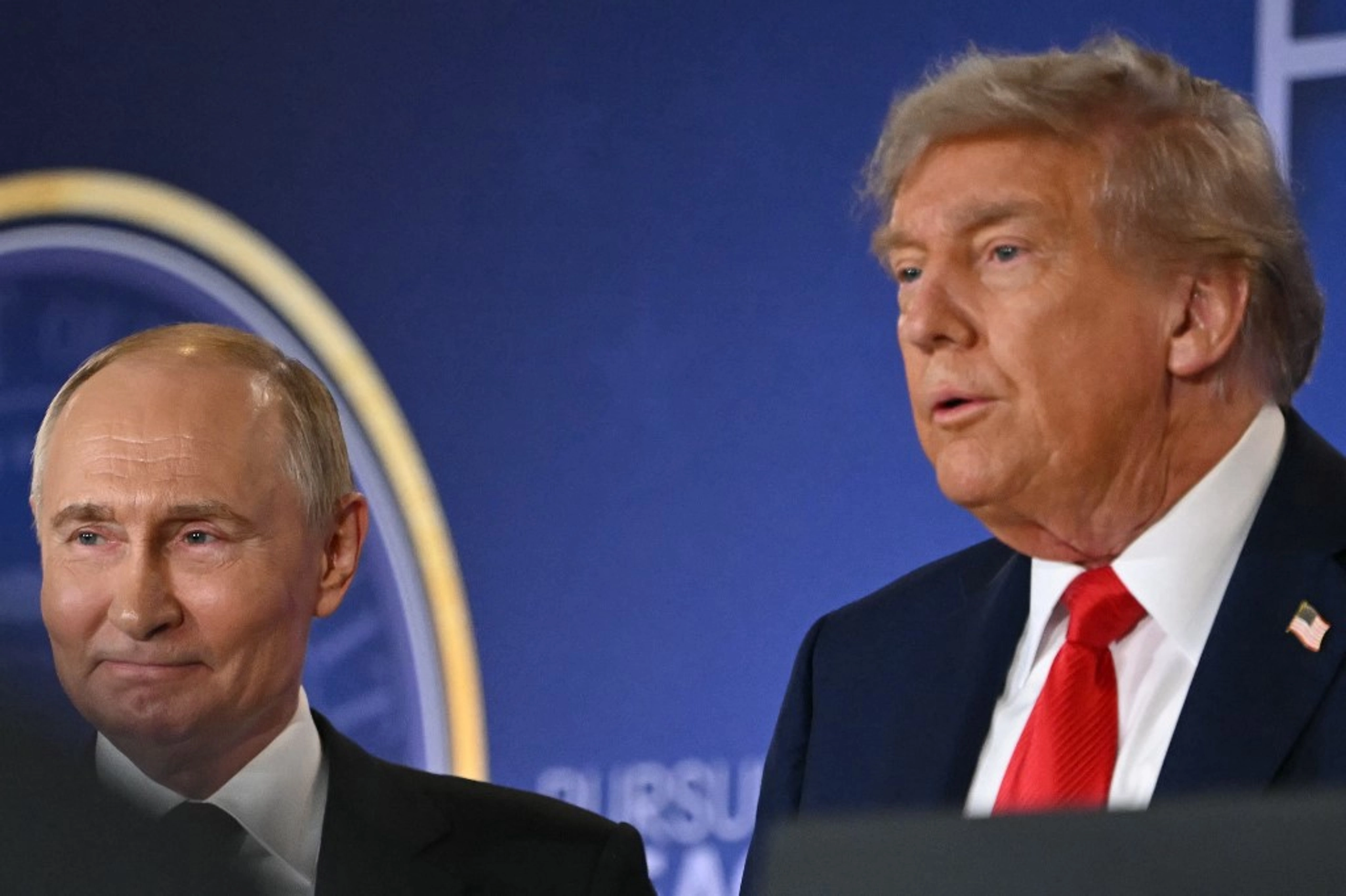
US President Donald Trump and Russian leader Vladimir Putin have held what the US president described as an “extremely productive meeting” in the latest diplomatic push to find a resolution to the ongoing conflict in Ukraine.
The US president, speaking at a press conference following the talks, offered a mix of optimism and caution, stating, “There’s no deal until there’s a deal.”
Trump outlined that while many points of agreement were reached, a few significant obstacles remain. “We’ve paid some headway,” Trump said, noting that only a “very few” points are left to be resolved, with one being particularly “significant.”
The meeting, which included key figures from the Trump administration as well as “tremendous Russian business representatives,” was described by the president as a testament to the US’s renewed global standing.
“We’ve become the hottest country anywhere in the world in a very short period of time,” he declared.
In a move to update allies and adversaries alike, Trump announced he would be making a series of phone calls, including to NATO and to Ukrainian President Volodymyr Zelensky, to brief them on the details of the meeting.
Read more about his full remarks here.
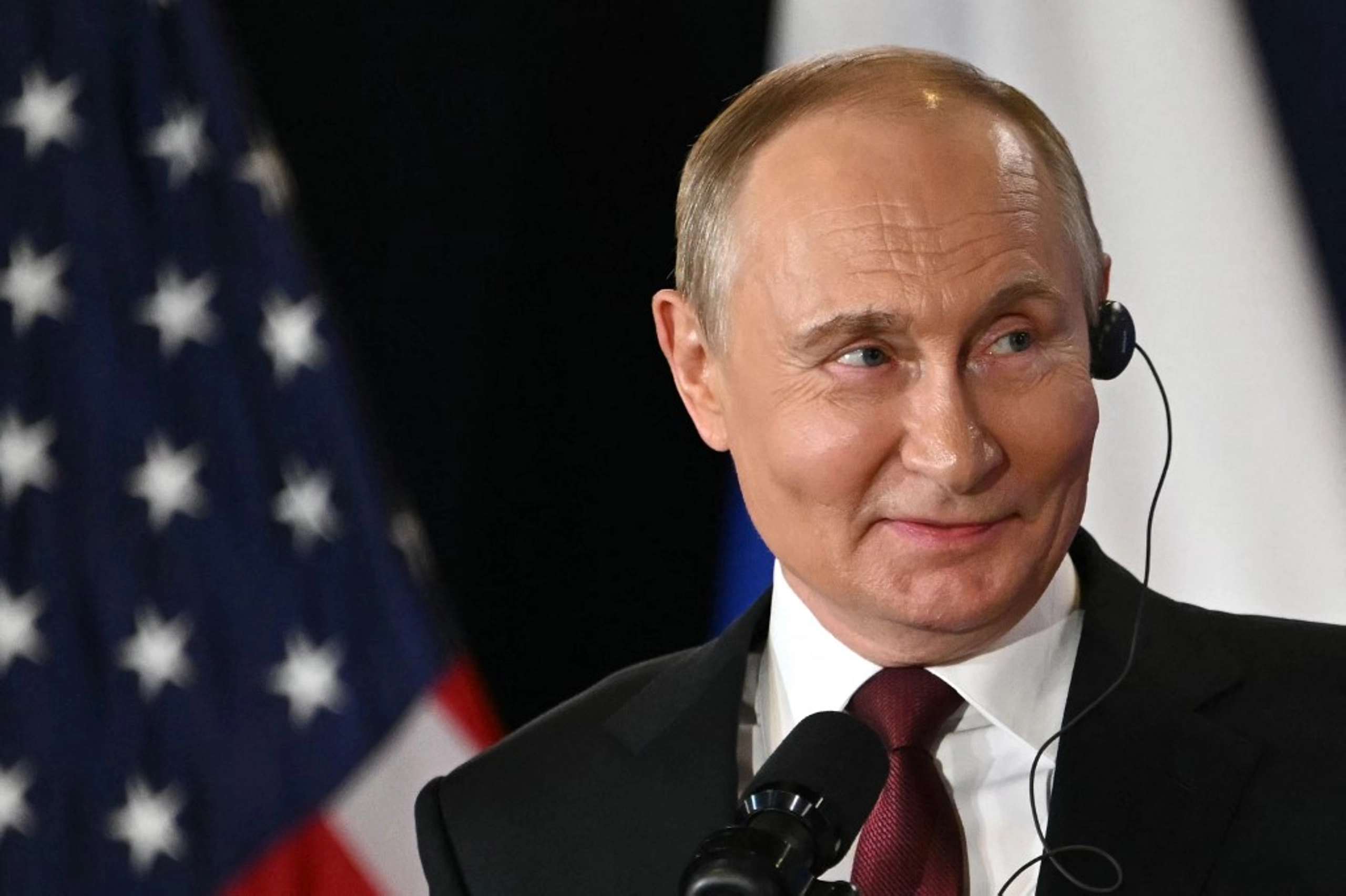
US President Donald Trump and Russian leader Vladimir Putin have finished their summit and press conference in Anchorage, Alaska.
Putin delivered the opening remarks – acting as the host, describing the negotiations as “held in a constructive atmosphere of mutual respect.”
Putin framed the conflict as a “tragedy” and a “terrible wound” for Russia, stressing that the Ukrainian nation and the Russian people share the “same roots.”
He reiterated that for a lasting settlement, it is necessary to “eliminate all the primary roots, the primary causes of that conflict” and “to consider all achievement concerns of Russia and to reinstate a just balance of security in Europe and in the world on the whole.”
He added that he and Trump had agreed on the need to ensure Ukraine’s security as well.
“Naturally, we are prepared to work on that,” Putin said, expressing hope that the agreements reached would “pave the path towards peace in Ukraine.”
Read more about his full remarks here.
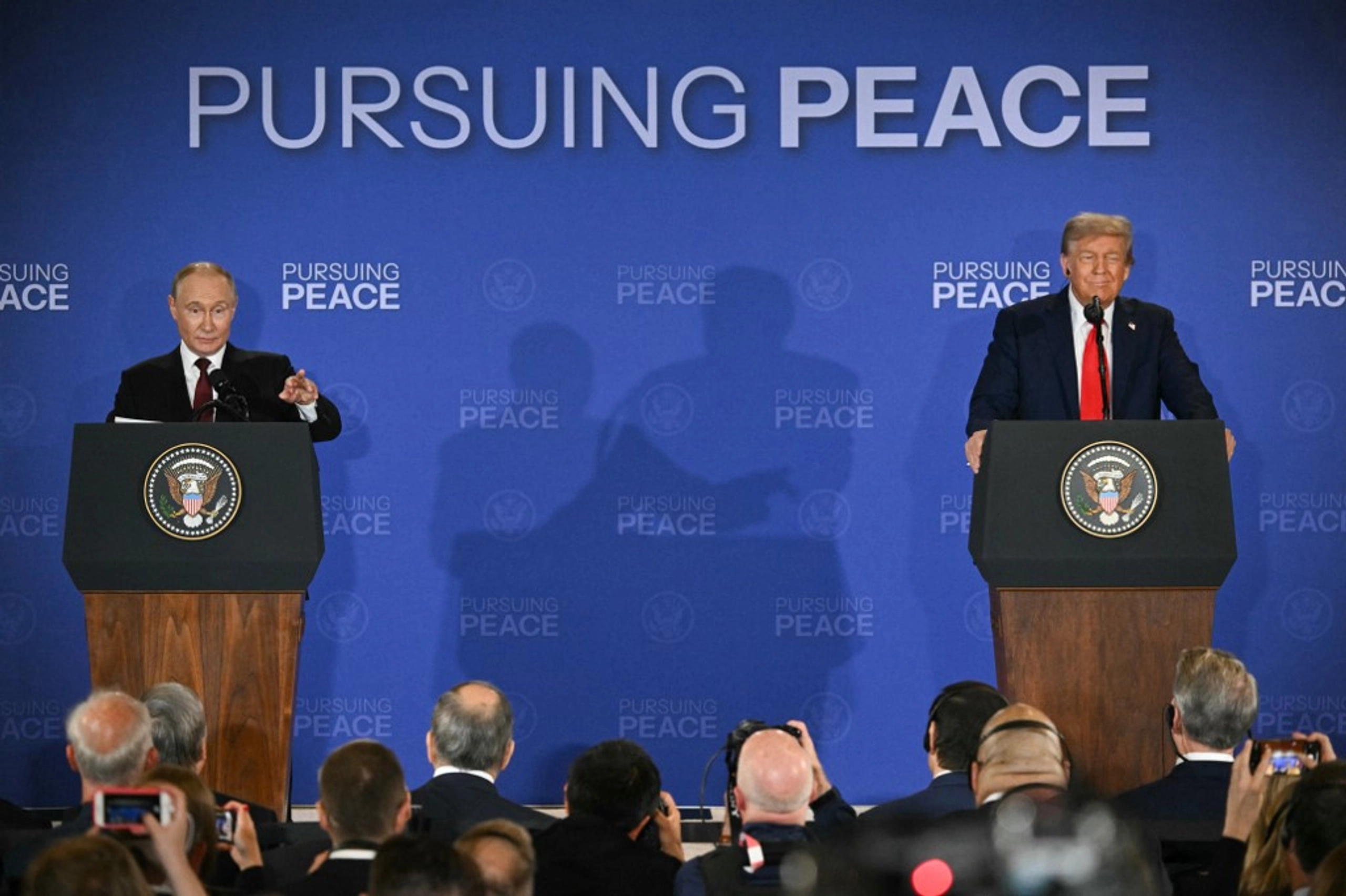
The highly anticipated press conference between US President Donald Trump and Russian leader Vladimir Putin has kicked off in Anchorage, Alaska.
Putin delivered the opening remarks – acting as the host.
The presidents are expected to discuss the outcome of their private meeting held earlier on Friday morning on the war in Ukraine.
The press pool has moved into the press conference seating area at Joint Base Elmendorf-Richardson in Anchorage, Alaska, in anticipation of a press conference between US President Donald Trump and Russian leader Vladimir Putin.
White House staff have also filled into the front rows.
It’s been 2.5 hours since US President Donald Trump and Russian leader Vladimir Putin began their closed-door 3-on-3 meeting, and the silence from both delegations is becoming deafening.
The typically garrulous American entourage, known for its rapid-fire tweets and gaggles, has gone entirely quiet.
Likewise, the Kremlin’s famously disciplined communications team has offered nothing but tight-lipped non-answers.
Inside the room, only three representatives from each side (along with translators) are present, an unusually small group for a meeting of such magnitude.
With the meeting already stretching well past its scheduled end time, it’s unclear whether the sides are making a breakthrough on a complex issue or are locked in a deep stalemate.
The reporters wait, watching the door for any sign of a breakthrough – or a breakdown.
The Trump–Putin meeting is still ongoing as of 1 p.m. in Alaska (1 a.m. Kyiv time). We’re still holding in the tent with hundreds of reporters here. No movements yet.

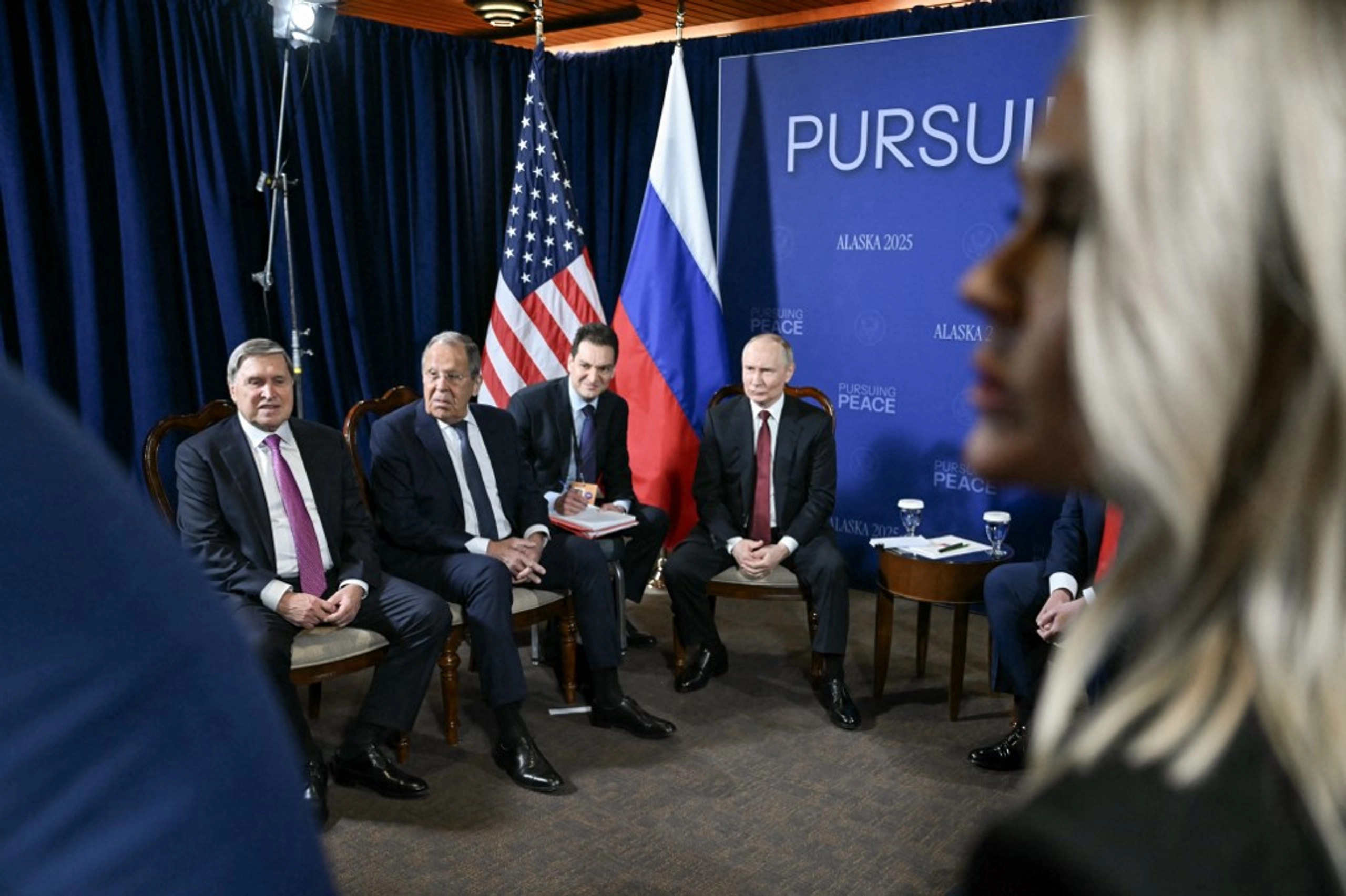
As Trump and Putin gather in Alaska, the Kremlin delegation underlines Moscow’s real agenda: not peace, but prosecuting a war through propaganda, economics, and power.
Russian Foreign Minister Sergey Lavrov, Defense Minister Andrey Belousov, and sanctioned financier Kirill Dmitriev headline the talks, joined by Finance Minister Anton Siluanov, and Putin aide Yuri Ushakov.
Each plays a key role in sustaining Russia’s invasion of Ukraine: disinformation, sanctions-busting, fiscal militarization, and backroom diplomacy. Far from neutral negotiators, they’re the machinery behind Moscow’s war effort.
Read the full analysis here.

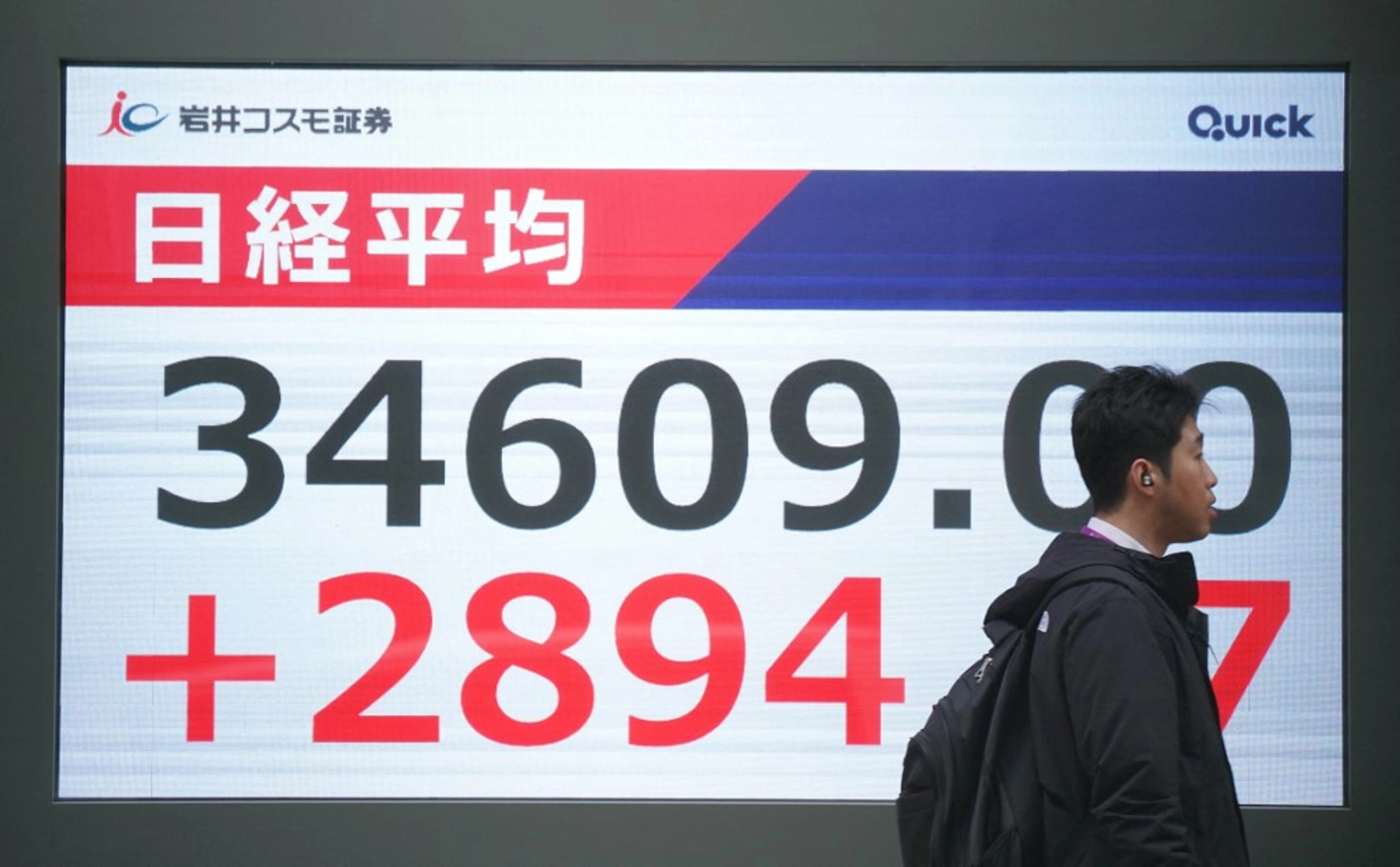
Stock markets wavered on Friday as investors digested mixed American economic data and monitored a landmark US-Russia summit aimed at ending the war in Ukraine.
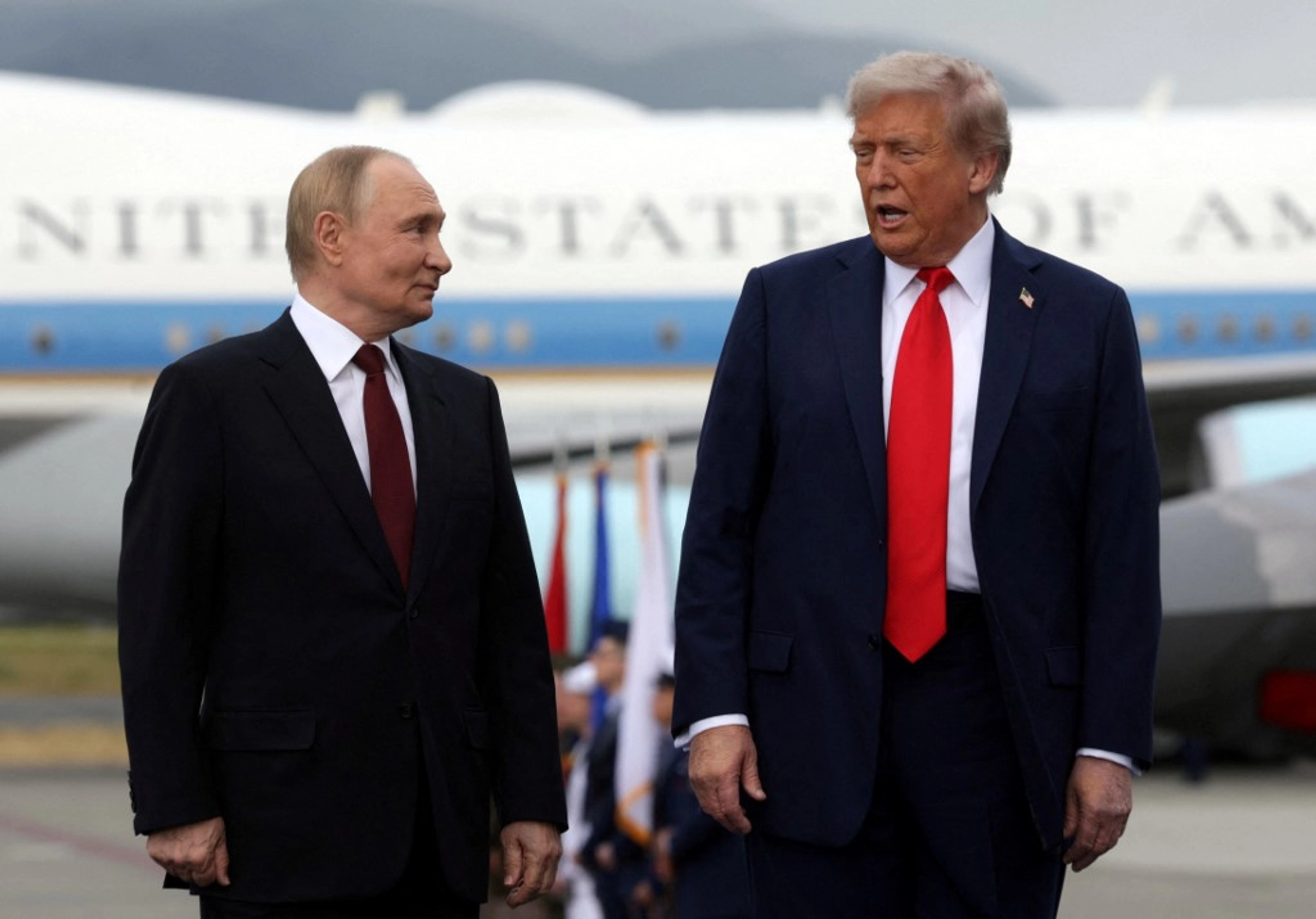
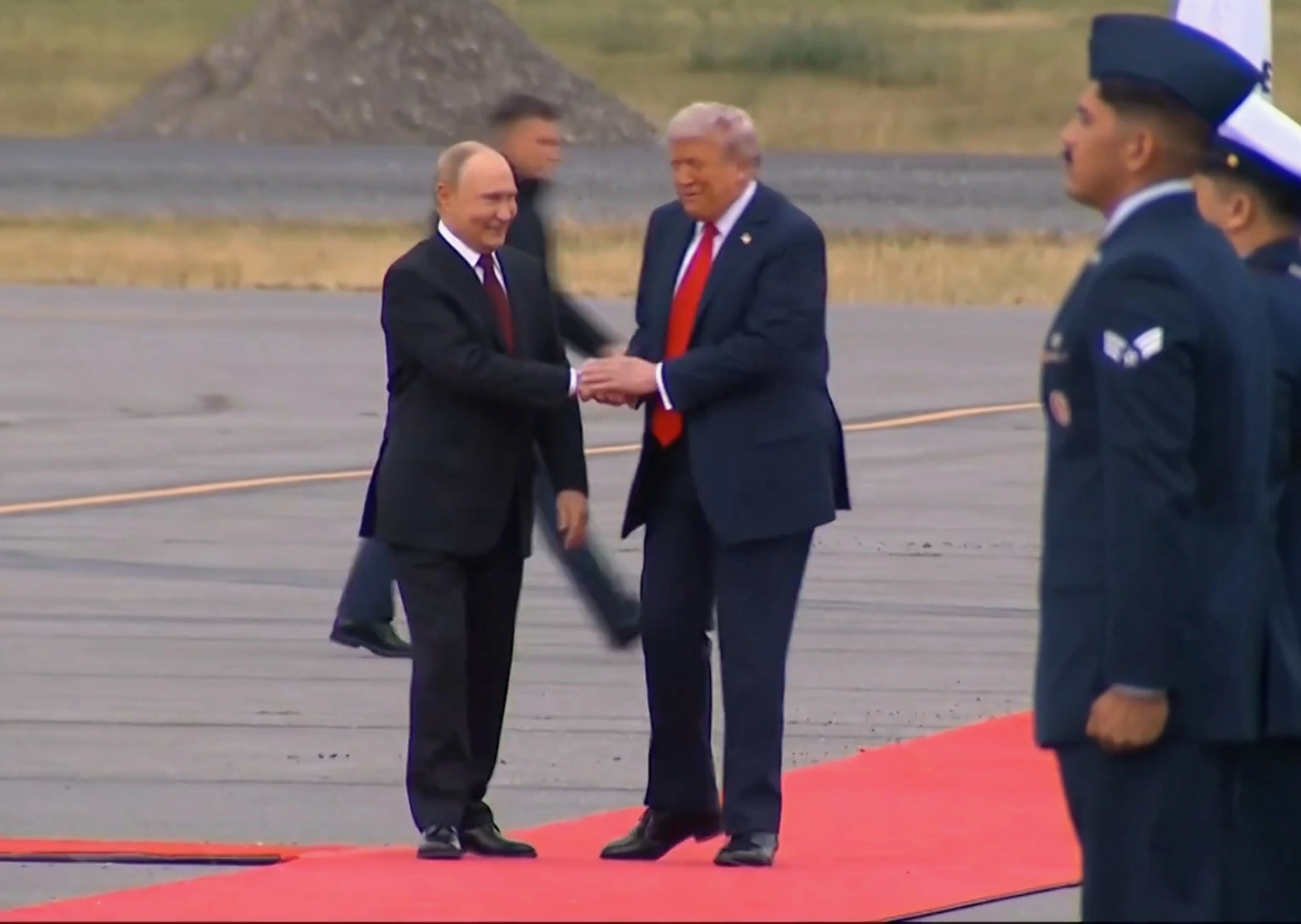
In choreographed drama, US President Donald Trump and Russia’s Vladimir Putin each arrived in their presidential jets and greeted one another on the tarmac of a US air base, before walking a red carpet together to an honor guard salute.
Trump, setting off for the Alaska meeting with Putin, had described his Russian counterpart as a “smart guy” and hailed a “good respect level” on both sides.
The possibility of an end to a conflict that Putin began in 2022 had put the markets in optimistic mood, analysts said, although oil prices had been volatile owing to Russia’s status as a major producer and uncertainty over the summit’s outcome.
After rallying about 2% on Thursday, oil prices gave back most of those gains Friday.
Wall Street stocks finished mostly lower following a mixed round of economic data.
London and Frankfurt ended lower while Paris rallied to finish in positive territory.
Tokyo’s main stocks index extended a record-run higher following Japanese economic growth data that beat expectations.
US retail sales climbed 0.5% in July to $726.3 billion from June, in line with analyst expectations and a solid performance after numerous tariff announcements by Trump.
But the Federal Reserve’s index for industrial production edged down in July, while the University of Michigan’s consumer sentiment survey fell for the first time in four months.
Steve Sosnick of Interactive Brokers said Friday’s reports amounted to a “difficult combination” of data that the market took in stride.
“When the news is good, (stocks) react really positively,” he said. “And when the news isn’t good, they just go down a little.”
Trump continued his tariff campaign on Friday, saying he would soon announce massive import duties on semiconductors.
Shares in chip giants Nvidia and AMD were down following the news.
Markets were also waiting for the Trump-Putin meeting, with Russia’s foreign minister saying his country would not make guesses on the outcome.
Putin, landing in Alaska, stepped onto Western soil for the first time since he ordered the invasion of Ukraine in February 2022, a war that has killed tens of thousands of people.
Every word and gesture will be closely watched by European leaders and by Ukrainian President Volodymyr Zelensky, who was not invited and has publicly refused pressure from Trump to surrender territory seized by Russia.
See the key market figures here.

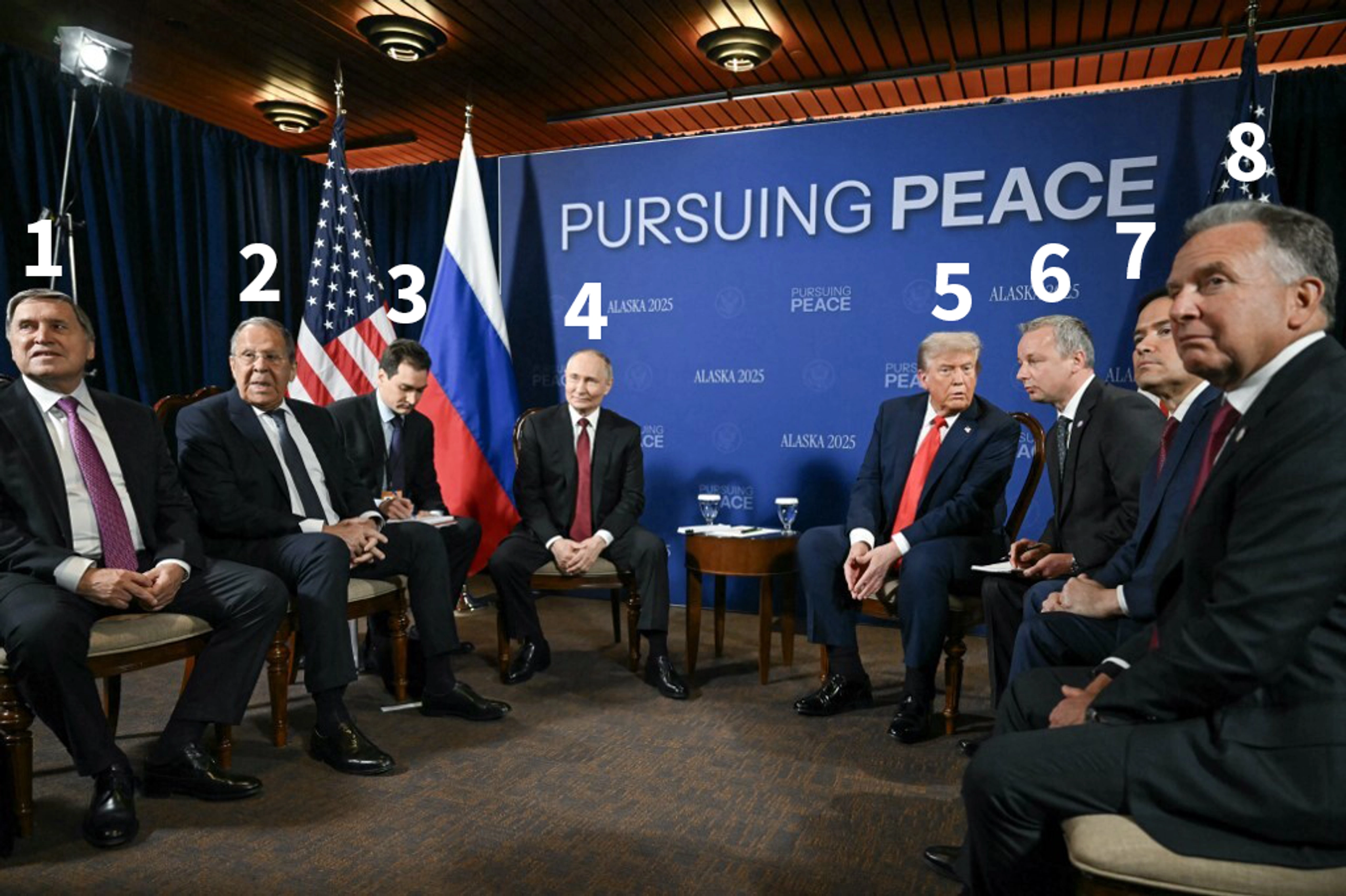
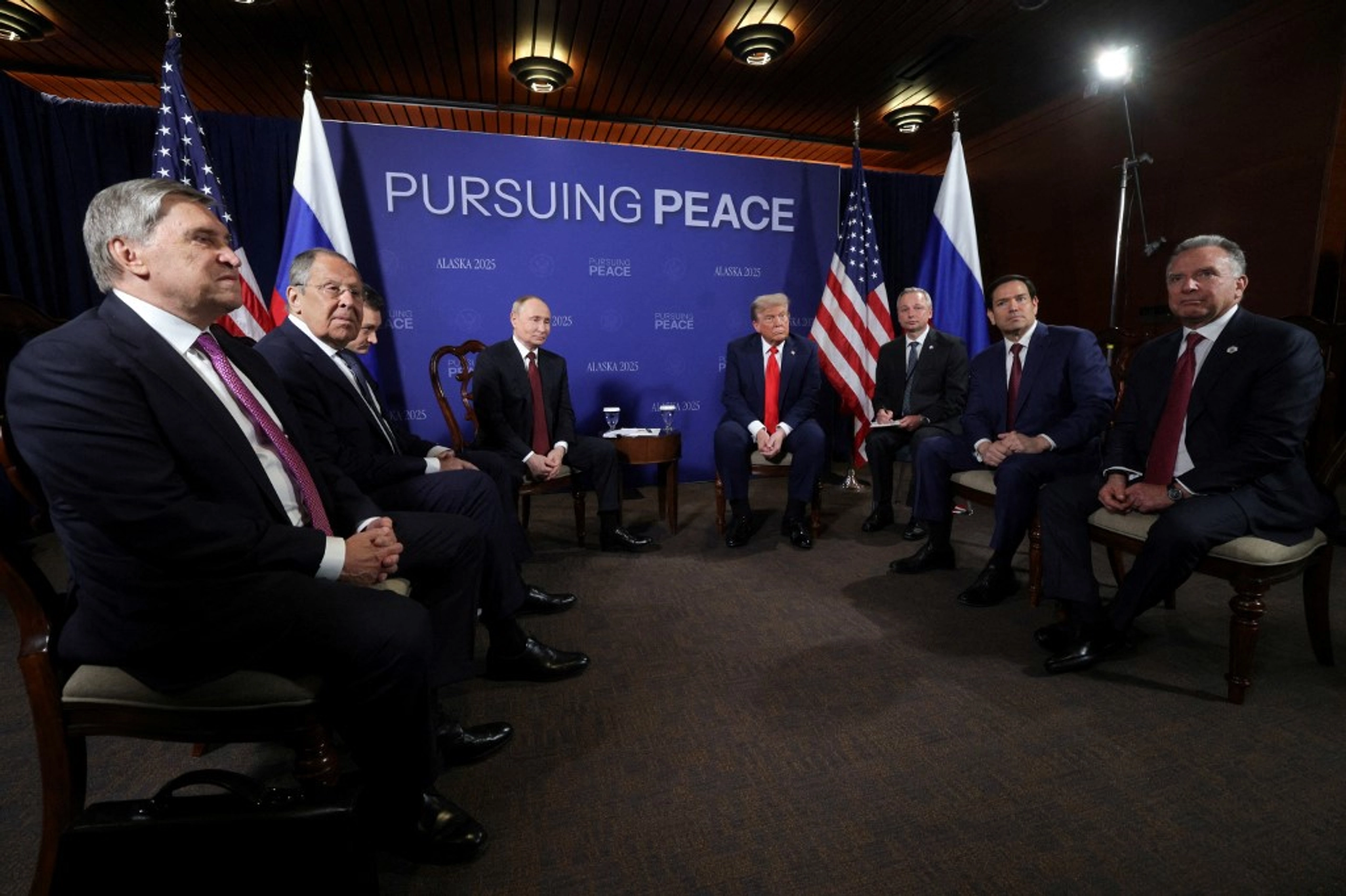
Friday’s summit is held in a three-on-three format – and here are the people sitting alongside Trump and Putin at the table:
1: Yuri Ushakov
Ushakov is a trusted veteran presidential aide who has flanked Putin for decades. He previously spent 10 years in Washington as Russia’s ambassador to the United States and is fluent in English.
2: Sergey Lavrov
Lavrov has been Russia’s foreign minister for more than two decades, prevailing over its increasingly bitter turn against the West. He was once dubbed by the UN diplomatic corps as “Minister Nyet” for his ability to impede US and European diplomatic initiatives. Western diplomats have said that he is little more than a mouthpiece and lacks real influence over Moscow’s foreign policy.
3: An interpreter
4: President Putin
5: President Trump
6: A second interpreter
7: Marco Rubio
Rubio, the US secretary of state, was once known for his strongly-worded criticisms of Putin: he called the Russian president “bloodthirsty” and “a butcher” in 2022, and “a gangster and a thug” in 2015. Recently he has adopted a more conciliatory tone towards Putin and he led the first senior US delegation to negotiate with Kremlin officials in Saudi Arabia earlier this year.
8: Steve Witkoff
Trump’s special envoy, Witkoff is also a longtime friend of the president and somebody whose opinion he trusts. He is also familiar with Putin, having met him several times this year in Moscow, though his visits were not met with any breakthrough in negotiations.
Speaking to Kyiv Post, Daniel Fried, former assistant secretary of State for European and Eurasian affairs in the Bush and Obama administrations, said “the initial greeting is less important the what happens at the meeting and how Trump portrays it.”
“Trump needs to push Putin to make a serious move to end the war, like a full ceasefire,” he added.
Another veteran diplomat Richard Kauzlarich, and former presidential envoy to the Newly Independent States during the Bill Clinton administration, suggested to Kyiv Post that Trump “clearly wanted to have this meeting.”
“Putin is someone he can relate to – like he did with [Azerbaijan’s Ilham] Aliyev and apparently with [Belarus dictator Alexsander] Lukashenko during their phone call today. More telling was the bad optics of [Russian Foreign Minister Sergey] Lavarov wearing the USSR sweatshirt. That was not a reminder of the past but a signal of the future.”
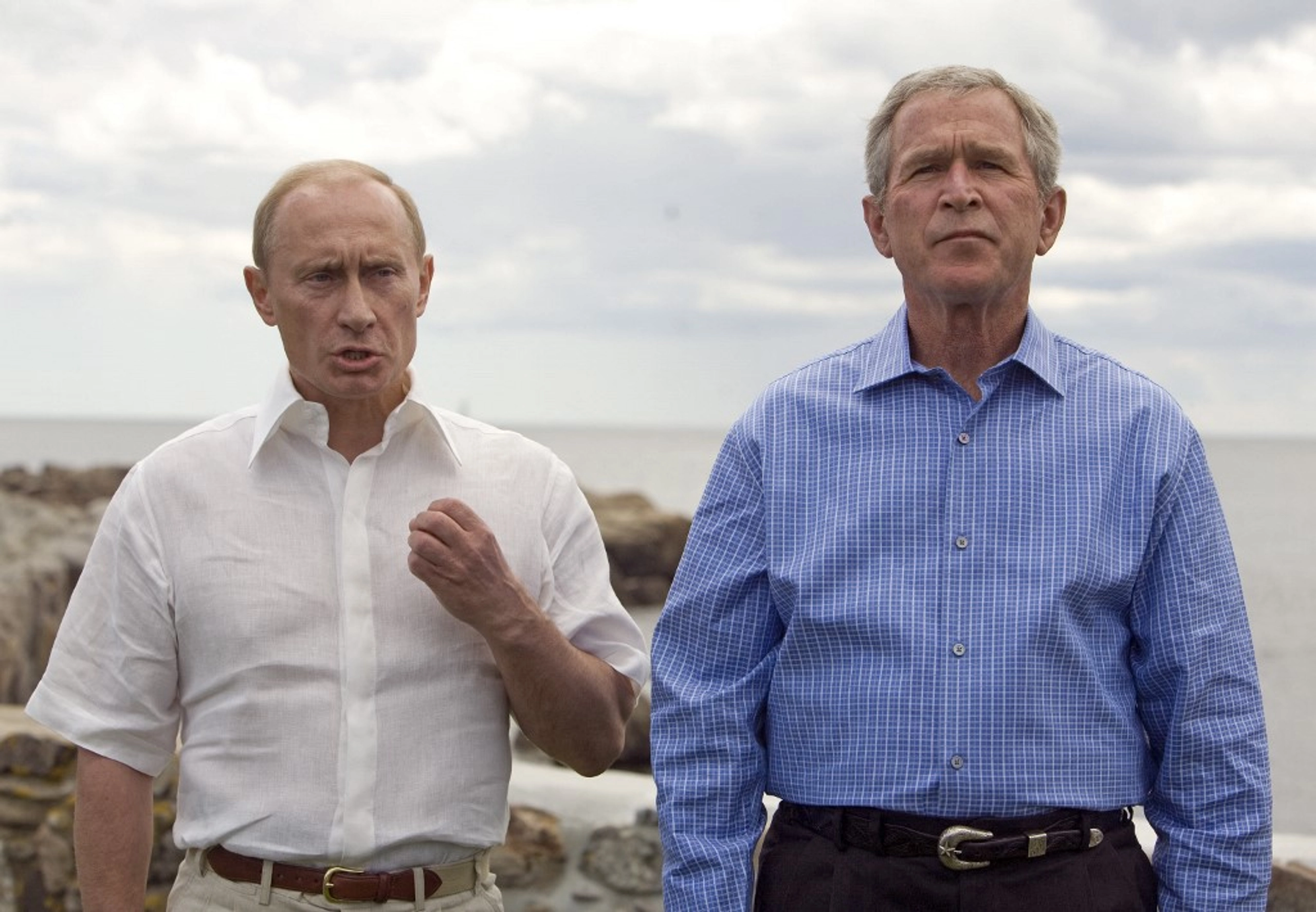
Russian leader Vladimir Putin has been reportedly enthusiastic about visiting Alaska for the ongoing summit – but how many times has he visited?
As it turns out, the Alaska summit marks the eighth in Putin’s presidency, a role he has held for roughly 20 years (excluding his brief stint as prime minister).
As the leaders talk behind closed doors, here’s a look at the Russian leader’s past visits to the US – which might provide a glimpse into his journey from a pro-Western figure to an increasingly autocratic ruler.
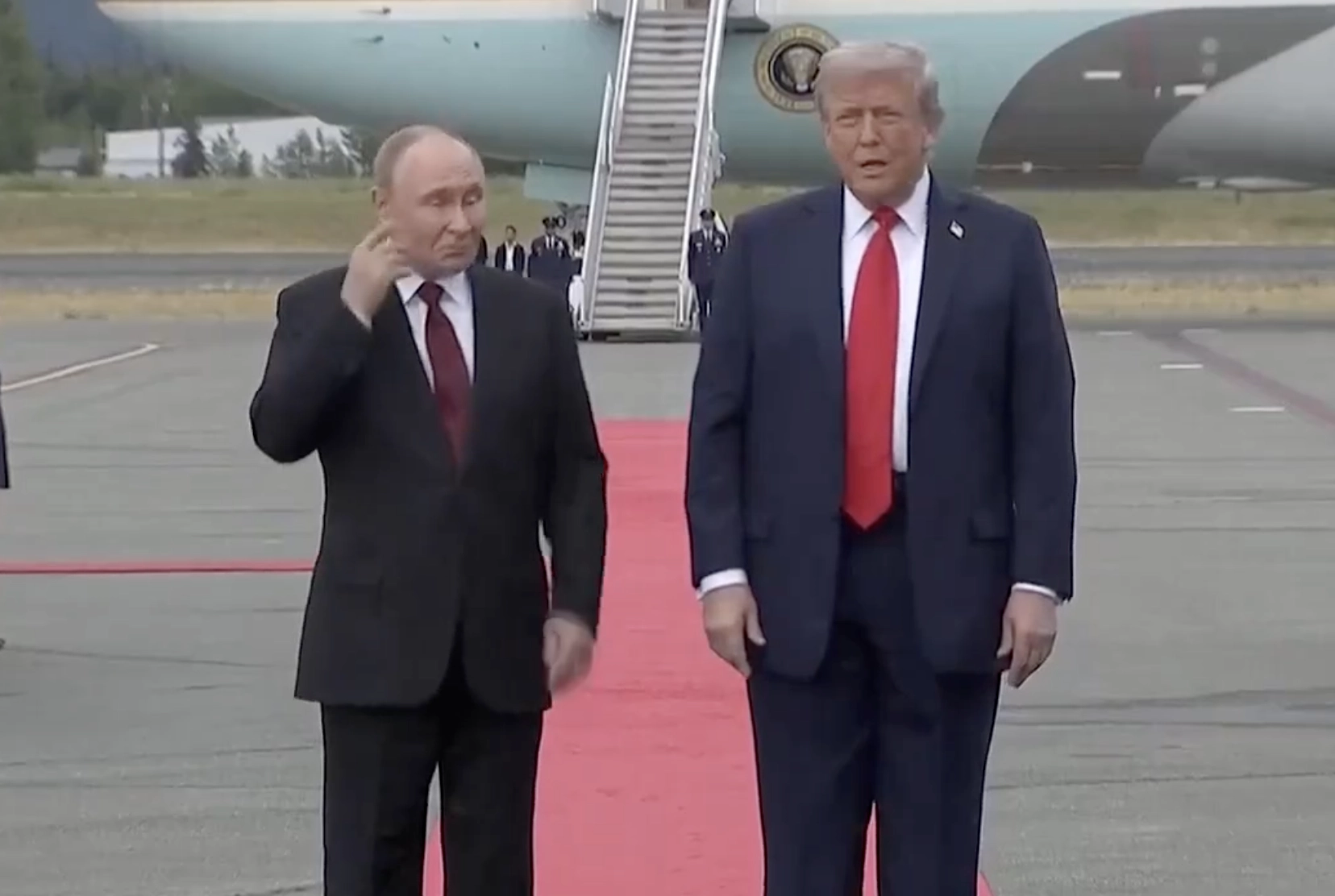
During a pre-meeting photo-op with US President Donald Trump in Alaska, Putin was asked about civilian killings in Ukraine and gestured as if he didn’t understand the question.
Russian leader Vladimir Putin smirked and gestured when questioned about Ukrainian civilian killings on Friday, soon after landing in Alaska for his meeting with US President Donald Trump.
At the far end of the red carpet rolled out for Putin’s arrival, the Russian and US presidents shared a cordial display, enjoying a long handshake in front of the press.
Putin’s reception by reporters was less warm, with one heckling him with the questions “Mr Putin, did you underestimate Ukraine?” and “President Putin, will you stop killing civilians?”
In response to the second question, Putin gestured at his ear with a smirk, as if to indicate that he could not hear the reporter over the sound of the roaring engines.
See the video here.

At around 11:30 a.m. local time (10:30 p.m. Kyiv time), the highly-awaited summit between US President Donald Trump and Russian leader Vladimir Putin in Anchorage, Alaska had officially started.
The leaders are expected to discuss the war in Ukraine and potential restoration of ties between Washington and Moscow.
The talks are expected to last six to seven hours, Russian state media claimed earlier on Friday.
A joint press conference is expected following the meetings.
Catch up on the summit details – namely why they are meeting and what preceded the meeting – in this Kyiv Post report.
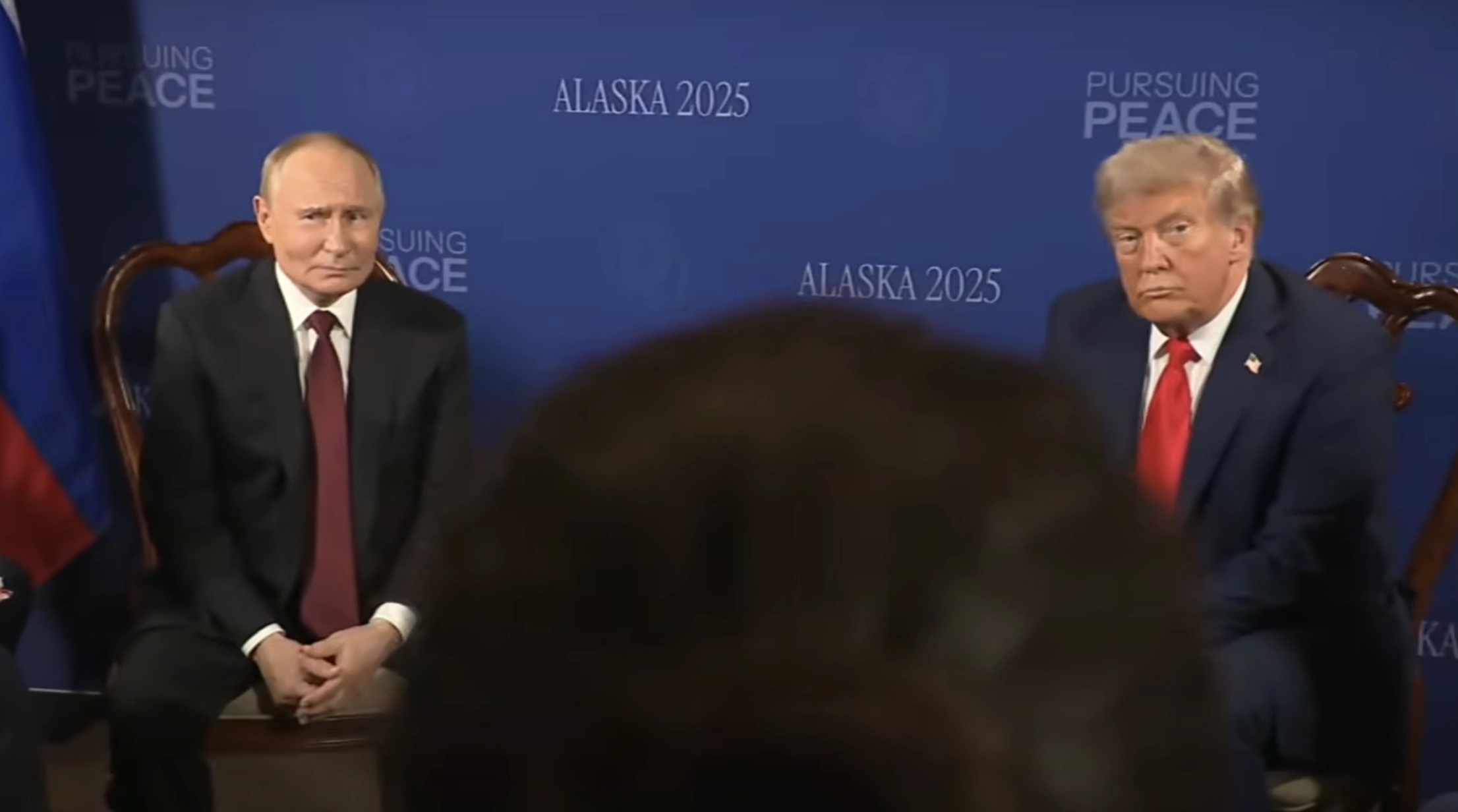
At 11:26 a.m. local time (10:26 p.m. Kyiv time), the press pool entered a room to find US President Donald Trump and Russian leader Vladimir Putin seated in silence. Their respective delegations sat to one side. The two sat before a blue banner with “Pursuing Peace” emblazoned across it.
“Thank you very much. Thank you,” Trump said as the press was ushered out a minute later.
Trump and Putin have arrived at the destination for the summit, according to Kyiv Post’s Chief Washington Correspondent on the scene.

Russian state-affiliated journalists have complained that they were made to stay overnight in a makeshift camp at a local stadium with folding beds and little internet access ahead of Friday’s Alaska talks.
When journalists from Russia’s state media organizations flocked to Alaska on Thursday to report on the Ukraine war summit between US President Donald Trump and Russian leader Vladimir Putin, they were told that hotels in Anchorage were booked up.
Read the full story here.
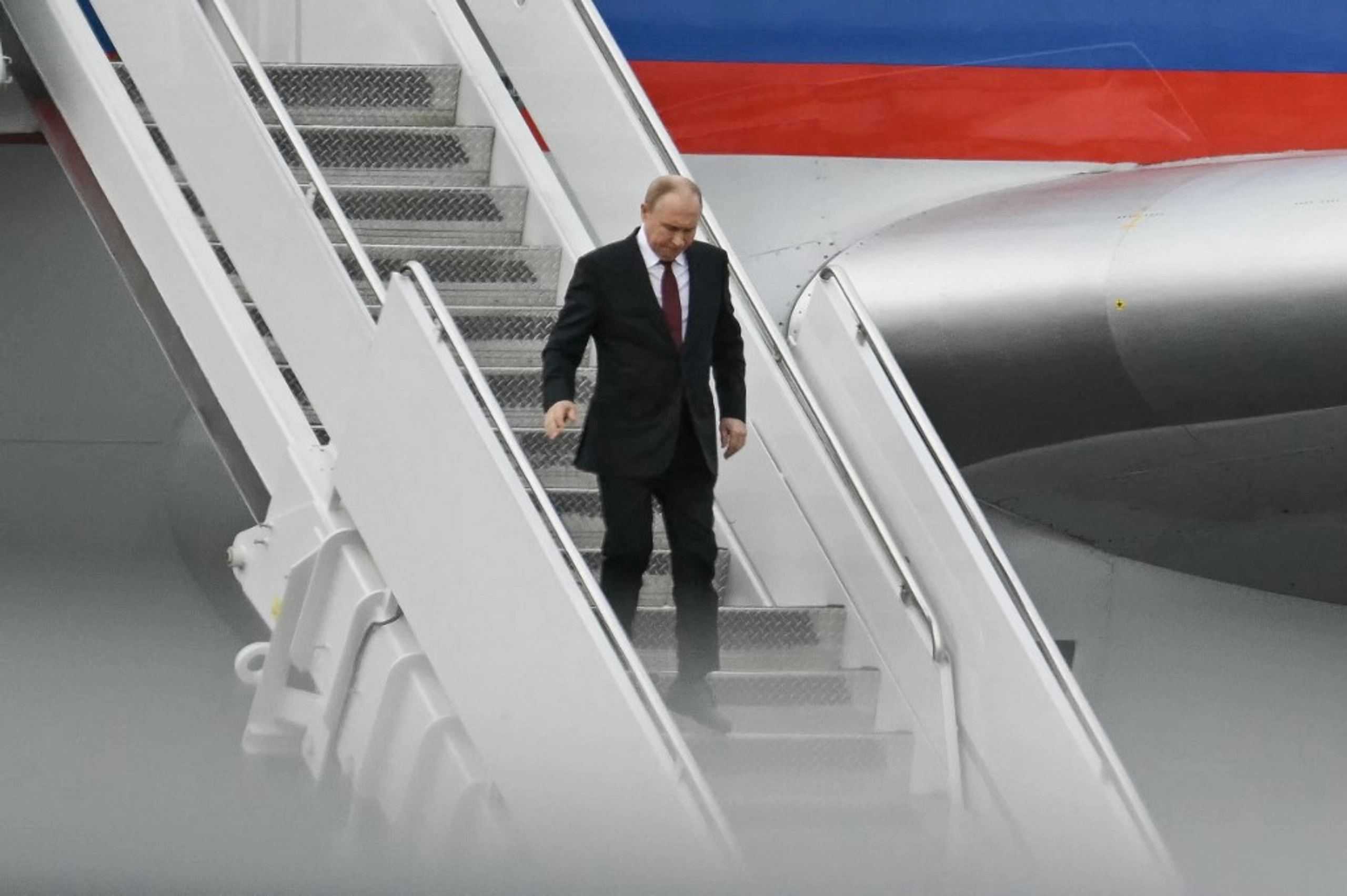
Both Trump and Putin landed in Alaska on Friday, with the two greeting and shaking hands at Elmendorf Air Force Base.
Trump, standing on the red carpet, waited for Putin as the latter approached. Both smiled at each other, shook hands, and began walking down the red carpet flanked by the four US stealth fighters, two on each side.
The two ostensibly had a brief chat, the content of which was inaudible.
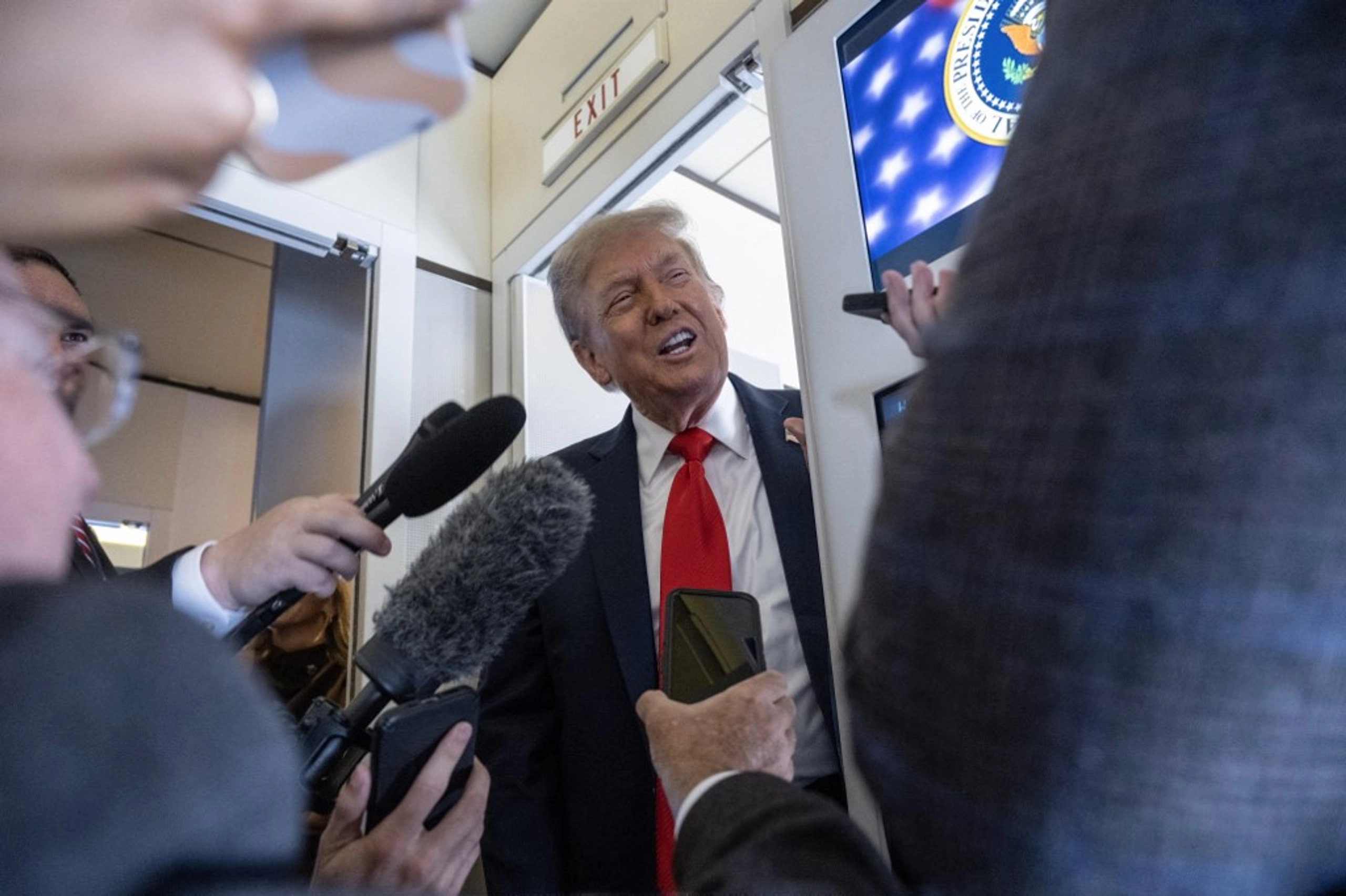
US President Donald Trump has landed in Anchorage, Alaska, in preparation for his meeting with Russian leader Vladimir Putin scheduled for later today.
Air Force One departed around 6:45 am (local time) from Washington, DC with Trump and a small delegation, including Secretary of State Marco Rubio and special envoy to Russia Steve Witkoff.
Read the full report here.
White House Press Secretary Karoline Leavitt confirmed the meeting will be held in a three-on-three format, with US Donald Trump joined by Secretary of State Marco Rubio and Special Envoy Steve Witkoff – rejecting earlier Kremlin claims it would begin as a one-on-one before expanding to full delegations.
Rubio, Witkoff, Treasury Secretary Scott Bessent, Commerce Secretary Howard Lutnick, Defense Secretary Pete Hegseth, and Chief of Staff Susie Wiles will then take part in a subsequent meeting, according to Leavitt.
Trump’s Ukraine Envoy Keith Kellogg has been notably absent.

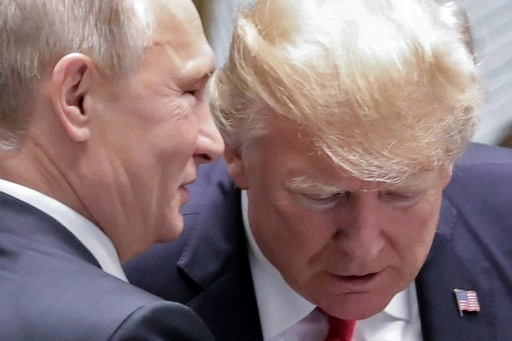
They shook hands under the flashes of cameras in Hamburg, held closed-door talks in Helsinki, and exchanged diplomatic pleasantries at international forums. Over eight years, US President Donald Trump and Russian leader Vladimir Putin have met in person six times, and on Friday a seventh meeting will be added to that list – in Alaska, at a moment when war, sanctions and the future architecture of global security are at stake.
Given that their previous meetings not only shaped US-Russia relations but also had a lasting impact on global diplomacy, this upcoming summit is certain to capture worldwide attention. But how many times have Trump and Putin met before? When did their relationship begin? And what have these personal encounters revealed about their approach to global issues?
The relationship between Donald Trump and Vladimir Putin began long before high-profile summits and global press conferences. Back when he was still a businessman, Trump openly praised the Russian leader, calling him a “tough guy” and “smart.”
Whether any unofficial meetings took place before Trump’s presidency remains unclear. However, during his time as US president, between 2017 and 2021, he officially met with Putin six times. The first of these encounters took place on July 7, 2017, at the G20 summit in Hamburg, Germany.
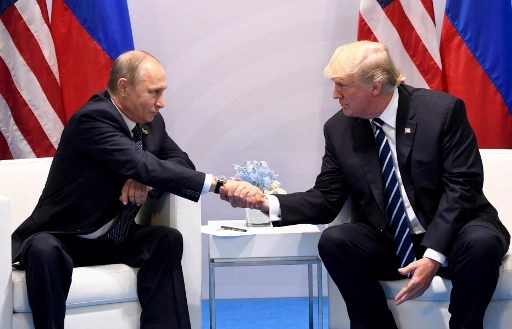
This long-anticipated conversation lasted more than two hours – far longer than planned. The main topic was Russia’s interference in the 2016 US presidential election. Putin flatly denied any involvement, and Trump did not press the issue of accountability. The leaders also discussed combating cyberattacks, the conflict in Syria, and ways to de-escalate it.
“Sanctions were not discussed at my meeting with President Putin. Nothing will be done until the Ukrainian & Syrian problems are solved!” Trump wrote at the time on what was then Twitter (now X).
Although the meeting brought no breakthrough on the war in eastern Ukraine or the lifting of sanctions, it produced several tangible outcomes: an agreement on a ceasefire in certain areas of Syria and the appointment of Kurt Volker as the US Special Envoy to Ukraine. Despite the lack of major diplomatic progress, the encounter became a symbol of direct dialogue between the two leaders after a prolonged period of tension between the two countries.
The second official meeting between Trump and Putin took place on Nov. 11, 2017, in Da Nang, Vietnam, during the Asia-Pacific Economic Cooperation (APEC) summit. This time, there was no formal stand-alone summit, but their multiple brief interactions on the sidelines – from handshakes to private conversations – drew just as much attention as official talks.
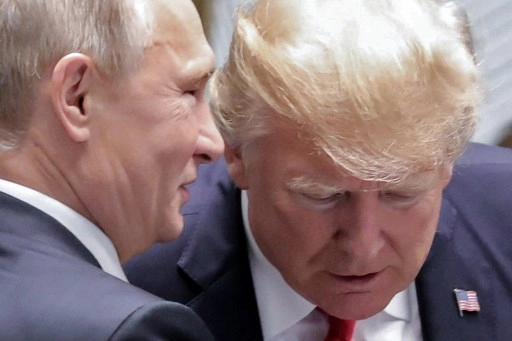
Unlike their first meeting in Hamburg, this one was informal and brief but again touched on the war in Syria and the issue of Russia’s interference in the 2016 US election. Later, Trump noted that the Russian leader denied any involvement:
“Every time [Putin] sees me, he says: ‘I didn’t do it,’ and I really believe that when he tells me that, he means it.”
The leaders briefly touched on Ukraine, but no breakthrough agreements were reached.
On July 16, 2018, in Helsinki, Finland, Trump and Putin held their third official meeting – the first full-scale bilateral summit between the leaders of the two countries.
The event included a closed two-hour one-on-one conversation with only interpreters present, a working lunch with their delegations, and a joint press conference that later sparked an international and domestic scandal.
During the talks, the sides discussed a wide range of issues: arms control, the situations in Syria, Iran, and Ukraine, as well as cybersecurity and economic cooperation. However, the diplomatic outcomes quickly took a back seat to the political firestorm triggered by Trump’s remarks at the press conference.
Answering a question from journalists about Russia’s interference in the 2016 US presidential election, Trump effectively cast doubt on the conclusions of his own intelligence agencies and publicly backed Putin’s categorical denial.
“I have great confidence in my intelligence people, but I will tell you that President Putin was extremely strong and powerful in his denial today,” Trump said.
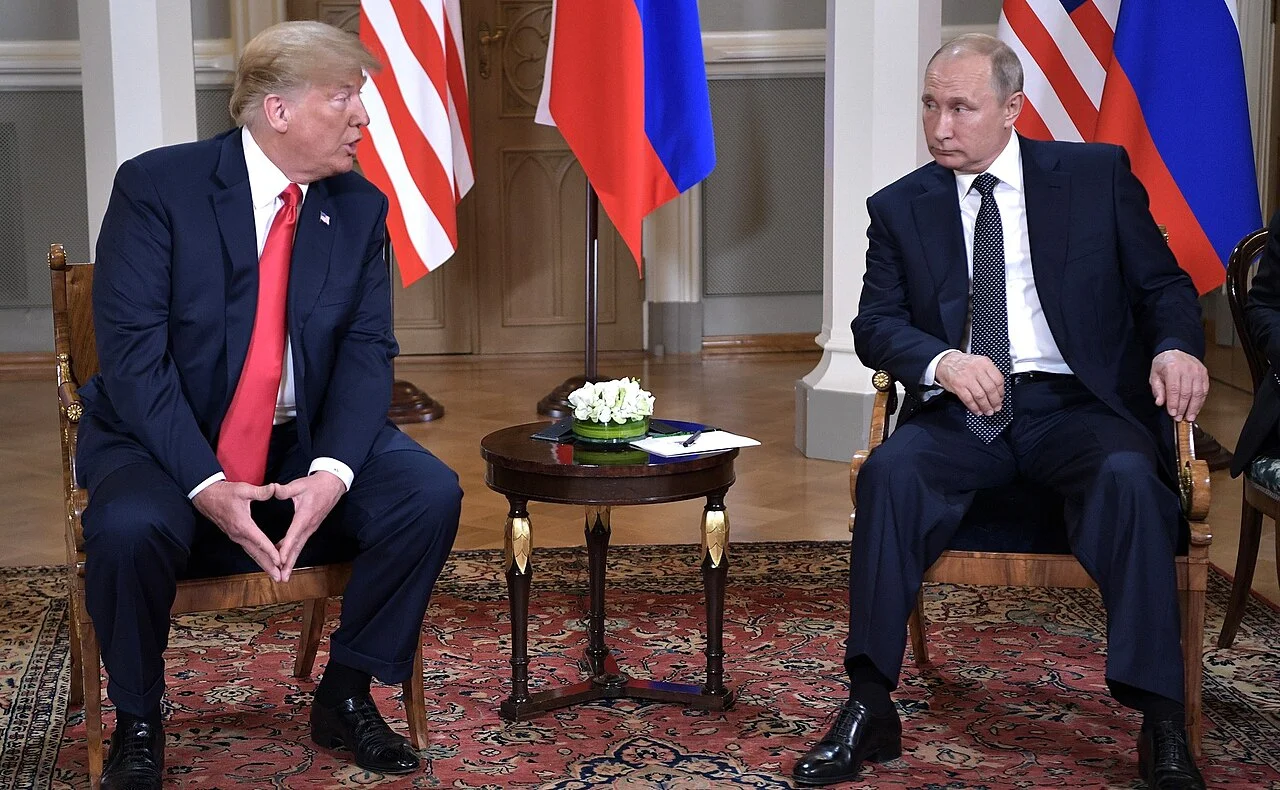
The reaction in the United States was immediate: Democrats accused him of undermining national security, and even some Republicans criticized the president’s stance as contradicting the country’s interests.
After the intense public scrutiny of the controversial Helsinki summit, Trump and Putin planned to meet again on Dec. 1, 2018, on the sidelines of the G20 summit in Buenos Aires. However, just two days before, the US president unexpectedly canceled the meeting via Twitter, saying he did not consider talks possible in light of the Kerch Strait incident, when Russian forces seized three Ukrainian naval vessels and their crews.
Despite the official cancellation, Trump and Putin still had a private conversation on Nov. 30 during a dinner for world leaders. The exchange took place without any US officials present or official notes, raising questions among journalists and critics about the content and nature of the discussion between the two presidents.
At the G20 summit in Osaka, the leaders of the United States and Russia once again shook hands – this time against the backdrop of the high-profile release of Special Counsel Robert Mueller’s report, which confirmed Moscow’s interference in the 2016 US presidential election.
During a brief photo-op, a journalist directly asked Trump if he planned to raise the issue in his conversation with Putin. Smiling, the American president turned to the Russian leader and quipped:
“Don’t meddle in the election, please.”
Although his words drew laughter in the room, many experts viewed the tone as too lighthearted for an issue Washington officially regards as a national security threat.
During the same meeting, Putin invited Trump to attend the Victory Day parade in Moscow in 2020. The US president politely thanked him for the invitation but ultimately did not appear at the event during that election year.
After six official meetings, dozens of brief exchanges, and years of controversial statements, Trump and Putin are once again set to sit down at the table – this time negotiating in Alaska.
The war in Ukraine is expected to be among the topics discussed, but it remains unclear whether the conversation will include words about justice and accountability for war crimes – including Moscow’s abduction of Ukrainian children – or whether it will boil down to political bargaining.