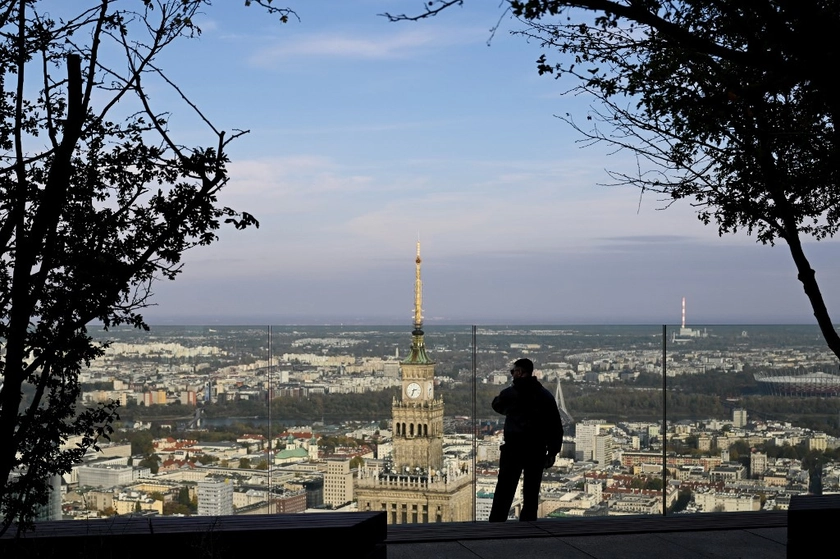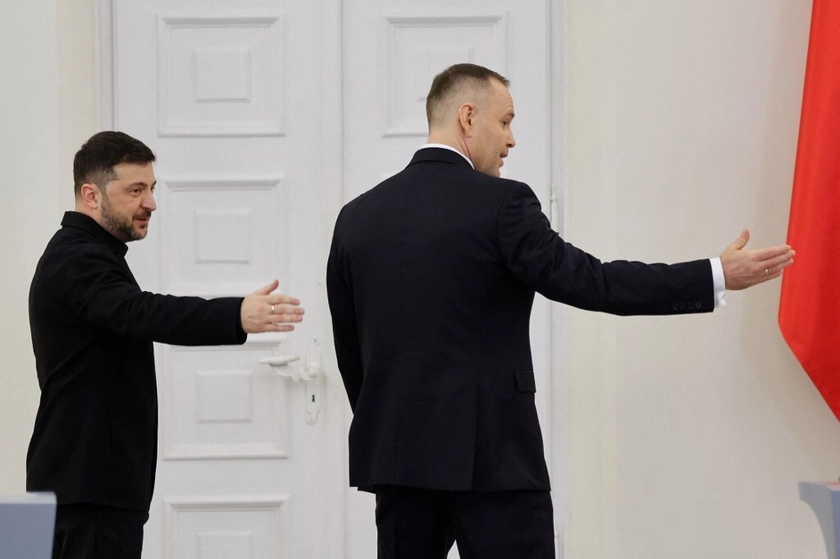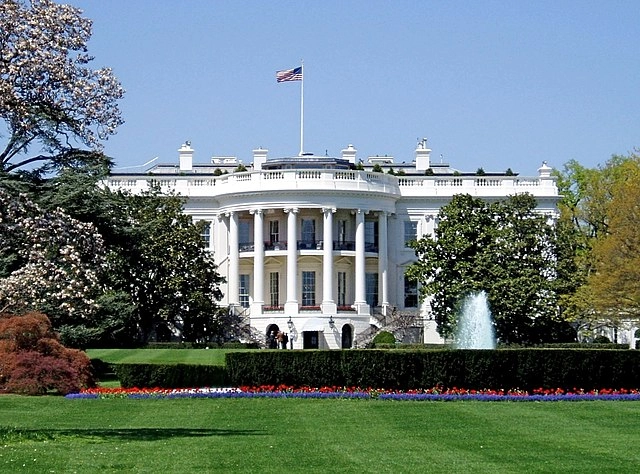
On Monday, high-level talks in Washington took place without any Polish representatives at the table – an absence that did not go unnoticed in Warsaw. The meetings were closely watched and widely commented on in Poland, with attention focused not only on their content but also on the fact that none of the country’s top leaders were present. The debate around this absence is unfolding along two main lines.
The first is rooted in national aspirations and a sense of dignity. As a mid-sized EU country that has provided substantial military, humanitarian, and diplomatic aid to Ukraine since 2022, Poland expects a seat at the decision-making table concerning the region’s future. In this context, the presence of Finnish President Alexander Stubb – representing a smaller country with less geopolitical weight – was perceived by many in Warsaw as a symbolic slight.
JOIN US ON TELEGRAM
Follow our coverage of the war on the @Kyivpost_official.
The second axis exposes a deep internal power struggle between Poland’s presidency and its government. This tug-of-war over competencies is not new. A tragic chapter in that conflict occurred in 2010, when President Lech Kaczyński died in the Smolensk plane crash. Despite the passing years, tensions between the two camps have not eased – they have intensified. According to many commentators, the crash was partly caused by a conflict between the President’s Chancellery and the Prime Minister’s Office – concerning both the rules for using the government plane and responsibility for organizing the visit. The tragedy, which briefly united Poles in mourning, quickly became another flashpoint in the country’s political divide. Over the years, the incident evolved from a national tragedy into a tool of political narrative and the subject of many conspiracy theories.
Learning from Ukraine’s Restructuring of Defense Tech
A more recent example came on Aug. 13, when a videoconference between European leaders and the US president was held. Politicians close to Prime Minister Donald Tusk initially announced his participation. In the end, however, it was President Karol Nawrocki who represented Poland. While the switch was officially explained by US protocol, it is widely known that the American administration maintains closer ties with President Nawrocki and the PiS party than with the current Polish government.
After the list of participants for the meeting with Donald Trump was made public, a wave of mutual blame erupted between the government and the president’s office. Deputy Foreign Minister Władysław Teofil Bartoszewski, in an interview with Polsat News, offered a more balanced view: he reminded the public that the US president decides whom to invite – and neither the Polish president nor prime minister was among them. Notably, a one-on-one meeting between President Nawrocki and the US president is scheduled for Sept. 3.
Does Poland hold any cards?
Some commentators argue that Poland’s absence at the table reflects a decline in political influence – driven partly by domestic turmoil and partly by inconsistent foreign policy. But the picture is far from black and white.
For decades, Poland has supported Ukraine’s push toward integration with the West. After Feb. 24, 2022, Warsaw was one of the first to send military and humanitarian aid, open its borders to refugees, and push for strong transatlantic support for Kyiv.
In recent months, however, the tone has shifted. While some Western leaders have begun to discuss the possibility of deploying troops to Ukraine under a so-called Coalition of the Willing, Polish politicians – across party lines – have firmly ruled out any such move. Instead, Warsaw emphasizes its logistical role, particularly the use of the Rzeszów-Jasionka airport near the Ukrainian border. Yet this card has already been played – and in the event of a ceasefire or reopening of Ukraine’s airspace, its strategic importance may diminish.
Another complication is the sensitive issue of the exhumation of victims of the Volhynia massacres. Increasingly, Polish leaders – regardless of political affiliation – tie future support for Ukraine’s NATO and EU ambitions to progress on this historical dispute. The politicization of the issue has elevated it to a central point in Polish-Ukrainian relations, even as Ukraine’s path to membership in either organization remains distant.
Absence as a strategy?
Some voices in the public debate suggest that Poland’s absence may be part of a conscious strategic decision. Not participating in the talks means avoiding the legitimization of Russia’s presence – especially since Poland formally does not recognize Vladimir Putin as Russia’s legitimate president due to electoral fraud. The White House meeting did not yield any concrete decisions; and should future agreements emerge that are unfavorable, Poland will not be a signatory – avoiding a repeat of the flawed Minsk agreements.
There is also growing awareness in Warsaw that the talks in Washington concern not just Ukraine but the broader architecture of European security. Russia seeks to reduce NATO’s presence on its eastern flank and regain influence in the region. According to Sławomir Dębski, former director of the Polish Institute of International Affairs (PISM), US officials were prepared for Polish participation – suggesting that the decision to stay away may have been politically calculated, not imposed.
The gray zones of diplomacy
Despite its absence in Washington, Poland continues to take part in various security-related discussions. The situation is complex, and missing one meeting does not necessarily mean long-term marginalization. Still, regardless of the motives behind the absence, the ongoing internal conflict in Polish politics opens the door for foreign actors to sideline Warsaw and weakens its diplomatic leverage. Premature public declarations – before any common strategy is formed – can end up stripping Poland of its bargaining power altogether.
The views expressed in this article are the author’s and not necessarily those of Kyiv Post.
You can also highlight the text and press Ctrl + Enter