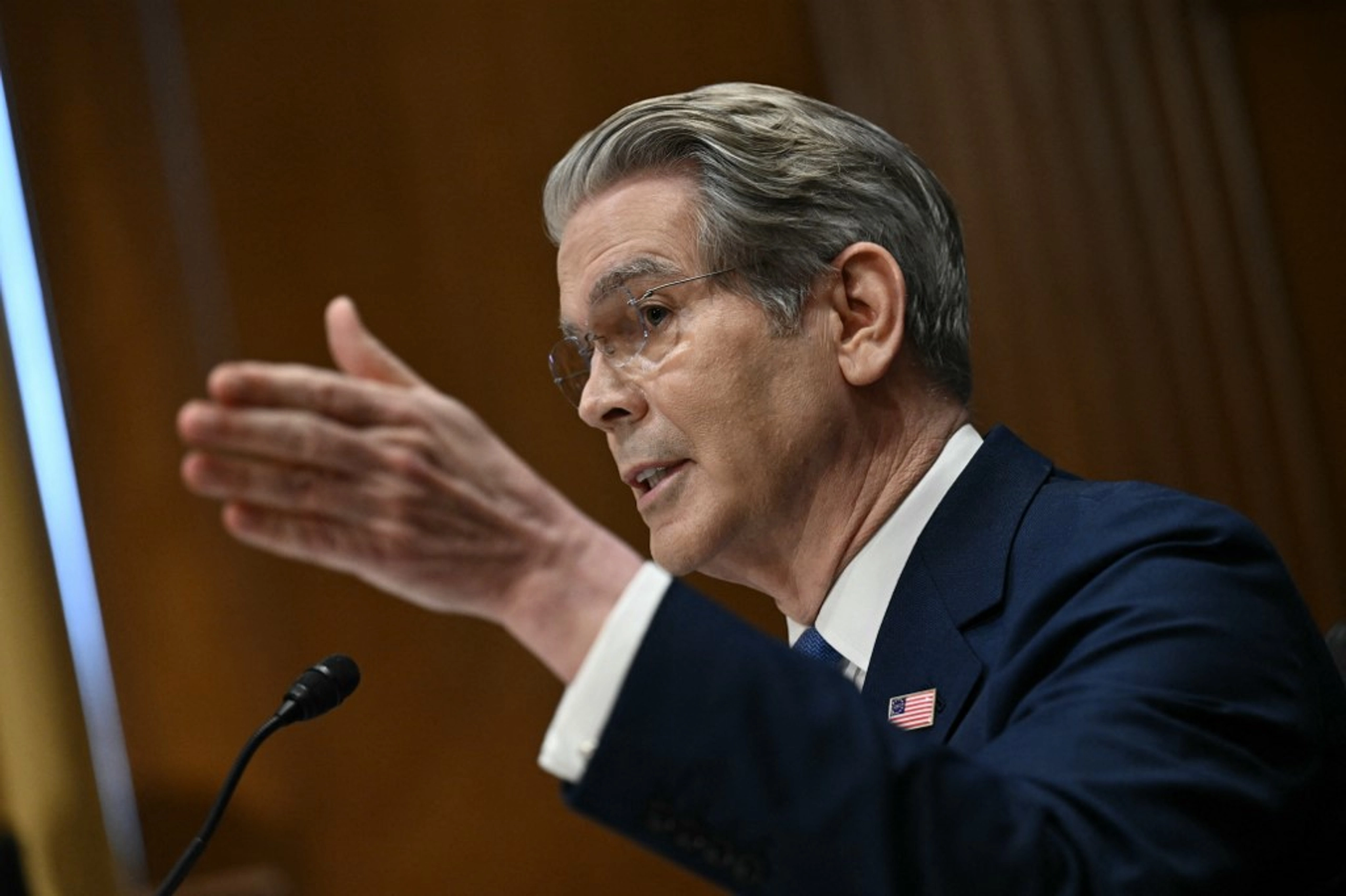
The US government is preparing a financial framework that would allow frozen Iranian state assets to be repurposed to fund recovery and reconstruction efforts across the Persian Gulf, CNN reported.
Compensating for missile strike damages
The Treasury Department is actively studying legal and financial mechanisms to divert Iranian funds. The plan aims to support Gulf states that may suffer damage from future Iranian operations, while also exploring ways to retroactively compensate nations for infrastructure damage inflicted by Tehran’s previous assaults.
JOIN US ON TELEGRAM
Follow our coverage of the war on the @Kyivpost_official.
Bessent’s team is slated to evaluate the security and economic situation across the Persian Gulf, officially requesting comprehensive cost estimates for damages incurred since the onset of the current regional conflict.
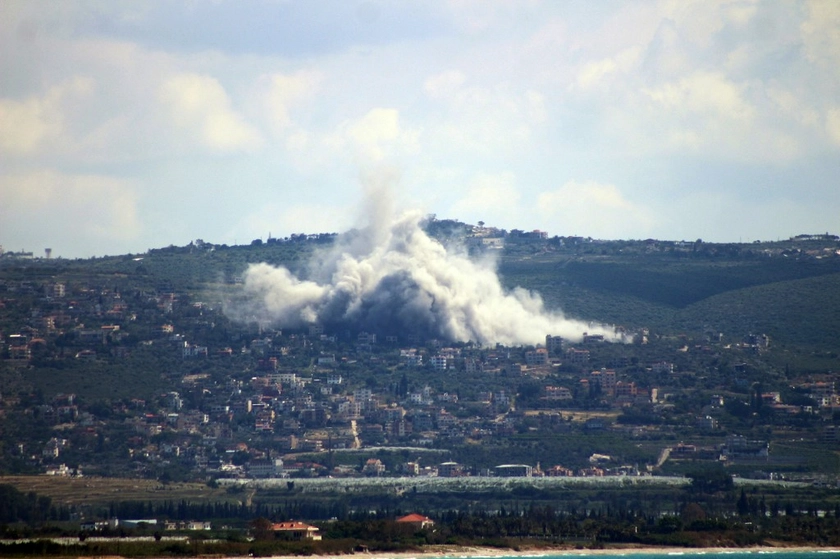
The emergence of the US asset-diversion plan coincides with a series of fresh kinetic strikes launched from Iranian territory. Both Kuwait and Bahrain recently reported that their air defense networks successfully intercepted multiple incoming ballistic missiles fired by Iranian forces. By linking the frozen assets directly to the destruction caused by these missile incursions, Washington aims to establish an economic deterrent against further cross-border bombardments.
A diplomatic and financial deadlock
The Treasury Department’s initiative directly complicates an ongoing diplomatic standoff over these exact financial reserves. Just days prior, senior Iranian military officials put forward a strict ultimatum, declaring that any prospective peace agreement with the US hinges entirely on the White House authorizing the release of $24 billion in frozen Iranian assets.
Infantry Up Close, More and Better Bombardment, Helping America ‘Win’
Mohsen Rezaei – military adviser to Iranian Supreme Leader Ayatollah Mojtaba Khamenei – outlined a two-tiered proposal. Under Tehran’s framework, the US would be required to immediately unfreeze $12 billion upon the signing of an interim peace treaty, with the remaining $12 billion released during subsequent implementation phases. Rezaei placed the responsibility for breaking the diplomatic gridlock on US President Donald Trump, framing the financial return as a mandatory “test of trust”.
“The negotiations are at a deadlock and Trump must break this deadlock,” Rezaei stated during the broadcast. “The ball is in Trump’s court. If he wants to reach an agreement with Iran, this $24 billion is a test of trust that Iran wants to have with Trump – this is a test that America must pass and the path will be opened.”
The threat of expanded regional attrition
US officials have repeatedly expressed deep skepticism regarding Iran’s financial demands, noting that prematurely unfreezing substantial reserves would eliminate Washington’s primary point of diplomatic leverage over Tehran. Rezaei explicitly rejected the possibility of a direct summit between Trump and Supreme Leader Khamenei while negotiations remain stalled, warning that a total breakdown in talks would force Washington into a “dark corridor.”
He cautioned that Iran maintains comprehensive operational plans to expand kinetic operations far beyond the Persian Gulf – threatening to target global shipping lanes in the Indian Ocean, the Bab al-Mandab Strait, the Red Sea, and the Mediterranean Sea if its financial conditions are ignored.
By shifting focus toward using the blocked reserves to rebuild allies like Kuwait and Bahrain, the Trump administration appears to be rejecting Iran’s multi-billion dollar ultimatum. Instead of returning the assets to Tehran, the US is preparing to integrate these funds into a regional defense and recovery strategy, bracing for a broader theater of attrition across the Middle East.
You can also highlight the text and press Ctrl + Enter

OPINION: The New Line Kyiv Quietly Built Into NATO