This was the fourth Independence Day in a row that the nation marked while fighting off the full-scale Russian invasion. One inevitably reflects on both how much – and how little – has changed over the past three years of war.
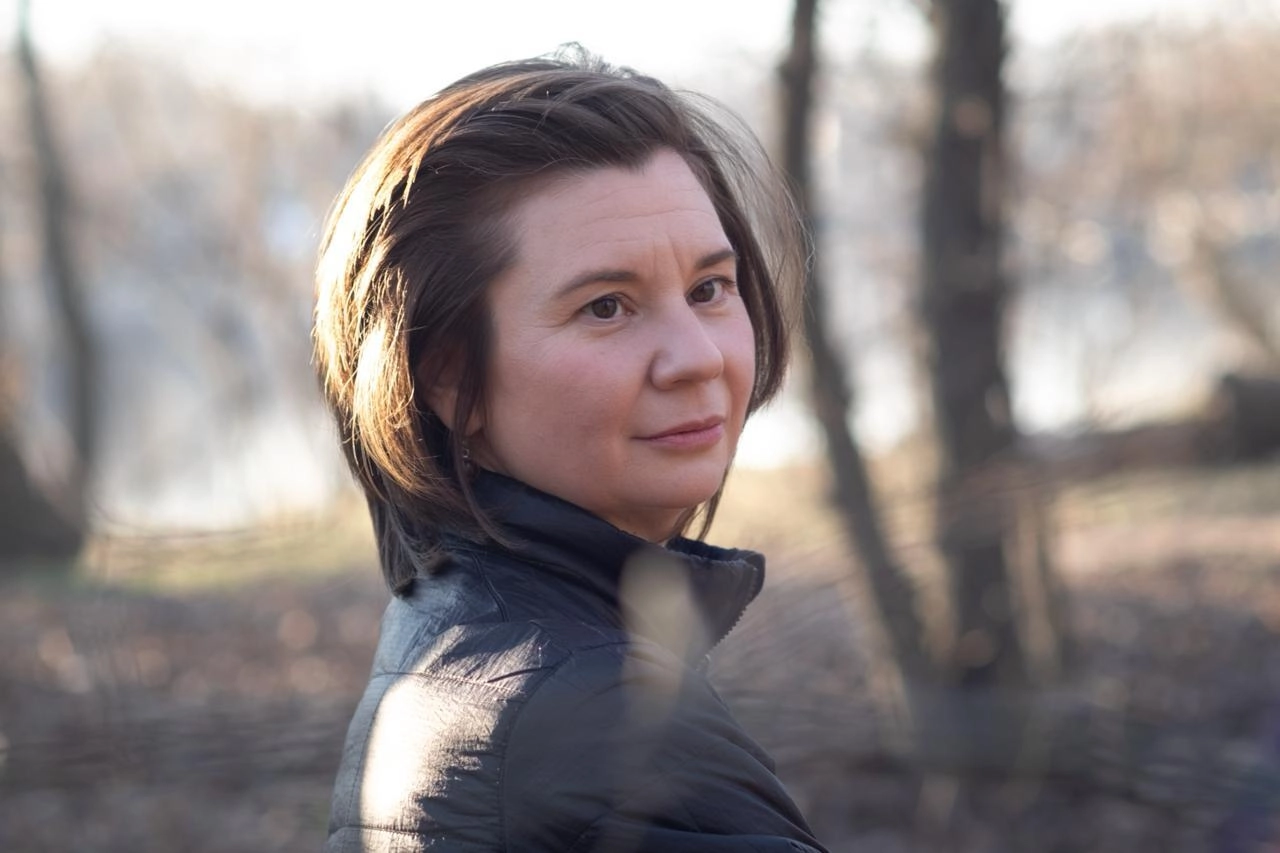
Last year, my Ukrainian-American friend Larissa Babij published her chronicle of becoming a refugee in the wake of the Russian full-scale invasion. Babij fled westward from her home in Kyiv on the first day of the invasion, taking only her suitcase and her cats. Along the way, she wrote a remarkable and deeply humane series of dispatches to her friends around the world – these were pieces of the highest literary quality.
JOIN US ON TELEGRAM
Follow our coverage of the war on the @Kyivpost_official.
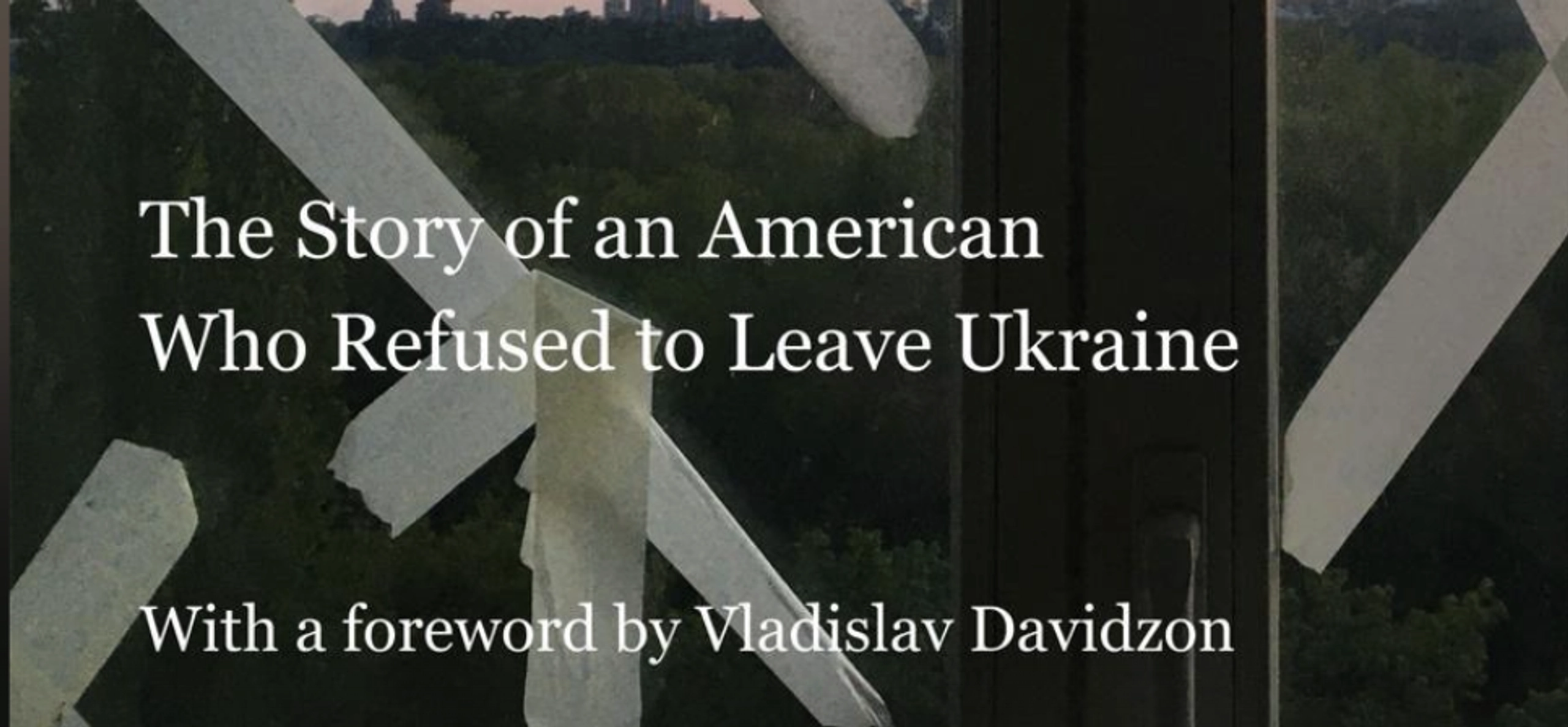
A Kind of Refugee focuses on the first year of the war and the choice Babij made to remain in the country and join the fight for her home – thus making her a “kind of refugee.”
The volume collects her dispatches from her own excellent Substack. The historical precedent of Babij’s grandparent’s fleeing the country during the Second World War (to America to ensure the safety of their grandchildren) echoes throughout the book. A Kind of Refugee is a wonderful book, and I cannot recommend it highly enough.
Babij honored me by asking me to write the preface to her book. It is republished here in honor of Ukrainian Independence Day in lieu of a book review. Here it is:
I am an American, Chicago born – Chicago, that somber city – and go at things as I have taught myself, free-style, and will make the record in my own way: first to knock, first admitted; sometimes an innocent knock, sometimes a not so innocent. But a man’s character is his fate, says Heraclitus, and in the end there isn’t any way to disguise the nature of the knocks by acoustical work on the door or gloving the knuckles.
‘Negotiations’ Are Traps – How Russia Tweaks Language to Deceive the West
- Saul Bellow, The Adventures of Augie March
Larissa Babij is Ukrainian, American born in Manchester, Connecticut, which despite its historic silk factories was dully suburban. Like Augie March she would make her own idiosyncratic way and record, freestyle – recursively returning to her ancestral lands. Abandoning the new world for the old, Babij would send the word back to the new.
Thus spake Bellow of the character of the hero in Heraclitus – his point being, perhaps, that ultimately every such hero is a priori a critic.
The book that you are holding in your hands, A Kind of Refugee, is a collection of writings that first began as wartime dispatches and occasional salvos to concerned friends and relatives. They are – as the reader will doubtless find – absolutely gripping.
This book constitutes an important addition to the literature of primary documents and diaries recounting the first year of the full-scale war that Russia liberally unleashed in Ukraine in 2022.
It offers – from the pen of a literate and fluid Ukrainian-cultured native writer of English – one of the very best and most humane accounts of what we felt and experienced during those first months of unspeakable violence.
Larissa and I were first introduced in 2017, in the eastern Ukrainian city of Kharkiv (once the capital of the Ukrainian Soviet republic) by a mutual friend. That friend was Yevgeniy Fiks, a Russian-born American artist whom I knew from my New York days, with whom Babij had co-curated the exhibition “In Edenia, a City of the Future,” featuring an international group of renowned contemporary artists.
The exhibition at the Yermilov Art Center took its name and inspiration from Yiddish author Kalman Zingman’s 1918 utopian novella, which was published in Kharkiv in the midst of the Russian Empire’s dissolution into revolution and war; the short-lived Ukrainian Republic’s declaration of national autonomy for Jews, Russians, and Poles; and the looming establishment of a Bolshevik Communist USSR.
The Yiddish writer’s work prophesied an idealistic, multicultural, and futurist fantasia of ethnic comity (a worthy precedent for the cultural activists – of whom Babij was one – who were working to reshape Ukraine, after the 2013-14 Maidan protests, into a vibrant political nation).
Zingman’s novel was set in the far-off future of 1943, which – as we all now know – would not turn out to be a year particularly renowned for its spirit of liberal ethnic comity. That same year, incidentally, Babij’s Ukrainian grandparents would have to abandon their homes in the country’s west, setting them on the path to becoming refugees.
The exhibition sparked viewers to meditate on utopia – whether with forlorn nostalgia or with the vision of a dream curdled into a nightmare. Larissa and I would eventually become close friends – may all of your own friends, dear reader, be as generous and loyal in that art form as is Babij.
Larissa’s path is noteworthy in that she left her original Ukrainian diaspora habitat to return to the land of her ancestors. Her depiction of the fabric of daily life as an ordinary citizen in wartime Ukraine is as deeply felt as it is intelligent.
Unsurprisingly for a dancer and performer, Babij channels and processes information through her body. Her sensibility is syncretic – at once cerebral, sensual, and poetic.
Babij is also a culture worker par excellence: she has engaged in writing, translating, editing, curating, criticism, and teaching over nearly two decades in Ukraine. She was one of the most valued editorial staff members of the literary journal The Odessa Review, which I edited together with my wife Regina Maryanovska-Davidzon in the years after the Maidan.
In February 2014, when the Maidan revolution succeeded in removing Ukraine’s authoritarian presidential administration from power (and the war began with Russia’s insidious invasion of Crimea), Babij and other change-oriented culture workers occupied the basement of the Ministry of Culture. Their protest against that monument of ossified Soviet stagnation was a distillation of the values of the Maidan. That “pragmatically utopian” attempt to liquidate the ministry has yet to achieve its goal.
When Babij posits that she is “a kind of refugee,” this is a characteristically thoughtful and wry assertion. The sobriquet intimates that there exists a wide variety and great teeming typology of refugees. Long before she was forced to abandon her Kyiv apartment by the rain of Russian missiles and approaching tanks and troops, her grandparents had been refugees after World War II. Two of them spent time in the limbo of a DP (displaced persons) camp, while two made their own way through chaotic postwar Europe – all of them eventually making it to immigrant heaven. That is, to America.
Growing up in Connecticut, Larissa was faced with the traditional choice demanded by American assimilation – to embrace or to efface. Ukraine would pull her back. This book is written from the perspective of an eternal insider outsider, and Babij is continually reliving her grandparents’ displacement.
Doing so, she has a deep sense that to be a Ukrainian (even one who was born into the comforts of North American life) is to understand how all present-day Ukrainians bear deep scars of intergenerational trauma. Indeed, her thoughtful reflections on what her grandparents lived through form the narrative spine of the book and constitute its moral and historical core. Her epistles, which offer a sense of the extraordinary recent past, are as remarkably astute as they are clever and witty.
It should be noted that Babij’s background is in Ukrainian avant-garde theater. And she writes about it from a historically literate perspective, being one of Ukraine’s most sensitive and penetrating theater critics. Her writing is always lyrical, passionate, and convincing.
Some of her long-form theater criticism appeared in the culture section of The Odessa Review (and nothing makes an editor more thrilled than to publish a critic of her acuity and powers of observation).
Her later interest in the Feldenkrais method, a movement practice that fosters a holistic recognition of the connections between the mind and body, should come as no surprise. It is part and parcel of her commitment to understanding reality and history through the movements of the body.
A Kind of Refugee is very much redolent of Larissa’s real-life spirit and voice. The text is suffused with what we routinely think of as particularly American traits – warm openness, directness, curiosity, nonjudgmental generosity, and gumption.
The story is related in the unadorned and colloquial register of thought, and her effervescent positivity can be felt everywhere throughout the work. Reading Larissa’s charged epistles from Mykolaiv or Lviv or her home in Kyiv, it is obvious that one is in the presence of a historically aware, sensitive, and canny observer of the textures of social relations and everyday life.
If Babij also observes that the Ukrainians are not a philosophical nation – as opposed to other European nations who have contributed greatly to the history of Western philosophy – she means that Ukrainians are more practical and action-oriented.
Perhaps certain historical conditions are necessary for a nation to develop an inclination to philosophize. Could centuries of repression and suffering dull the capacity for thought? Larissa Babij’s first book categorically negates that thesis.
While serving as an excellent guide to these horrific times, it is a deeply important work of philosophic candor and observation by an incredibly perceptive critic.
Vladislav Davidzon can be followed at his newsletter The Fantastical Daybook of Vladislav Davidzon.
Copyright © 2024 by ibidem-Verlag, Hannover • Stuttgart
Reproduced with permission from Larissa Babij, A Kind of Refugee: The Story of an American Who Refused to Leave Ukraine, ibidem-Verlag, 2024, pp. 9–12.
You can also highlight the text and press Ctrl + Enter

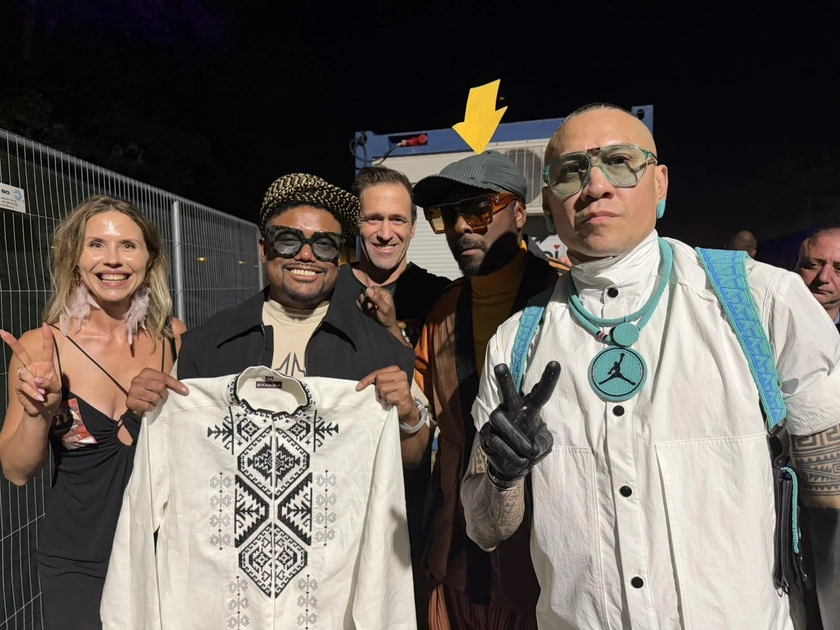
Black Eyed Peas Embrace Ukraine With an Authentic Vyshyvanka