Background
Towards the end of World War One, many people in Europe believed that an Allied victory would usher in an age of self-determination. On Feb. 11, 1918, barely a month after delivering his famous “Fourteen Points” speech, US President Woodrow Wilson declared that:
JOIN US ON TELEGRAM
Follow our coverage of the war on the @Kyivpost_official.
“People are not to be handed about from one sovereignty to another by an international conference or an understanding between rivals and antagonists. National aspirations must be respected; peoples may now be dominated and governed by their own consent. Self-determination is not a mere phrase – it is an imperative principle of action which statesmen will henceforth ignore at their peril.”
At the end of October 1918, an Inter-Allied Parliamentary Commission of French, Belgian, Italian, and British representatives, also proclaimed their acceptance of the principle of nationality and of the “right of people to dispose of their own destiny.”
Ukrainians in Western Ukraine try to seize the moment
Under Austrian rule, Lviv was known as Lemberg, and was contested by the Poles, who called it Lwow. Ukrainians had not long prior been referred to as Ruthenians. The city was a Polish-dominated island in a region where Ukrainians were the majority and where Jews also constituted a significantly large population.
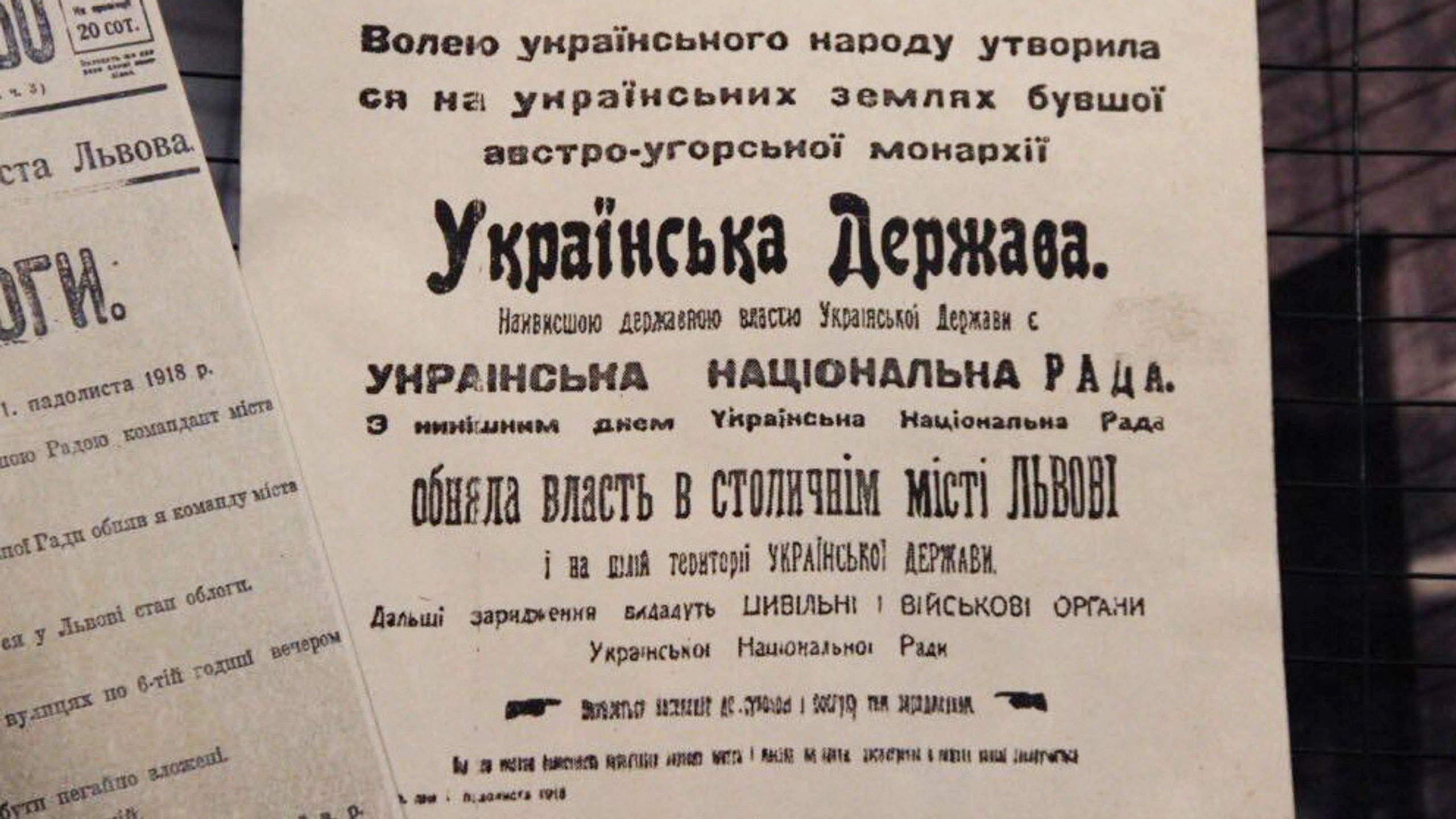
On Nov. 1, 1918, the West Ukrainian People’s Republic was proclaimed in Lviv. The declaration came as Austria-Hungary collapsed and its subject peoples rushed to establish independent states. The move appeared sudden, but it was the result of months of preparation and a last-minute acceleration.
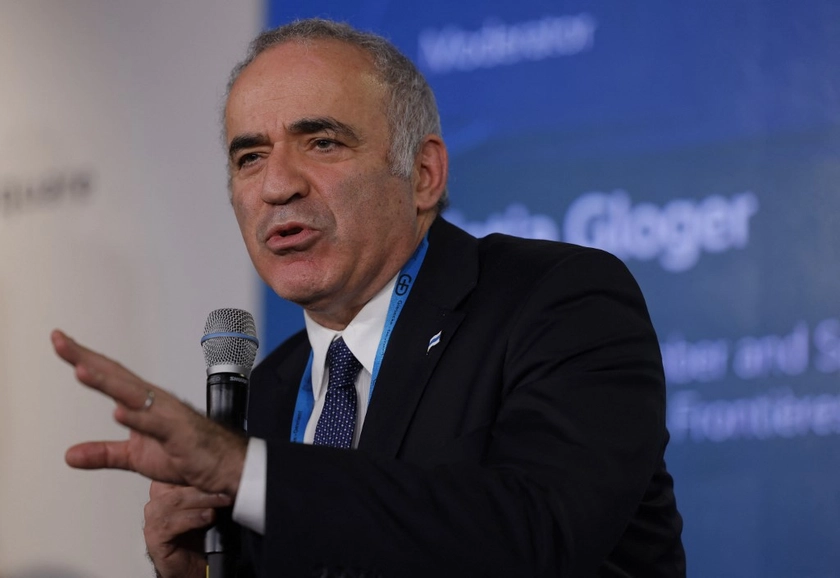
Kasparov: Ukrainian Flag in Sevastopol Is the Shock Russia Needs to Accept Empire Is Dead
The Ukrainian National Rada, or Council, was formed in Lviv on Oct. 18–19, 1918. It drew together Ukrainian representatives from both houses of the Austrian parliament and the provincial diets in Galicia and Bukovina. The Rada proclaimed a Ukrainian state encompassing the territories of Galicia, northern Bukovyna, and Transcarpathia.
News from Cracow forced the Ukrainians to act quickly. The Polish Liquidation Commission, established on Oct. 28, 1918, planned to assume control of Galicia. Learning that the commission intended to transfer to Lviv on Nov. 2–3, the Ukrainian National Rada moved its declaration forward from Nov. 3 to Nov. 1.
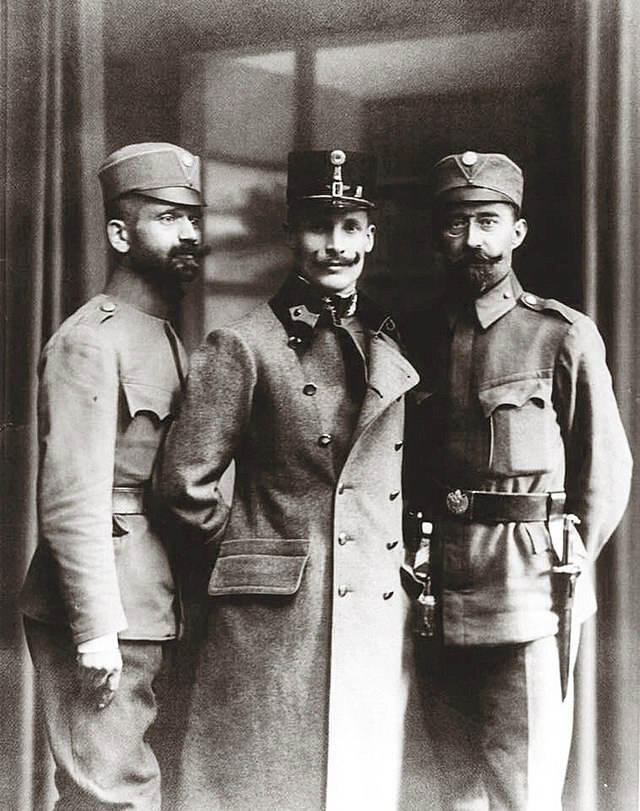
On the night of Nov. 1, 1918, Ukrainian forces seized government buildings and infrastructure throughout the city and surrounding counties. The new government took control in Galicia and in the Ukrainian districts of Bukovyna on Nov. 6.
On Nov. 9, the Rada formally announced the establishment of the West Ukrainian People’s Republic (Zakhidnoukraïns’ka Narodna Respublika, or ZUNR). That same day, the Rada issued the “Provisional Basic Law on the Sovereign Independence of the Ukrainian Lands of the Former Austro-Hungarian Monarchy,” establishing the constitutional basis for the new state.
War with Poland
The Ukrainian action immediately sparked conflict with the Poles, who had their own plans for Galicia. Lviv’s population was roughly half Polish, and many residents opposed Ukrainian rule. An uprising began in the city, and fighting continued from Nov. 1 until Nov. 21 when Polish forces captured Lviv.
Most of Galicia remained under Ukrainian control, however. After losing Lviv, the ZUNR government relocated to Stanyslaviv (now Ivano-Frankivsk).
Territory and structure
From November 1918 to July 1919, the ZUNR controlled most of Eastern Galicia. Its territory included Lviv, Ternopil, Kolomyia, Drohobych, Boryslav, Stanyslaviv, and right-bank Peremyshl. The state also claimed northern Bukovina and Carpathian Ruthenia.
Despite the wartime chaos, the government established functioning state institutions. It implemented policies granting autonomy to Jewish communities, allowing them self-governance and the formation of national councils. In December 1918, the Central Jewish National Council was established to represent Jewish interests.
Union with the Ukrainian People’s Republic
On Jan. 22, 1919, the West Ukrainian People’s Republic and the Ukrainian People’s Republic representing the far larger part of Ukraine – which had declared independence from Russian rule exactly one year earlier, on Jan. 22, 1918 – signed an Act of Union in Kyiv. This formally united the western and eastern Ukrainian territories. The ongoing wars prevented actual political integration, but the symbolic union was proclaimed with public celebrations.
By late July 1919, with the help of Polish military reinforcements brought in from France, Polish forces had conquered all of Galicia. The Polish-Ukrainian War, which began on Nov. 1, 1918, ended in a complete Polish victory.
International settlement
The Treaty of Versailles, signed in June 1919, did not recognize Ukrainian independence. Unlike other new states that emerged from the war, Ukraine gained no international recognition. That same month, the Entente powers recognized Poland’s conquest of the ZUNR. The treaty assigned Galicia and western Volhynia to Poland.
Poland was required to sign a Minorities Treaty on June 28, 1919 – the same day as the main Versailles Treaty. It did so under protest. The agreement was the first of several such treaties and became the template for others.
The Allied powers required the treaty because Poland would inherit large non-Polish populations – Ukrainians and other minorities from the former Austrian territories, Germans within the new borders, and populations from the ongoing conflicts with Ukrainian and other forces. Poland signed in exchange for international recognition.
The treaty mandated equal treatment for all Polish nationals regardless of race, religion, or language. Minorities received the right to establish and manage their own charitable, religious, and educational institutions. In districts with substantial non-Polish populations, primary schools were to offer instruction in the children’s native language.
The question of another Ukrainian-populated region, to the north of Eastern Galicia, Volhynia, that had been under Russian rule, remained unresolved.
A Polish-Soviet War was ended by the Peace of Riga, signed on March 18, 1921, which divided the disputed territories. Poland gained western Volhynia and other Ukrainian lands, while the Soviet Union took control of eastern Ukraine. The treaty carved up Ukrainian-claimed territory without Ukrainian representation at the negotiations. For Ukrainians, Riga was another betrayal – their lands divided between two powers, neither of which recognized their right to independence.
A sad record
From 1919 forward, the Ukrainian regions under Polish control experienced continual unrest. On March 14, 1923, the Council of Ambassadors formally granted Eastern Galicia to Poland. The decision noted that Poland recognized the need for autonomy in the region and had committed to minority rights by signing the 1919 treaty.
Implementation of these provisions proved difficult. Ukrainians filed numerous petitions with the League of Nations regarding minority rights. Polish policies emphasized integration and settlement programs. The Warsaw authorities sought to consolidate control through administrative measures, which Ukrainians saw as attempts to suppress their cultural and political life.
These tensions produced a radical nationalist response among some Ukrainians. Militant organizations emerged in the 1920s and 1930s, employing terrorism against Polish officials and installations.
The interwar period left a bitter legacy. When Poland was partitioned in 1939 between Nazi Germany and the Soviet Union, Ukrainians found themselves trapped between two totalitarian powers, with no good options and deep grievances on all sides. The violence that followed during World War II reflected decades of unresolved national conflicts in the region.
Lessons and legacy
The November 1918 proclamation was the first time Western Ukrainians declared their own state. The republic lasted less than a year, but it set a precedent. It showed that Ukrainians in Galicia saw themselves as a nation capable of self-government.
The failure of 1918-1919 taught hard lessons. International recognition matters. Wilson’s rhetoric about self-determination was selective – it applied to some nations but not others. Ukraine’s geographic position, wedged between larger powers, made independence precarious. Without strong allies or military strength, even legitimate national aspirations could be crushed.
The two decades under Polish rule radicalized a generation. Some turned to extreme nationalism and political violence. Others kept the idea of Ukrainian statehood alive through cultural work, education, and political organizing. Both impulses shaped what came later.
When Ukraine gained independence in 1991, it came after seven decades of Soviet rule had reshaped the country. But Lviv, the city where the West Ukrainian People’s Republic was proclaimed in 1918, and from which the Polish population was largely displaced by the Soviets after they had taken control at the end of Second World War, became one of the strongest centers of the independence movement. The memory of 1918 had not disappeared.
As Ukraine fights another war for its independence and territorial integrity, the parallels to 1918 are striking. Once again, Ukraine faces a larger neighbor bent on conquest. Once again, Ukrainian identity and statehood are contested by force. Once again, international commitments to self-determination are being tested.
But there are differences. In 2022, Ukraine was a recognized state with an army, international borders, and diplomatic relations. It had spent over 30 years building institutions and a national identity that bridged the old divides between east and west. When Russia invaded, Ukrainians from Lviv, Kharkiv, Kyiv, and Odesa fought side by side. The country that failed to hold together in 1918–1919 proved far more resilient a century later.
And Poland was a friend and supporter!
So, Nov. 1 remains significant not because the West Ukrainian People’s Republic succeeded, but because it tried. Ukrainian independence was not a Soviet invention or a post-1991 experiment; it had deeper roots. Even failed independence movements can shape the future if the idea survives.
If there is mutual understanding and a willingness to look back not just in anger, but with understanding and readiness to support one another after lessons are learned and political maturity is reached, as in the case of Ukraine and Poland today, the impact endures.
You can also highlight the text and press Ctrl + Enter