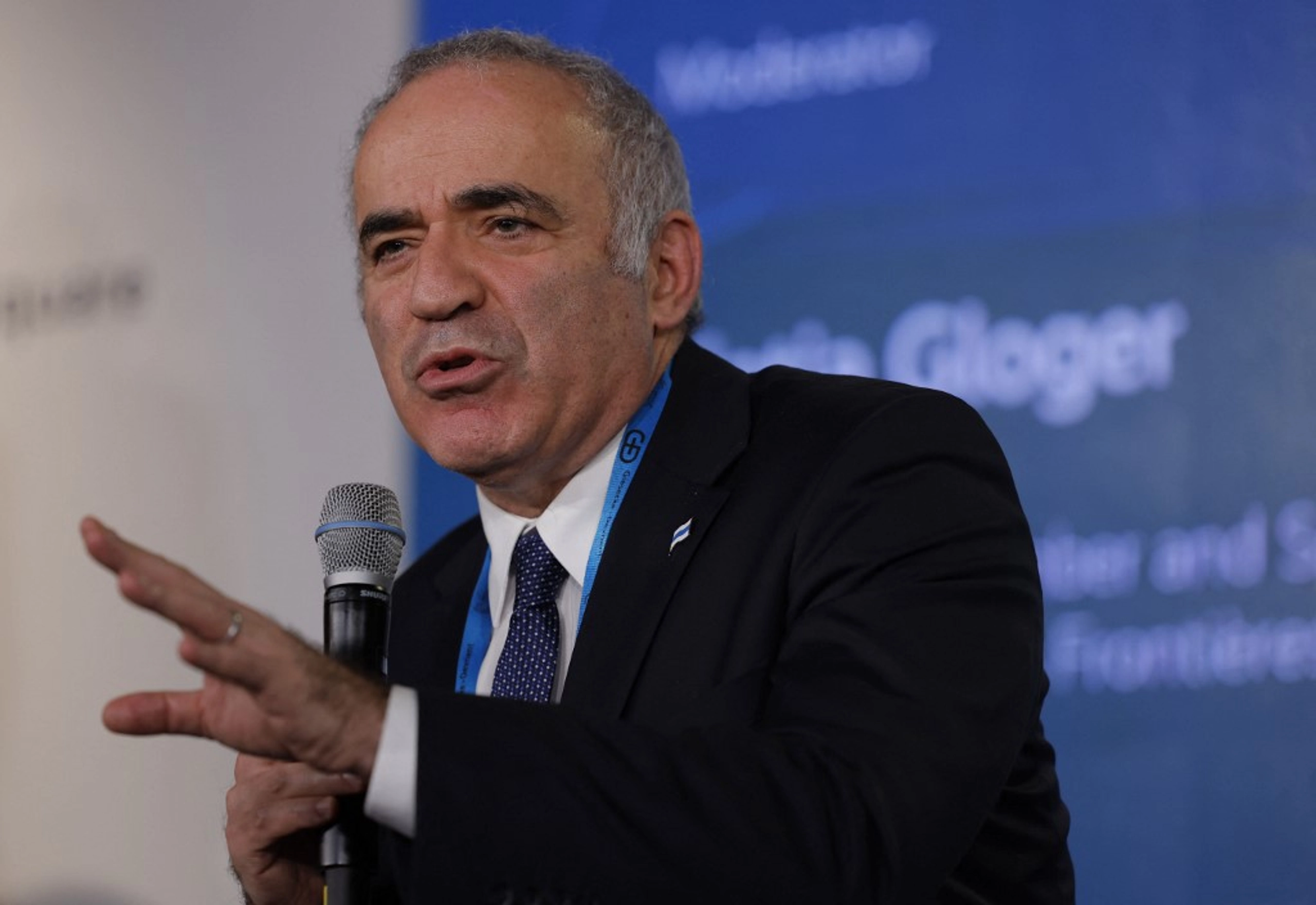
Garry Kasparov has warned that Ukraine’s victory is the only path to lasting peace in Europe and the only real chance for Russia to begin returning to the civilized world.
Kasparov, the 13th world chess champion, Russian opposition politician, and member of PACE’s Platform for Dialogue with Russian Democratic Forces in Exile, made the remarks in an interview with Euroscope, an advocacy publication to help align Ukrainian legislation with EU requirements.
JOIN US ON TELEGRAM
Follow our coverage of the war on the @Kyivpost_official.
The opposition leader argued that testing whether a Russian political figure is truly pro-Western requires a simple litmus test: they must state without hesitation that Moscow’s war is criminal, Vladimir Putin is illegitimate, and Crimea belongs to Ukraine
“Many still stumble even today when saying that Crimea is Ukrainian,” Kasparov noted.
Ukraine’s victory, Russia’s defeat, collapse of empire
For Kasparov, the strategic task facing the democratic world is clear: help Ukraine win.
“Ukraine’s victory is a mandatory condition for establishing peace in Europe,” he stressed. “It also gives Russia its only chance for change.”
He argued that Russia’s defeat is not only necessary for Ukraine’s survival, but also for any possible transformation of Russia itself.
“The only chance for Russia to begin its road back to civilized society is Ukraine’s victory and, accordingly, Russia’s defeat,” Kasparov said.
Ukraine Accelerates Winter Energy Push With New Foreign Supply Pacts
He emphasized that these three goals are inseparable, even if many Western politicians still hesitate to say them openly.
Russian imperialism as a threat beyond Ukraine
Kasparov described Russia as the last empire and warned that Putin’s war has exposed the wider danger of Russian fascism.
“Putin’s war against Ukraine and these metastases, this cancerous spread of Russian fascism, affect everyone – Georgia, Belarus, all of Europe, and in fact the whole world,” he warned.
According to him, the center of many global problems today is tied to Moscow’s imperial project. Until that empire is defeated and dismantled, he argued, neither Russia nor its neighbors can fully move toward the free world.
Putin cannot afford to lose
Kasparov said Russian history shows that the greatest threat to tsars and dictators has always been a lost war.
“If a tsar starts a war, he must win it,” Kasparov said. “The victims do not matter. How many people die does not matter. The main thing is to win.”
When a war is started and not won, he continued, Russia often faces major upheaval or even revolution.
Kasparov said Putin may not be guided by deep historical reading, but his instinct as a dictator tells him that defeat is dangerous.
“That is why he will continue this war as long as he has any resources,” he warned.
Crimea as the shock Russia needs
Kasparov argued that Russian imperial thinking remains deeply rooted in the average Russian citizen and has proven stronger than the Soviet communist dictatorship.
“This imperial idea has lived for centuries,” he said. “It mutates, it transforms, but it cannot simply be pulled out.”
For him, only a historic shock can force Russian society to understand that the empire is over.
“The only thing that can make a Russian citizen understand that the empire is dead is the Ukrainian flag in Sevastopol,” Kasparov said.
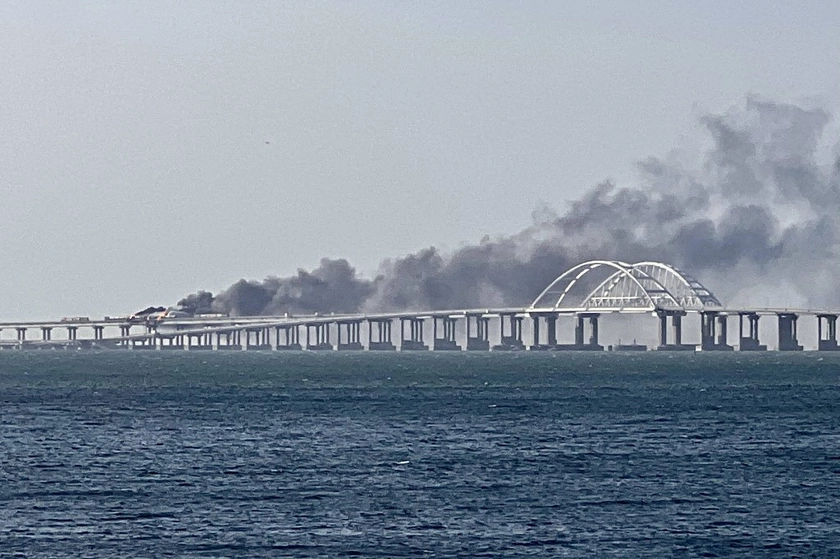
He described Crimea as a “sacred” part of the Russian imperial myth, making its liberation central not only to Ukraine’s victory but to Russia’s possible future transformation.
“The liberation of Crimea, the Ukrainian flag in Sevastopol – that is exactly the shock Russians need to understand: that’s it, we need to start again,” he said.
Following that defeat, he concluded, Russia will face a defining choice: become a vassal state of China, or recognize its war crimes, pay reparations, and begin negotiating with its neighbors on equal terms.
You can also highlight the text and press Ctrl + Enter
Russia Hit by 660-Drone Overnight Barrage Targeting Moscow, Crimea and Key Military Sites