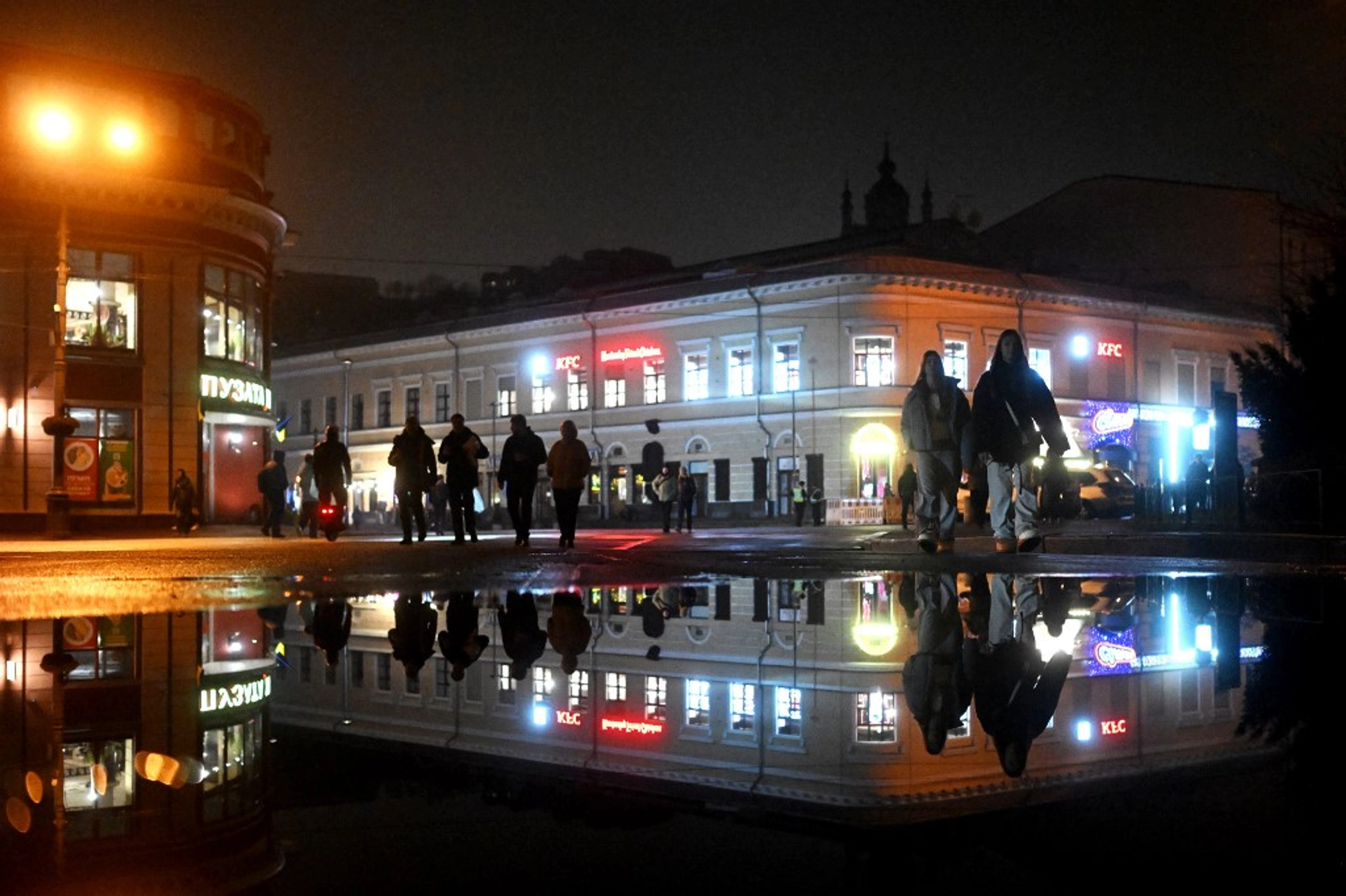
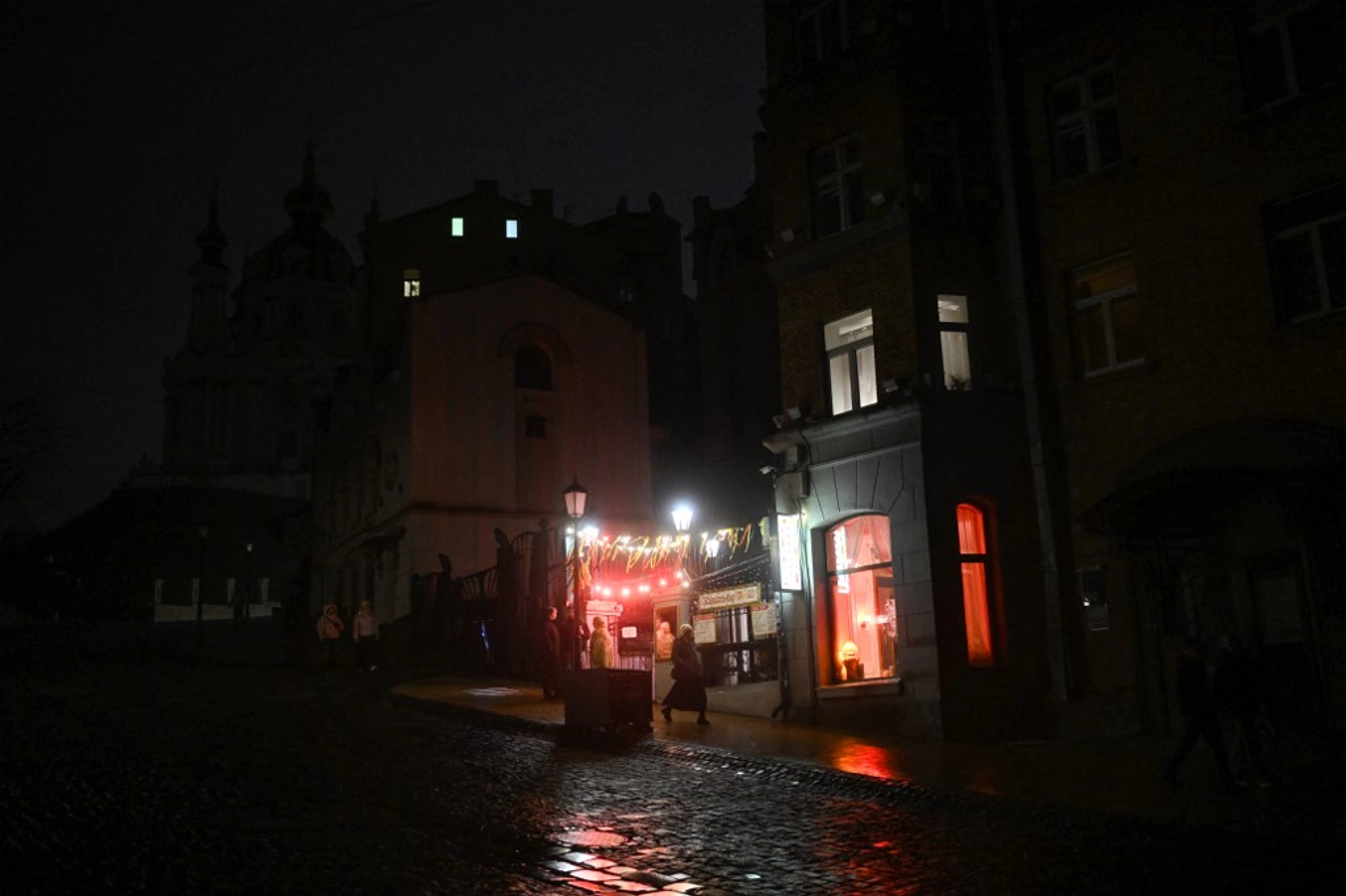
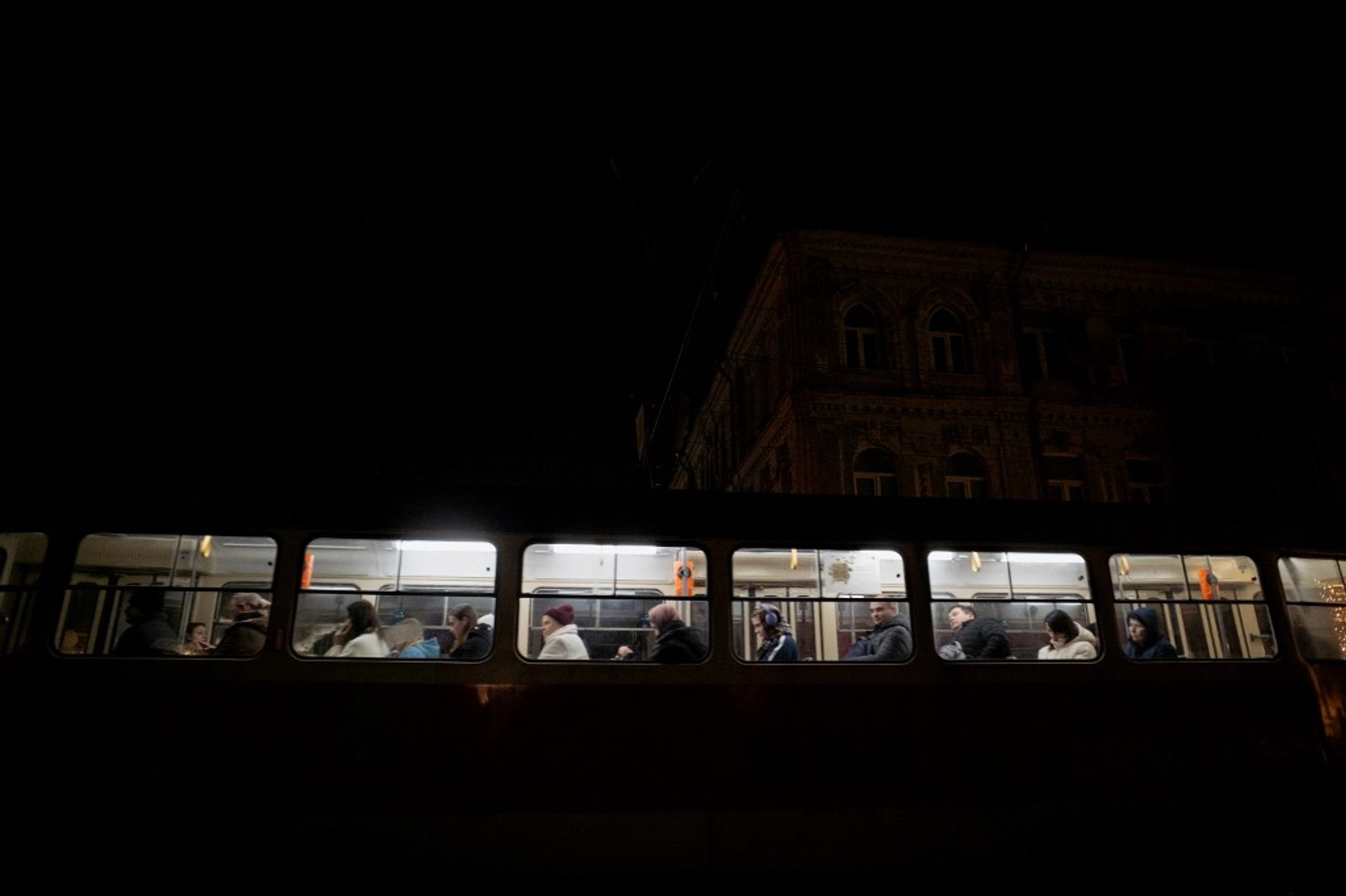
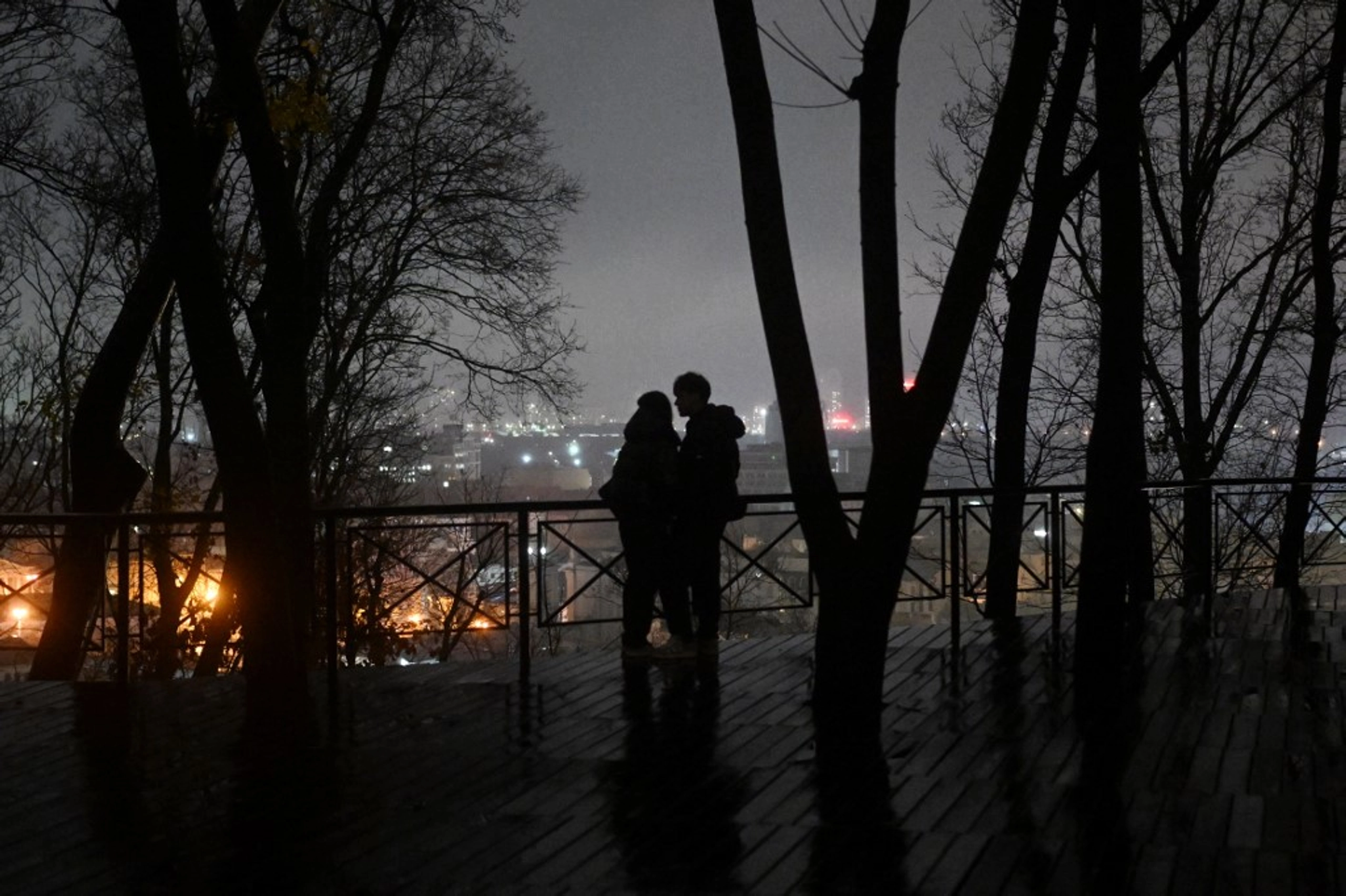
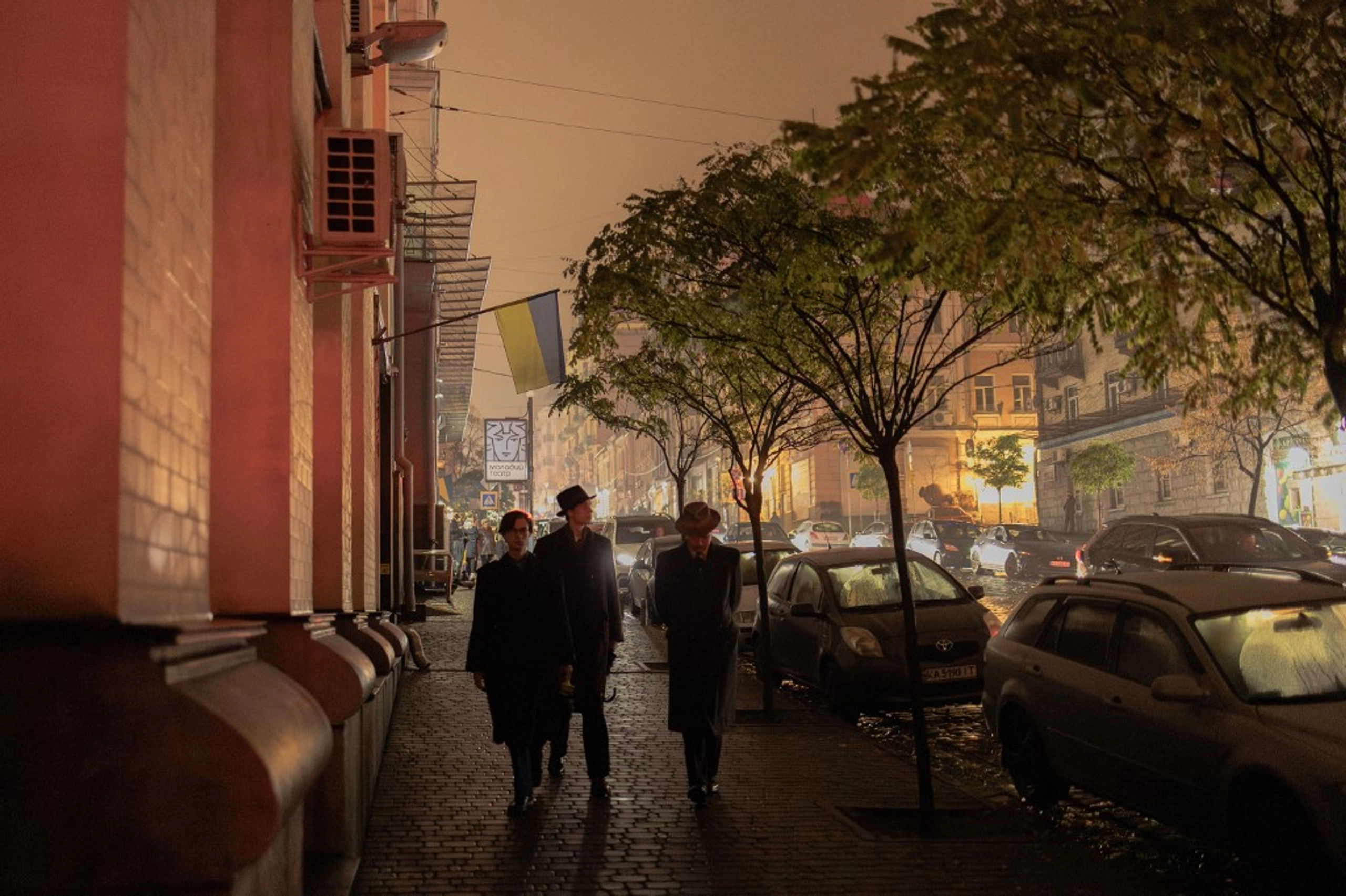
Wartime Kyiv after sunset now means dark streets and passing silhouettes, with the only light from the occasional faint glow of luminous dog collars.
As Ukraine reels from being presented with a US plan that would force it to capitulate in exchange for peace, the capital’s residents are bracing for what could be the toughest winter yet of the war.
JOIN US ON TELEGRAM
Follow our coverage of the war on the @Kyivpost_official.
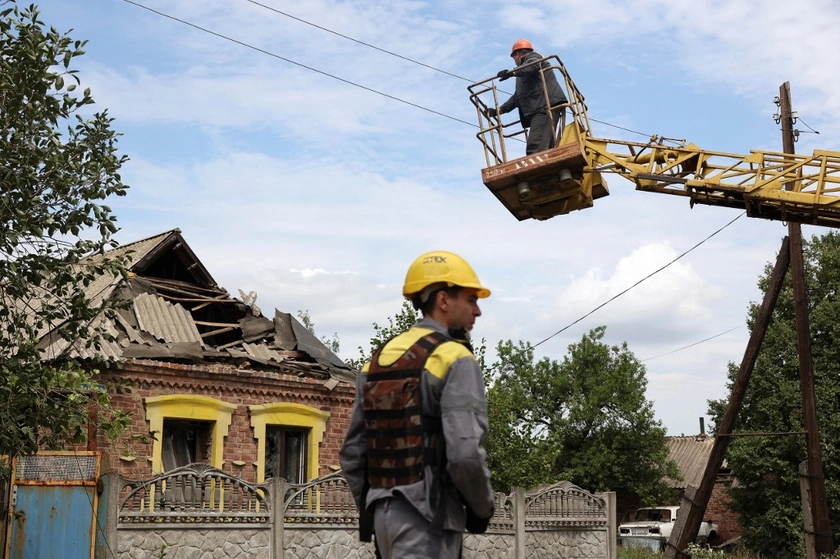
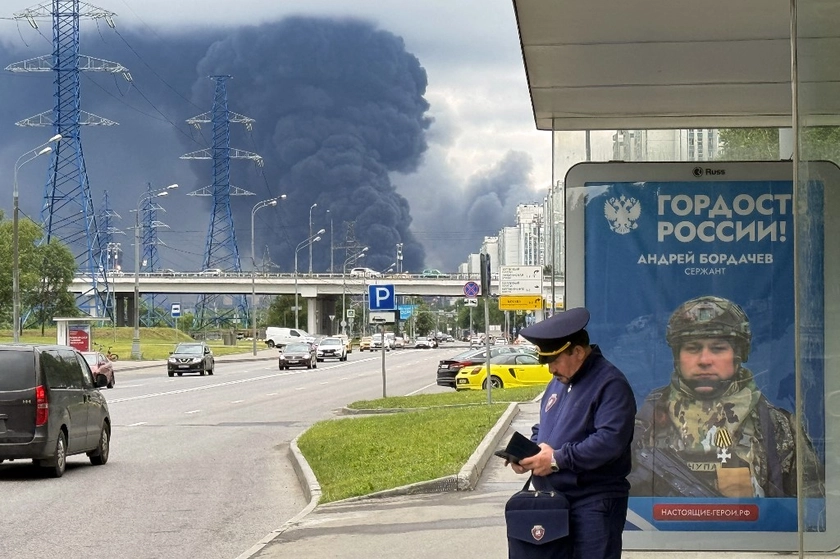
Russia has relentlessly attacked Ukraine’s energy infrastructure since invading in 2022, but is now raining down record numbers of missiles and drones.
Those whose strategies in previous years may have been to grin and bear it are taking extra precautions.
The light from Dmytro Kustov’s dance studio was flooding the street. Inside, it was warm, and pop music blared from electric speakers.
Pointing to a humming closet concealing a web of cables, a generator and power inverter, he told AFP: “As soon as the last blackout started, I snapped and decided that all this needed to be set up.”
Without it, the power would go out twice a day for four hours each time.
Hungary Rejects EU Plan to Exclude Ukrainian Men of Military Age From Temporary Protection
“It’s very important for people to have warmth now, it’s important for people to have some hope,” Kustov, 29, said.
“I always need light here so that people can come, train, communicate. It’s very important. And to release all these emotions.”
- ‘Bit stressful’ -
Ukraine has not revealed the extent of the damage caused to its gas network but local media estimated that 60 percent of production capacity has been lost.
Kyiv says it has sufficient reserves to get through the winter but there are concerns about transmission infrastructure.
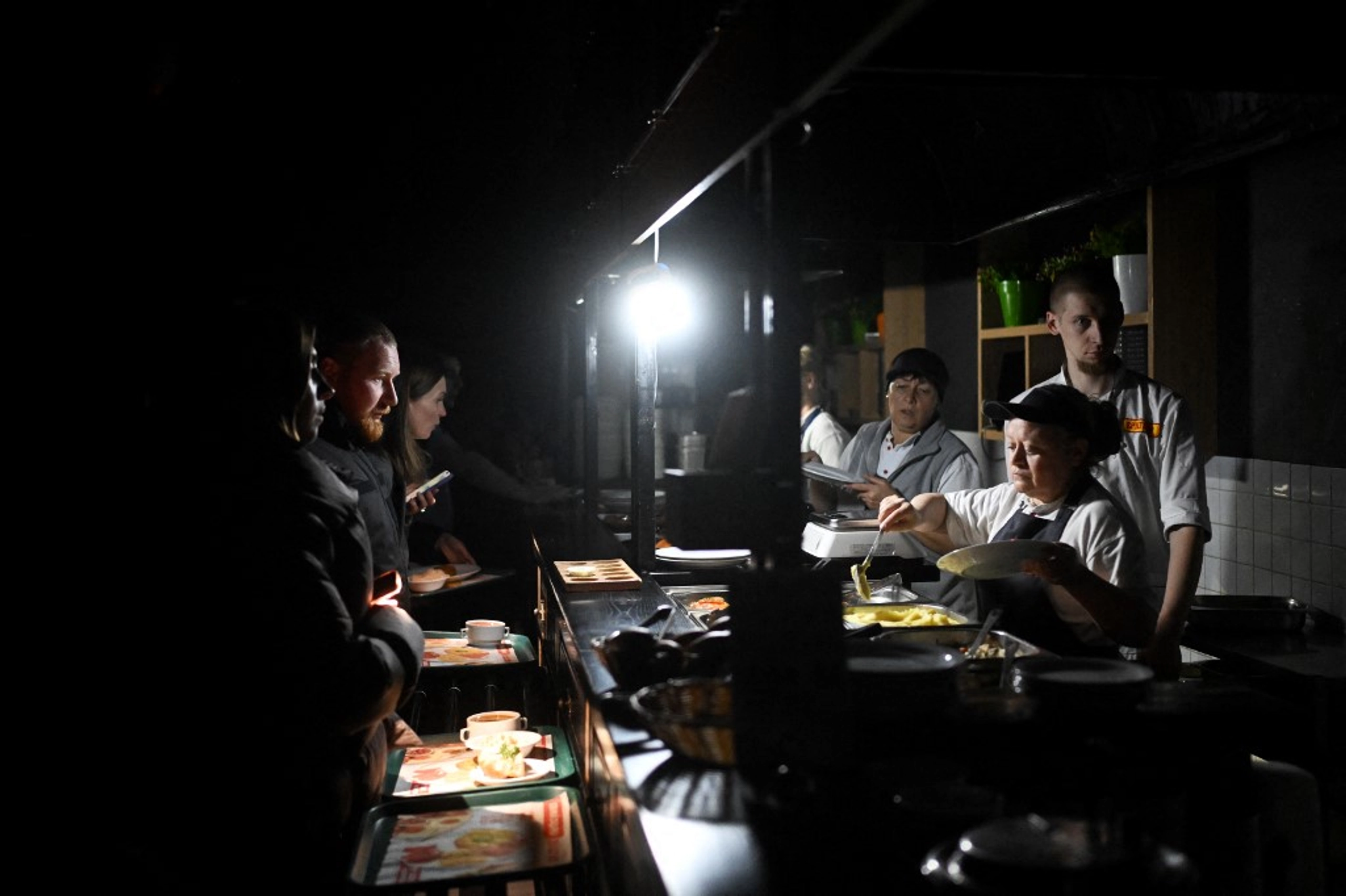
Fears run high, too, that new attacks could lead to a mass heating shutdown during freezing temperatures in the Ukrainian capital, which is home to around 3.5 million people.
“It’s a bit stressful,” Kustov conceded but he added: “My brain has probably adapted so much to this that the power outages, unfortunately, are just everyday life.”
His battery may power the lights but he has no solution if the heating goes out for hours.
“We’ll hold on,” he said, before adding: “I want to go to Bali.”
- ‘Stocking up’ -
Across the country, Ukrainians’ mornings are filled with the same three pieces of news: a phone alert to honour a minute’s silence for victims of the war.
There is also an air force report about how many Russian drones and missiles were fired overnight, and a message from the national energy provider Ukrenergo.
“As a result of Russian attacks, power outages will be imposed in several regions of Ukraine,” it states.
Sometimes, the outages cover “most regions”. Occasionally, it is “all regions”.
Kyiv’s districts are on a rolling blackout schedule.
Volodymyr, 66, and his wife, Tetiana, 64, wake at night to shower, do laundry and recharge their batteries.
“I have returned to what our ancestors once used -- kerosene lamps,” Volodymyr told AFP in his small house in the capital.
Bit by bit, they have been “stocking up” with batteries, generators, rechargeable lightbulbs and gas canisters
On Volodymyr’s terrace, a dusty gas stove is waiting for the day that all his back-up power sources run out.
“If there’s no gas, there will be firewood -- I have it,” he said.
But Tetiana is less sure. “My husband says he is not worried, but I am worried,” she told AFP.
She worries for her 85-year-old aunt, who lives alone in an apartment and can’t make as many preparations.
- ‘Bundle up’ -
The first full winter of the war -- from 2022 to 2023 -- was particularly difficult for many Ukrainians caught off guard by strikes on the energy grid.
“People thought for a long time that this would resolve itself, that it would pass,” she said.
“Just like we thought the war wouldn’t start.”
Three years on, that mindset appears to be shifting.
Epicentr, a home improvement hypermarket chain, reported a tripling in generator sales, and an eight-fold increase in power banks and camping burners after a major strike on October 3.
Costs present a major barrier.
“Not everyone can buy a generator or a heater,” said Volodymyr.
Kustov spent about $1,100 fitting out his studio -- twice the average monthly salary.
During a break from rehearsals, the dancers talk about water cuts and climbing 20 floors when the elevator is out.
The bombings “keep getting worse”, one said, and a feeling of being “back in 2022” abounds.
As for the cold? “I think we’ll just bundle up. Or dance,” they said.
You can also highlight the text and press Ctrl + Enter