It is not without a certain tremor in my fingers that I write the word “optimism” when talking about Ukraine’s future. I hope my Ukrainian friends will not hold it against me for using it, given that their daily lives are marked by the killing of civilians by Russian forces, endless torture, the ongoing deportation of children, and incessant destruction.
JOIN US ON TELEGRAM
Follow our coverage of the war on the @Kyivpost_official.
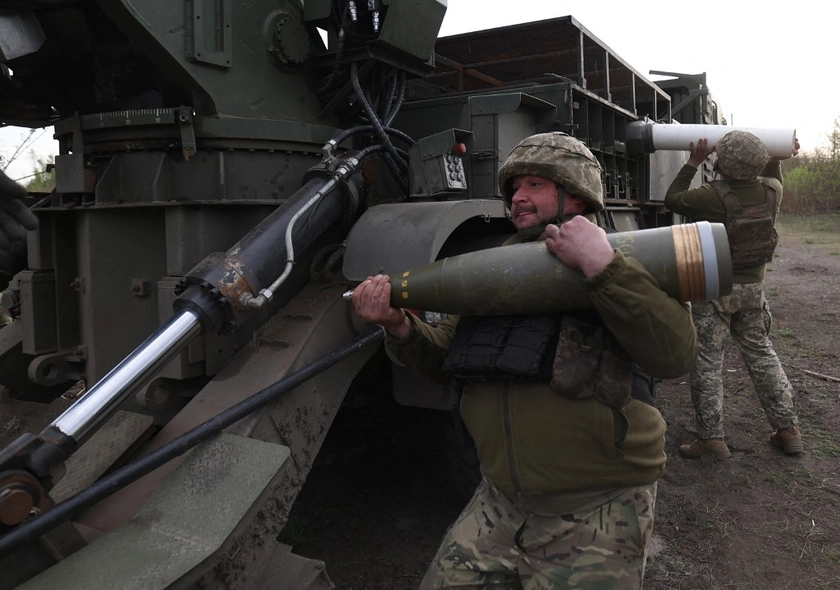
How can we forget the Ukrainian soldiers who are fighting tooth and nail against the Russian enemy in appalling conditions – but who, overall, are holding their ground? How can we talk about optimism when death is everywhere and, in Ukraine, can strike anyone, in their sleep or in broad daylight?
At a recent conference in Germany at which I spoke, some of my colleagues preferred to use the word “hope.” On reflection, I find it insufficiently strong and, above all, the word seems to me to be based on a feeling of improbable transcendence – it takes on a religious dimension that is quite foreign to me. The argument I prefer to develop in favor of optimism seems to me to be based both on the rationality of facts and, ultimately, on what can be called, particularly in the field of international relations, realism. These are the two terms that need to be combined.
Of course, many people often ask me, “Are you pessimistic or optimistic?” I generally decline to answer and prefer to say that I refuse to get involved in such considerations.
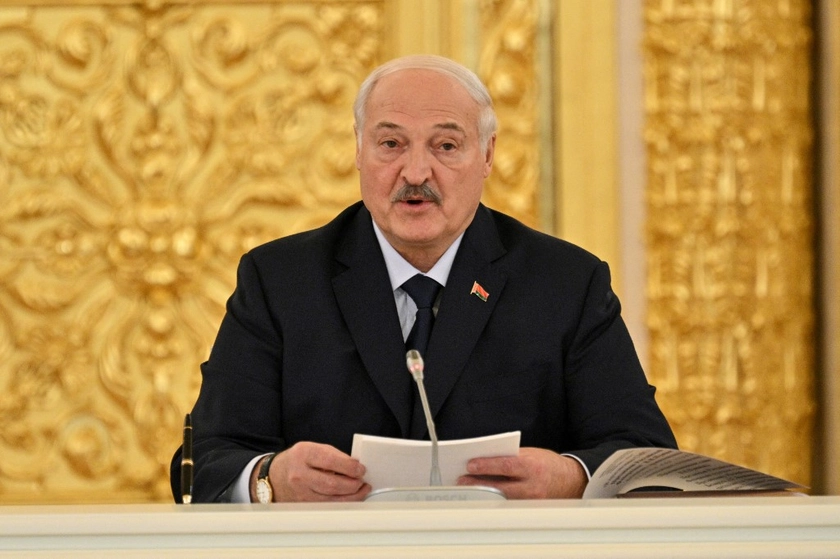
Lukashenko: ‘No Military Action Should Be Expected From Belarus’
All of us who have been warning Western political leaders for more than a decade about the Russian threat and who see that a war is being fought in Ukraine, the outcome of which will determine the coming decades, find it difficult to shake off the fear that the absolute evil embodied by Russia will prevail. We also perceive the backtracking of some Westerners, their persistent failure to understand what is really at stake, or, at the very least, their refusal to act accordingly when they do understand. Put mildly, we see their resolve as insufficient.
However, a serious analyst of international relations has no right to give in to fear and cannot think, because it would not be rational, that previous trends will continue unchanged. To think in terms of fatalism is not to think at all.
Conversely, there are forms of optimism that are based solely on wishful thinking. Those who profess it do not always seek to base it on reason and cling to a few tenuous signs. They are convinced that evil cannot triumph, when in reality it always remains a possibility. I certainly cannot blame these optimists, especially if, in the depths of a damp and freezing prison or in the midst of gunfire, they draw on it to find the strength to live, if not to survive and resist torture, and to fight with the most vital of energies.
But for those who remain outside this struggle, there is a high risk that both pessimism and optimism will remain either fatalistic or a belief borrowed from the theory of predestination. Both detract from intelligent action.
But well-founded optimism makes it possible to break with this strategic failure. It allows us to build a strategy based precisely on factual data that enables us to make the most of the balance of power – and thus to win. This is what Ukrainians are doing today.
A war that the Ukrainians will win
Without even mentioning the childish boasting of the Kremlin criminals who imagined they could take Kyiv in three days, we remember the dire predictions of certain self-proclaimed experts.
During the first year of Russia’s war against Ukraine, they announced, repeating it ever since and continuing to do so today, that it was impossible for Ukraine to win. They pointed to Russia’s demographics, with a population three times larger than Ukraine’s, the size of its army and its reserves of manpower, Russia’s GDP, which, although low, was still higher than Ukraine’s, and, of course, the massive aid provided by Iran at the start of the war, as well as by North Korea and China. However, a poor strategist and connoisseur of war is someone who relies on simple arithmetic to assess the balance of power.
We could discuss at length the distinction made by Blaise Pascal (1623-1662) between the spirit of geometry and the spirit of finesse, which the mathematician, theologian, and philosopher said was a “grace” when combined. Of course, Russian propaganda mouthpieces have done nothing but repeat this defeatist thesis, which is in fact based on a miscalculation by a surveyor: the false scholars had prepared the ground.
Almost ten years ago, an expert in electoral analysis noted that one of the most reliable predictors of a candidate’s or party’s results was the momentum they had generated, whereas stagnation in voters’ perceptions was, on the contrary, often a harbinger of defeat, even if the candidate appeared to have a comfortable lead. With all the usual caveats, this analysis can be broadly transposed to the battlefield.
We know that Russian forces are making little or no progress, and every square meter they conquer, often only to lose it again, results in huge losses that Russian President Vladimir Putin and the Russian command do not care about. Perhaps they have learned some lessons from their initial mistakes, but their command is too worn out for this to translate into major successes.
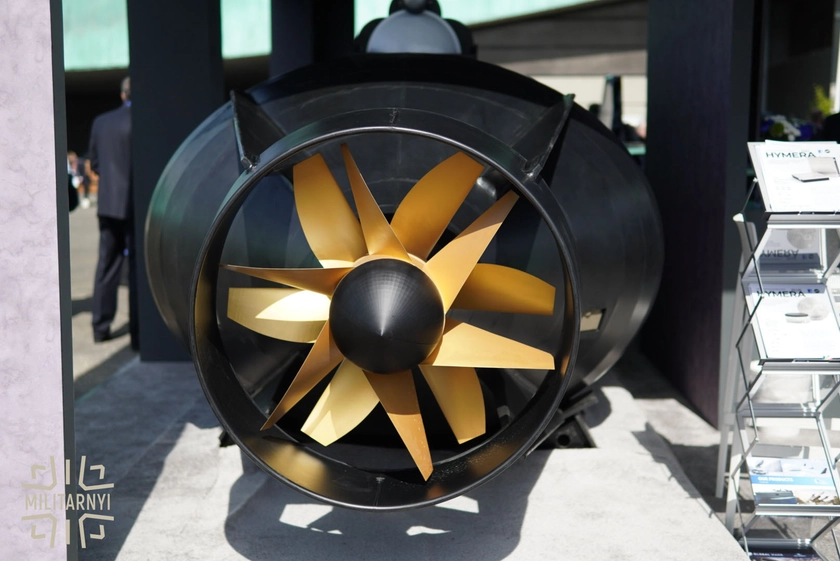
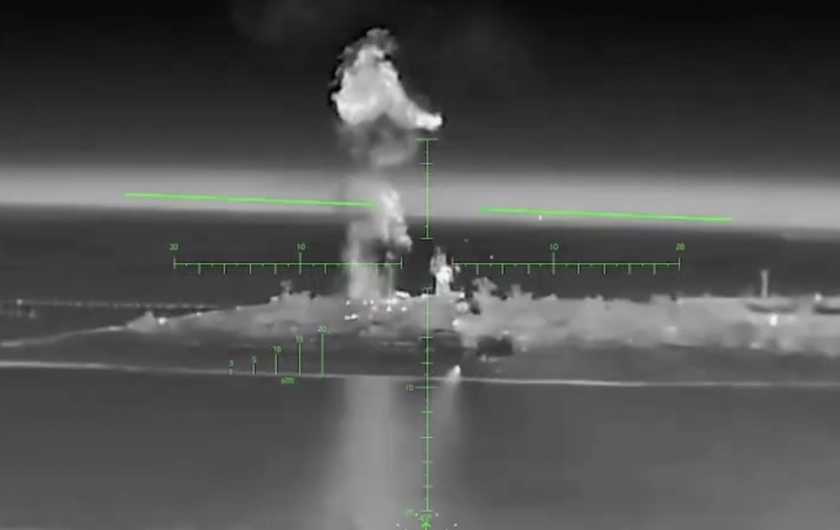
On the other hand, the Ukrainians have been, as we see almost every day, at the forefront not only of technological innovation with drones and marine drones, and tomorrow with long-range missiles, but also of ingenuity in military intelligence. They will certainly need even more resources to secure a complete victory over the Russian army and force it to leave the territory it occupies, but Kyiv has already scored decisive blows that are weakening the Russian economy and army.
There is every reason to believe that, with a little more European aid – which is still most insufficient, despite considerable efforts by countries such as Norway, Germany, the Nordic EU countries, and the Baltic states in particular – the beginning of the reconquest can be accelerated.
In reality, Ukraine will not need to militarily recapture every area occupied by the Russian invader inch by inch. It will suffice to deal decisive blows to certain enemy military infrastructures, particularly ammunition depots, missile launchers and combat aircraft, or even command centers and logistics facilities such as fuel depots and refineries, so that Moscow will not only be unable to advance, but will also be forced to withdraw from certain positions due to a lack of ammunition, manpower, and logistical support.
Therefore, a consistent geometric approach must not stop at the raw balance of power, the population, and the actual shell and missile production capabilities of the Russian war machine, but must also take into account the “geometry” on the Ukrainian side, which is in the process of surpassing Russia in terms of technological capabilities.
To do justice to geometry is also to identify how the Ukrainians choose their targets and organize both their defense and attack plans. Adding finesse to this means understanding how they deploy their own cunning – a combination of acuity, caution, and situational intelligence – ultimately, a set of qualities that the ancient Greeks summed up in one word: mètis (μῆτις). This is certainly produced by unique individuals who pool their intellectual resources. It thus becomes the defining attribute of Ukraine as a nation at war – a set of outstanding qualities that Russia will never be able to possess.
So yes, undoubtedly, Ukraine has not yet won the war, and by definition, there is an unpredictability in its course that defies logic, morality, and rationality. The situation on the battlefield is not only unspeakably horrific for Ukrainian forces, but it also remains precarious. How many thousands more of these noble souls will die, not because of their own failings, but because of the West’s pusillanimity, its irresoluteness, its all too rare intelligence – its ultimately “half-skilled” character, to borrow another expression from Pascal, which was not the most flattering – and sometimes its own turpitude?
But the momentum is on Ukraine’s side. Its victory will still take time, too much time, again because of the cowardice of the Western camp, but it is inevitable. Rationality in the conduct of the fight is on its side, along with intelligence. But it is now up to democracies to understand that this is the only realistic path.
Coming up in part II: the achievements of the Ukrainian Resistance; and to what extent Ukraine can really depend on its “allies” in the West.
The views expressed are the author’s and not necessarily of Kyiv Post.
You can also highlight the text and press Ctrl + Enter