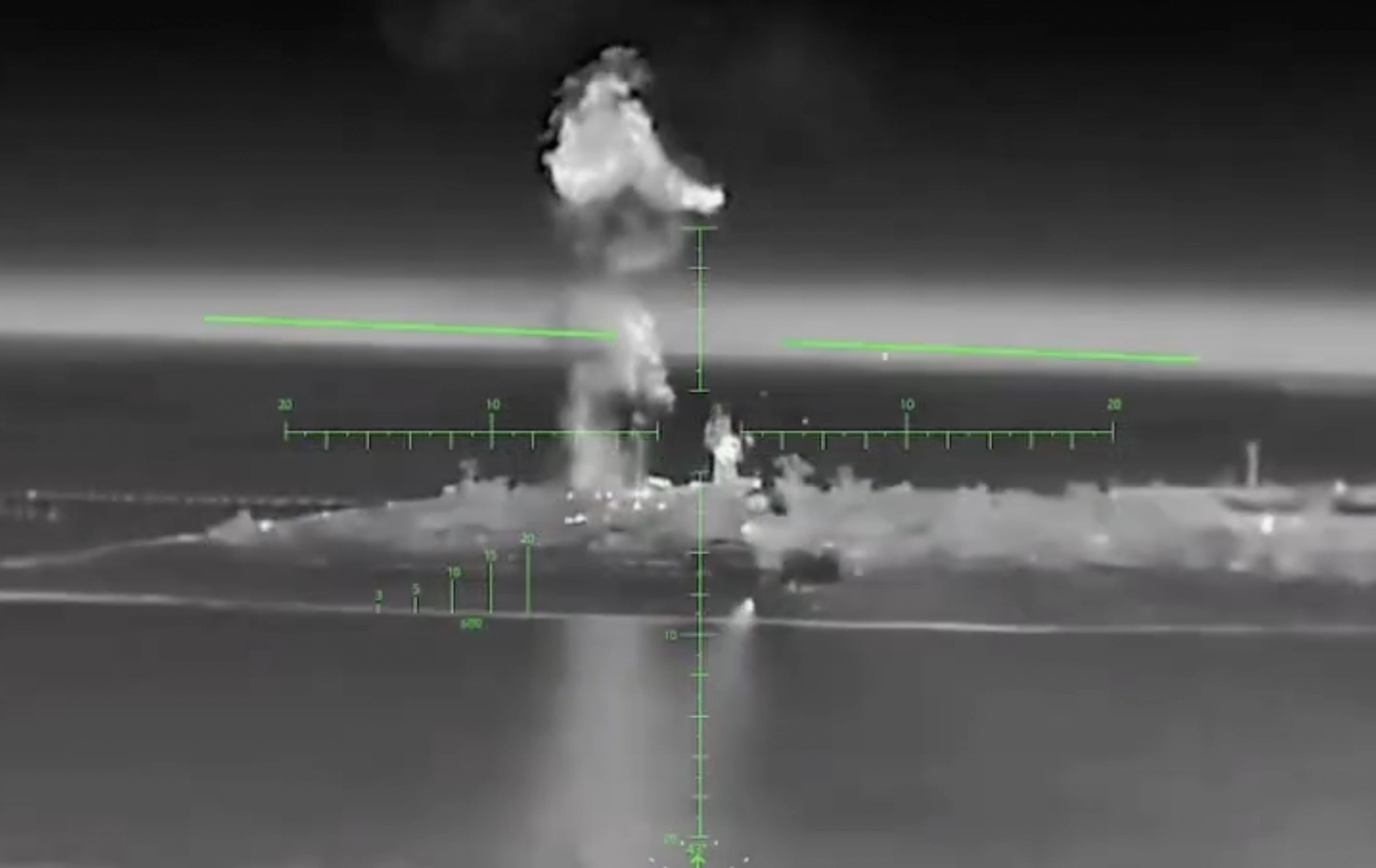
This is the third of a Kyiv Post series on Ukraine’s air bombardment campaign targeting Russian military logistics at middle ranges from the front lines, with the declared objective of damaging Russian army unit capacity to fight effectively by using unmanned air vehicles (UAVs) to attack Russian supply routes and logistics.
The first article in the series, focusing on the aircraft used by the Armed Forces of Ukraine (AFU) in that ongoing strike campaign, is available here.
JOIN US ON TELEGRAM
Follow our coverage of the war on the @Kyivpost_official.
The second article in the series, focusing on the tactics and targeting strategies aircraft used by the AFU in that ongoing strike campaign, is available here.
Ukraine’s “middle-strike” campaign with swarms of wide-ranging robot aircraft has destroyed hundreds of Russian fuel trucks, paralyzed truck and rail shipments over a territory roughly the size of the US state of Arizona or the European country of Bulgaria and placed the jewel of sovereign Ukrainian regions occupied by the Kremlin – Crimea – under a near-total blockade.
The operation, formally known as “Logistical Lockdown,” marked the first time since 2022 that either Ukraine or Russia deployed hundreds of mid-range drones daily to strike logistical hubs and patrol roads and concealment areas across much of occupied southern Ukraine.
The aircraft have mostly avoided the densest Russian air defenses along front lines and around high-value targets like oil refineries and naval bases, instead hunting for Russian military convoys and fuel trucks of all types traveling to or from the Russia-occupied Black Sea peninsula of Crimea.
Zelensky Proposes G7 Meeting With Putin to End War
According to the AFU’s drone troops command, the Unmanned Systems Forces (USF), hundreds of Russian tanker trucks have been burned since the campaign launched in late April.
USF video published over the weekend showed kamikaze planes swooping in on dozens of freight rigs driving along the Novoazovsk-Mariupol-Melitopol-Crimea highway, and attacking trucks parked side-by-side in lots on logistically-critical supply routes for Russia.
According to open source satellite imagery, more than 300 new truck hulks – charred from fire or demolished from hits to the windshield or fuel tank – appeared alongside that road just in the first half of June.
From June 7 to June 13, drones operated by pilots from Ukraine’s Special Operation Forces (SSO), along with a pair of veteran line squadrons, the 1st Da Vinci and 475th CODE 9.2, flew a collective 100-plus air strikes and associated sorties against land-corridor bottlenecks in the north of Crimea.
The strike packages combined conventional FP-1, Liutyi, and Begemot fixed-wing drones, all domestically developed and manufactured aircraft, to blow holes in causeways and bridges crossing marshland near the cities of Chonhar, Dzhankoi, and Armyansk. Russian air defense fire was reportedly minimal.
Moscow-appointed occupation authorities on Friday acknowledged that the strikes had rendered most roads into and out of Crimea from the north impassable and issued notices to motorists advising them to take detours. By Sunday, follow-up strikes had blown gaps in bridges or marsh causeways along the suggested detours.
By Monday, per occupation authority announcements, all civilian traffic was not just halted but banned on the main highways leading to and from Crimea, and secondary road use was permitted only during daylight hours. Meanwhile, local media reported Ukrainian drones were dropping mines on detour roads.
Attacks or the threat of attacks against locomotives had, by Sunday, halted most passenger train traffic between the Russian mainland and Crimea.
Currently, a rail traveler from mainland Russia to Crimea may ride in comfort up to an end station adjacent to the peninsula (Kerch or Dzhankoi, in most cases) after which he or she travels to the destination by passenger bus. Unfortunately for those Russian national railroad customers, the war and Ukrainian drone strikes notwithstanding, the Russian Railroad service to Crimea is at normal summer rates, roughly double the out-of-season cost.
Major Robert Brovdi, the commander of Ukraine’s USF, said in a Sunday statement that Ukrainian pilots, thanks to excellent flying weather with long summer days giving 16-17 hours of usable daylight, had cut, in the first two weeks of June, Russian vehicle traffic in occupied southern Ukraine by more than two-thirds, or around 71 percent.
The USF’s objective is to make all roads unusable to Russian military supply, he said.
Ukraine’s mid-range attacks have targeted fuel trucks in southern Russia-occupied regions abutting the Azov Sea. These efforts, along with continuing longer-range strikes against Russia’s fossil fuel production sometimes hundreds of miles deep inside Russian territory, have intensified in recent months.
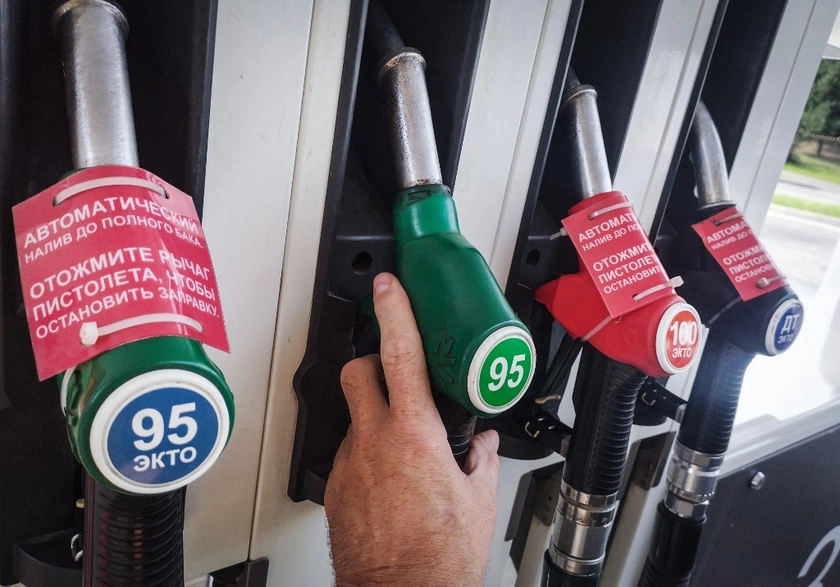
By early June, they had sparked automobile fuel shortages, followed quickly by panic buying and total outages. The impact has been most severe in Crimea and in the Russia-occupied Donetsk region, where fuel rationing of 20 liters (5.3 gallons) per driver per week was in effect.
On Monday, social media channels for motorists and local news outlets in Crimea and occupied southern Ukraine reported that most fuel stations were not selling fuel, and where sales were taking place, motorists were lining up as early as 6 a.m.
Prices were up 40-60 percent, and black market prices – usually jerry cans filled somewhere else in Russia and driven to an area hit by shortages – were reported as high as 10 times state-mandated fuel prices. Spot shortages and even rationing were reported as far away as St. Petersburg and the oil-rich Tatarstan, in the upper Volga River region.
Embarrassingly for Kremlin prestige in Crimea, which Russia invaded in 2014 and now claims is an inalienable part of Russia, the Moscow-appointed governor of Crimea, Serhiy Aksyonov, in the past week twice promised drivers gas pumps would have fuel in the next 48 hours, only to renege both times on the commitment.
He blamed new Ukrainian drone attacks and a “developing situation.”
Ukrainian Navy spokesperson Dmitry Pletenchuk, in a Sunday interview with the Freedom television channel, said Ukraine’s current air dominance by drone of territories occupied by Russia was the result of months of attacks targeting and wearing down Russian air defenses in the region, and that Ukrainian drones were ranging freely over those territories only thanks to “hard work” done before.
“What we’re seeing now isn’t the result of a single day of work. It’s a systematic effort that’s been underway for a long time. And we can actually say we’re seeing the fruits of that work now,” Pletenchuk said.
“In Crimea, the Russian occupiers’ air defense systems were systematically destroyed. And they were destroyed most effectively – by striking radar stations, without which all other hardware is just hardware,” he continued. “These are the most expensive components, and it was precisely these that were targeted.”
Pletenchuk predicted that Russian logisticians would, despite Ukrainian drone dominance in Donetsk, Kherson and the northern Crimea region, keep trying to move military material along existing routes “out of inertia.”
Ukraine’s advantage in aircraft and geography will nonetheless make Crimea untenable for Russia to hold in the long term, he said.“At some point, a critical mass of defeats accumulates, ultimately leading to the collapse of the system itself. Let’s look at the Crimean Peninsula. It’s surrounded by water on three sides. And, accordingly, the history of previous wars fought on this territory should suggest to those who occupied it that they all ended roughly the same way. And always not very well – with retreat,” Pletenchuk said.
“There are five (Russian) military airfields in Crimea. They need fuel.”
The USF’s Brovdi suggested that the only way for Russian military freight drivers to avoid a drone strike against themselves and their rigs would be “to stay in Siberia.” The USF and its pilots were planning intensified attacks, he said.
Following the Ukrainian strikes on Chonhar on Friday, Russian military engineers quickly built a pontoon bridge across the Sivash lagoon and marshland, re-establishing a northern route for wheeled military traffic between Crimea and the Russian mainland.
But overnight between Sunday and Monday, a strike package reportedly of mixed FP-1 and Begemot drones attacked the new pontoon bridge.
According to claims by the Ukrainian drone squadron, the pontoon bridge was broken. According to the official website of the Crimean occupation authority, as of Monday, there were no usable roads remaining between northern Crimea and Russia.
You can also highlight the text and press Ctrl + Enter